Stop and call for qualified help when plumbing water is near electrical equipment, sewage is entering occupied space, gas or burning odors are present, or a repair would require opening pressurized piping.
You may be scrubbing white residue from a shower door while also noticing an unpleasant taste at the kitchen sink. Perhaps a faucet aerator contains small particles, or a water heater seems to develop scale faster than expected. When several water complaints appear at once, it is natural to ask whether a water softener or whole-house filtration system will solve them.
The immediate safe action is to separate the symptoms. Check whether each concern appears in hot water, cold water, one fixture, or the entire house. Avoid drinking water that has a sudden unusual odor, color, or oily appearance. Do not purchase equipment until testing identifies the condition and a plumbing inspection rules out a fixture, pipe, or water-heater problem.
Why a Softener and a Whole-House Filter Are Not Interchangeable
A water softener targets hardness minerals. Calcium and magnesium are dissolved in the water and can create scale, spotting, soap scum, and buildup inside water-using equipment. Traditional softeners use resin to exchange those minerals for a small amount of sodium or potassium.
A whole-house filter targets different concerns. Sediment filters trap particles. Activated carbon may reduce certain objectionable tastes, odors, and chlorine-related effects. Specialty media may address another verified condition.
A standard sediment or carbon filter does not remove dissolved hardness. A softener does not reliably capture sediment or correct every taste and odor. A home may need one system, both systems, a smaller point-of-use device, or plumbing repair instead.
What Common Symptoms Usually Suggest
White Scale on Fixtures
Chalky deposits around faucet outlets, crust on showerheads, film on glass, and recurring spots on dishes may suggest hard water. Hardness testing is the appropriate next step.
Scale can collect on heating elements, valves, and small water passages. A softener reduces future accumulation but does not remove old deposits already attached.
Taste or Odor at Multiple Cold Faucets
A consistent taste or odor throughout the cold-water system may justify evaluation for filtration. A strong sewage, petroleum, solvent, or chemical smell should not be treated as a routine carbon-filter purchase. Stop using the water for consumption and obtain guidance promptly.
Particles in a Sink or Tub
Sand-like grains, rust-colored flakes, or black specks may suggest sediment, but the source matters. Material can come from the incoming supply, a faucet washer, a flexible connector, a water heater, or a deteriorating plumbing component.
A main-line filter cannot stop debris released by plumbing downstream.
Problems Only on the Hot Side
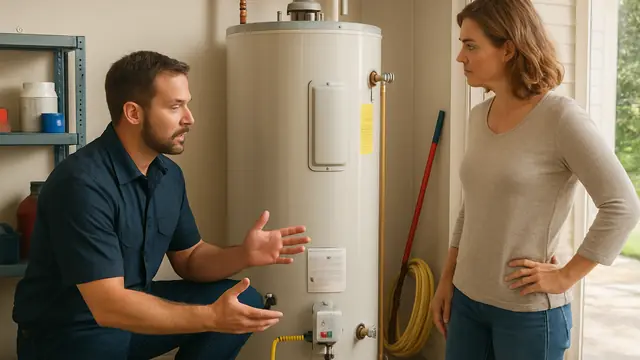
Odor, flakes, or discoloration limited to hot water often points toward the water heater. The heater may require flushing, component service, or replacement depending on its condition. Installing a whole-house filter without examining the heater could leave the actual problem unchanged.
Safe Checks Before Scheduling Service
- Fill a clear glass from several cold-water faucets and compare the samples. Let them stand and observe whether cloudiness clears or particles settle.
- Run the hot and cold water separately at the same fixture. Write down which side shows the symptom.
- Check faucet aerators for trapped debris and mineral crust. Clean an aerator only when it can be removed without damaging the faucet and reinstalled correctly.
If a softener already exists, confirm that it has power, contains salt, and is not in bypass. Look for an error code, continuous drain flow, or unusual water level in the brine tank. Do not disassemble the valve.
Check the replacement date on existing filter cartridges. A clogged cartridge can reduce pressure, while an exhausted carbon filter may allow taste or odor to return.
What Homeowners Should Not Do
- Do not select equipment from appearance alone. Clear water can contain dissolved hardness, and visible particles can originate inside the house.
- Do not install the smallest or finest cartridge available without checking flow requirements. Restrictive filtration can create weak showers and slow appliance filling.
- Do not open a pressurized filter housing or media tank. Shutoff and pressure-relief procedures vary, and trapped pressure can cause injury or flooding.
- Do not pour household cleaners, acids, or disinfectants into treatment equipment without an approved procedure.
- Do not connect a regeneration or backwash drain line to an unsafe location. Improper drainage can lead to flooding, contamination, or code problems.
Signs the Situation Is Urgent
Request prompt professional help when water changes suddenly throughout the home, pressure drops dramatically, or a treatment tank begins leaking.
Continuous regeneration, an overflowing brine tank, or water flowing constantly to a drain can waste significant water and may signal a failed control valve or blocked drain assembly.
Stop using the water for drinking and cooking when it has an unexplained strong odor, oily film, unusual color, or suspected contamination. Follow any official boil-water or do-not-use notice exactly.
How a Licensed Plumber Diagnoses the Need
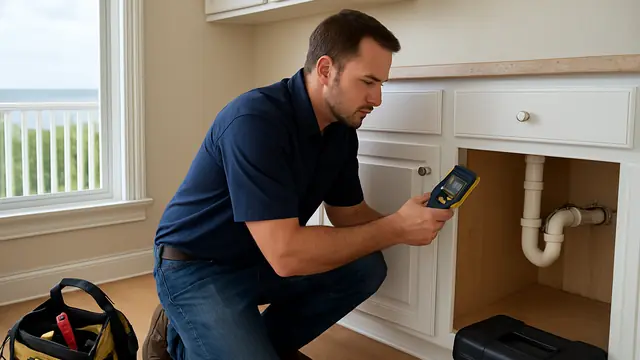
Diagnosis begins with what the problem looks or smells like, when it started, and where it occurs.
Testing may include hardness, pH, chlorine-related measurements, total dissolved solids, and indicators associated with staining or particles. Unusual or health-related concerns may require a certified laboratory.
The plumber measures pressure, flow, pipe size, and peak demand because an undersized system can restrict water delivery.
The technician also inspects the main shutoff, available drainage, electrical access, bypass arrangement, water heater, and accessible fixtures. Existing equipment may be tested before replacement is considered.
Repair and Treatment Options, Starting With the Simplest
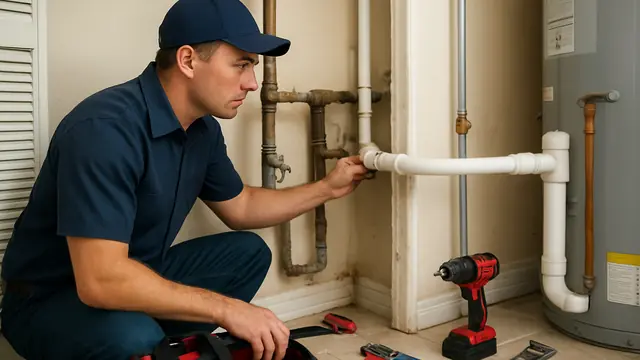
- A localized repair may be enough. Replacing an aerator, flexible connector, faucet component, or deteriorated washer can stop particles from one fixture.
- Water-heater service may correct hot-water-only odor or flakes. Depending on the heater's condition, work may include inspection, flushing, or component replacement.
- For drinking-water taste at one sink, an under-sink carbon filter or reverse-osmosis system may meet the goal without whole-house treatment.
- For verified incoming sediment, a properly sized sediment filter may be installed. Cartridge size and filtration level should balance particle removal and acceptable flow.
- For a whole-home taste or odor concern, carbon filtration may be appropriate. Cartridge and backwashing systems have different capacities and maintenance requirements.
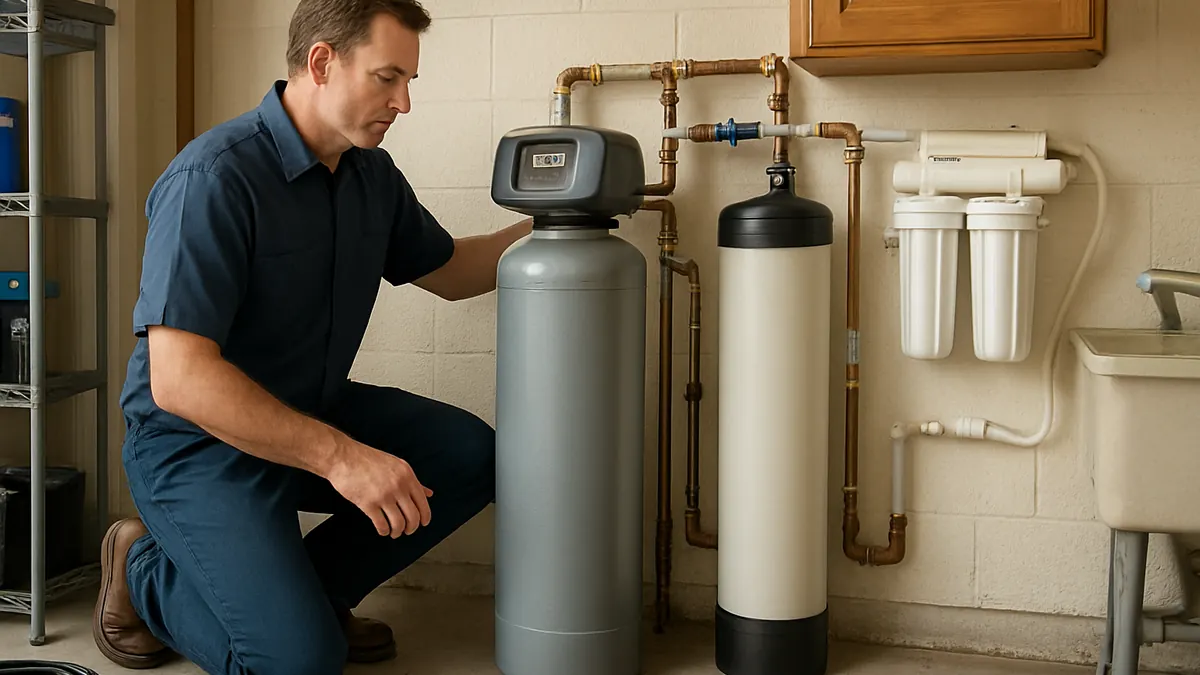
- For confirmed hardness, a conventional softener can reduce scale. If testing shows both hardness and filtration needs, separate stages can be arranged in the correct order.
- Existing equipment may need only programming, seal replacement, valve repair, cleaning, or fresh media.
Factors That Affect Cost
Cost depends on test results, treatment capacity, household water demand, pipe size, number of stages, installation access, drain availability, electrical requirements, and the condition of existing plumbing.
Ongoing ownership costs include salt, cartridges, regeneration water, replacement media, sanitizing, and periodic service. A lower-priced system may become expensive if it is undersized or requires constant cartridge changes.
Prevention and Maintenance
- Keep records of test results, equipment model numbers, settings, cartridge changes, and service dates.
- Replace cartridges before they become severely clogged. Check softener salt regularly and watch for salt bridging, a hard layer that keeps salt from dissolving.
- Inspect tanks, bypass valves, fittings, and drain tubing for leaks. Retest the water after major plumbing work or when taste, odor, scale, staining, or pressure changes.
Deciding Between Water Softener and Whole-House Filtration in Lower Grand Lagoon
Choose treatment according to evidence. Confirmed hardness points toward a softener. Verified particles, taste, or odor may call for filtration. A one-fixture or hot-water-only issue may need repair rather than a new main-line system.
About this guide: This resource provides general homeowner education, not a remote diagnosis. Actual conditions, code requirements, equipment, and safe repair options must be evaluated at the property.