Stop and call for qualified help when plumbing water is near electrical equipment, sewage is entering occupied space, gas or burning odors are present, or a repair would require opening pressurized piping.
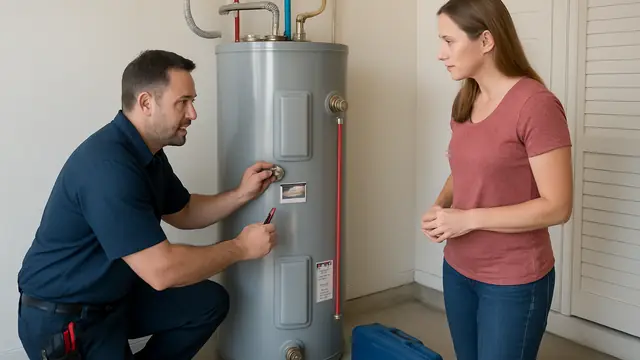
A leaking water heater in Mary Esther may first appear as a small puddle near the base, moisture inside the drain pan, a drip from a pipe, or rust-colored staining on the tank. Some homeowners first notice a musty smell, soft drywall, warped flooring, or damage to items stored near the heater.
Even a slow leak deserves attention because the heater remains connected to the home's pressurized water system. A minor leak can worsen if a valve, connector, or tank fails.
The source is not always obvious. Water from a top fitting, condensate drain, washing machine hose, nearby pipe, or wall leak can collect beneath the heater. Some component leaks are repairable, while an internal tank leak generally requires replacement.
Most Common Causes of a Leaking Water Heater
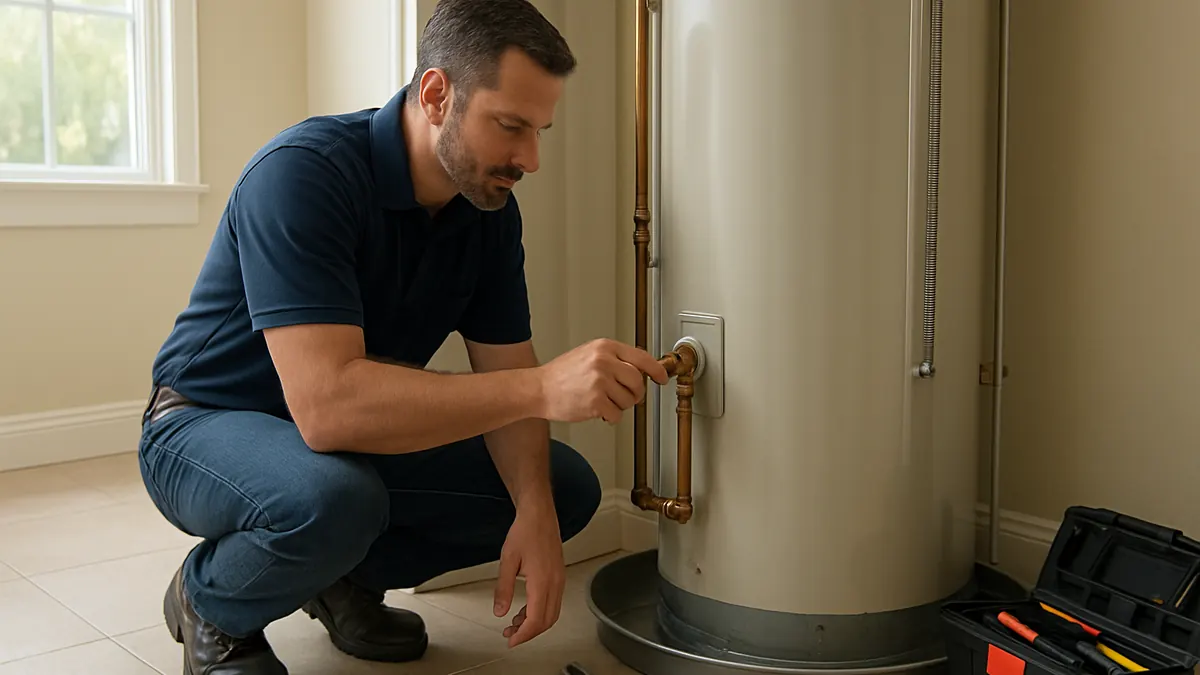
The hot- and cold-water connections at the top are common leak locations. Flexible connectors can deteriorate, threaded fittings can loosen, and metal nipples can corrode.
The cold-water shutoff valve may leak around its stem, body, packing, or pipe connection. Rust or mineral buildup around the valve often indicates a slow leak.
The temperature and pressure relief valve, or T&P valve, may also release water. This safety device opens when the tank's temperature or pressure becomes unsafe. A T&P valve may be worn, but it may also be responding to high household water pressure, thermal expansion, or overheating.
The drain valve near the bottom of the tank can leak because it is loose, cracked, corroded, or obstructed by sediment. A drip sometimes begins after the valve has been used during flushing or service.
Electric water heaters may leak around a heating element gasket. Water can collect behind an access panel or inside the insulated jacket before becoming visible.
Gas water heaters can produce temporary condensation during heavy operation. Persistent puddling, however, should be evaluated.
The most serious source is internal tank corrosion. Traditional storage heaters use a protective lining and sacrificial anode rod. As those protections deteriorate, corrosion may penetrate the steel tank. Water emerging from the lower seam or beneath the heater usually indicates tank failure.
Safe Checks a Mary Esther Homeowner Can Perform
Use a flashlight to inspect the top connections, flexible supply lines, shutoff valve, T&P valve, discharge pipe, drain valve, tank seams, drain pan, and surrounding floor.
Do not touch wet wiring, gas controls, burner components, or hot pipes.
Dry the visible water and place paper towels beneath individual fittings. Observe where moisture first returns. Note whether the leak becomes more noticeable while the heater is operating or after hot water is used.
Look for rust trails, mineral deposits, corrosion, stained drywall, swollen baseboards, damp insulation, or water marks. Check whether a condensate drain, utility sink, washer hose, or hidden pipe could be responsible.
If water is actively spreading and the cold-water shutoff valve turns easily, close it. Do not force a heavily corroded valve. For an electric heater, turn off the correct circuit breaker if water is near electrical components. Never stand in water while operating electrical equipment.
What Homeowners Should Not Attempt
Do not cap, plug, or restrict the T&P valve or its discharge pipe. This valve is essential for protecting the tank from unsafe pressure.
Do not patch a leaking storage tank with epoxy, tape, caulk, putty, or liquid sealer. Once the steel tank has corroded through, the vessel is structurally compromised and cannot be restored safely.
- Avoid removing electrical access panels, thermostats, heating elements, gas valves, burners, or venting without proper qualifications.
- Do not repeatedly reset a breaker that trips. The heater may have a failed heating element, damaged wiring, or water intrusion.
- Do not relight a gas heater if the burner compartment is wet or gas is smelled. Avoid forcing an old shutoff or drain valve because it may break and release more water.
Signs That Make the Leak Urgent
Urgent conditions include:
- Water spraying under pressure
- The puddle growing rapidly
- Water entering walls, cabinets, or ceilings
- Steam around the heater
- Extremely hot water leaving the relief pipe
- Continuous T&P valve discharge
- A swollen or deformed tank
- Gas odor
- Scorched or melted wiring
- Soot near a gas burner
- Loud banging with active leakage
- Water reaching outlets or electrical panels
If gas is smelled, leave the area and contact the gas utility or emergency services from a safe location. Avoid switches, flames, and sparks.
How a Licensed Plumber Diagnoses the Leak
A licensed plumber first confirms that the water heater is the source. The technician traces moisture to its highest point and checks nearby plumbing, air-conditioning drainage, and appliances.
The inspection includes supply connectors, shutoff valves, threaded fittings, the T&P valve, discharge piping, drain valve, element areas, tank seams, and drain pan.
Household water pressure may be measured. Excessive pressure can damage the heater and shorten the life of other plumbing fixtures. A pressure-reducing valve may need adjustment or replacement.
Thermal expansion may also be evaluated. Water expands when heated. In a closed plumbing system, an expansion tank provides space for the additional volume. A failed or improperly charged expansion tank can cause pressure spikes and recurring relief-valve leakage.
Electric units may be tested for leaking element gaskets, thermostat problems, damaged wiring, grounding, and proper breaker sizing. Gas units may be inspected for burner condition, combustion, venting, gas connections, and safe exhaust.
The plumber considers the heater's age, warranty, corrosion, and expected remaining life before recommending a solution.
Repair Options That May Solve the Problem
A focused repair may be appropriate when the internal tank remains sound. Possible repairs include replacing a flexible connector, threaded fitting, shutoff valve, drain valve, T&P valve, or electric heating element gasket.
The plumber may also repair nearby piping, correct excessive water pressure, replace a pressure regulator, or install or replace a thermal expansion tank.
A leaking relief valve should not simply be replaced without determining why it discharged. If high pressure, expansion, or overheating remains, the new valve may begin leaking.
The age and overall condition of the equipment matter. Repairing one isolated component on a newer heater may be the best value. Replacing several parts on an older, heavily corroded tank may only delay an inevitable replacement.
Water Heater Replacement Choices
When the internal tank is leaking, replacement is generally necessary. Available options can include conventional electric tanks, conventional gas tanks, high-efficiency storage heaters, heat pump water heaters, and tankless systems.
A standard tank may offer the lowest initial cost and simplest installation. A heat pump water heater may reduce energy use when there is adequate space, airflow, and condensate drainage. A tankless system may provide extended hot-water production but must be sized for the home's maximum simultaneous demand.
Some replacements require changes to gas piping, venting, electrical service, or drainage. The best choice should reflect household demand, installation conditions, energy goals, and budget-not automatically the most expensive equipment.
Typical Factors Affecting Cost
The cost depends on the cause of the leak and the condition of the installation. Factors include:
- Repair versus replacement
- Heater size and efficiency
- Gas or electric service
- Tank, heat pump, or tankless design
- Accessibility
- Existing pipe and valve condition
- Water-pressure corrections
- Expansion tank requirements
- Electrical capacity
- Gas-line and venting changes
- Drain pan and drainage
- Permits and inspections
- Warranty coverage
- Removal and disposal
- Emergency service timing
- Existing water damage
A simple connector or valve repair on an accessible unit is generally less involved than replacing a heater in a confined closet with corroded plumbing or utility upgrades.
Prevention and Maintenance Guidance
Inspect the water heater several times each year. Look for moisture, rust, mineral buildup, loose fittings, and corrosion around valves.
Flush a tank-style heater according to the manufacturer's recommendations. Sediment can reduce efficiency, create popping or rumbling noises, and increase stress near the bottom of the tank.
- Have the sacrificial anode rod inspected periodically. Replacing a depleted rod may extend the life of a tank that is still structurally sound.
- Maintain safe household water pressure. Have the pressure regulator and expansion tank tested when installed.
- Replace aging flexible connectors and corroded shutoff valves before they fail. Keep the T&P discharge pipe properly installed and unobstructed.
A drain pan with a correctly routed drain line can reduce damage. Leak alarms and automatic shutoff valves provide additional protection when the heater is near finished areas or the home is vacant for extended periods.
Early diagnosis may preserve a lower-cost repair option and prevent major water damage. A Superior Mechanical can determine whether the Mary Esther water heater needs a targeted repair, pressure correction, or full replacement.
About this guide: This resource provides general homeowner education, not a remote diagnosis. Actual conditions, code requirements, equipment, and safe repair options must be evaluated at the property.