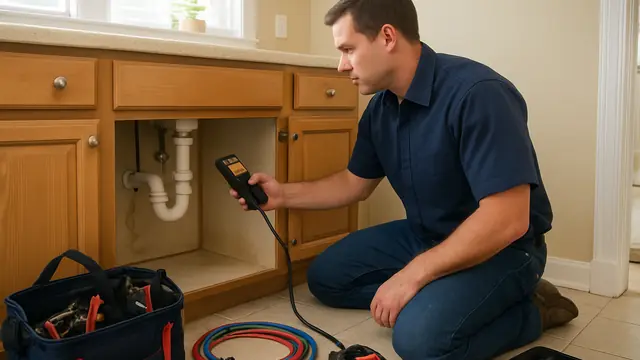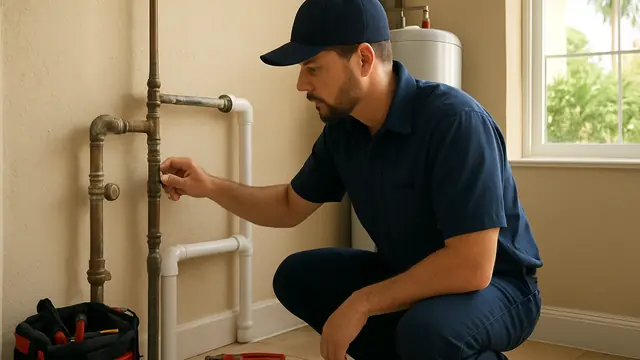
Stop and call for qualified help when plumbing water is near electrical equipment, sewage is entering occupied space, gas or burning odors are present, or a repair would require opening pressurized piping.
A Niceville homeowner may call a plumber after a toilet clogs for the third time in two months. The toilet can be cleared, but the nearby bathtub drains slowly afterward, and a gurgling sound comes from the sink whenever the washing machine empties. Those symptoms suggest that the problem may not be inside one fixture. Wastewater may be encountering a restriction in a shared drain or sewer line.
Until the cause is known, the safest action is to limit water use. Avoid running water-intensive appliances, and do not continue flushing a toilet that is already rising. If sewage appears in a tub, shower, or floor drain, stop using the plumbing system and keep people and pets away from the contaminated area.
A sewer camera inspection allows a licensed plumber to view the inside of an accessible pipe. It can help distinguish an ordinary blockage from a recurring condition that needs cleaning, repair, or replacement.
What Happens During a Sewer Camera Inspection in Niceville?
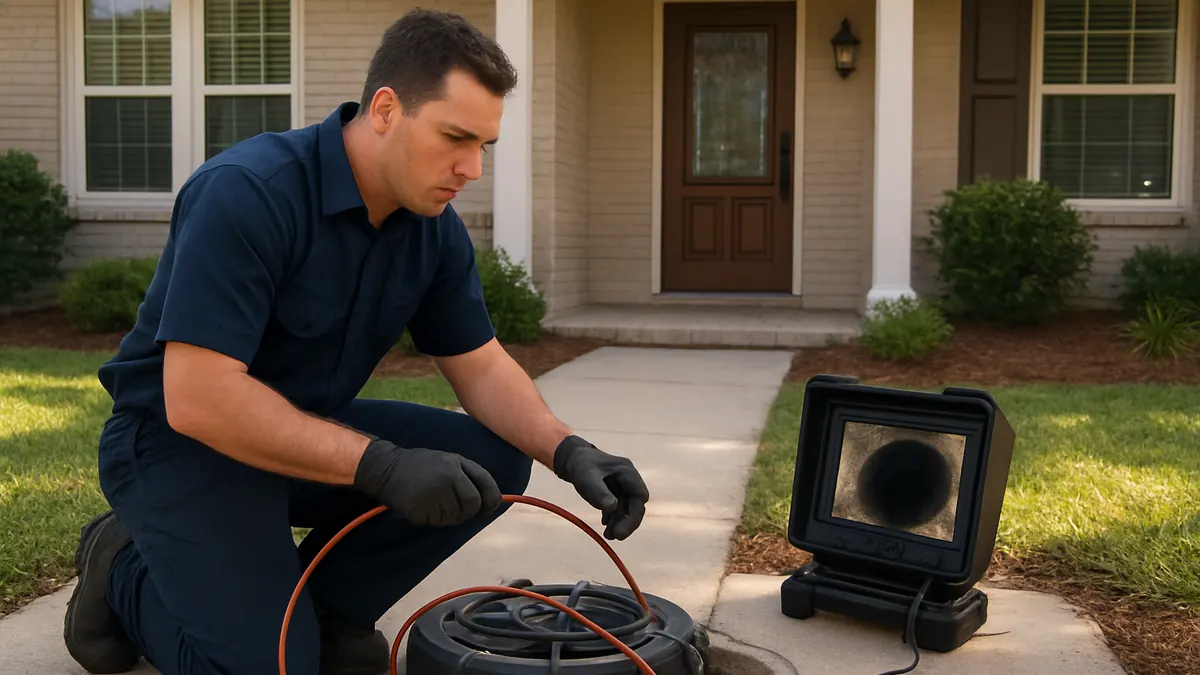
The plumber reviews which fixtures are affected, what triggers the backup, and whether previous cleaning lasted. A flexible cable with a waterproof camera is then inserted through a suitable access point.
Live video may reveal buildup, roots, misaligned joints, cracks, standing water, or collapse. A built-in transmitter can help estimate a finding's location and depth from above ground. The inspection does not repair the line; it connects visible evidence with the home's symptoms.
When Is a Camera Inspection Useful?
The Same Clog Keeps Returning
A clog that returns after plunging or professional cleaning may be forming around an underlying defect. A rough joint, root opening, low section, or damaged pipe can repeatedly collect paper and waste.
Multiple Drains React Together
If flushing one toilet makes a shower gurgle, or the washing machine causes water to rise in a tub, the fixtures may share a restricted drain farther downstream.
Drainage Changes During Heavy Water Use
A partially restricted line may appear normal when a small amount of water is used but back up when a bathtub, washer, or several fixtures discharge quickly.
A Property Owner Wants Documentation
A camera inspection can document visible conditions before a purchase, renovation, or major repair, although it cannot guarantee future performance.
What the Camera May Reveal
Soft blockages may include paper, wipes, grease, sludge, or a foreign object. Roots may enter through an opening; cutting them can restore flow, but the entry point may still need repair.
An offset or separated joint can catch solids. Cracks, corrosion, deformation, and collapse are more serious findings.
Standing water can indicate a sagging section, inadequate slope, or a restriction beyond the camera. The plumber must interpret this finding with flow testing and the rest of the video. A single patch of standing water does not automatically prove that the entire line needs replacement.
Safe Checks Before Calling a Plumber
Determine whether one fixture or several are affected, note which symptom appeared first, and record what water use causes gurgling. Stop testing if wastewater rises.
Locate an exterior cleanout if visible, but do not remove its cap during an active backup. Also note any object that may have been flushed or whether the problem returned soon after cleaning.
What Homeowners Should Not Attempt
- Do not repeatedly use chemical drain cleaner. The chemical may remain trapped behind the blockage, damage some plumbing materials, or expose the plumber when the line is opened.
- Do not mix drain-cleaning products. Chemical combinations can create hazardous fumes, heat, or splashing.
- Do not force a garden hose, improvised rod, or rented sewer machine into the line. These methods can injure the operator, lodge equipment in the pipe, or worsen existing damage.
- Do not approve excavation or full replacement based only on a recurring clog. A proper diagnosis should identify the location and extent of the problem whenever possible.
Signs That Make the Problem Urgent
Sewage entering the home is an urgent sanitation concern. Stop water use, avoid contact, and arrange professional service.
Call promptly if every toilet is affected, water rises in the lowest drain whenever another fixture is used, or wastewater is near flooring, cabinets, drywall, or electrical equipment.
A backup that returns soon after professional cleaning may indicate that the line has a structural problem. Strong sewer odor accompanied by visible leakage, a suspected pipe collapse, or loss of all usable plumbing also requires fast attention.
How a Licensed Plumber Diagnoses the Line
The plumber may test selected fixtures to determine whether the issue is local or system-wide. A fully blocked or heavily coated pipe may need cleaning before meaningful video can be obtained.
During the inspection, the camera is advanced slowly. Significant findings may be recorded, measured by cable distance, and located from above ground with a receiver.
The plumber should distinguish confirmed findings from possibilities. Some leaks, vent problems, or hidden defects may require additional testing.
Repair Options Beginning With the Least Invasive
A removable blockage in a sound pipe may be addressed with professional cabling. Heavy grease, sludge, or attached debris may require a more thorough cleaning method selected for the pipe material and condition.
A reachable foreign object may be retrieved through an existing opening. Roots may be cut to restore flow, followed by repair of the entry point when appropriate.
If one short section is cracked, separated, or badly offset, localized repair may solve the problem without replacing the entire line. Trenchless rehabilitation may be considered when the existing pipe, access, and layout meet the method's requirements.
Partial or complete replacement becomes appropriate when damage is widespread, several sections have failed, or the line is severely deformed or collapsed. The recommendation should be supported by the inspection findings.
Typical Factors Affecting Cost
Inspection cost depends on access, line length and configuration, obstruction severity, and whether cleaning is required first. Removing a toilet or creating access can add labor when no suitable cleanout exists.
Repair cost depends on the defect's location, depth, and length; pipe material; accessibility; surface restoration; and repair method. Work beneath a slab or finished surface has different requirements than work in an open area.
Ask for a written scope that explains whether locating, permits, cleanup, restoration, and a follow-up camera inspection are included.
Prevention and Maintenance Guidance
Flush only human waste and toilet paper. Wipes labeled as flushable, paper towels, hygiene products, cotton swabs, dental floss, and household trash should not enter the toilet.
Keep cooking fats, oils, and grease out of the sink. They can cool inside the line, coat its walls, and capture other debris.
Use drain strainers where appropriate, and respond to recurring slow drainage before it becomes a full backup. Save inspection videos and repair records so future plumbers can compare conditions and avoid repeating diagnostic work.
Choose the Repair Based on What the Line Shows
What happens during a sewer camera inspection in Niceville is a step-by-step effort to turn hidden symptoms into usable evidence. The plumber evaluates the drainage pattern, establishes access, clears the pipe if needed, records visible conditions, locates important findings, and presents repair choices beginning with the least invasive reasonable solution. When a clog keeps returning or several fixtures react together, limiting water use and arranging an inspection is safer than repeatedly treating the symptom.
About this guide: This resource provides general homeowner education, not a remote diagnosis. Actual conditions, code requirements, equipment, and safe repair options must be evaluated at the property.