Stop and call for qualified help when plumbing water is near electrical equipment, sewage is entering occupied space, gas or burning odors are present, or a repair would require opening pressurized piping.
You flush the toilet, hear the tank refill, and expect the sound to stop. Instead, the water keeps hissing, trickling, or cycling on again several minutes later. In a Panama City home, a toilet that keeps running usually means the tank is losing water into the bowl or the fill system is not shutting off at the correct level.
The safest immediate step is to remove the tank lid carefully and watch one complete flush-and-refill cycle. If the tank is overflowing, water is leaking onto the floor, or the valve will not stop admitting water, turn the toilet's shutoff valve clockwise with gentle pressure. Do not force a valve that is stuck or badly corroded.
What the Symptom Usually Means
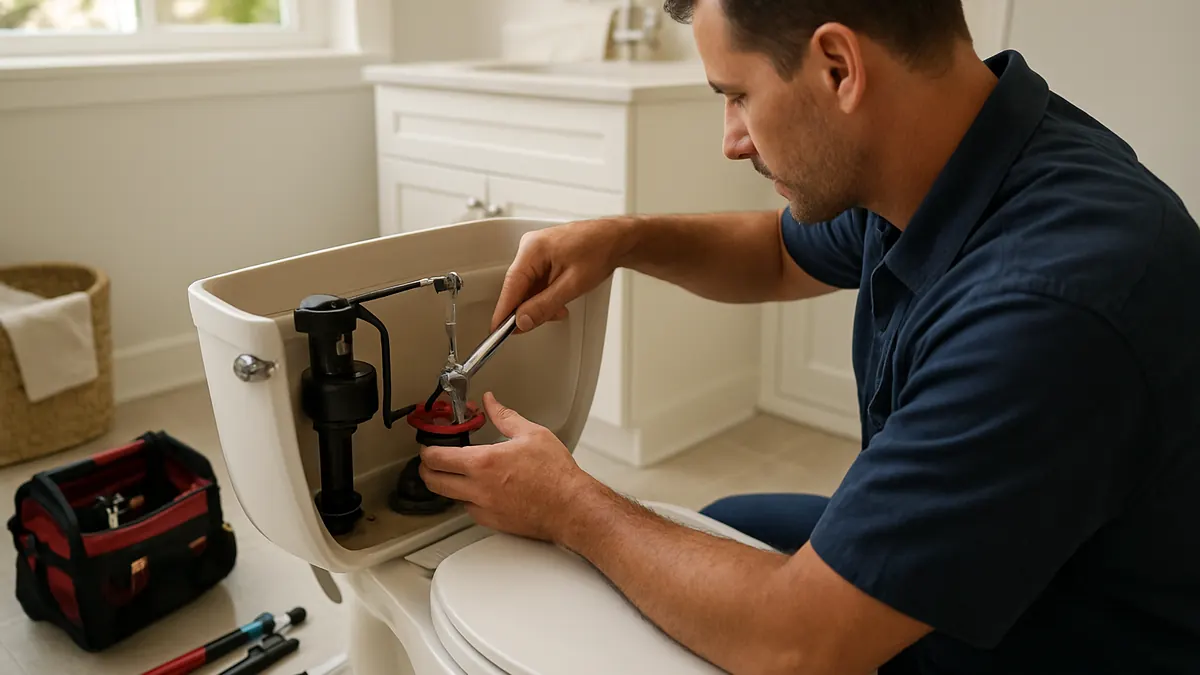
A toilet tank contains several parts that work together. The handle lifts a flapper or canister seal, allowing water to rush into the bowl. As the tank empties, the float drops and opens the fill valve. The tank then refills until the float rises and shuts the valve.
If the seal does not close completely, water leaks from the tank into the bowl. If the float is set too high or the fill valve cannot close, water continues moving into the overflow tube. Either problem can keep the toilet running.
The Most Common Causes
A flapper that no longer seals
A rubber flapper can warp, harden, crack, or collect residue. Even a small gap lets water leak into the bowl.
A worn canister gasket
A canister-style toilet uses a rubber base gasket that can deteriorate or shift, creating a slow leak.
Incorrect chain tension
The chain needs slight slack. Too tight holds the flapper open; too loose can tangle or become trapped beneath it.
A float set too high
A float set too high lets water spill into the overflow tube, causing continuous running.
A failing fill valve
Internal fill-valve wear can cause hissing, pulsing, slow filling, or failure to shut off.
A damaged overflow tube or flush-valve seat
A cracked overflow tube or damaged flapper seat can leak even after a new seal is installed.
Safe Checks a Homeowner Can Perform
Lift the tank lid with both hands and place it on a folded towel.
Flush once and watch the mechanism. Confirm that the handle returns, the chain moves freely, the seal closes completely, and the float rises without rubbing.
Look at the overflow tube. The final water level should stop below the top edge. If water is continually flowing into the tube, gently lift the float. If the water stops, the float may need adjustment. If the water continues, the fill valve may be failing.
A dye test can reveal a quiet leak. Add several drops of food coloring to the tank and wait 15 to 20 minutes without flushing. If colored water appears in the bowl, water is leaking past the flush seal.
Use a dry paper towel to check the supply line, shutoff valve, tank bolts, and floor. Any outside moisture requires prompt attention.
What You Should Not Attempt
- Do not force a shutoff valve that does not turn easily. A broken valve stem can create an active leak.
- Do not overtighten tank bolts or supply fittings. Porcelain can crack, and plastic threads can split.
- Do not pour chemical drain cleaner into the bowl to stop a running toilet. The problem is usually in the tank, not the drain.
- Avoid gluing the flapper, wedging the float, bending parts aggressively, or cutting the overflow tube. These shortcuts can interfere with proper operation and create new problems.
Signs the Problem Is Urgent
Turn off the water and arrange service promptly if water is leaking onto the floor, spraying from the supply line, flowing over the tank edge, or continuing uncontrollably.
Other warning signs include a shutoff valve that does not work, a toilet that rocks at the base, a bowl that rises toward the rim, repeated clogs, or sewage odors. Those symptoms may point to a second problem involving the drain, mounting flange, or base seal.
How a Licensed Plumber Diagnoses the Cause
A plumber begins by observing the entire flush and refill cycle. The technician checks the handle, trip lever, chain, flapper or canister gasket, flush-valve seat, float position, fill valve, refill tube, and overflow tube.
A dye test may confirm water loss. The plumber also tests the fill valve and inspects the shutoff valve, supply line, tank bolts, and porcelain.
If the toilet also moves, flushes weakly, or clogs repeatedly, the diagnosis may include the trapway, wax seal, flange, and drain opening.
Repair Options From Least Invasive to Most Extensive
The least invasive repair may be adjusting chain slack, freeing a sticking handle, repositioning the refill tube, or lowering the float.
If the flapper or canister gasket is worn, replacing that seal may restore normal operation. If the fill valve will not shut off consistently, it can usually be replaced without removing the toilet.
When several internal parts are worn, a tank rebuild may be more reliable than replacing one part at a time. This can include a new fill valve, flush seal, handle assembly, and related hardware.
If the flush-valve body is cracked or loose, the tank may need to be removed from the bowl. Complete toilet replacement becomes more reasonable when the porcelain is cracked, the fixture is unstable, compatible parts are unavailable, or repairs keep recurring.
Typical Factors That Affect Cost
Cost depends on the failed component, toilet design, parts availability, accessibility, and whether the tank must be removed.
A simple adjustment requires less labor and material than a fill-valve replacement, tank rebuild, or toilet installation. Corroded bolts, a failed shutoff valve, a deteriorated supply line, or a separate drain problem can add work.
Prevention and Maintenance Guidance
- Pay attention to how the toilet normally sounds. New hissing, longer refill times, repeated cycling, or a handle that sticks should be investigated early.
- Inspect the tank occasionally. Make sure the chain is free, the float moves without obstruction, the seal sits evenly, and the water stops below the overflow tube.
- Avoid harsh in-tank cleaning tablets unless the toilet manufacturer approves them. Some chemicals can damage rubber seals and shorten valve life.
- Keep the floor dry so new moisture is obvious. Replace supply lines showing cracking, bulging, corrosion, or dampness, and keep the shutoff valve accessible.
Take the Right Next Step
If you are asking, "Why does my toilet keep running in Panama City?" the cause is usually a leaking flush seal, faulty fill valve, incorrect float setting, chain problem, sticking handle, or damaged flush-valve component.
A homeowner can safely observe the tank and perform a dye test. However, floor leakage, uncontrolled filling, cracked porcelain, a failed shutoff valve, or repeated drainage symptoms should be evaluated promptly by a licensed plumber.
About this guide: This resource provides general homeowner education, not a remote diagnosis. Actual conditions, code requirements, equipment, and safe repair options must be evaluated at the property.