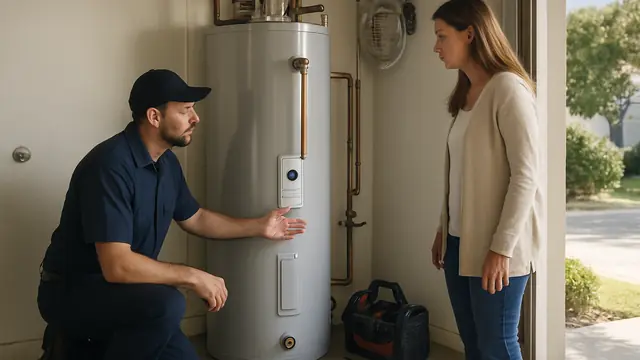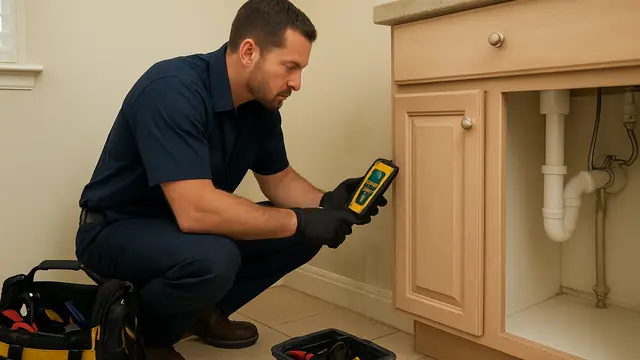
Stop and call for qualified help when plumbing water is near electrical equipment, sewage is entering occupied space, gas or burning odors are present, or a repair would require opening pressurized piping.
You flush the toilet, leave the bathroom, and still hear water moving inside the tank several minutes later. It may also become quiet and then refill without being used, or stop only after the handle is jiggled. In a Seagrove Beach home, these symptoms mean the flush-and-refill cycle is not ending correctly.
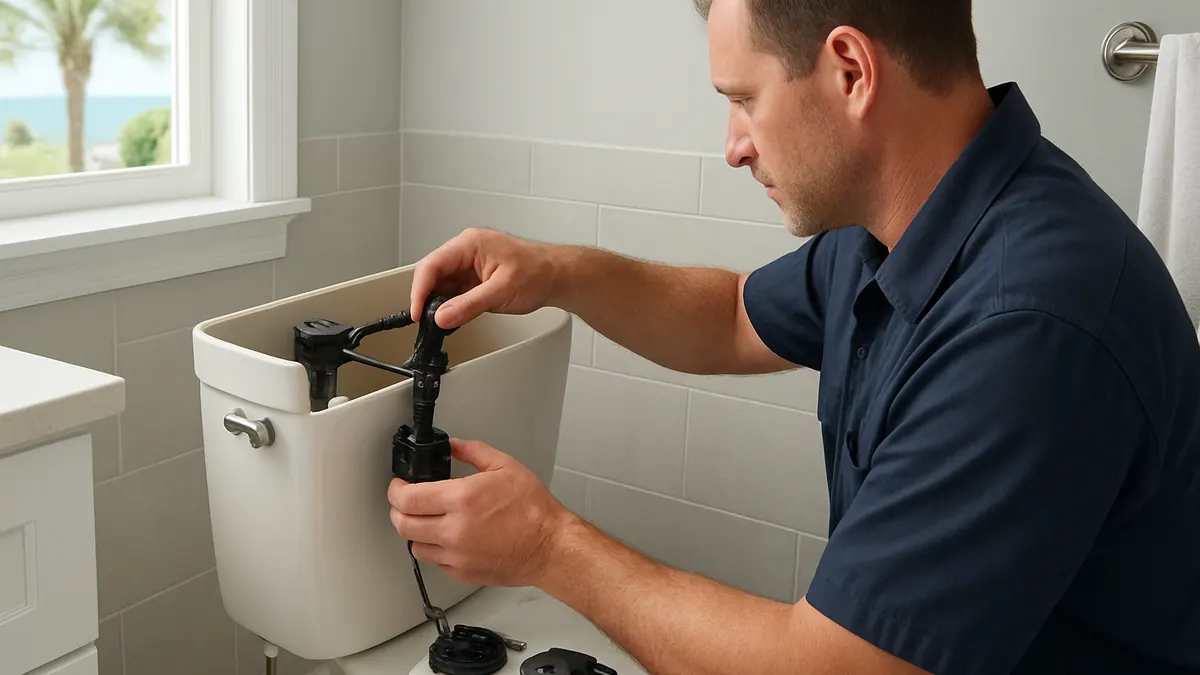
Start with a safe visual check. Lift the tank lid carefully, place it on a towel, and watch one complete flush. If the water keeps rising toward the top, gently turn the shutoff valve behind the toilet clockwise. Do not force a valve that is stuck, corroded, or leaking. Most running toilets involve a worn seal, incorrect adjustment, or failing fill component and can be repaired without replacing the fixture.
Why Does My Toilet Keep Running in Seagrove Beach?
A toilet should release water into the bowl, refill the tank to a set level, and stop. Running means water is either escaping from the tank or continuing to enter after the tank should be full.
A constant hiss often points to the fill valve, float, or water level. A toilet that runs again after becoming quiet usually has a slow tank-to-bowl leak.
Common Causes of a Running Toilet
The flapper is not sealing
Many toilets use a rubber or silicone flapper over the flush opening. It lifts when the handle is pressed and should settle flat afterward. Warping, dirt, or an incorrect replacement part can leave a gap that leaks into the bowl.
The chain or handle is interfering
A short chain can hold the flapper open, while a long one may become trapped beneath it. A sticking handle can also keep tension on the chain.
The fill valve is failing
The fill valve controls incoming water. Wear or debris can prevent it from shutting off, causing hissing, vibration, slow filling, or continuous flow.
The float is set incorrectly
The float tells the fill valve when the tank is full. If it is set too high, water may spill into the overflow tube. If it rubs the tank wall or another part, it may not move freely enough to close the valve.
A canister seal or flush-valve part is damaged
Some toilets use a canister or tower. Its base seal can harden, stretch, or shift. A cracked overflow tube or damaged flush-valve seat can also leak.
Safe Checks a Homeowner Can Perform
Remove the tank lid and watch one full cycle. The handle should return freely, the chain should move without catching, and the flapper or canister should close evenly.
Watch the float rise. It should move without rubbing another component. The water should stop near the manufacturer's fill line and below the top of the overflow tube.
For a dye test, add several drops of food coloring to the full tank and wait fifteen to twenty minutes without flushing. If colored water appears in the bowl, water is escaping past the tank seal.
Water entering the overflow tube suggests a fill-valve or float problem. A trickle into the bowl points more toward the tank seal.
Also inspect the shutoff valve, supply line, tank bolts, floor, and toilet base for moisture.
What the Homeowner Should Not Attempt
- Do not pour chemical drain cleaner into the toilet. A running toilet is usually a mechanical problem inside the tank, not a clogged drain.
- Do not force a stuck shutoff valve with pliers or a wrench. A weakened valve or connection can break and create a larger leak.
- Avoid overtightening tank bolts, plastic fittings, or supply connections. Porcelain can crack, plastic threads can strip, and rubber washers can deform.
- Do not install a merely similar part or improvise with weights and sharply bent float components. Some toilets require model-specific parts.
Signs That Make the Problem Urgent
Request prompt plumbing service if the water level is rising close to the tank rim, the fill valve is spraying, or the shutoff valve cannot stop the incoming water.
Water outside the toilet also requires immediate attention. The source may be the supply line, shutoff valve, tank bolts, tank-to-bowl gasket, cracked porcelain, or seal beneath the toilet.
Stop using the fixture if it rocks, has a visible crack, repeatedly overflows, or is associated with wastewater backing up through another drain.
Do not leave a known running toilet operating in an unoccupied property.
How a Licensed Plumber Diagnoses the Problem
A licensed plumber first determines whether the tank is overfilling, leaking into the bowl, or experiencing both problems.
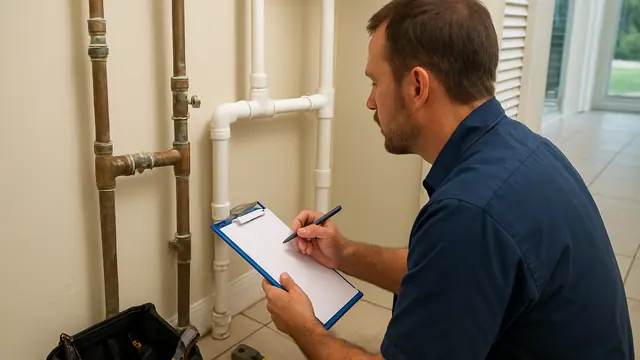
The technician observes the handle, chain, seal, refill, and shutoff sequence. The inspection includes the flapper or canister, fill valve, float, refill tube, overflow tube, flush valve, tank bolts, supply line, and shutoff valve.
A dye test may confirm a slow leak, and model identification helps ensure the replacement part fits.
Repair Options From Least Invasive to Most Extensive
- The simplest repair may be adjusting the handle, chain, float, or refill tube. Cleaning debris from the sealing surface may allow an otherwise usable seal to close correctly.
- If a component is worn, the plumber may replace only the flapper, canister seal, handle, fill valve, supply line, or shutoff valve.
- When several tank parts are worn, rebuilding the tank can replace the working components while retaining serviceable porcelain.
Complete toilet replacement is generally considered when the porcelain is cracked, the fixture is unstable, compatible parts are unavailable, or repeated repairs no longer make practical sense.
Typical Factors That Affect Repair Cost
Cost depends on the failed component, toilet design, part availability, and access. A simple chain adjustment differs from replacing a specialty canister or completing a tank rebuild.
A defective valve, leaking supply line, corroded bolts, difficult access, or toilet removal can increase labor. Property damage is separate.
Prevention and Maintenance Guidance
- Listen after every flush. The tank should refill once, stop, and remain quiet.
- Investigate new hissing, trickling, slow filling, or periodic refilling early. Do not rely on repeatedly jiggling the handle as a permanent solution.
- Avoid harsh in-tank cleaning tablets unless the toilet manufacturer approves them. Some products can shorten the life of rubber seals and plastic components.
- Check guest bathrooms and less-used toilets regularly. Flush each toilet, confirm that the tank stops filling, and inspect around the supply connection and base for moisture.
Stop the Running and Correct the Actual Cause
If you are asking, "Why does my toilet keep running in Seagrove Beach?" pay attention to whether the sound is constant or returns after the toilet has been quiet. That detail helps distinguish a fill-system problem from a leaking tank seal.
Safe observation may reveal clues, but persistent running, rising water, floor moisture, or a failed shutoff valve requires professional attention. A plumber can begin with the least invasive reasonable repair.
About this guide: This resource provides general homeowner education, not a remote diagnosis. Actual conditions, code requirements, equipment, and safe repair options must be evaluated at the property.