Stop and call for qualified help when plumbing water is near electrical equipment, sewage is entering occupied space, gas or burning odors are present, or a repair would require opening pressurized piping.
The first sign may be a practical nuisance rather than a dramatic plumbing failure. You wipe the bathroom faucet in your Seaside home, but a pale ring returns. Glassware dries with spots, shampoo does not rinse the way you expect, and the kitchen water has a taste that encourages everyone to reach for bottled water. Because these complaints can overlap, many homeowners are unsure whether to install a water softener, whole-house filtration, or both.
Before purchasing anything, compare the water at several fixtures. Check hot and cold water separately and note whether the issue is widespread or limited to one location. If the water suddenly develops an unusual color, oily appearance, or strong chemical, fuel, or sewage-like odor, avoid using it for drinking and cooking until the source is evaluated.
The correct treatment depends on the condition being treated. A softener reduces hardness minerals. Whole-house filtration addresses particular particles, tastes, odors, or other substances according to the filtration media.
Why the Difference Matters
Calcium and magnesium are dissolved minerals that create hard water. They can pass through a standard particle filter because they are not floating debris. When hard water evaporates or is heated, mineral scale may remain behind.
Most conventional softeners use ion exchange. Resin captures calcium and magnesium and substitutes sodium or potassium ions. Brine periodically restores the resin.
Whole-house filters work differently. Sediment cartridges capture particles, activated carbon may reduce chlorine-related taste and odor, and specialized media may address other tested conditions.
Installing the wrong type of equipment can add maintenance while leaving the original complaint unchanged.
Symptoms That Usually Point Toward Hardness
Hardness often creates a pattern of recurring cleanup. White deposits may form around faucet outlets, showerheads, and glass doors. Dishes can dry with spots, laundry may feel stiff, and soap may not lather efficiently.
Scale can accumulate inside water heaters, valves, and appliances. A softener can reduce new buildup but cannot reverse existing damage. Testing matters because cleaning products and detergent can also leave marks.
Symptoms That May Call for Filtration
Filtration becomes more likely when the complaint involves visible sediment, unpleasant taste, odor, or discoloration. The treatment media must be selected for the verified cause.
A sediment filter may catch grit or suspended particles. Activated carbon may improve a confirmed chlorine-like taste or odor. Other problems may require different media, a laboratory test, or a plumbing repair instead of filtration.
A single affected faucet does not automatically justify a whole-house system. The aerator, flexible supply line, fixture, drain, or nearby pipe may be responsible. Hot-water-only symptoms may come from the water heater.
Safe Checks Before Calling a Plumber
Fill one clear container from a cold tap and another from a hot tap. Allow both samples to sit. Compare color, odor, cloudiness, and visible material without tasting questionable water.
Repeat the check in another bathroom or at another sink. If the condition appears everywhere, the supply, main plumbing, water heater, or existing treatment equipment may be involved.
Remove faucet aerators and inspect any trapped material. Chalky crust supports a hardness concern. Grit, rubber fragments, or metallic flakes may point toward another source.
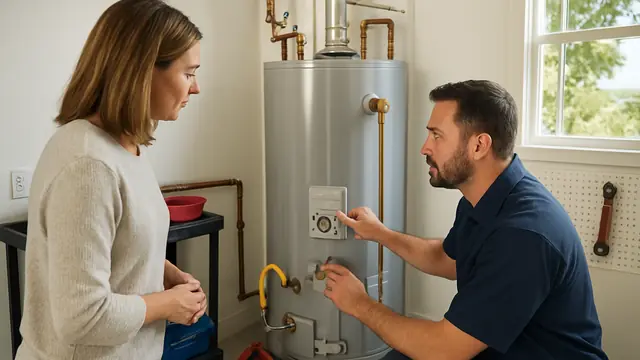
If treatment equipment is already installed, check the service dates, control display, power, salt level, bypass position, and surrounding area for leakage. Do not dismantle the unit.
What You Should Not Attempt
Do not select equipment only because a product is described as "whole-house" or "all-in-one." Those terms do not prove that it treats the condition present in your water.
Do not increase a softener's salt dosage in an effort to correct odor, sediment, or discoloration. Do not expect activated carbon to remove dissolved hardness unless the system includes a separate hardness-treatment stage.
Avoid installing an extremely fine cartridge without considering peak flow. A restrictive filter can reduce pressure when showers, appliances, and faucets operate together.
Never open a pressurized housing before shutting off the water and relieving pressure. Do not alter brine lines, drains, controls, or chemical-feed equipment without proper training.
When Water Symptoms Become Urgent
Gradual scale and spotting are usually planned-maintenance concerns. A sudden whole-house change should be treated differently.
Arrange prompt evaluation if water turns brown, red, black, or oily-looking; develops a persistent chemical, fuel, rotten-egg, or sewage-like odor; contains unexplained material; or appears to cause irritation.
A rapid pressure loss may indicate a clogged filter, failed valve, supply restriction, or plumbing problem. A cracked housing, leaking treatment tank, or softener that continuously sends water to the drain can cause damage and waste.
For significant leakage, close the main shutoff if you can operate it safely and arrange professional service.
How a Licensed Plumber Diagnoses the Problem
The plumber determines where the symptom begins by asking which fixtures are affected, whether the problem involves hot or cold water, and when it started. The inspection may include pressure, flow, the water heater, piping, aerators, filter housings, valves, bypasses, and drains.
Testing may measure hardness, chlorine, pH, iron, total dissolved solids, or another factor related to the complaint. Possible health-related contaminants or conditions that field kits cannot identify may require certified laboratory analysis.
The plumber also calculates the home's likely peak demand so treatment equipment can operate without creating unacceptable pressure loss.
Treatment Options Beginning With the Simplest
The least invasive correction may be cleaning aerators, replacing an expired cartridge, moving an accidental bypass setting, adjusting programming, repairing a control valve, or servicing the water heater.
If only kitchen drinking water is affected, a point-of-use filter may be sufficient. If testing confirms suspended particles throughout the property, a properly sized sediment filter may be appropriate.
Activated carbon may be considered for a verified taste or odor complaint. A water softener may be recommended when hardness is confirmed and recurring scale is the primary concern.
Some homes need staged treatment, such as sediment filtration followed by carbon and softening. The correct order depends on the water analysis and equipment requirements.
Repiping is a later option and should be considered only when the plumbing itself is producing debris, discoloration, contamination, or recurring restrictions.
Factors That Influence Cost
Cost is affected by testing, system capacity, treatment media, peak flow, installation access, available drainage, electrical requirements, and changes needed at the main water line.
Operating costs may include salt, cartridges, media, regeneration water, and service. A cheaper unit may cost more if it clogs, reduces pressure, or treats the wrong condition.
Prevention and Maintenance Guidance
Record water-test results, cartridge changes, salt additions, repairs, and control settings. Write the installation date on each replacement filter.
Inspect around the equipment for dampness, cracked housings, loose tubing, or unusual sounds. Watch for excessive regeneration and check the brine tank for a hardened salt bridge.
Replace cartridges before flow becomes severely restricted. Retest when symptoms change, the water source changes, or plumbing work is completed. For a home that is sometimes vacant, arrange periodic checks for leakage and overdue service.
Choosing Water Softener Versus Whole-House Filtration in Seaside
Choose a water softener when testing confirms hardness and your main goal is reducing scale. Choose whole-house filtration when a specific condition such as sediment, taste, or odor has been identified. When several symptoms occur at once, professional testing can show whether the answer is one system, staged treatment, or a focused plumbing repair.
About this guide: This resource provides general homeowner education, not a remote diagnosis. Actual conditions, code requirements, equipment, and safe repair options must be evaluated at the property.