Stop and call for qualified help when plumbing water is near electrical equipment, sewage is entering occupied space, gas or burning odors are present, or a repair would require opening pressurized piping.
Multiple plumbing fixtures backing up in a Shalimar home usually means that a shared drainage pipe cannot carry wastewater away properly. Toilets may bubble, showers may fill with dirty water, sinks may drain slowly, or a washing machine may force water into a nearby tub.
A single stopped sink is often a local clog. When several drains are involved, the problem may be in a larger branch, the main sewer line, or a septic connection.
The situation should be addressed promptly. Sewage can expose occupants to harmful organisms and damage flooring, drywall, cabinets, furniture, and electrical equipment.
Shalimar's mix of established homes, coastal properties, and renovated buildings means drainage systems can vary considerably. The proper repair depends on the pipe material, layout, cause of the blockage, and overall structural condition.
The Most Common Possible Causes
- A main sewer obstruction may develop from waste, toilet paper, wipes, grease, and accumulated debris.
- Wipes and hygiene products are common causes because they do not break down like toilet paper.
- Grease can coat the interior of kitchen and sewer piping. Food particles and paper then become trapped.
- Roots may enter through damaged pipe joints or cracks. Once inside, the roots can grow throughout the line.
- Older cast-iron piping may develop internal corrosion and scale. The roughened surface restricts flow and catches debris.
- Pipe joints can separate or shift. A cracked, offset, or partially collapsed section may repeatedly catch paper.
- A low section of pipe can retain wastewater. This condition, called a belly, often causes recurring backups that return after basic cleaning.
- Renovation debris, grout, sand, and construction materials can also obstruct a line.
- High water usage may overwhelm a partially blocked sewer. A property may appear normal until several bathrooms, laundry equipment, and kitchen fixtures operate close together.
- Septic properties may back up because of a full tank, clogged filter, failed pump, blocked line, or drain-field problem.
Safe Checks the Homeowner Can Perform
- Stop using all water. This includes toilets, sinks, showers, laundry, and dishwashing.
- Identify the affected fixtures. Note whether the problem is limited to one bathroom or occurs throughout the home.
- Check the lowest drain openings without adding water. A shower or floor drain often reveals a main-line backup first.
- Listen for toilet bubbling or gurgling when another fixture has recently drained.
- Observe whether the problem follows laundry use. Washing machines discharge a large volume quickly.
- Look outside for sewage around a cleanout or septic area. Keep away from visible wastewater.
- Notify a property manager or association when the property has shared piping or neighboring units.
- Protect occupants from contaminated water. Keep pets and children away and avoid touching sewage.
What the Homeowner Should Not Attempt
- Do not keep flushing toilets.
- Do not pour chemical cleaners into several fixtures. Chemicals can remain trapped in the sewer and create a hazard.
- Never mix drain chemicals or combine them with bleach.
- Do not operate a professional sewer cable or jetter without training.
- Avoid removing a cleanout cap when wastewater may be under pressure.
- Do not climb onto a roof to inspect vents. Roof access is dangerous and vent blockages are less common than sewer restrictions when multiple fixtures overflow.
- Do not begin digging without knowing the sewer location and checking for utilities.
- Never enter a septic tank or enclosed sewer space.
Signs That Make the Problem Urgent
Seek prompt assistance when:
- Sewage enters a tub, shower, or floor drain
- Several toilets cannot be used
- Wastewater reaches electrical equipment
- Contaminated water spreads into finished rooms
- Strong sewer odors affect the building
- Sewage appears outdoors
- The backup involves multiple units
- The problem returns after recent drain cleaning
- A septic alarm is active
- Vulnerable occupants are present
- A rental or occupied business cannot safely operate
Stop water use immediately.
How a Licensed Plumber Diagnoses It
- The plumber reviews which fixtures are affected and what activity causes the backup.
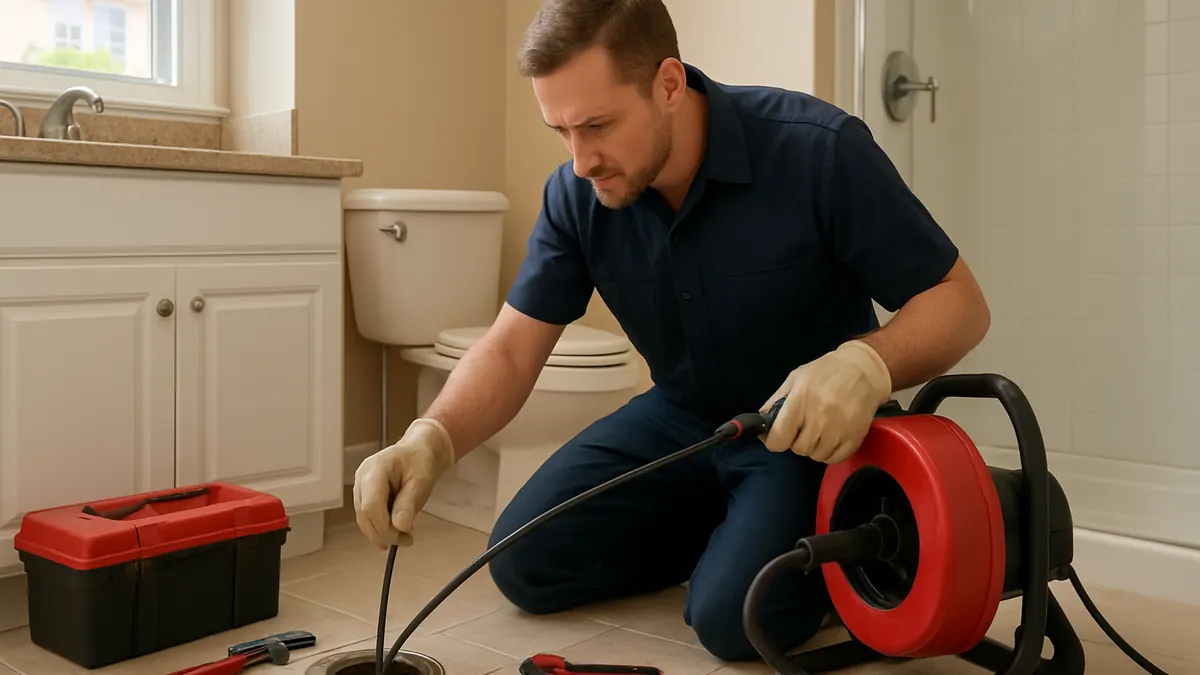
- A cleanout provides direct access when available. The plumber can determine whether the line is holding water and introduce professional cleaning equipment.
- Cable resistance and recovered material may identify roots, grease, wipes, or heavy scale.
- A camera inspection is often performed after flow is restored. The camera can reveal cracks, offsets, corrosion, bellies, foreign objects, and collapsed sections.
- Electronic locating identifies the problem area from the surface.
- The plumber may inspect multiple branches if the drainage layout is complex.
- For septic properties, the tank, filter, piping, pump components, and drain field may be evaluated.
Repair Options
- A mechanical sewer cleaning may be the most economical solution for a one-time blockage.
- Root cutting may reopen a root-intruded line. Pipe repair may still be necessary if roots repeatedly return.
- Hydro jetting can remove grease and sludge from suitable piping.
- Descaling can improve some cast-iron pipes with internal buildup.
- Spot excavation may repair one failed section instead of replacing the entire line.
- Trenchless lining can rehabilitate certain pipes without full excavation.
- Pipe bursting may replace an underground line through limited access openings.
- Traditional trenching may be necessary for collapse or severe misalignment.
- Septic repairs may include pumping, filter cleaning, line clearing, pump repair, or baffle replacement.
Typical Factors Affecting Cost
Cost varies with:
- Obstruction location
- Cleanout access
- Pipe length and depth
- Blockage material
- Root intrusion
- Pipe age and material
- Camera inspection
- Hydro jetting
- Structural repair method
- Landscaping or pavement
- Permits
- Emergency response
- Septic involvement
- Sewage cleanup
A plumber should explain whether the quoted work restores flow temporarily, cleans the pipe more completely, or corrects a structural defect.
Prevention and Maintenance Guidance
- Keep fats, oils, and grease out of drains.
- Flush only human waste and toilet paper.
- Use drain strainers and empty them into the trash.
- Do not wash sand, mortar, grout, paint, or renovation residue into plumbing fixtures.
- Keep exterior cleanouts accessible.
- Investigate recurring backups with a camera instead of repeatedly treating only the symptom.
- Monitor older cast-iron systems for scale and corrosion.
- Manage landscaping near known sewer routes and address root intrusion based on camera findings.
- Maintain septic tanks, filters, pumps, and drain fields according to system needs.
- Teach household members and guests what should not enter the drainage system.
Multiple drains backing up indicate that a shared drainage path is restricted or damaged. Prompt professional diagnosis can protect the property and provide repair choices before the problem becomes more disruptive.
About this guide: This resource provides general homeowner education, not a remote diagnosis. Actual conditions, code requirements, equipment, and safe repair options must be evaluated at the property.