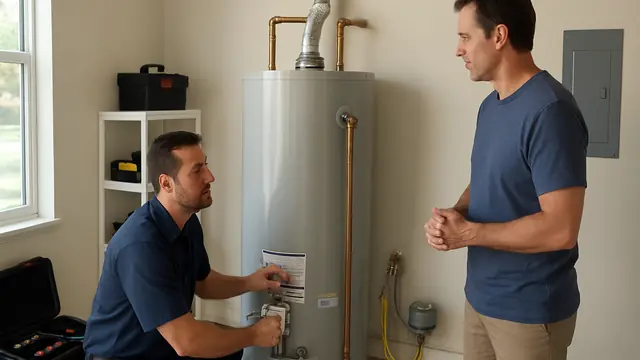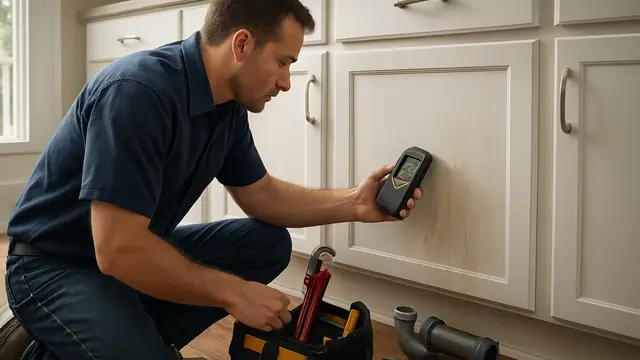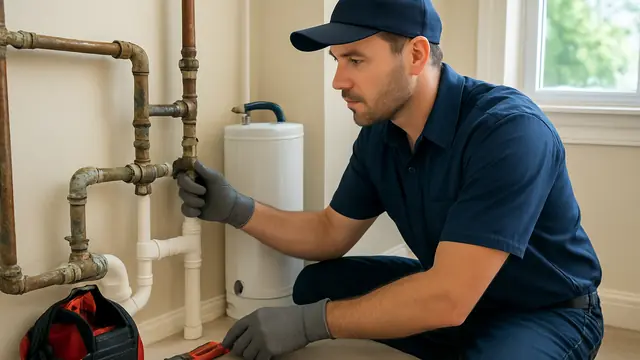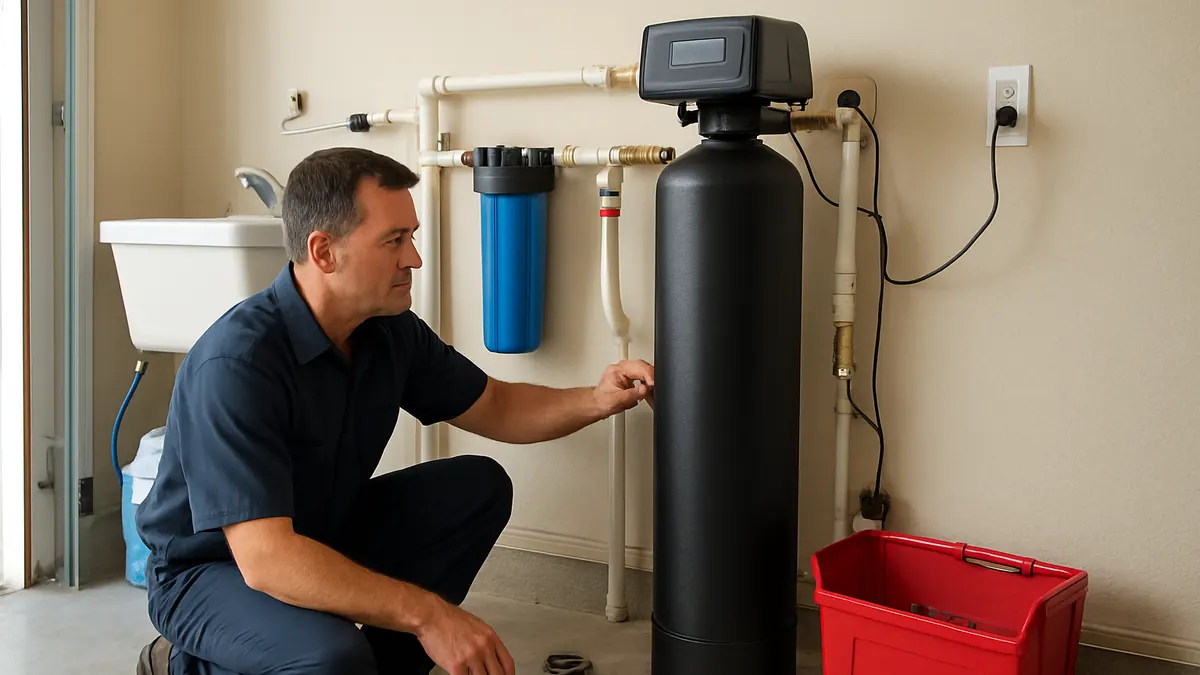
Stop and call for qualified help when plumbing water is near electrical equipment, sewage is entering occupied space, gas or burning odors are present, or a repair would require opening pressurized piping.
You replace a showerhead because the spray has weakened, only to find mineral buildup inside it. Then you notice that an existing filter cartridge looks dirty and the water still has an unwanted taste. These symptoms can overlap without sharing one cause. Comparing a water softener versus whole house filtration in Shalimar, FL requires separating dissolved minerals from particles, tastes, odors, and plumbing restrictions.
The safe first step is to leave unfamiliar valves and controls alone. Compare several fixtures, note whether the issue affects hot or cold water, and have the water and equipment evaluated. The correct solution may be maintenance, a local repair, a softener, filtration, or a combination.
Why One Water-Treatment System Does Not Solve Every Problem
A water softener mainly reduces dissolved hardness minerals such as calcium and magnesium, which pass through many ordinary filters. Softening can reduce scale, improve soap performance, and limit mineral accumulation in fixtures and equipment.
A whole-house filter uses selected media. Sediment filtration captures particles. Carbon media may reduce certain tastes and odors. Other media may be selected when testing confirms a different condition.
A particle filter does not necessarily soften water. A softener does not automatically remove every substance a homeowner may be concerned about. Equipment should be selected by function.
Common Possible Causes of the Symptoms
Hardness Scale Restricting Fixtures
Mineral deposits can collect in faucet aerators, showerheads, valves, and equipment that heats water. Over time, buildup can reduce flow or make fixtures difficult to clean.
A Clogged or Undersized Filter
A whole-house cartridge traps material until it becomes restricted. If the housing or cartridge is too small for household demand, pressure may fall when several fixtures operate.
Incorrect Softener Settings
A softener may be programmed for the wrong hardness level, demand, or regeneration schedule. It may use excessive salt and water while still allowing hardness through.
Exhausted or Incorrect Filter Media
Filter media has a limited service life and defined purpose. An exhausted carbon filter may stop improving taste or odor, while a sediment cartridge cannot correct dissolved hardness.
A Water-Heater or Fixture Problem
Sediment or scale from a water heater may affect hot water more than cold. A problem at one faucet may originate in the aerator, supply tube, faucet body, or nearby drain.
Safe Checks the Homeowner Can Perform
- Compare cold water from several fixtures. Look for particles, color differences, or odor. Repeat the comparison with hot water after allowing it to run safely.
- Inspect showerheads, faucet outlets, glassware, kettles, and coffee makers. Note whether deposits return quickly after cleaning.
- Inspect faucet aerators for debris by following the fixture instructions and avoiding corroded threads.
Check existing treatment equipment visually. Record the control display, salt level, cartridge date, pressure gauges if present, bypass position, leaks, and unusual drain activity. Do not change programming simply to experiment.
Observe whether pressure weakens when several fixtures run. That pattern helps evaluate flow capacity and restriction.
What You Should Not Attempt
Do not identify water conditions only by the color of a used filter cartridge. It shows that material was captured, but not necessarily what it is or whether another problem remains.
- Do not pour bleach, acids, cleaners, or descaling chemicals into treatment equipment without an approved procedure and confirmed need.
- Do not increase water pressure to overcome a restricted filter. Higher pressure can stress plumbing and will not correct the blockage.
- Do not leave an empty filter housing in service unless it is designed for that operation. Do not bypass treatment during a suspected contamination concern without guidance.
- Do not connect a softener drain without an air gap, and do not guess at hardness settings or regeneration frequency.
Signs That Make the Water Problem Urgent
- Routine scale usually allows time for testing, but a sudden whole-house change in color, odor, taste, or clarity deserves prompt evaluation.
- Follow any official advisory affecting the water supply. A household softener or filter should not be assumed to provide protection from a condition it was not designed to treat.
- Call promptly if a filter housing cracks, a treatment tank leaks, a control valve will not stop running to the drain, or pressure falls sharply throughout the home.
Water around electrical controls, receptacles, appliances, or wiring creates an additional hazard. Avoid touching wet equipment and shut down the water only when the correct valve is safe to operate.
How a Licensed Plumber Diagnoses the Cause
A licensed plumber maps whether symptoms affect every fixture, only hot water, or began after equipment or plumbing changes.
The inspection includes pressure and flow testing, fixture aerators, visible scale, the water heater, existing filters, softener controls, bypass valves, drainage, and nearby plumbing.
Water testing confirms whether hardness is present and at what level. Additional testing may be appropriate for sediment, iron, pH, taste, odor, or another concern.
The plumber also evaluates service flow. The system must handle peak demand without excessive pressure loss. Capacity, plumbing size, space, and drain access affect the design.
Repair and Treatment Options Starting With the Least Invasive
Clean or Repair the Affected Fixture
When one showerhead or faucet is restricted, cleaning or replacing the local component may restore flow. This may correct the immediate symptom without whole-house work.
Service Existing Equipment
The next step may be replacing a cartridge, correcting a bypass position, removing a salt bridge, restoring programming, or repairing a control valve.
Add Point-of-Use Filtration
When only drinking and cooking water require treatment, a point-of-use filter may be more practical than whole-house filtration.
Upgrade Whole-House Filtration
If testing confirms a whole-house filtration need, the system should be sized for the required flow and use media suited to the concern.
Install a Water Softener
When measured hardness is causing scale and cleaning problems, a properly sized softener may reduce those minerals. Settings should match actual hardness and demand.
Install a Coordinated Combination System
When hardness and a separate filtration concern are both confirmed, equipment may be installed in stages. The order should protect downstream components while preserving pressure.
Typical Factors Affecting Cost
Cost depends on testing, equipment capacity, flow rating, media, controls, installation space, plumbing modifications, drain access, electrical requirements, and existing equipment.
Long-term cost includes salt, cartridges, media replacement, regeneration water, and service. Repairing a functioning system may cost less than replacement; an undersized system may continue causing problems.
Prevention and Maintenance Guidance
- Keep test results, model numbers, settings, and service records. Mark cartridge replacement dates and label bypass valves.
- Check the softener salt level and look for bridging. Replace filters before severe pressure restriction develops.
- Inspect housings, connections, control valves, and drain tubing for leaks. Retest when symptoms change or treatment performance declines.
Solve the Cause Instead of Adding Another Tank
The choice between a water softener versus whole house filtration in Shalimar, FL should not be based only on scale, cartridge color, or a sales presentation. Hardness, sediment, taste, odor, equipment restriction, and local fixture problems require different responses.
A licensed plumber can test the water, measure flow and pressure, inspect existing equipment, and begin with the least invasive reasonable correction. The plan may involve servicing existing equipment, adding filtration, installing a softener, or combining systems for separate confirmed concerns.
About this guide: This resource provides general homeowner education, not a remote diagnosis. Actual conditions, code requirements, equipment, and safe repair options must be evaluated at the property.