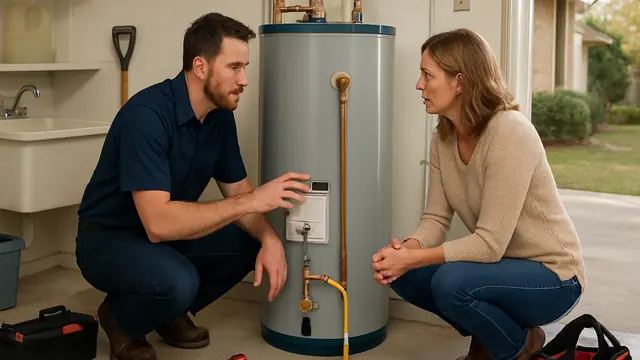
Stop and call for qualified help when plumbing water is near electrical equipment, sewage is entering occupied space, gas or burning odors are present, or a repair would require opening pressurized piping.
You may discover the leak because the heater is hissing, the nearby floor feels damp, or a puddle returns after cleanup. If you are wondering, "Why is my water heater leaking in Springfield?" do not assume automatic replacement. A fitting, valve, gasket, or pressure problem may be repairable, while water through the tank usually requires replacement.
Move belongings away and keep people clear. If water is escaping steadily and the cold-water valve is safely accessible, close it. Turn off an electric unit at the breaker only when the floor and panel are dry. Do not touch wet wiring. Avoid adjusting gas components; if you smell gas, leave and contact the gas utility or emergency services.
Begin With the Leak's Timing and Location
A heater may leak constantly, while heating, or after hot-water use. Constant leakage can point to a pressurized connection or damaged tank. Intermittent leakage may involve pressure, condensation, or a gasket.
Dry the outside of the heater and look for the highest wet point. Water from a top connection can run down the jacket and make the base appear to be leaking.
Why Is My Water Heater Leaking in Springfield?
The Cold-Water Inlet or Hot-Water Outlet Is Leaking
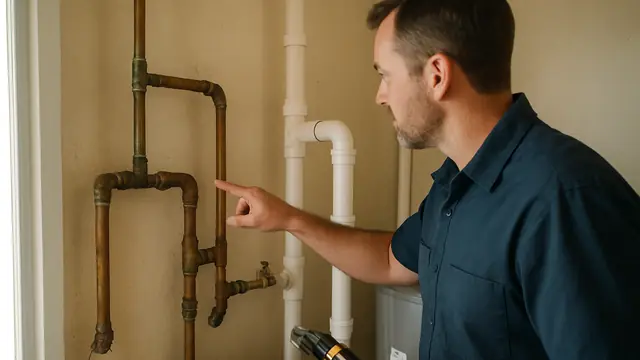
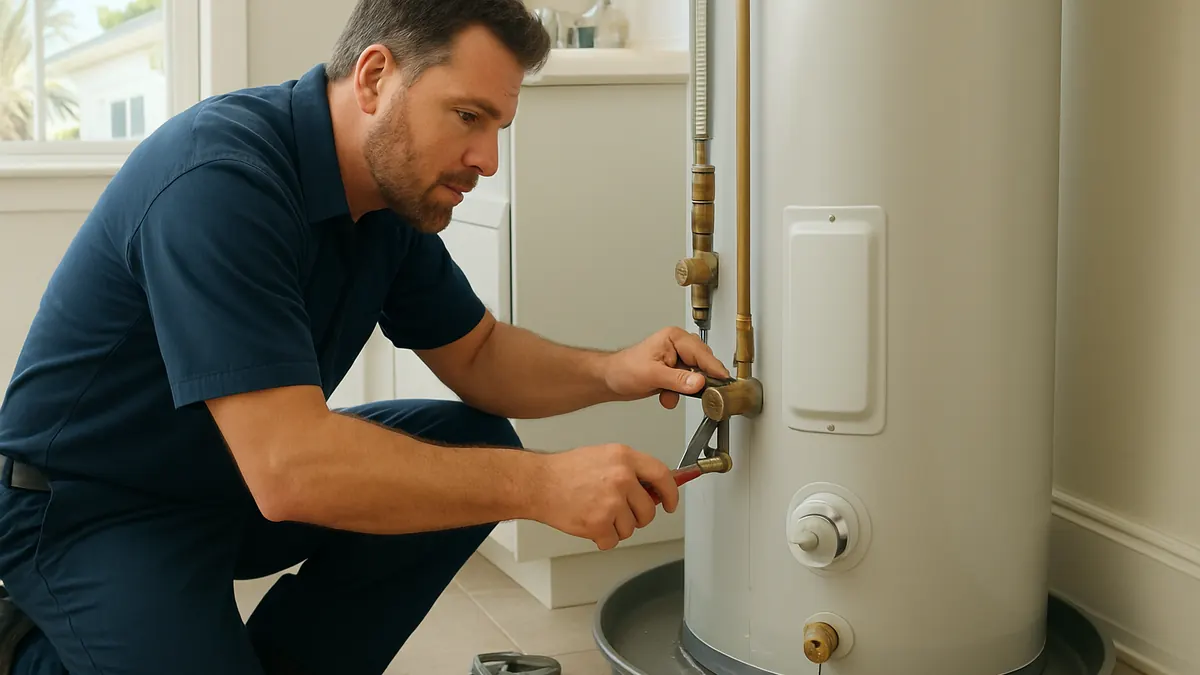
Top connectors, unions, fittings, and shutoff valves can leak as seals wear or corrosion develops. A plumber may replace the affected part without replacing the heater if the tank connection remains sound.
The Temperature-and-Pressure Relief Valve Is Dripping
The temperature-and-pressure relief valve, or T&P valve, opens when the tank reaches unsafe pressure or temperature. Its discharge pipe may drip because the valve is worn, but the valve may also be responding to high household water pressure, overheating, or thermal expansion.
Thermal expansion occurs when heated water increases in volume and raises system pressure. Never cap, plug, or restrict the T&P valve or discharge pipe.
The Drain Valve Is Not Sealing
The drain valve may leak after service, because debris is trapped in the seal, or because it has deteriorated.
An Electric Element Gasket Is Leaking
Electric heating elements use gaskets at the tank wall. A failed gasket can leak behind an access panel and send water downward.
Condensation Is Forming
Temporary condensation may form during a long recovery cycle. Repeated puddles, steady dripping, or moisture continuing afterward should be investigated.
The Steel Tank Has Corroded
A tank-style heater has a steel vessel protected by a lining and an anode rod, but both protections eventually deteriorate.
If water is coming through the tank shell, beneath the insulation, or from the bottom seam, the inner tank may have failed. A leaking pressure vessel cannot be made dependable with tape, caulk, epoxy, or an exterior patch.
Safe Checks You Can Perform
- After drying the area, place paper towels beneath the top connections, drain valve, and T&P discharge pipe. The first wet towel may identify the source.
- Check nearby pipes and appliance drainage for another source because water can travel toward the heater.
- Note whether the leak follows hot-water use, whether the water is warm, and whether performance or sounds have changed.
- Keep the inspection visual. Do not remove access panels, burner covers, insulation, thermostats, or wiring.
What the Homeowner Should Not Attempt
- Do not tighten a corroded fitting while the heater is energized, hot, or pressurized. Excessive force can worsen the leak.
- Do not repeatedly reset a tripped breaker; an element may have failed or water may be contacting electrical parts.
- Do not plug the T&P valve or drain a hot tank without understanding the shutdown procedure; hot water can cause burns.
- Gas piping, burners, controls, and venting should be serviced by qualified professionals.
Signs That Make the Problem Urgent
Call promptly when water flows continuously, reaches electrical equipment, or damages walls, cabinets, or flooring.
A bulging or distorted tank, steam, scalding water, or forceful T&P discharge may indicate unsafe conditions.
A gas odor, soot, scorch marks, or damaged venting requires immediate action. Leave the building if gas is suspected. Keep an electric heater off if water has reached its wiring or controls.
How a Licensed Plumber Diagnoses the Leak
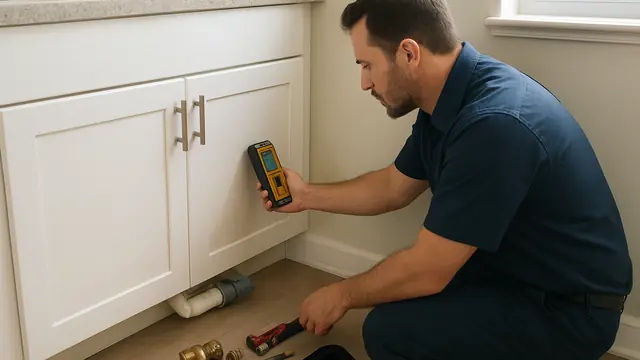
- A plumber verifies the source by drying the unit and observing it under pressure and through a heating cycle.
- The technician inspects connections, valves, the tank jacket, and nearby piping. Household pressure may be measured.
- When the T&P valve is involved, the plumber checks temperature, thermostat operation, incoming pressure, and heating-cycle pressure changes.
- Electric heaters may need element, thermostat, wiring, and gasket tests. Gas units may need burner, control, combustion, and venting inspection.
Repair Options Beginning With the Least Invasive
- A leaking connector, fitting, union, or shutoff valve may be replaced while preserving the existing heater. A drain valve may also be replaceable if the threaded opening is sound.
- An element gasket may be replaced after safe isolation. A defective T&P valve can be replaced after high pressure or overheating is ruled out.
- Pressure-related leakage may require repair or installation of pressure-regulating or thermal-expansion control equipment.
- Replacement is necessary when the inner tank leaks and may be more reliable when corrosion or multiple failures are extensive.
- Homeowners can compare tank and tankless equipment based on demand, utility capacity, space, and maintenance expectations.
Typical Factors That Affect Cost
Repair cost depends on the source, part, access, and diagnostic work. A connector leak differs from an intermittent pressure problem.
Replacement cost reflects capacity, fuel type, efficiency, venting, utility changes, piping, drain-pan needs, permits, disposal, safety corrections, and access.
Prevention and Maintenance Guidance
- Inspect regularly for rust, dampness, mineral buildup, or staining, and keep stored items away from the tank.
- Follow manufacturer maintenance guidance, which may include flushing, anode-rod evaluation, thermostat checks, burner cleaning, venting inspection, or electrical testing.
- Have pressure and expansion control checked after T&P discharge. A water alarm can provide early notice.
Identify the Cause Before Making the Decision
The answer to "Why is my water heater leaking in Springfield?" may be a serviceable connection, valve, gasket, or pressure condition, or a corroded tank requiring replacement. The source should determine the next step.
Limit incoming water when safe, keep the energy source off around hazards, and have the leak diagnosed before damage grows.
About this guide: This resource provides general homeowner education, not a remote diagnosis. Actual conditions, code requirements, equipment, and safe repair options must be evaluated at the property.