Stop and call for qualified help when plumbing water is near electrical equipment, sewage is entering occupied space, gas or burning odors are present, or a repair would require opening pressurized piping.
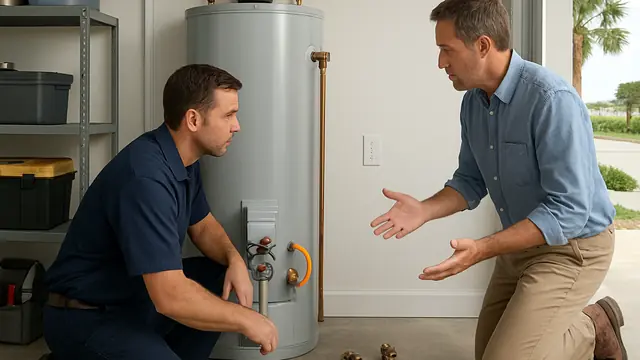
You walk into the garage, utility room, or water-heater closet and notice a damp floor, a rusty streak down the tank, or a puddle near the base. The first question is usually, "Why is my water heater leaking in Bid-A-Wee, and do I need to replace it?" The answer depends on where the water originates. Some leaks come from a loose connection or worn valve that can be repaired. Others point to corrosion inside the tank and require replacement.
Your safest immediate step is to keep people and stored belongings away from the wet area. If water is actively spreading, shut off the cold-water supply valve above the heater if you can reach it safely. For an electric unit, turn off the correct breaker only when the panel and surrounding floor are dry. For a gas unit, do not adjust gas components unless you understand the manufacturer's shutdown procedure. If you smell gas, leave the area and contact the gas utility or emergency services.
Why Is My Water Heater Leaking in Bid-A-Wee?
A water heater can leak from the top, side, bottom, nearby piping, or a component that releases water only under certain conditions. Finding the general source helps determine whether the problem is minor, urgent, or likely to require a new tank.
Loose Water-Supply Connections
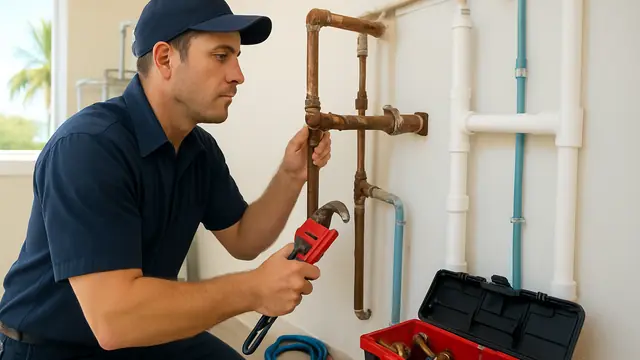
The hot- and cold-water pipes connect at the top of most tank-style heaters. Fittings, flexible connectors, and shutoff valves can drip because of age, corrosion, vibration, or movement. Water may run down the outside and collect at the bottom, making the tank look like the source. A plumber may be able to replace the affected connector, valve, or fitting without replacing the heater.
A Faulty Temperature-and-Pressure Relief Valve
The temperature-and-pressure relief valve, commonly called the T&P valve, opens if pressure or temperature inside the tank becomes unsafe. Water from its discharge pipe may mean the valve is worn, but it can also indicate excessive pressure, overheating, or a problem with thermal expansion.
A dripping T&P valve should never be plugged, capped, or tied shut. It is a safety device, and the discharge is a warning that the heater or plumbing system needs evaluation.
A Leaking Drain Valve
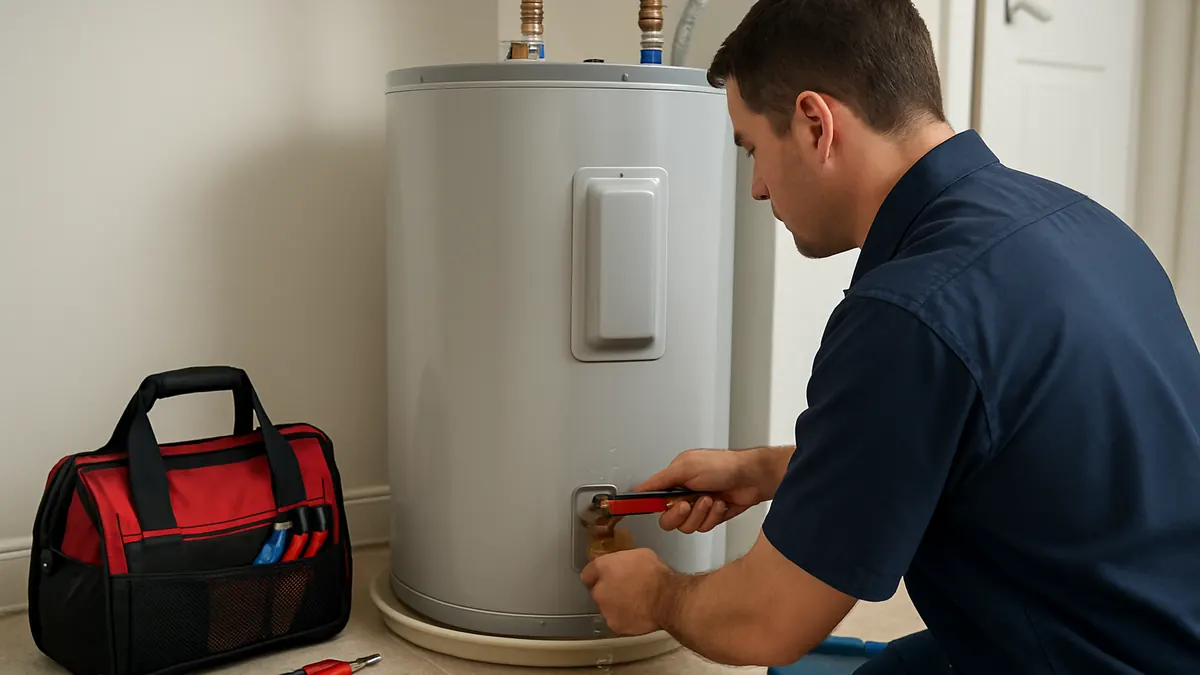
The drain valve near the bottom is used for flushing and service. It may leak if it was not fully closed, debris is preventing a seal, or the valve has deteriorated. Depending on the tank's condition, a plumber may repair or replace the valve.
Condensation That Resembles a Leak
Condensation can form when cold water enters the tank and the surrounding air is warm. Gas heaters may also produce temporary condensation during a heavy recovery cycle. It should be limited and stop as the unit warms.
Corrosion Inside the Tank
Tank-style heaters have protective lining and an anode rod, but the steel tank can eventually corrode. Once the inner tank develops a hole, patching the exterior does not restore its strength. Water around the bottom seam, rusty streaks, or recurring leakage with no visible valve problem often indicates internal tank failure.
Safe Checks a Homeowner Can Perform
Dry the visible water and place a paper towel near the suspected source. Check again after several minutes. This may reveal whether water is dripping from a top connector, the T&P discharge pipe, the drain valve, or the base.
Look above the heater. A leaking pipe, air-conditioning drain, or nearby appliance can send water toward the tank. Confirming the heater is truly the source can prevent an unnecessary replacement.
Note when the leak appears. Does it happen after several showers, while the heater is heating, or continuously? Is the water warm? Is the leak steady or intermittent? These details help the plumber narrow the cause. Do not remove access panels, burner covers, or electrical components.
What You Should Not Attempt
Do not plug the T&P discharge pipe or install a valve on it. Do not apply epoxy, tape, or sealant to a tank that is leaking through the metal. These measures can hide the problem while pressure and corrosion continue.
Avoid repeatedly resetting a tripped breaker. A breaker may trip because of a wet component, failed heating element, or wiring problem. Do not work on gas piping, burners, thermostats, or internal wiring unless qualified.
Signs the Leak Is Urgent
Call for prompt service if water is spreading, flowing continuously, reaching electrical equipment, damaging drywall, or entering a finished area. Shut off the water supply when safe.
Other urgent signs include a bulging tank, scalding water, a T&P valve releasing a strong stream, a gas odor, soot near a gas burner, or a breaker that will not remain on.
How a Licensed Plumber Diagnoses the Leak
The plumber first confirms the source instead of assuming the tank has failed. The inspection may include drying the unit, checking fittings, examining the drain valve, and observing the T&P discharge line.
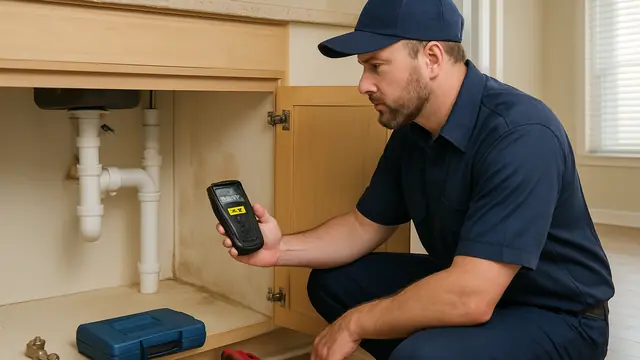
The technician may measure water pressure and determine whether thermal expansion is raising pressure in the system. On electric heaters, heating elements and electrical components may be tested. On gas heaters, the burner area, controls, venting, and combustion condition may be examined.
The plumber also considers the unit's age, condition, capacity, repair history, corrosion, and installation quality. The goal is to recommend the least invasive reliable solution, not automatically the most expensive one.
Repair Options, Starting With the Simplest
The least invasive repair may be replacing a flexible connector, fitting, or shutoff valve. A leaking drain valve may be repaired or replaced. A faulty T&P valve can be replaced after pressure and temperature conditions are checked.
If excessive pressure is causing discharge, the solution may involve pressure regulation or expansion control. Electric heating-element gaskets can sometimes be replaced when the tank itself remains sound.
Replacement becomes reasonable when the inner tank leaks, corrosion is extensive, several components are failing, or continued repairs would be unreliable. A plumber can compare tank and tankless options, capacity, fuel type, and installation requirements.
What Affects the Cost?
Cost depends on the leak source, part involved, access, fuel type, and whether surrounding piping must be changed. A connector repair is different from replacing a pressure-control component or installing a new heater.
Replacement cost is influenced by capacity, efficiency, venting, electrical or gas modifications, drain-pan needs, expansion control, permits, disposal, and the condition of the installation area. Correcting prior installation problems can add labor and materials.
Prevention and Maintenance
Have the heater inspected periodically for corrosion, loose connections, valve problems, venting concerns, and overheating. Follow the manufacturer's maintenance instructions, including flushing when recommended.
The anode rod should be evaluated as the unit ages because it helps protect the steel tank. Water pressure should remain within a safe range, and expansion-control devices should be maintained where required.
Keep the area clear enough to spot early moisture. A drain pan may reduce damage in some locations, but it does not repair a leak. A water alarm can provide early warning.
Take the Next Step
When you ask, "Why is my water heater leaking in Bid-A-Wee?" the right response is to contain the water safely and identify the source. A loose fitting, drain valve, or relief-valve problem may be repairable. A leaking inner tank requires timely replacement.
About this guide: This resource provides general homeowner education, not a remote diagnosis. Actual conditions, code requirements, equipment, and safe repair options must be evaluated at the property.