Stop and call for qualified help when plumbing water is near electrical equipment, sewage is entering occupied space, gas or burning odors are present, or a repair would require opening pressurized piping.
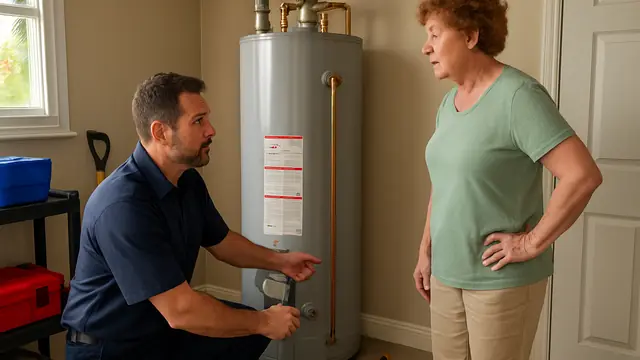
You step into the garage or utility area and notice a damp patch near the water heater. Maybe the floor is only slightly wet, or perhaps water is moving steadily away from the tank. For a homeowner in Latitude Margaritaville Watersound, the immediate concern is whether this is a small repair or a failing water heater.
Keep people and stored items away from the wet area. If water is actively leaking and you can reach the cold-water shutoff valve without standing in water or touching electrical equipment, turn it off. For an electric heater, switch off the correct breaker only when the panel and floor are dry. For a gas heater, do not adjust gas components unless you know the manufacturer's shutdown procedure. If you smell gas, leave the home and contact the gas utility or emergency services.
A leak does not always mean the entire unit must be replaced. The source may be a connector, valve, gasket, or pressure problem. Water coming through the tank body or bottom seam, however, usually indicates internal corrosion.
Why Is My Water Heater Leaking in Latitude Margaritaville Watersound?
The location of the first drop matters. Water can travel down the side of the tank or follow piping before reaching the floor. A puddle at the base does not automatically prove that the tank has failed.
Top Water Connections
Most tank-style heaters have a cold-water inlet and hot-water outlet at the top. Flexible lines, threaded fittings, unions, and shutoff valves can loosen, corrode, or lose their seal. A small drip may run down the tank jacket and look like a bottom leak.
Temperature-and-Pressure Relief Valve
The temperature-and-pressure relief valve, or T&P valve, opens when temperature or pressure inside the tank becomes unsafe. A worn valve may drip, but repeated discharge can also indicate excessive water pressure, overheating, or thermal expansion. Thermal expansion occurs when heated water expands but has limited room to move within the plumbing system.
Never cap, plug, clamp, or block the T&P valve or its discharge pipe. It is a critical safety device.
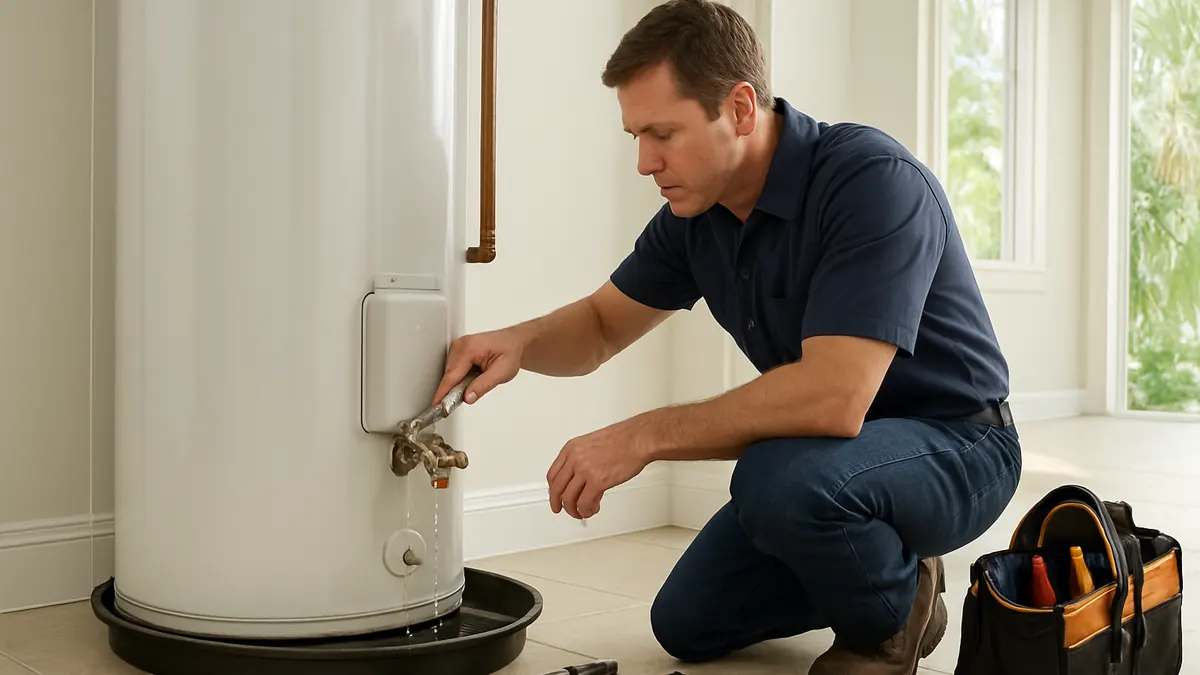
Drain Valve
The drain valve near the bottom is used for flushing and service. It may leak because it was not fully closed, sediment is caught in the seal, or its internal parts have worn out. A plumber may replace the valve if the tank and threaded opening remain sound.
Electric Element Gasket
Electric heaters usually have one or two heating elements mounted through the side of the tank. Each has a gasket. A failed gasket can allow water to seep behind an access cover and run down the unit.
Internal Tank Corrosion
A tank-style heater contains a steel pressure vessel protected by a lining and an anode rod. The anode rod is designed to corrode in place of the tank, but that protection is eventually depleted.
Water emerging from the tank shell, lower seam, or beneath the insulation often means the inner tank has failed. Tape, epoxy, and exterior patches do not restore a corroded pressure vessel.
Safe Checks the Homeowner Can Perform
Dry the heater and surrounding floor. Place paper towels beneath visible top connections, near the T&P discharge pipe, and around the drain valve. Check them after several minutes to see where moisture appears first.
Look above and beside the heater. A nearby plumbing line, air-conditioning drain, washing-machine hose, or other appliance can send water toward it.
Note when the leak occurs. Does it appear while the heater is recovering after several showers? Does it continue when no hot water is used? Is the water warm or cold? These observations help the technician.
Keep the inspection visual. Do not remove electrical covers, burner panels, or insulation.
What the Homeowner Should Not Attempt
Do not use tape, epoxy, or sealant on a leaking tank body. These products can hide the leak while corrosion continues.
Do not repeatedly reset a breaker that trips. A failed heating element, wet wiring, or another electrical defect may be present.
Do not modify gas piping, burners, thermostats, or venting. Never plug a relief-valve pipe. Avoid draining a hot tank without understanding how to isolate the water and energy source because the discharge can cause burns.
Signs That Make the Problem Urgent
Call for prompt service when water is flowing continuously, spreading into finished areas, reaching electrical components, or damaging walls and flooring.
A bulging tank, steaming water, unusually hot water, or strong T&P discharge may indicate unsafe temperature or pressure.
A gas odor, soot near the burner, damaged venting, or repeated ignition problems requires immediate attention. Leave the property if you smell gas. For electric units, keep the heater off if water reaches wiring or the breaker trips repeatedly.
How a Licensed Plumber Diagnoses the Leak
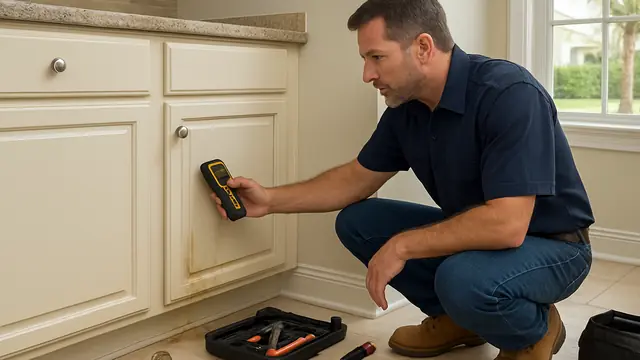
The technician first confirms that the heater is the true source. The tank and fittings may be dried and observed under normal pressure.
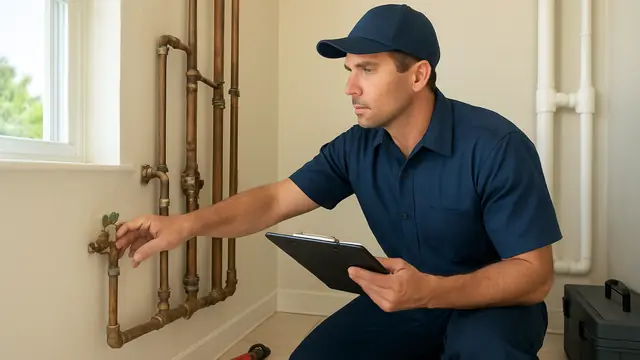
The plumber inspects the hot- and cold-water connections, shutoff valve, T&P valve, discharge piping, drain valve, tank jacket, and nearby plumbing. Water pressure may be measured.
If the T&P valve is dripping, the plumber may check actual water temperature, thermostat operation, household pressure, and thermal expansion. Replacing the valve alone will not solve the problem if pressure is the cause.
On an electric heater, elements, thermostats, wiring, and gaskets may be tested. On a gas unit, the burner, controls, venting, and combustion area may be inspected.
Repair Options From Least Invasive to Most Extensive
The simplest dependable correction may be replacing a supply connector, fitting, union, or shutoff valve. A leaking drain valve can sometimes be replaced.
A failed electric-element gasket may be repaired when the tank opening is sound. A defective T&P valve may be replaced after pressure, temperature, and expansion conditions are evaluated.
If excessive pressure is causing leakage, the repair may involve pressure regulation or expansion-control equipment.
Replacement is necessary when the inner tank leaks, corrosion is extensive, or multiple failures make continued repair unreliable. Homeowners can compare tank and tankless equipment according to hot-water demand, utilities, available space, and installation requirements.
Typical Factors That Affect Cost
Cost depends on the source, required part, access, and diagnostic time. Replacing an accessible connector is different from repairing a drain valve or correcting pressure problems.
Replacement cost is affected by capacity, fuel type, efficiency, venting, electrical service, gas-line requirements, piping changes, drain-pan arrangements, permits, disposal, and any safety corrections.
Prevention and Maintenance Guidance
Inspect the heater area regularly for moisture, corrosion, rust streaks, and staining. Follow the manufacturer's maintenance instructions. Depending on the unit, maintenance may include flushing, anode-rod inspection, temperature checks, burner service, venting inspection, or electrical testing.
Have household water pressure checked if relief-valve discharge has occurred. A water alarm can provide early warning, while a properly connected drain pan may help limit damage but will not prevent a leak.
Take the Next Appropriate Step
When you ask, "Why is my water heater leaking in Latitude Margaritaville Watersound?" the answer depends on the source. A connector, valve, gasket, or pressure condition may be repairable. Water escaping through the tank usually means replacement is necessary.
Contain the water safely, avoid temporary patches, and have the unit evaluated before the leak causes additional property damage or creates an electrical or gas hazard.
About this guide: This resource provides general homeowner education, not a remote diagnosis. Actual conditions, code requirements, equipment, and safe repair options must be evaluated at the property.