Stop and call for qualified help when plumbing water is near electrical equipment, sewage is entering occupied space, gas or burning odors are present, or a repair would require opening pressurized piping.
You return home, open a closet or garage, and find a water stain spreading from the water heater. Perhaps the drip appears only after hot water has been used, or the floor dries and becomes wet again later. When you ask, "Why is my water heater leaking in Laguna Beach?" the timing and location of the moisture provide important clues. A leak that appears only during heating may involve pressure, a valve, or a gasket. Constant water from beneath the tank may indicate internal corrosion.
Protect the property first. Move belongings out of the wet area and keep children and pets away. If water is steadily escaping, close the cold-water supply valve to the heater when it is safe to reach. Turn off an electric heater at the breaker only if the floor, panel, and your hands are dry. Do not handle gas controls if you smell gas. Leave the building and contact the gas utility or emergency services from a safe location.
Why Is My Water Heater Leaking in Laguna Beach Only at Certain Times?
Intermittent leakage is common because pressure and temperature change as the heater operates. Cold water expands when heated. In a plumbing system where that expansion has limited room, pressure can rise and cause the temperature-and-pressure relief valve to drip. A worn valve may also fail to reseal after opening.
Trace the Water Before Assuming the Tank Has Failed
Dry the tank and floor, then observe from a safe distance. A clean paper towel placed near each visible connection may show where the first drop forms. Check the relief-valve discharge pipe and the drain valve near the bottom. Do not remove electrical access covers or burner panels.
Common Sources of Water Heater Leakage
Hot- and Cold-Water Connections
Threaded adapters, flexible connectors, unions, and shutoff valves can loosen, corrode, or lose their seal. The leak may begin as a bead of water and leave a white, green, or rusty deposit around the fitting.
Temperature-and-Pressure Relief Valve Discharge
The T&P valve is designed to open when temperature or pressure becomes unsafe. It can leak because the valve seat is worn, but replacing the valve without checking the cause may not solve the problem.
Never block or cap the discharge pipe. Water from this line must be treated as a safety warning.
Drain-Valve Seepage
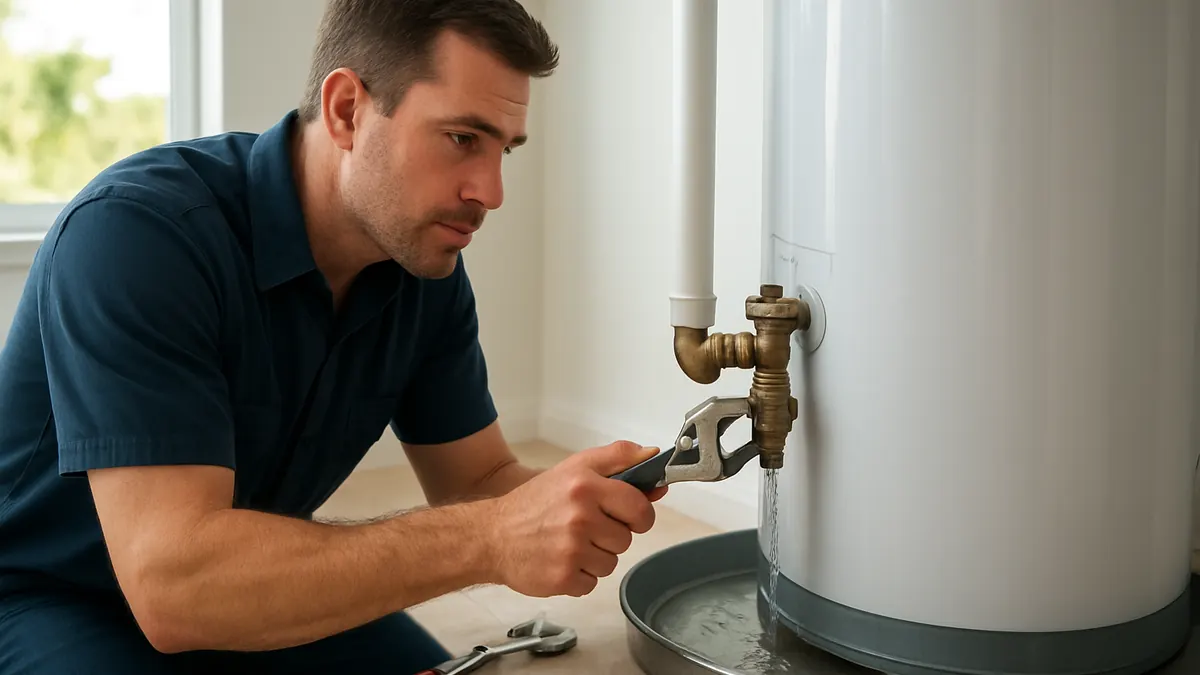
A drain valve can leak after maintenance or as its internal seal deteriorates. Sediment may prevent complete closure, or the valve body may crack.
Internal Tank Corrosion
A tank can eventually corrode despite its protective lining and sacrificial anode rod. Leakage may appear through the shell, under the insulation, or around the bottom seam.
An internally leaking tank is not repaired with tape, sealant, or an exterior patch. Because the tank holds heated water under pressure, replacement is the dependable solution.
Safe Information to Gather Before Service
Record where the water first appears and whether it feels hot or cold. Note whether the leak changes after showers, laundry, or periods when no hot water is used. Observe whether the heater is making unusual popping, hissing, or rumbling sounds.
Repairs and Actions to Avoid
Do not plug the relief valve or discharge pipe. Do not tighten fittings while the tank is hot, energized, or connected to gas unless you have the training and tools to work safely.
Avoid liquid stop-leak products. They are not a reliable repair for a potable-water tank and may interfere with valves or fixtures. Do not drill, weld, solder, or apply epoxy to the tank shell.
Warning Signs That Require Prompt Help
Request urgent service when water is flowing rather than dripping, the tank appears swollen, water is near electrical equipment, or leakage is entering walls or finished rooms.
Other serious signs include steam, unexpectedly scalding water, forceful relief-valve discharge, a strong gas odor, soot, a damaged vent connector, or a breaker that trips repeatedly. Leave the area for a gas odor and contact the proper emergency resource.
How a Plumber Diagnoses the Problem
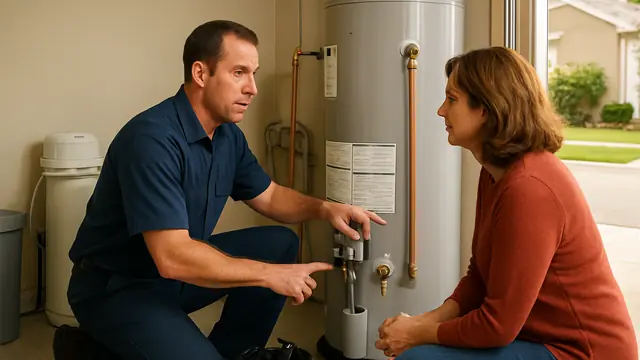
A licensed plumber isolates and observes each possible source. The technician inspects top connections, the shutoff valve, T&P valve, discharge pipe, drain valve, tank jacket, and surrounding plumbing.
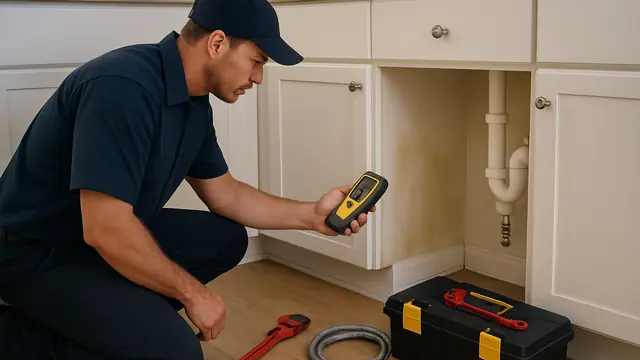
Water pressure and temperature may be measured. If the leak occurs during heating, the plumber can watch how system pressure changes. Electric elements, gaskets, thermostats, and wiring may be tested. Gas heaters may require inspection of the burner, controls, venting, and combustion area.
Repair Options in Practical Order
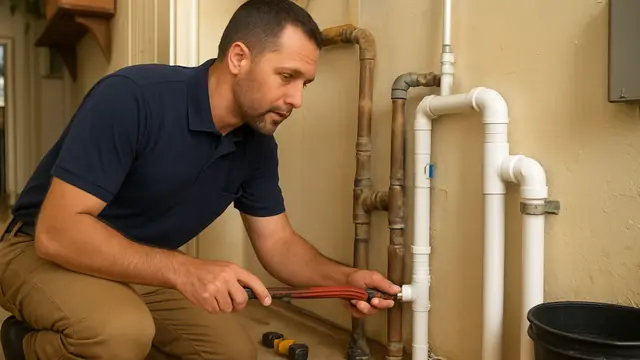
A loose or failed connector is generally addressed first. A leaking shutoff valve, union, or section of nearby pipe may be repaired or replaced while preserving the heater.
A drain valve or electric element gasket may be replaced when the tank is structurally sound. A T&P valve may be replaced after pressure, temperature, and expansion conditions are corrected.
If the tank itself is leaking, replacement is required. The homeowner can then compare conventional tank and tankless equipment where appropriate. Selection should consider household demand, fuel source, available electrical or gas capacity, space, recovery rate, venting, and installation requirements rather than choosing by tank size alone.
What Determines the Cost?
The cost begins with the diagnosed source. Replacing an accessible connector is different from repairing a drain valve, correcting pressure problems, or replacing an entire unit.
Labor and materials can be affected by access, fuel type, venting, electrical service, shutoff condition, piping changes, drain-pan or drainage needs, permits, disposal, and corrections to an unsafe or outdated installation. A tight location may require additional protection or disassembly.
Preventing Future Water Heater Leaks
Inspect the area regularly rather than waiting for a large puddle. Look for corrosion at the top connections, moisture at the relief pipe, seepage around the drain valve, and rust near the base.
Follow the manufacturer's service guidance. Maintenance may include flushing, anode-rod inspection, temperature checks, venting inspection, and electrical or burner evaluation. The correct maintenance plan depends on the equipment and installation.
Stop Guessing and Identify the Source
If you are wondering, "Why is my water heater leaking in Laguna Beach?" start by containing the water safely and observing where it begins. A connector, valve, gasket, or pressure condition may be repairable. Water from the tank shell or bottom seam usually means the tank must be replaced. A professional diagnosis provides the information needed to choose the least invasive dependable solution.
About this guide: This resource provides general homeowner education, not a remote diagnosis. Actual conditions, code requirements, equipment, and safe repair options must be evaluated at the property.