Stop and call for qualified help when plumbing water is near electrical equipment, sewage is entering occupied space, gas or burning odors are present, or a repair would require opening pressurized piping.
You may notice the problem during an ordinary morning in your WaterColor home. The showerhead has begun spraying unevenly, a white film returns to the tile and fixtures, and the dishwasher leaves spots on glasses. Later, you fill a cup at the kitchen sink and notice a taste or odor you would like to improve. It is natural to wonder whether one whole-house system can solve everything.
First, separate the symptoms. Compare hot and cold water at more than one faucet. Note whether the issue is present throughout the home, only at one fixture, or only after water has been sitting. Do not use water that suddenly changes color, appears oily, or develops a strong chemical, fuel, or sewage-like odor. Use another safe source until the condition has been evaluated.
A water softener is designed mainly for hardness. Whole-house filtration targets selected particles, tastes, odors, or other substances. Some homes need both, but testing should come first.
Understanding the Difference Between Softening and Filtration
Hard water contains dissolved calcium and magnesium. Those minerals are too small for a standard sediment cartridge to capture. When water evaporates or passes through heating equipment, the minerals can form scale.
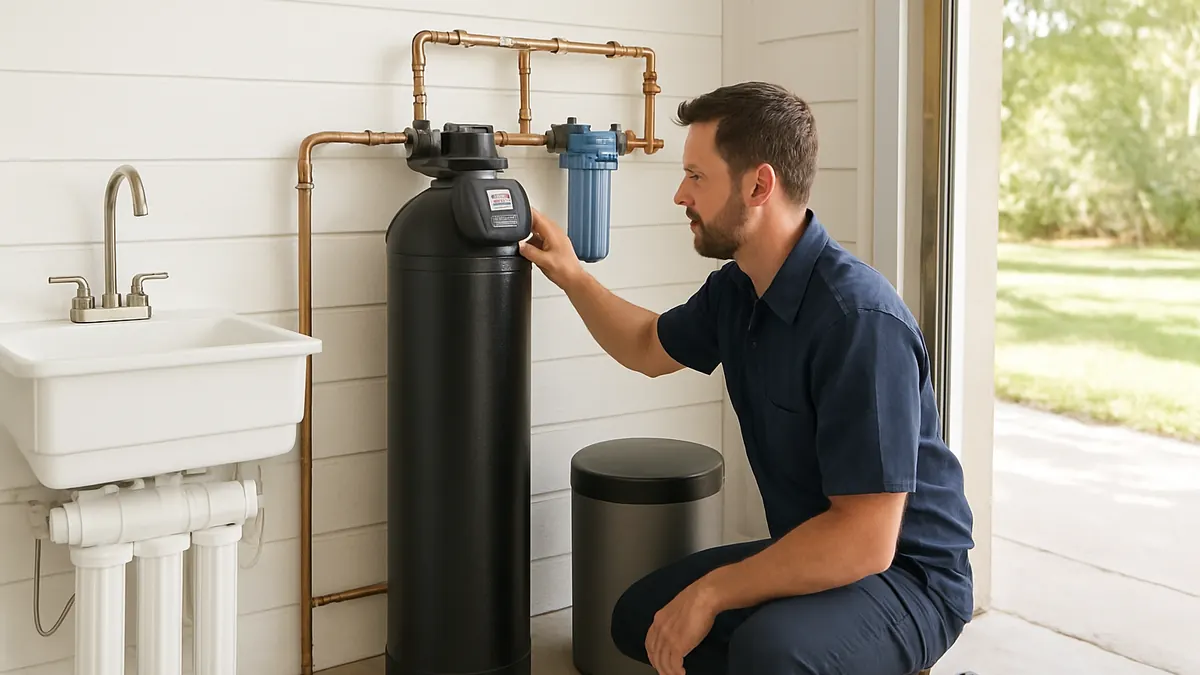
A conventional softener uses ion exchange. Resin captures calcium and magnesium and releases sodium or potassium ions. The unit periodically regenerates with brine.
Whole-house filters use media selected for a target. Sediment filtration captures particles, while activated carbon may reduce chlorine-related taste and odor. Other media address other tested conditions.
Why Your Symptoms May Have More Than One Cause
White residue often supports a hardness concern, but soap, detergent, and cleaning products can also leave film.
Particles can come from the supply, water heater, fixture parts, an old cartridge, or internal piping. An odor near one sink may come from the drain. Low pressure may result from a clogged filter, partly closed valve, or undersized system.
When a Water Softener Is the Logical Choice
A softener is usually considered when testing confirms hardness and the homeowner wants to reduce recurring scale. Common signs include chalky buildup around faucets, cloudy shower glass, spotted dishes, poor soap lather, and frequent showerhead cleaning.
Hardness can accumulate inside water heaters, appliances, and valves. Softening may reduce future buildup but will not restore damaged components. Sizing should reflect measured hardness, daily use, and peak flow.
When Whole-House Filtration Is More Appropriate
Whole-house filtration may make sense when testing confirms sediment, a chlorine-related taste or odor, or another condition that specific media can address.
Sediment filters are rated by particle size. A coarse cartridge may allow debris through, while an unnecessarily fine one may clog and reduce pressure. Activated carbon may improve certain tastes and odors but does not normally remove hardness.
When the complaint is limited to one faucet, a point-of-use filter or fixture repair may be more practical than main-line treatment.
Safe Checks You Can Make
Collect one clear sample from a cold tap and another from a hot tap. Let both sit and compare color, odor, cloudiness, and visible material. Do not taste water that appears questionable.
Repeat the check at another fixture. If only the hot sample is affected, the water heater or hot-water piping should be inspected. If one sink is affected, inspect that location before assuming the entire supply needs treatment.
Remove an aerator carefully and examine what is trapped. White crust points toward scale. Grit, rubber pieces, or metallic flakes may suggest another source.
For existing equipment, review cartridge dates, salt level, power, display messages, bypass position, and visible leakage. These checks do not replace testing.
What the Homeowner Should Not Attempt
- Do not purchase equipment solely because a salesperson or product page calls it a complete water solution. Confirm what the system removes and under what operating conditions.
- Do not increase softener salt settings to correct taste, odor, sediment, or discoloration. Do not expect a basic carbon filter to solve hard-water scale.
- Avoid installing a restrictive cartridge without checking the required flow rate. An undersized system may cause weak showers or slow filling when several fixtures are in use.
Never remove a pressurized housing or loosen a treatment valve before isolating the water and relieving pressure. Do not alter drain tubing, electrical controls, brine components, or chemical-feed equipment without proper training.
Warning Signs That Require Prompt Service
Gradual scale is usually a maintenance concern. Sudden changes throughout the home deserve a faster response.
Seek prompt evaluation when water becomes brown, red, black, or oily-looking; develops a persistent chemical, fuel, rotten-egg, or sewage-like odor; contains unexplained material; or appears to cause skin or eye irritation.
A rapid pressure loss may indicate a clogged cartridge, failed valve, supply restriction, or plumbing problem. Leaking tanks, cracked filter housings, and softeners that run continuously can waste water and damage the home.
For uncontrolled leakage, close the main water shutoff if it is safely accessible and call for professional help.
How a Licensed Plumber Diagnoses the Right Solution
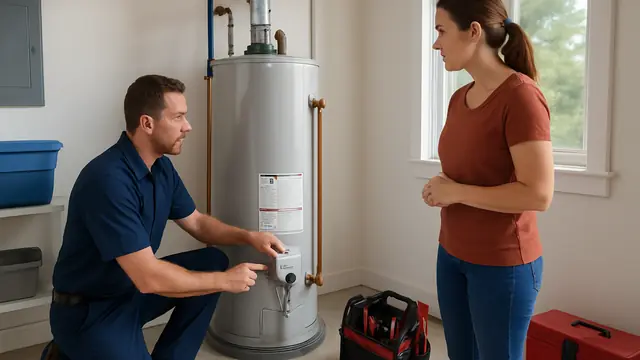
The plumber asks when the symptoms began, which fixtures are affected, whether the problem involves hot or cold water, and what equipment is already installed.
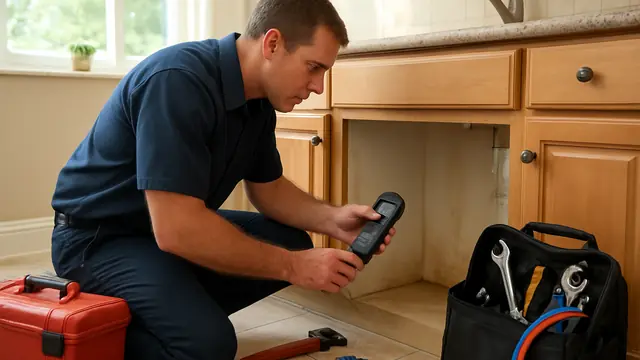
The inspection may include pressure, flow, the water heater, piping, aerators, housings, bypass valves, settings, and drains. Testing may measure hardness, chlorine, pH, iron, total dissolved solids, or another relevant factor. Some conditions require laboratory analysis. Peak demand is also considered.
Treatment Options From the Least Invasive Upward
The simplest solution may be cleaning aerators, replacing an overdue cartridge, correcting a bypass setting, adjusting softener programming, repairing a control valve, or servicing the water heater.
A point-of-use filter may solve a kitchen drinking-water complaint. Confirmed suspended particles throughout the home may justify a main-line sediment filter sized for the required flow.
- Activated carbon may be recommended for a verified taste or odor concern. A softener may be recommended when hardness is confirmed and scale is the primary problem.
- When testing identifies more than one condition, filtration and softening may be installed in stages. The sequence matters because one stage may protect another.
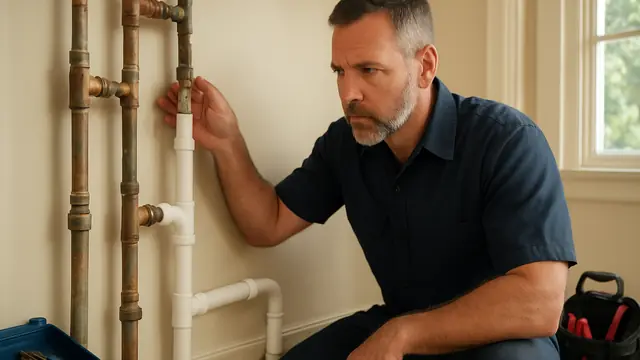
- Repiping is considered only when deteriorating plumbing is causing recurring particles, discoloration, contamination, or restrictions.
Factors That Affect Cost
Cost depends on the testing required, treatment media, system capacity, flow rate, number of stages, installation access, drain routing, electrical needs, and plumbing changes at the main line.
Ongoing expenses may include salt, cartridges, media, regeneration water, and service. Compare maintenance requirements and expected performance, not only purchase price.
Prevention and Maintenance Guidance
Keep a service record with test results, cartridge changes, salt additions, repairs, and settings. Mark each filter with its installation date.
Inspect the equipment area for moisture, loose tubing, cracked housings, unusual sounds, or excessive regeneration. Check the brine tank for salt bridging.
Replace cartridges before severe pressure loss develops. Retest when symptoms change, the water source changes, or plumbing work is completed. If the home is vacant for stretches of time, arrange periodic equipment and leak checks.
Choosing Water Softener Versus Whole-House Filtration in WaterColor
Choose a water softener when testing confirms hardness and recurring mineral scale is the main concern. Choose whole-house filtration when a specific issue such as sediment, taste, or odor has been identified. A licensed plumber can also determine when a cartridge change, fixture repair, water-heater service, or other focused correction is all that is needed.
About this guide: This resource provides general homeowner education, not a remote diagnosis. Actual conditions, code requirements, equipment, and safe repair options must be evaluated at the property.