Stop and call for qualified help when plumbing water is near electrical equipment, sewage is entering occupied space, gas or burning odors are present, or a repair would require opening pressurized piping.
The toilet works normally most of the day, but at night you hear it refill for several seconds without anyone flushing. When you press the handle the next morning, it feels loose and must be jiggled before the running stops. If you are asking, "Why does my toilet keep running in Wright, FL?" a slow tank leak or a problem with the handle, chain, flapper, float, or fill valve is likely preventing the toilet from completing its normal cycle.
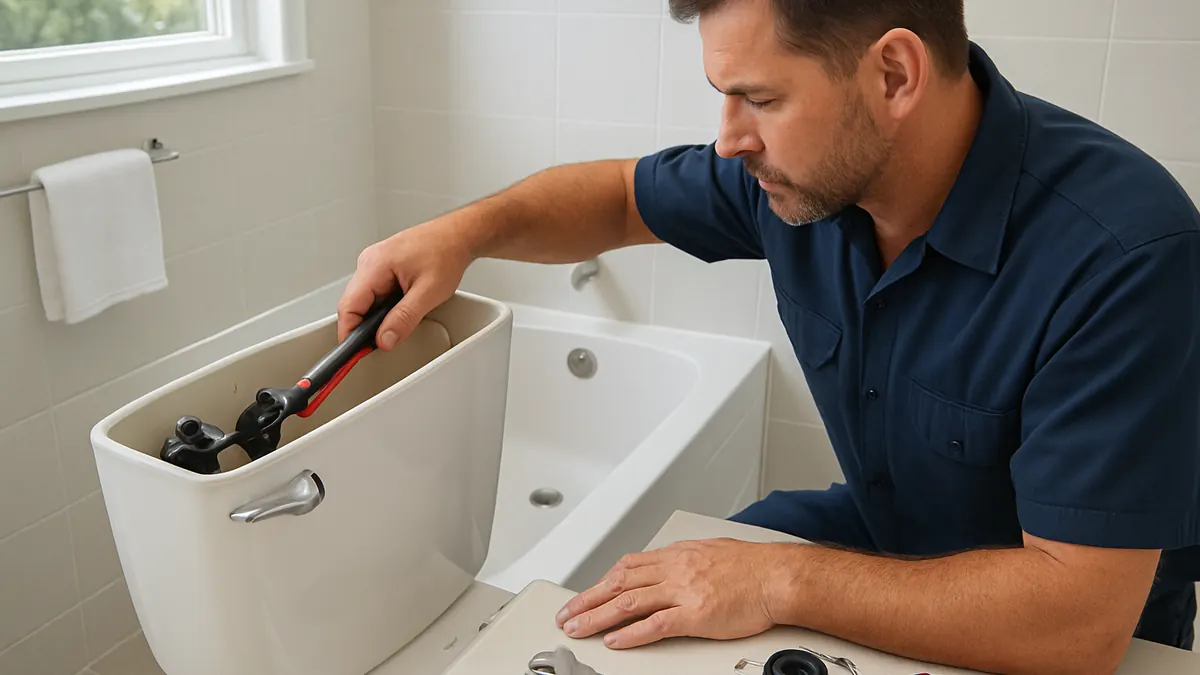
The immediate safe step is to remove the tank lid carefully, place it on a towel, and watch the mechanism without forcing anything. If water is continuously entering the overflow tube or leaking outside the toilet, gently close the fixture shutoff valve. Do not force a valve that is stuck, corroded, or damp. Use the home's main water shutoff if active leakage cannot be controlled at the toilet.
Why Does My Toilet Keep Running in Wright?
A toilet should release tank water during a flush, reseal the tank, refill, and then stop. Running occurs when the tank keeps receiving water or loses water after it has filled.
Continuous hissing often means the fill valve or float is not shutting off. Short refill cycles usually mean water is leaking past the flapper or another tank seal.
The Most Common Possible Causes
A Loose or Sticking Handle
The handle operates a lever inside the tank. If the handle is loose, corroded, misaligned, or sticking, the lever may keep tension on the chain and prevent the flapper from closing.
Incorrect Chain Slack
A chain that is too short can hold the flapper open. A chain that is too long can tangle, catch on another component, or slip beneath the flapper.
A Worn Flapper
The flapper is the rubber or silicone seal over the tank outlet. It may become warped, hardened, torn, coated with residue, or incorrectly sized. Water then leaks into the bowl and causes the tank to refill.
A Fill Valve That Continues Running
The fill valve controls incoming water. Internal wear, debris, or binding can cause steady hissing, slow filling, or water that continues flowing after the tank appears full.
A Float Set Too High or Unable to Move
The float tells the fill valve when to stop. If the setting is high or the float is obstructed, water may enter the overflow tube.
A Damaged Flush Valve or Overflow Tube
A cracked overflow tube, worn sealing surface, or deteriorated tank component may allow leakage even when the flapper looks properly positioned.
Safe Checks the Homeowner Can Perform
Place the tank lid on a padded surface and watch one complete flush. The handle should return freely. The chain should lift the flapper and retain slight slack after it closes. The float should rise smoothly, and the fill valve should stop before water reaches the top of the overflow tube.
If the toilet refills without being used, add several drops of food coloring to the tank and wait 15 to 20 minutes without flushing. Color appearing in the bowl confirms that water is escaping from the tank into the bowl.
You may gently untangle an obvious chain problem or tighten a loose handle by hand only when the correct adjustment is clear. Stop if parts feel brittle, corroded, or unfamiliar.
Close the toilet valve if it turns normally and continuous running will not stop.
What the Homeowner Should Not Attempt
Do not use drain cleaner. A running toilet is generally a tank-mechanism problem rather than a drain blockage.
Do not force a shutoff valve or overtighten the handle nut, tank bolts, supply fittings, plastic nuts, or fill-valve connection. Porcelain can crack, plastic can strip, and an old valve may begin leaking.
- Do not shorten the chain without first confirming that excessive slack is the problem. A chain that becomes too tight can create continuous leakage.
- Do not install a replacement flapper based only on its appearance. The size, attachment style, and toilet design must be compatible.
- Never glue cracked porcelain and return the fixture to service. A cracked tank or bowl can fail suddenly.
Signs That Make the Problem Urgent
- Seek prompt service when water is leaking onto the floor, the supply connector is damaged, the tank or bowl is cracked, or the local shutoff valve cannot stop active flow.
- Stop using the toilet if it rocks, water appears around the base after a flush, the floor feels soft, or sewage odor is present.
- If active water cannot be controlled with the toilet valve, close the main water supply. Keep water away from electrical equipment and nearby rooms.
How a Licensed Plumber Diagnoses the Running Toilet
A plumber watches the toilet through flushing, filling, and idle periods. The handle, lever, chain, flapper, flush-valve surface, float, fill valve, overflow tube, supply line, and shutoff valve are inspected.
A dye test can confirm tank-to-bowl leakage.
When water is outside the fixture, the inspection expands to the tank bolts, tank-to-bowl gasket, porcelain, supply connection, base seal, flange, and floor condition.
Repair Options Beginning With the Least Invasive
The least invasive repair may be tightening or aligning the handle, correcting chain slack, or lowering the float.
A worn flapper or defective fill valve can often be replaced without removing the toilet. Damage to the flush valve, overflow tube, tank bolts, or tank-to-bowl gasket may require tank removal and rebuilding.
A leak at the base may require lifting the toilet, inspecting the flange and flooring, and installing a new seal.
Complete replacement may be practical when the porcelain is cracked, the fixture is unstable, compatible parts are unavailable, repairs are recurring, or several major components need work. One loose handle or worn flapper is not a reason by itself to replace the toilet.
Typical Factors Affecting Cost
Cost depends on which part failed, the toilet design, parts availability, accessibility, and the condition of the shutoff valve, supply connector, bolts, seals, flange, and flooring.
Tank removal, corroded hardware, base repairs, emergency scheduling, or toilet replacement and disposal can expand the job. Ask what diagnosis, parts, testing, cleanup, and related work are included.
Prevention and Maintenance Guidance
Address a loose handle, random refill cycle, or steady hiss when it first appears. Waiting can waste water and allow other internal parts to wear.
Inspect the supply line and shutoff valve for dampness, corrosion, cracking, or bulging. Avoid harsh in-tank cleaning products unless the toilet manufacturer approves them because some chemicals damage rubber seals.
Do not lean on the tank, slam the handle, or continue using a fixture that rocks at the floor. Keep the local and main water shutoffs accessible.
Fix the Mechanism Instead of Repeatedly Jiggling the Handle
If you are asking, "Why does my toilet keep running in Wright, FL?" watch whether the handle and chain release the flapper correctly and whether water stops below the overflow tube. Those observations help distinguish linkage trouble from a fill-valve or sealing problem.
A small adjustment or one matched replacement component may restore normal operation. Water on the floor, cracked porcelain, an unstable toilet, or an inoperative shutoff valve requires prompt professional attention.
About this guide: This resource provides general homeowner education, not a remote diagnosis. Actual conditions, code requirements, equipment, and safe repair options must be evaluated at the property.