Walk into any Bid-A-Wee kitchen and you can usually tell when something is off with the water. Maybe the coffee tastes flat. Maybe ice cubes look cloudy. Maybe soap does not rinse clean and your shower feels like it leaves a film. In older homes and newer builds alike, water quality problems can creep in quietly, and they often get blamed on “plumbing” when the real issue is water treatment.
Professional water purification helps you protect your family’s daily routines, from drinking and cooking to bathing, laundry, and appliance performance. This guide explains what to watch for in Bid-A-Wee, how local conditions can affect water, and which solutions typically work best, including AO Smith water filtration, whole home water filtration, water softeners, and reverse osmosis.
Why Bid-A-Wee water treatment matters for both older and newer homes
Bid-A-Wee sits in Bay County, and homeowners here often run into water quality challenges that show up in everyday life. Depending on the home’s plumbing materials, how the water is delivered, and the condition of existing lines, you can see issues like scale buildup, sediment, odors, and changes in taste. These problems can be present in new construction if the home never had a proper filtration plan, and they can become worse over time in older homes as plumbing and fixtures age.
When water quality is off, the impact is not limited to taste. Scale and sediment can reduce water flow, shorten the lifespan of water heaters and appliances, and make fixtures look worn even with regular cleaning. For homeowners searching for water treatment near me or water filtration near me, choosing the right system is about matching the solution to the symptom you are seeing.
If you want to review local service options, you can start here: /service-areas/bay-county/bid-a-wee. For a direct focus on purification, see /service-areas/bay-county/bid-a-wee/water-purification-bidbcfl.
Common water quality symptoms that should not be ignored
Some water issues are annoying enough to notice right away. Others build up slowly and only become obvious when something breaks, stains appear, or skin and hair feel different. Below are the most common signs Bid-A-Wee homeowners report, and what they often point to.
Hard water spots on glass, dishes, and fixtures
If you wipe a glass and still see cloudy streaks, or your dishes come out with a film even after the dishwasher runs, hard water is often the culprit. Hard water leaves mineral deposits as water evaporates, so you may see hard water spots on glass, dull looking faucets, and residue around shower doors.
Hard water can also contribute to scale buildup around faucets, showerheads, and plumbing lines. Over time, that scale can reduce flow and make fixtures work harder.
Scale buildup around faucets, showerheads, and plumbing
Look closely at the places where water dries quickly. If you see crusty rings at the base of faucets, rough buildup on showerheads, or mineral deposits near plumbing connections, you are likely dealing with ongoing mineral content and possibly sediment. This is a strong clue that hard water treatment and filtration are needed, not just a stronger cleaner.
When hard water treatment becomes part of protecting fixtures and appliances, homeowners often see fewer clogs, less frequent descaling, and better water performance.
Dry skin or dull hair after bathing
Many families in Bid-A-Wee describe a noticeable change: skin feels tight or dry, hair looks dull, and soap does not rinse well. Hard water can interfere with how soap lathers and how rinse water carries away residue. The result is often dry skin from hard water and that “not quite clean” feeling after showers.
For households with kids, sensitive skin, or anyone who already uses moisturizers, this is a real quality of life issue, not a cosmetic one.
Metallic, chlorinated, or unpleasant taste and odor concerns
If drinking water tastes metallic, smells “chlorinated,” or has an odor that makes you avoid using the tap, that is a clear signal to investigate. Water odor concerns can come from a few different sources, including disinfectant byproducts, changes in water supply, or sediment that moves through the system.
Even if your water looks clear, taste and smell are often the first warning signs that filtration is needed.
Cloudy ice cubes
Cloudy ice cubes are a classic clue that there is something in the water that affects clarity. Sometimes it is fine sediment. Sometimes it is mineral content. Either way, it can also affect drinking water for the household and can show up in poor tasting water for cooking.
Poor tasting coffee and cooking water
Homeowners often notice poor tasting coffee water before they notice anything else. If coffee tastes flat or metallic, or if cooking water affects pasta, rice, or soups, you may be dealing with mineral balance, sediment, or odor issues.
Better water for drinking and cooking is often achieved with a dedicated drinking water filter, reverse osmosis for the kitchen, or a whole house system plus point-of-use filtration.
Soap that does not lather or rinse well
If you feel like you need more soap than usual, or if laundry comes out with a rough feel, you might be seeing the effect of hard water. Soap that does not lather or rinse well can leave residue, especially in laundry and on towels.
That residue can also contribute to a buildup on fixtures and fabrics, making everything feel “less clean” even when you clean regularly.
Visible sediment, discoloration, and odor concerns
Visible sediment in household water or occasional discoloration is a reason to act quickly. It can appear after changes in water flow, construction activity, or aging plumbing. If you see particles, notice discoloration, or detect odor concerns that come and go, you want to get the water checked and treated correctly.
For homeowners searching for water filtration near me, remember that the right system depends on what is present in the water. A whole house approach can help with sediment and taste issues, while point-of-use systems can target drinking water.
Appliances wearing out faster
Scale and sediment are hard on appliances. If your water heater runs more often, your dishwasher never seems to clean as well, or your hot water system seems to lose performance, water quality could be part of the problem. When sediment and mineral buildup accumulate, appliances and internal components can wear out faster.
What causes these problems in Bid-A-Wee homes?
Water quality issues are rarely one single factor. In Bid-A-Wee, homeowners commonly see a combination of mineral content, sediment movement, and the way water interacts with household plumbing over time.
Hard water minerals and scale formation
Hard water contains dissolved minerals that can deposit as water heats up or evaporates. That is why scale buildup around faucets, showerheads, and plumbing is so common. The deposits can also contribute to reduced efficiency in hot water equipment.
Sediment and flow changes
Even when water looks clear, fine sediment can be present. Over time, it can collect in plumbing and show up as cloudy ice cubes, discoloration, or a gritty feel. A filtration plan that includes whole home water filtration can reduce sediment across the house.
Water chemistry that affects taste and odor
Metallic or unpleasant taste can be tied to water chemistry and how the water is treated. Chlorinated notes can also be noticeable. If your family drinks straight from the tap, point-of-use filtration becomes especially important.
Choosing the right water purification solution for your home
Homeowners in Bid-A-Wee usually need a system that matches their symptoms. Many homes benefit from a layered approach: whole home filtration and protection for plumbing, plus targeted filtration for drinking and cooking.
Whole home water filtration for cleaner water everywhere
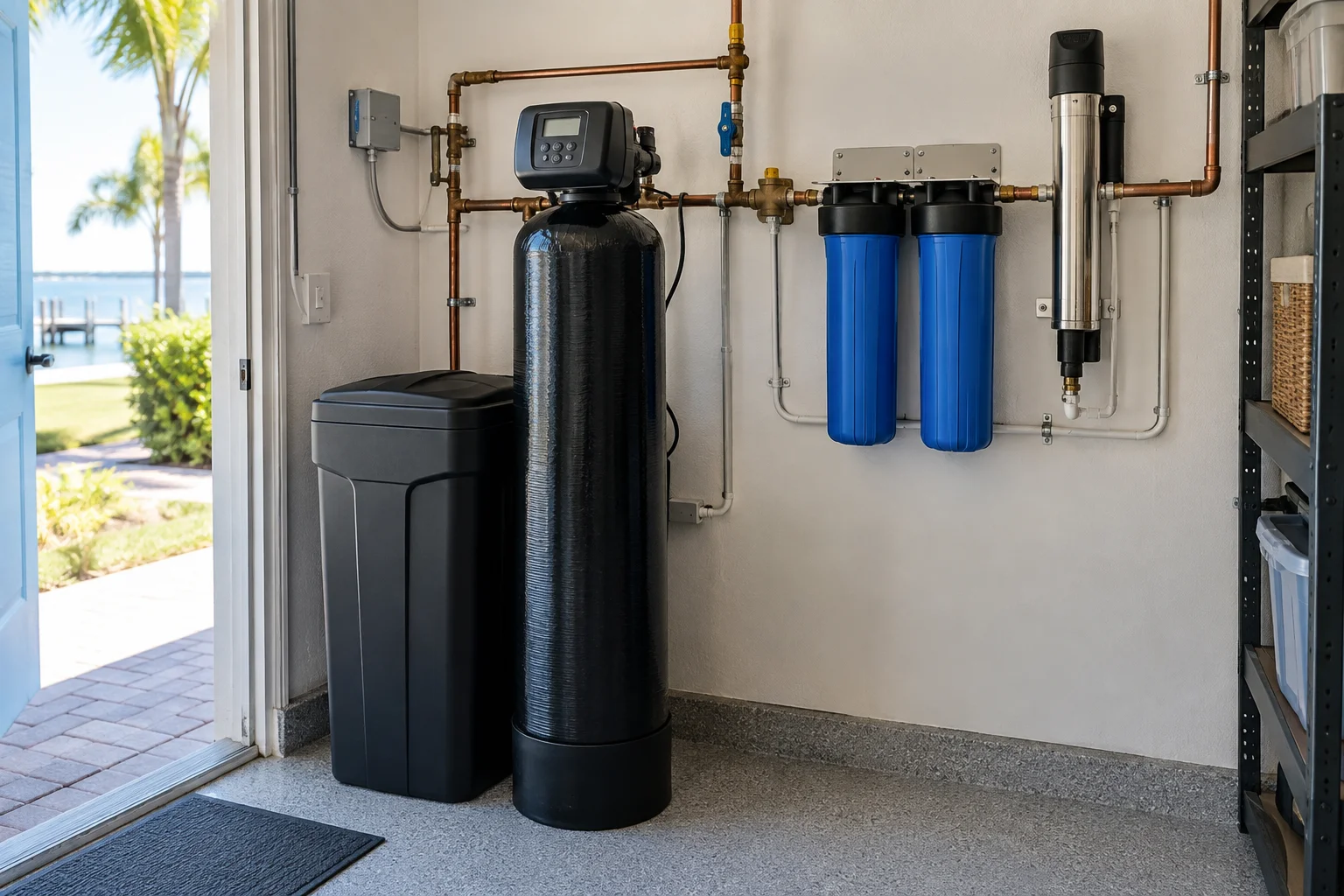
A whole house water filter is designed to treat water before it reaches fixtures and appliances. It can reduce sediment, improve clarity, and help with odor and taste when combined with appropriate media and filtration stages.
For families dealing with visible sediment in household water, cloudy ice, or recurring odor concerns, whole home water filtration often provides the most consistent improvement across kitchens, bathrooms, and laundry.
If you are comparing options, the main water filtration landing page can help you map the approach: /water-filtration-ro-water-softeners.
Water softening to protect fixtures, skin, and appliances
Water softeners are one of the most effective solutions for hard water spots on glass, soap that does not lather, and dry skin from hard water. Softening reduces mineral buildup, which helps prevent scale around faucets, showerheads, and plumbing.
In homes where the shower feels “less clean,” or where towels and laundry feel rough, water softening can make bathing and washing feel noticeably different within days.
Reverse osmosis for drinking water and cooking water
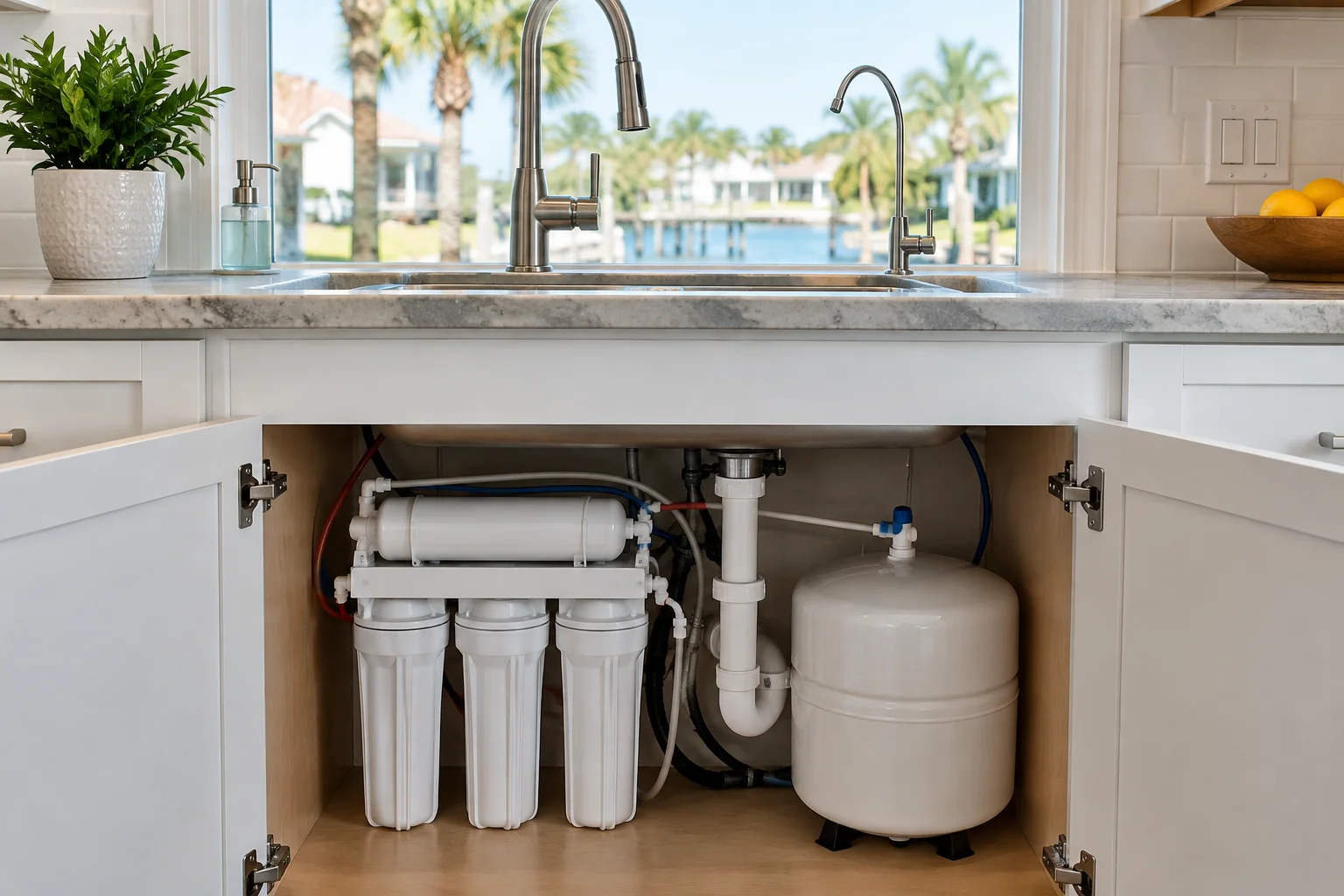
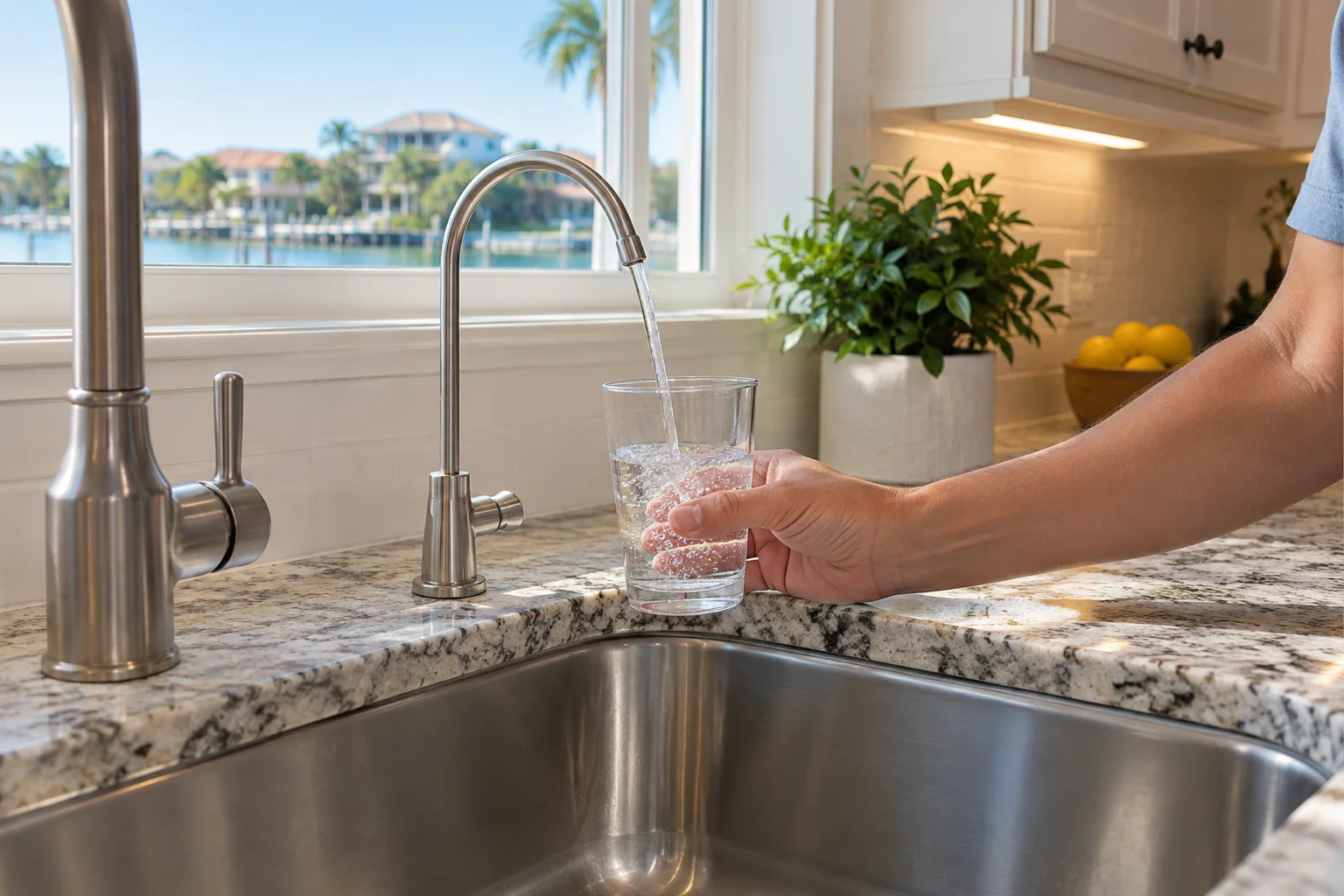
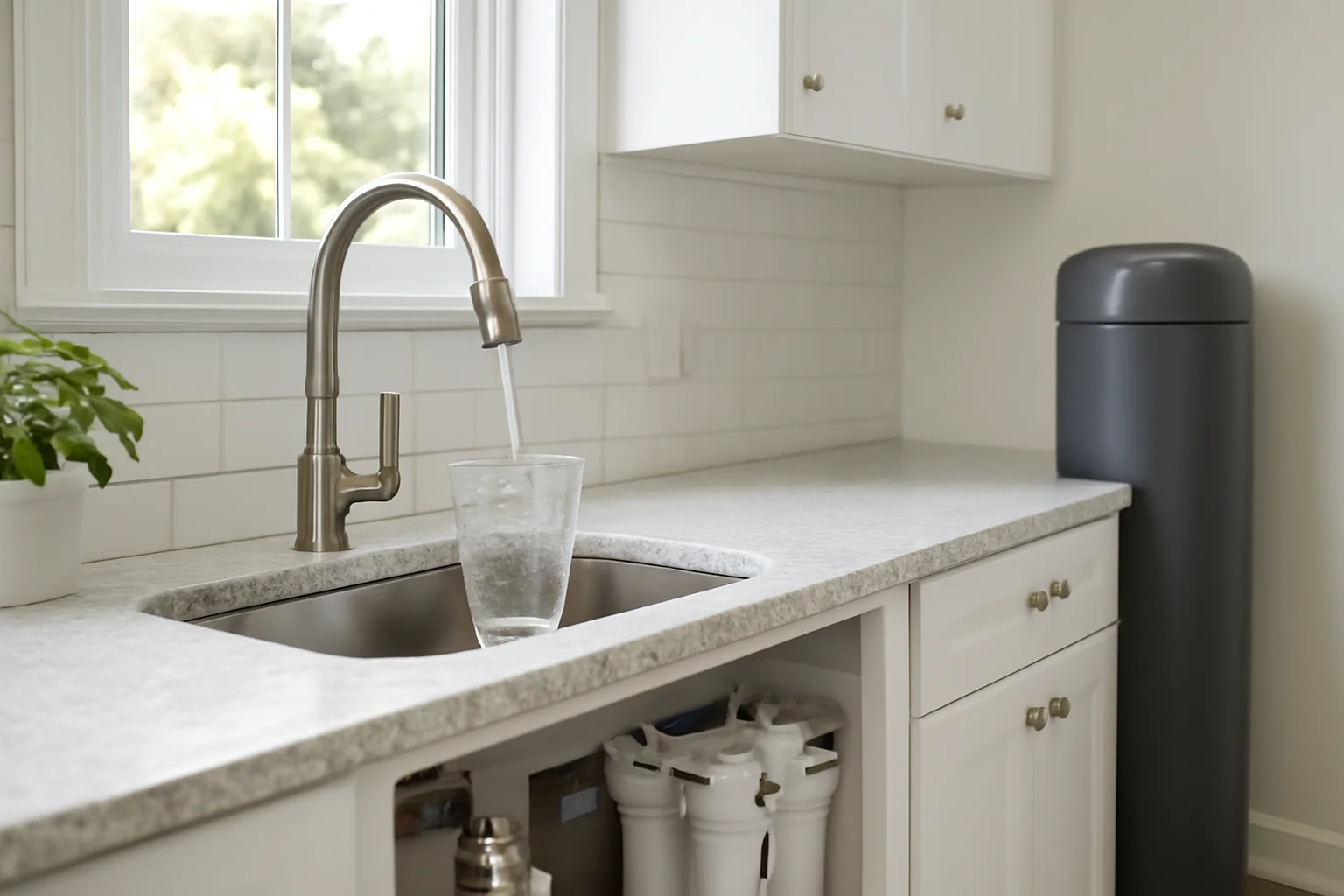
Reverse osmosis is a popular choice for homeowners who want very clean drinking water and better water for cooking. If you have metallic taste concerns, unpleasant odors, or poor tasting coffee water, a reverse osmosis system can provide a focused upgrade at the kitchen tap.
Many families choose reverse osmosis installation near the sink and pair it with whole home filtration for comfort and protection throughout the rest of the home.
If you are searching for reverse osmosis installation near me, it is worth asking about system sizing, filter stages, and how it will be maintained in Florida’s climate.
AO Smith water filtration and whole home system options
AO Smith water filtration systems are widely used because they are designed for real household demands, not just countertop convenience. Depending on your water test results, an AO Smith solution may be recommended as part of a whole home water filter setup or as a component of a broader clean water system.
For homeowners comparing AO Smith water filtration, a key factor is matching the system to your water’s needs. That means considering hardness, sediment, taste and odor concerns, and how many people are in the home.
How to spot the difference between a “cleaning issue” and a water treatment issue
Sometimes it is tempting to solve everything with stronger cleaners. But if you are repeatedly seeing hard water spots on glass and scale buildup around faucets and showerheads, it is usually not a cleaning technique problem.
Use these quick comparisons:
Cleaning works briefly, then stains return quickly often indicates ongoing mineral content.
Only the kitchen taste is off can point to a point-of-use need like a drinking water filter or reverse osmosis.
Whole home residue and soap issues often point to hardness and may require water softening and whole home filtration.
Cloudy ice and visible sediment are strong signals that filtration and maintenance are needed across the system.
Everyday life impacts you can actually feel in Bid-A-Wee
Water quality shows up in the small moments, not just lab results.
Kitchen scenes: drinking water, cooking, and coffee
Imagine the morning routine. Someone fills a glass for the kids. Someone makes coffee. Someone rinses a pot. If the water has sediment or an unpleasant taste, you will notice it in drinking water and cooking water right away. Poor tasting coffee water can make even good beans feel disappointing.
With better water for drinking and cooking, the kitchen feels more reliable. Families can trust the tap for everyday use and spend less time compensating with bottled water.
Bathing and skin: comfort that shows up after the shower
After a long day in Florida heat, a shower should feel refreshing. When hard water is present, dry skin from hard water and dull hair after bathing can make that routine feel less effective. Whole home water filtration and water softening can help reduce soap residue and improve rinse quality.
Laundry and towels: soap that rinses clean and fabrics that last
Soap that does not lather or rinse well can leave residue in laundry. That can affect how towels feel, how clothes look, and how you perceive “clean.” Better water can help detergent work as intended, which is especially important for households with sensitive skin.
Fixtures and appliances: less scale, smoother performance
When water treatment is aligned with your home’s needs, you often see fewer hard water spots on glass and less scale buildup around faucets and showerheads. Appliances also tend to run more efficiently because mineral buildup is reduced. Over time, that can mean fewer repairs and less early replacement.
Maintenance habits that keep purification working well
Even the best system needs routine care. Filter replacements and proper service help ensure your water purification stays effective, especially in a climate where water usage and temperature changes can influence how systems perform.
Keep an eye on performance changes
If drinking water tastes different, ice becomes cloudy again, or soap starts to feel “off,” treat it like a maintenance cue. A system that is due for filter changes will often show symptoms before it fully fails.
Do not ignore odors or discoloration
Visible sediment, discoloration, and odor concerns deserve attention. If you see particles or notice changes after plumbing work or storms, contact a water purification professional to confirm what is happening and whether your system needs adjustment.
Plan for seasonal demand
Bid-A-Wee households may see higher water demand during warmer months. That does not automatically mean your system is failing, but it does mean you should follow manufacturer service intervals and consider upgrades if your household has grown or water usage has changed.
When to call a water purification professional in Bid-A-Wee
Homeowners can start with observation, but water testing and system sizing are what lead to the right fix. You should call a professional when:
You see persistent hard water spots on glass and scale buildup around faucets, showerheads, and plumbing despite cleaning.
Your family reports dry skin or dull hair after bathing and soap does not lather or rinse well.
Drinking water has metallic, chlorinated, or unpleasant taste and water odor concerns.
Ice cubes are frequently cloudy or you notice sediment in household water.
Appliances are wearing out faster, or you suspect repeated scale-related maintenance.
If you want to understand how plumbing conditions can affect water purification results, read /news/how-plumbing-conditions-change-water-purification-in-bid-a-wee-homes. For a deeper look at odors and hard water together, see /news/why-hard-water-and-odors-disrupt-water-purification-in-bid-a-wee-fl.
For property managers and rentals in the area, it can also help to review /news/why-property-management-plumbing-keeps-bid-a-wee-homes-comfortable-and-repairs-under-control.
A practical approach to better water: start with the right questions
When you contact a water treatment provider, be ready to describe what you notice and where you notice it. That helps narrow down whether you need water softening, whole home water filtration, reverse osmosis, or a combination.
Helpful details to bring:
Which rooms show the problem most (kitchen, bathrooms, laundry)?
Whether issues are constant or show up after certain events.
Examples of residue, such as hard water spots on glass or scale buildup around showerheads.
Any taste and odor concerns, including metallic or chlorinated notes.
Whether you have appliances that seem to wear out faster.
Professionals can then recommend a clean water system that fits your home and your budget, rather than guessing.
Protecting your Bid-A-Wee home with the right purification plan
Older homes may have older plumbing materials and a history of scale buildup, while newer homes still need a thoughtful approach to filtration and softening. Either way, water quality problems should not be ignored because they can affect skin, laundry, fixtures, and appliance lifespan.
If you are looking for water treatment near me or water filtration near me, choose a local provider that understands Bid-A-Wee water conditions and can recommend solutions that match your symptoms. A Superior Mechanical focuses on water purification in the area, including AO Smith water filtration, water softening, reverse osmosis, and whole home water filtration. You can explore the service page here: /service-areas/bay-county/bid-a-wee/water-purification-bidbcfl, and learn more about broader service coverage at /service-areas/bay-county.
If you want to connect the dots between earlier plumbing attention and better purification outcomes, this may help: /news/why-plumbing-problems-in-bid-a-wee-deserve-earlier-attention.
When you treat water quality as part of home care, the payoff is visible and practical: clearer drinking water, better coffee and cooking water, softer skin, and fewer mineral stains on the things you use every day.
Find Water Purification in Bid-A-Wee, FL
If you need Water Purification in Bid-A-Wee, FL, visit our local service page or contact A Superior Mechanical today.
For a broader look at whole-home water filtration, reverse osmosis, and water softener options, visit our water filtration, RO, and water softener page.
Map of Bid-A-Wee, FL
Frequently Asked Questions
How can I tell if I need a water softener or a whole house water filter?
If you are seeing hard water spots on glass, scale buildup around faucets and showerheads, and dry skin from hard water, softening is often the priority. If you notice sediment in household water, cloudy ice cubes, or recurring taste and odor concerns throughout the home, whole home water filtration usually matters too. Many Bid-A-Wee homes benefit from both.
Is reverse osmosis only for drinking water?
Most reverse osmosis installation is designed for the kitchen tap and drinking water. That is where people notice metallic taste, unpleasant odors, and poor tasting coffee water. Some homeowners also choose whole home filtration first, then add reverse osmosis for point-of-use drinking and cooking water.
What does AO Smith water filtration do in a typical home?
AO Smith water filtration systems are designed to reduce contaminants that affect clarity, taste, odor, and scale potential depending on the model and your water conditions. A technician can match the system to what is actually in your water so you get the right filtration stages for your home.
Why do cloudy ice cubes keep coming back?
Cloudy ice cubes usually point to sediment or mineral content that is not being fully addressed by your current setup. If the issue returns after cleaning or filter changes are overdue, it can also indicate that the system needs service. Whole home filtration and proper maintenance often resolve it.
Can water quality problems make appliances wear out faster?
Yes. Scale buildup from hard water and sediment accumulation can reduce efficiency and increase wear in water heaters, dishwashers, and other plumbing-fed appliances. Treating your water helps protect those components and can reduce repair frequency.
Related Articles
Photo Gallery