A quiet room that never quite cools down. An upstairs bedroom that feels sticky by bedtime. An addition that the existing air conditioner cannot comfortably serve. Along 30A, these are practical reasons to consider ductless mini-splits, but adding equipment is only part of the answer.
The best results come from planning around the home, its occupants, and Walton County's coastal conditions. A Superior Mechanical provides ductless mini-split installation, replacement, and service in 30A, FL. Understanding sizing, airflow, moisture removal, and maintenance helps homeowners make better decisions before installation or repair becomes urgent.
Where Ductless Fits in a 30A Home
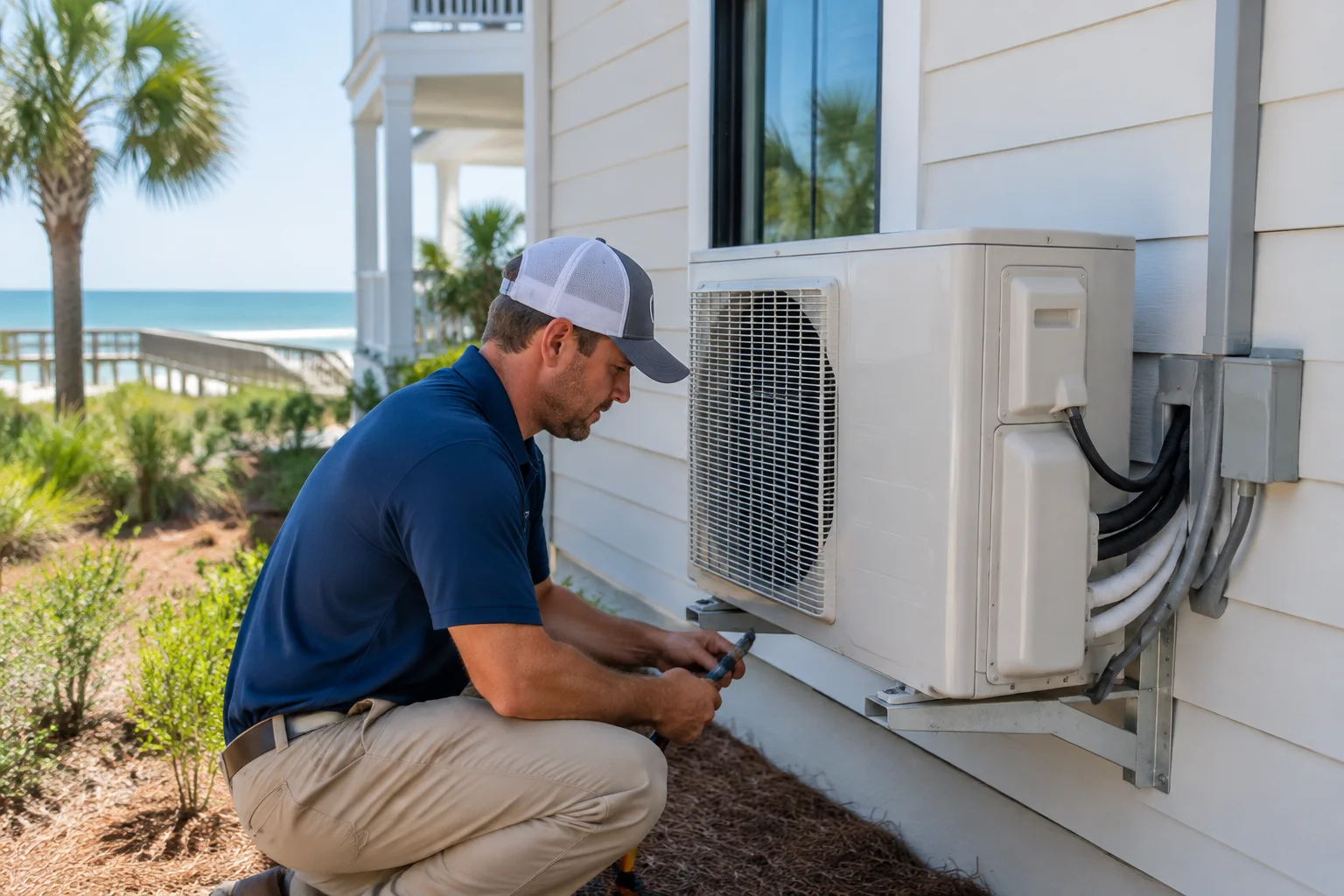
A ductless mini-split connects an outdoor unit to one or more indoor air handlers through refrigerant tubing, wiring, and a condensate drain. Most residential systems are heat pumps, providing both cooling and heating. Rather than moving conditioned air through traditional ductwork, each indoor unit serves its intended zone directly.
That arrangement can work well in older beach cottages with limited attic space, remodeled rooms, additions, and upstairs bedrooms. Newer homes may also benefit when a home office or guest suite has a different schedule from the rest of the house. For seasonal rentals, separate zones can offer flexibility, provided controls are straightforward for guests.
Ductless is not automatically the right fix for every uncomfortable room. Leaking ducts, restricted vents, poor insulation, or an underperforming central system may be the underlying problem. A useful evaluation compares correcting those issues with adding a dedicated mini-split.
Coastal Humidity Changes the Planning Conversation
Along the 30A corridor, long cooling seasons, moist outdoor air, and salt exposure affect HVAC performance. A room can reach the thermostat setting and still feel clammy if moisture remains high. Open patio doors, frequent guest turnover, and air leakage around older windows can keep adding humidity.
During cooling, moisture condenses on the cold evaporator coil and drains outside through the condensate system. Effective humidity control depends on equipment selection, operating conditions, airflow, and runtime. Variable-speed equipment can often operate for longer periods at lower capacity, but it still needs to be properly matched to the space.
A practical indoor relative humidity target is often around 40 to 50 percent, with sustained readings above 60 percent warranting attention. A separate hygrometer can help identify trends. Persistent dampness may call for air sealing, ventilation adjustments, or a dedicated dehumidifier rather than a lower temperature setting.
Size for the Actual Room, Not Just Its Square Footage
Homeowners searching for mini split installation near me should ask how the proposed capacity was calculated. Square footage alone leaves out ceiling height, insulation, window area, solar exposure, occupancy, and air leakage. A west-facing room with large windows can behave very differently from a shaded room of the same size.
Too much capacity can create its own problems
An oversized unit may satisfy the temperature setting quickly without removing enough moisture, particularly during mild, damp weather. Inverter-driven equipment can reduce output, but every system has a minimum capacity. Oversizing beyond that operating range can still cause cycling and uneven comfort.
Multiple zones need a coordinated design
A multi-zone outdoor unit does not necessarily deliver every connected indoor unit's maximum rated capacity simultaneously. Equipment combinations, diversity assumptions, and manufacturer limits matter. Most standard residential multi-zone systems also require connected zones to share a heating or cooling mode. These details should be explained before equipment is selected.
Indoor Placement Determines How Comfort Spreads
A wall-mounted air handler needs a clear path to distribute air and draw room air back through its intake. Installing it behind a tall cabinet or directly above an obstruction can create uneven temperatures. Placement should also allow safe access for filter cleaning, coil service, and drain inspection.
One indoor head in a hallway usually cannot reliably condition several bedrooms with closed doors. Door position, room layout, and distance affect airflow. Some homes need separate heads; others may suit a compact ducted mini-split serving a small group of rooms.
Adjustable louvers can improve distribution without sending cold air directly onto a bed or sofa. Ceiling fans may help occupants feel comfortable at a slightly higher cooling setting, but they do not remove humidity. Fans and louver changes cannot compensate for a fundamentally undersized or poorly located system.
Look at Existing Ductwork Before Adding Equipment
If a mini-split will supplement central air, evaluate both systems together. A hot bedroom might have a crushed supply duct, an undersized return path, or a disconnected branch in the attic. Adding another cooling source without investigating can leave the original energy loss in place.
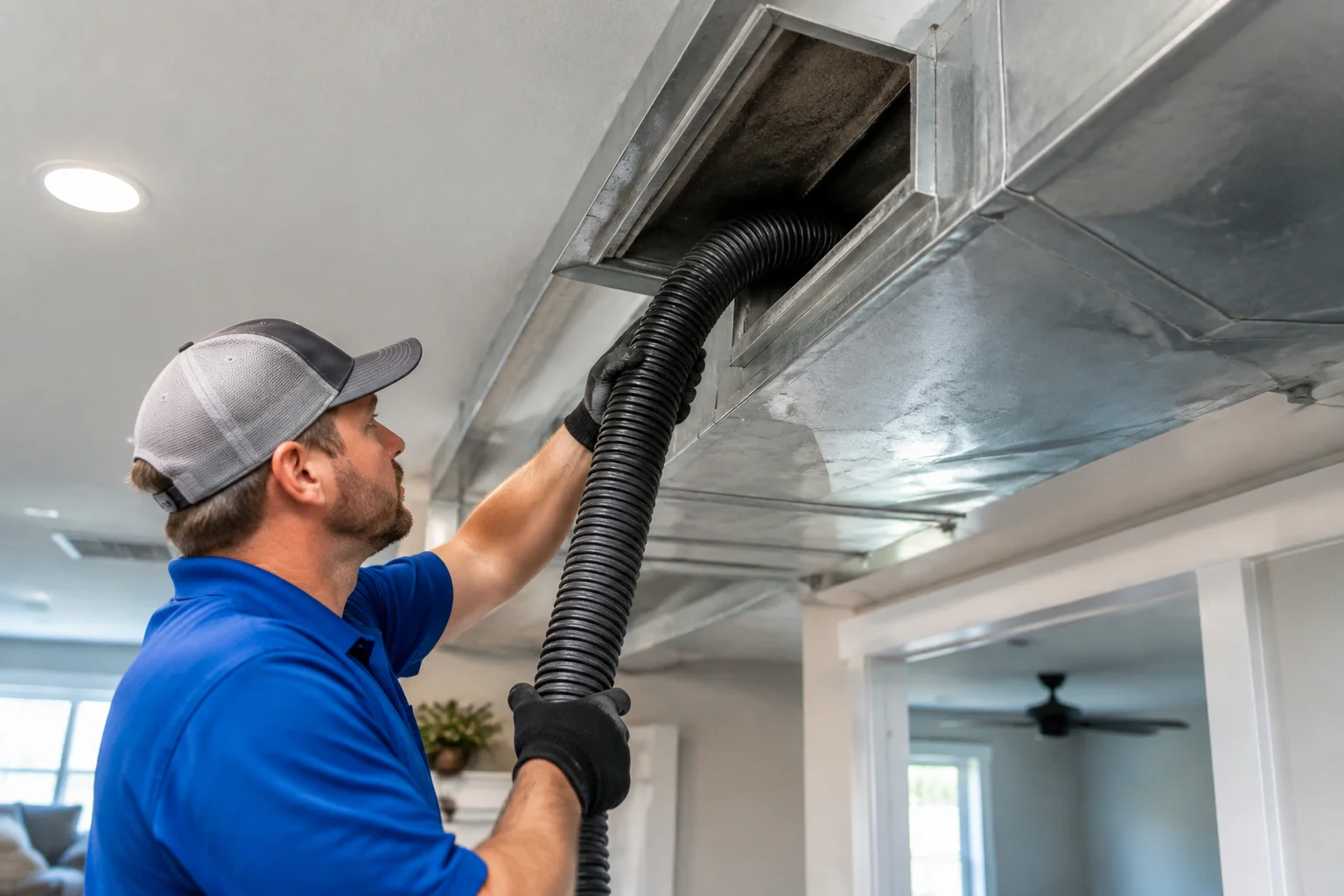
A professional duct inspection in 30A can help identify those problems. Depending on the findings, ductwork repair or modifications may be more appropriate than new equipment. Where leakage is confirmed, duct sealing and Aeroseal services may help, subject to the duct system's condition and suitability.
The same whole-home approach matters when central equipment includes furnaces. A mini-split can supplement a difficult room without replacing the need for furnace service, central air conditioning repair, or airflow balancing elsewhere.
Give the Outdoor Unit a Coastal Installation Plan
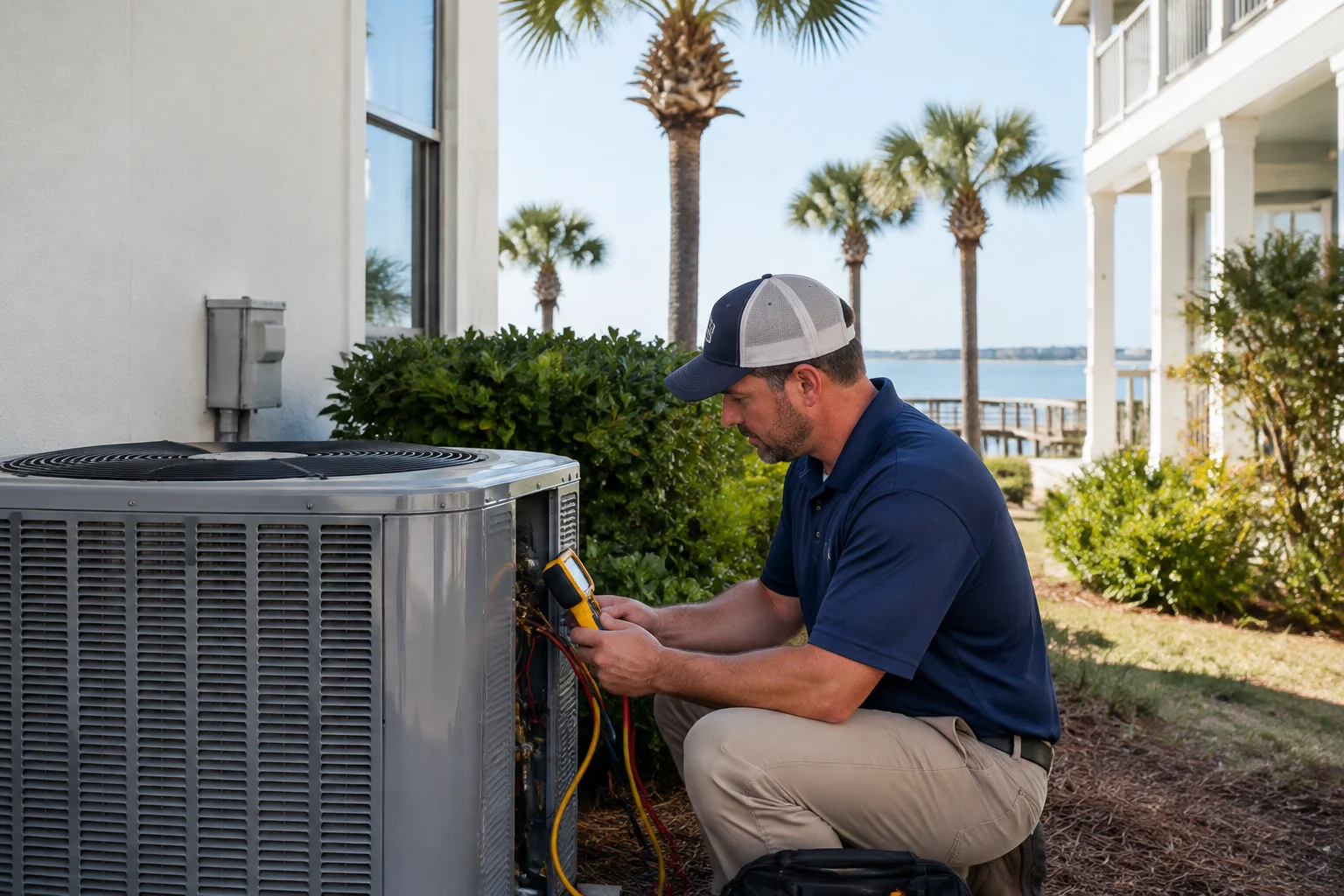
Outdoor units face salt air, wind-driven rain, vegetation, and debris along 30A. Salt exposure can accelerate corrosion on coil surfaces and metal components. Equipment selection should consider manufacturer-supported coastal protection options, while placement should preserve airflow and service access.
The outdoor heat exchanger acts as a condenser during cooling and an evaporator during heating. Blocking its airflow with a decorative enclosure can reduce efficiency and strain operation. Required clearances, secure mounting, local wind requirements, and applicable flood-elevation requirements all belong in the installation discussion.
Do not pressure-wash coils or apply an aftermarket coating without manufacturer approval. Ask the contractor about appropriate cleaning methods and inspection frequency for the property's exposure. Homes close to the beach may require more attention than sheltered inland properties, even when the equipment is similar.
Read the Symptoms Before Resetting the System
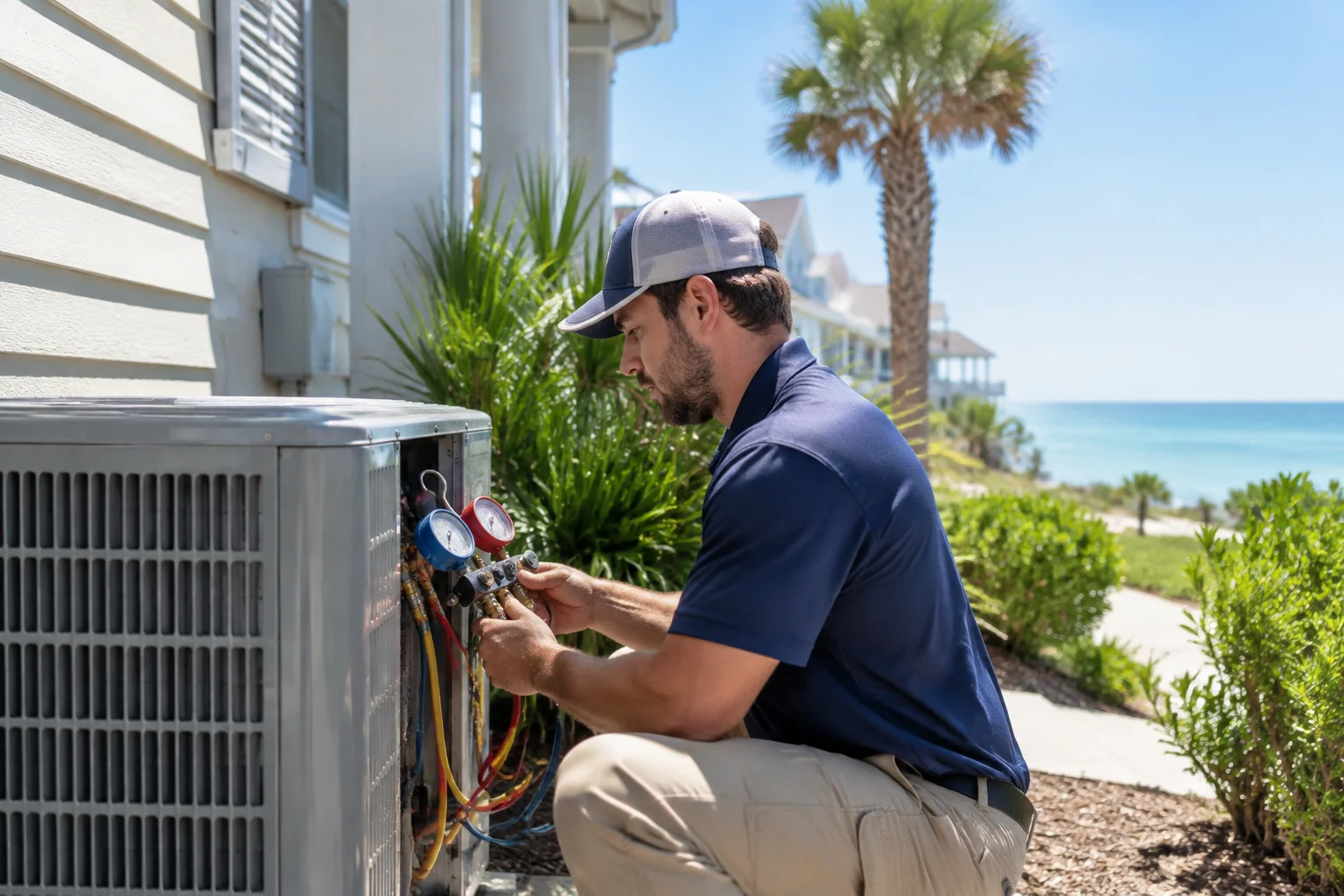
A mini-split that runs but does not cool properly needs more than a guess about refrigerant. Restricted filters, dirty evaporator coils, outdoor airflow problems, sensor faults, and refrigerant leaks can produce overlapping symptoms. Homeowners searching for ductless mini split repair near me should expect diagnosis before a repair recommendation.
Weak airflow, ice, or uneven temperatures
Check the selected mode, fan setting, and accessible filters according to the owner's manual. Keep furniture and curtains clear of the unit. Ice on tubing or the indoor coil is not normal cooling performance. Stop cooling operation and arrange service rather than repeatedly restarting the system.
Water indoors or a persistent musty smell
A blocked drain line, failed condensate pump, damaged drain connection, or installation issue can allow water to escape indoors. Turn off the affected unit if it is leaking and protect nearby surfaces. Persistent odors warrant inspection of the coil, blower, drain pan, and other possible moisture sources in the room.
Poor heating during cooler weather
Heat pumps can temporarily pause heating during defrost, and brief outdoor steam can be normal. Persistent icing, repeated error codes, or extended loss of heat is different. Heat pump repair requires checks of controls, sensors, refrigerant operation, and airflow, not an assumption that every heating complaint is a thermostat problem.
Filters, Controls, and Indoor Air Quality
Most wall-mounted mini-splits use washable mesh filters that mainly capture larger particles. They are not equivalent to high-efficiency whole-home filtration, and a standard ductless unit generally does not bring in fresh outdoor air. Indoor air quality may require a separate strategy for ventilation, particle filtration, and moisture management.
Do not add dense aftermarket filter material unless the manufacturer permits it. Excessive resistance can reduce airflow. Households concerned about allergies may benefit from a properly sized portable HEPA cleaner or compatible filtration on an existing central system.
Thermostat installation also deserves a compatibility check. Many mini-splits use proprietary controls, and a conventional smart thermostat may require an approved interface or limit some functions. Ask whether a wall controller or remote temperature sensor would improve comfort before assuming a familiar thermostat brand is the best option.
A Maintenance Routine That Matches Coastal Use
Inspect accessible filters regularly and clean them at the interval specified by the manufacturer, sooner when pets, heavy use, or visible buildup justify it. Let washable filters dry as directed before reinstalling them. Keep the outdoor area clear without reaching inside the equipment.
Professional service should address the indoor coil, blower wheel, drain pan, drain line, outdoor coil, electrical connections, controls, and operating performance. Refrigerant is not a consumable that should need routine topping off. A confirmed low charge calls for investigation of leakage or an earlier charging problem.
Schedule air conditioning maintenance before peak summer demand when possible. Rentals benefit from filter and drainage checks between busy occupancy periods. Our article on preventive HVAC service and air conditioning repair in 30A explains why small operating problems deserve early attention.
Efficiency Comes From Daily Operation, Too
Use moderate, consistent temperature settings rather than repeatedly demanding rapid cooling after a large setback. Some setbacks can save energy, but leaving a coastal home warm and poorly dehumidified for extended periods can invite moisture problems. Vacation settings should account for humidity as well as occupancy.
Close doors and windows while cooling, shade strong afternoon sun where practical, and address significant envelope leakage. Dry mode may help under certain conditions, but it is not a substitute for a properly designed humidity-control system. Compare equipment efficiency ratings alongside sizing, installation quality, and expected operating patterns.
Know Which Problems Need Prompt Local Help
Smoke, a burning odor, repeated breaker trips, severe vibration, or water reaching electrical components calls for shutdown if safe and prompt professional attention. After flooding, do not restart submerged equipment until it has been evaluated. Avoid removing panels, handling wiring, or attempting refrigerant repairs.
For someone searching for emergency HVAC repair near me, loss of cooling becomes especially urgent when indoor heat threatens older adults, infants, or people with medical vulnerabilities. Move to a safe, cooled location when necessary. Confirm current service availability directly rather than assuming every contractor offers round-the-clock response.
When comparing a licensed HVAC contractor near me, ask about load calculations, coastal placement, drain routing, permits where required, and access for future service. A Superior Mechanical's 30A HVAC services and broader Walton County service coverage provide a starting point for local help. Whether the property needs one room cooled or several zones coordinated, request an evaluation that addresses temperature, airflow, humidity, and long-term upkeep together.
Find Ductless Mini-Splits in 30A, FL
If you need Ductless Mini-Splits in 30A, FL, visit our local service page or contact A Superior Mechanical today.
Map of 30A, FL
Frequently Asked Questions
Can a ductless mini-split control humidity in a 30A home?
A properly sized mini-split removes moisture while cooling, but humidity control also depends on runtime, outdoor air entering the home, and operating settings. If humidity remains elevated despite normal cooling, an HVAC professional can evaluate sizing, drainage, air leakage, and whether separate dehumidification is needed.
Can one mini-split cool several bedrooms?
One indoor unit may serve an open area well, but it usually cannot reliably cool several bedrooms with closed doors. Separate indoor units or a compact ducted system may provide better distribution. A room-by-room load calculation and layout review help determine the appropriate design.
How often should a coastal mini-split receive maintenance?
Follow the manufacturer's maintenance schedule and have professional service performed at least annually, with more frequent attention when year-round use, rental occupancy, or salt exposure warrants it. Inspect accessible filters regularly and arrange service promptly for leaks, ice, unusual odors, or declining performance.
Related Articles
Photo Gallery