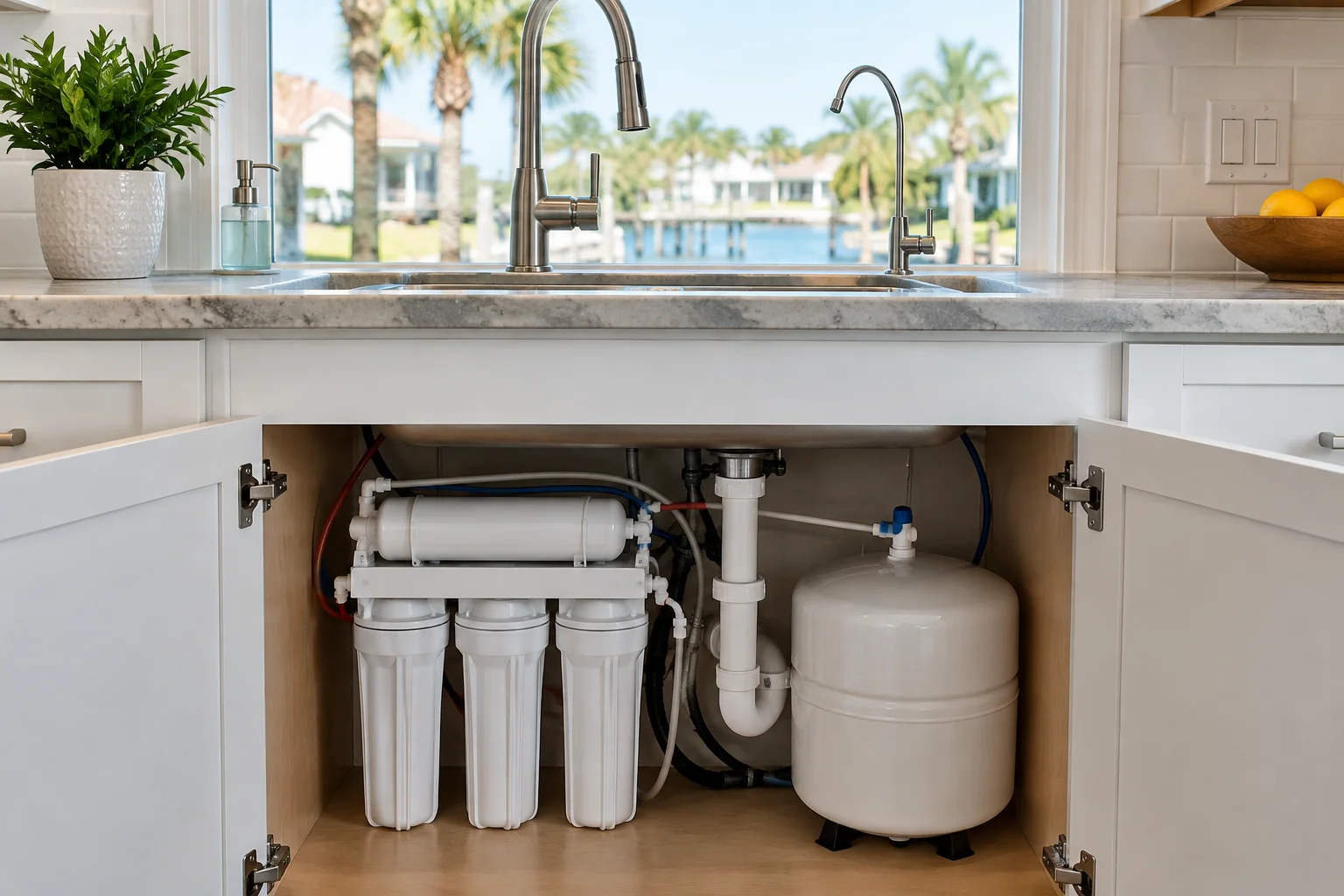
A glass filled at the kitchen sink should not leave you wondering why the water tastes metallic or why yesterday's ice cubes smell like the freezer. When coffee tastes off, dishes dry with spots, and the showerhead develops a chalky crust, it is tempting to look for one filter that fixes everything.
Those problems can have different causes. Reverse osmosis systems in Freeport, FL are especially useful for improving drinking and cooking water, while water softening and whole home water filtration address other concerns. Choosing the right combination starts with understanding what is in your water and where you need improvement.
What Your Water Leaves Behind Can Tell You Something
Picture a typical family kitchen: breakfast glasses beside the sink, a coffee maker warming up, and a pot waiting for pasta water. Water touches almost every task. Small annoyances become noticeable when the same spots, odors, or flavors keep returning.
Spots, scale, and stubborn soap
Hard water spots on glass, dishes, and fixtures often come from calcium and magnesium left behind as water evaporates. The same minerals can form scale buildup around faucets, showerheads, and inside plumbing, especially where water is heated. Permanent glass etching can look similar to spotting, but treatment will not reverse existing etching.
If soap does not lather readily or leaves a difficult-to-rinse film, hardness may be contributing. Laundry can feel stiff, and some people notice dry skin or dull hair after bathing. These symptoms are not proof of a water problem, but they are good reasons to test hardness rather than keep changing detergents.
Taste, color, and odor clues
Metallic tasting water can have several sources, including iron, copper, or plumbing corrosion. A chlorinated taste may reflect a disinfectant residual in utility water. Visible sediment, discoloration, or an unpleasant odor requires a closer look because the source could be the incoming supply, household piping, or water heating equipment.
Cloudy ice cubes are another clue, not a diagnosis. Dissolved minerals can contribute, but trapped air and the way water freezes also affect clarity. Clear water is not necessarily safe water, and cloudy ice does not automatically indicate contamination.
Where Reverse Osmosis Makes the Biggest Difference
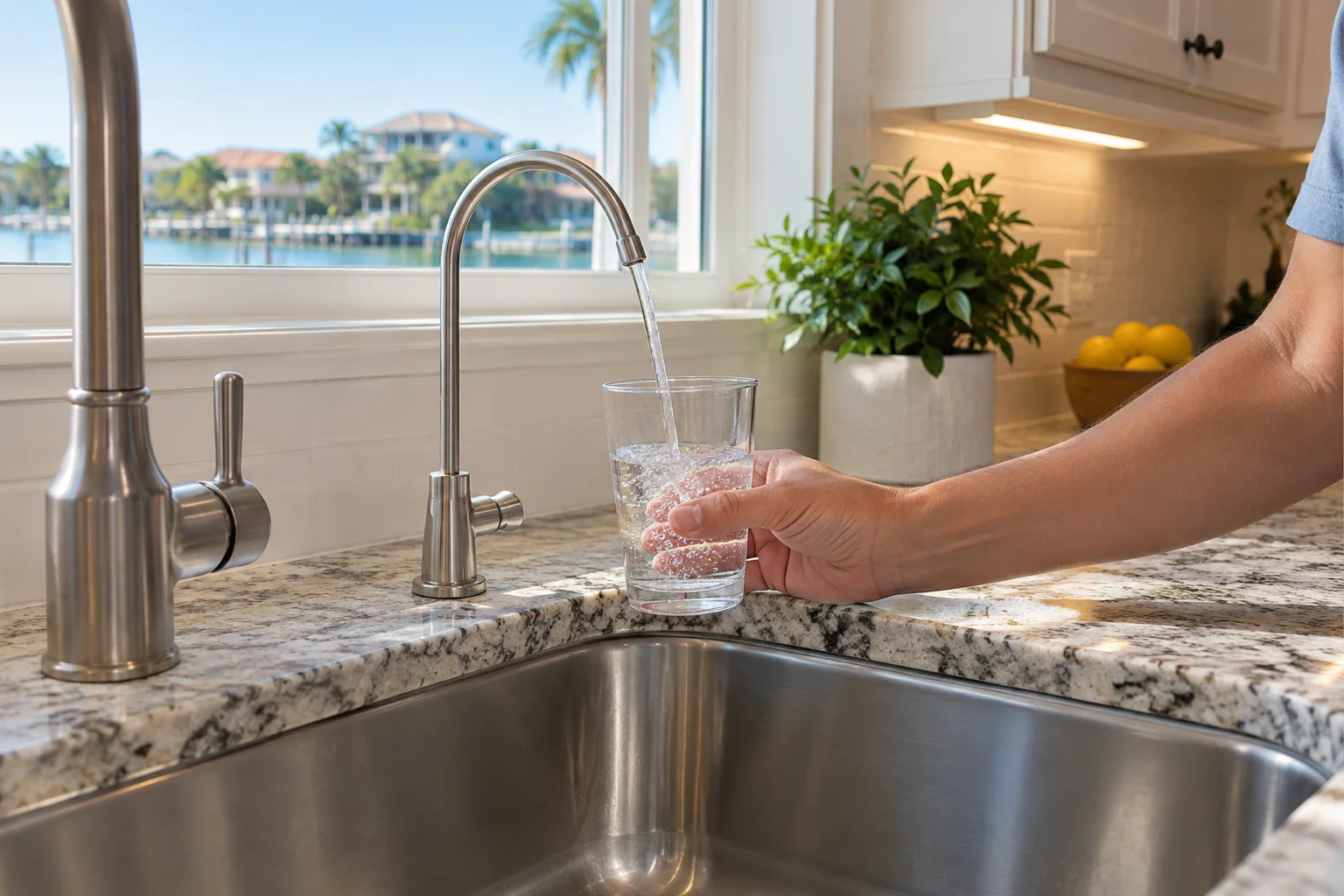
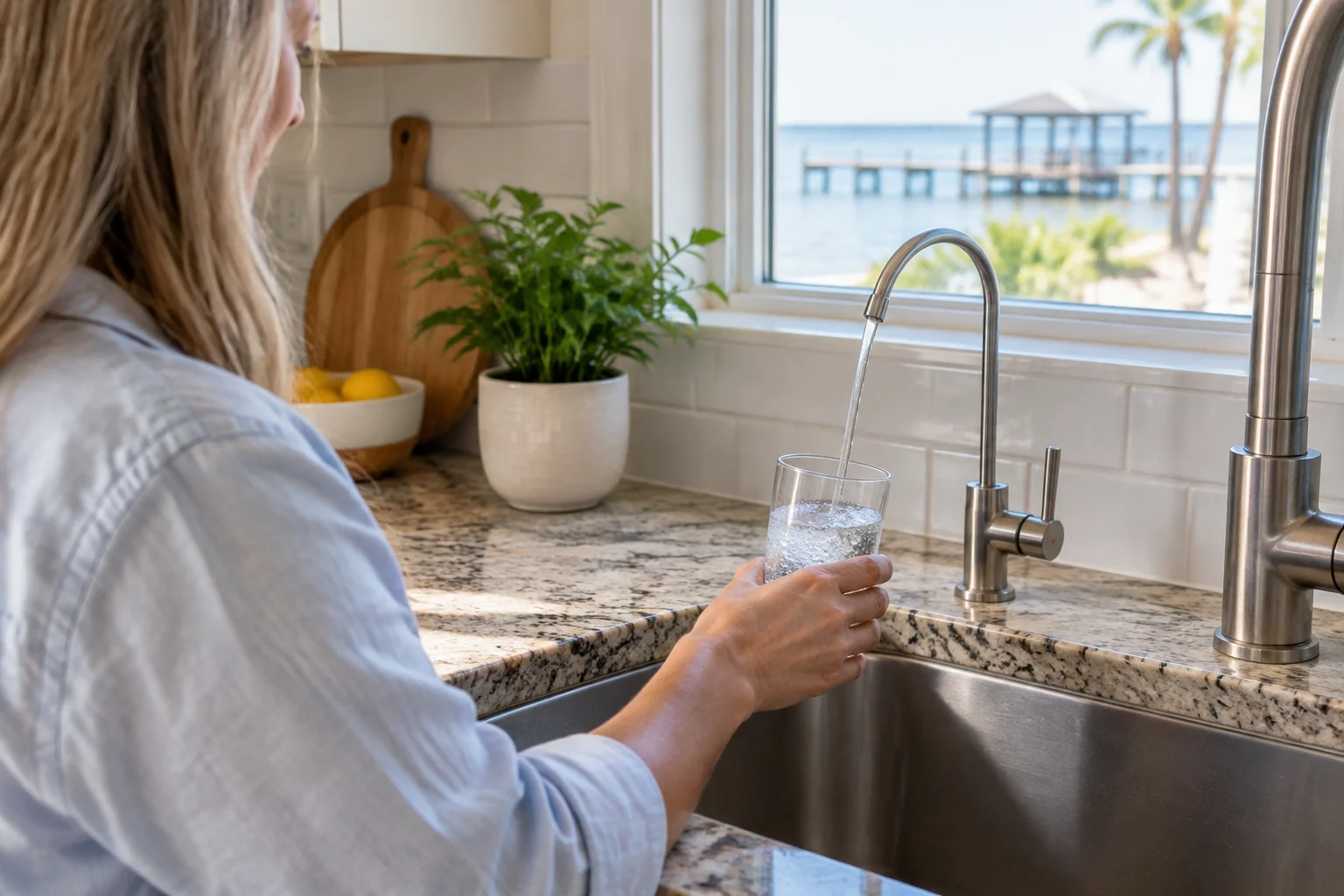
A residential RO drinking water system usually treats water at a dedicated kitchen faucet. Water passes through prefilters and a semipermeable membrane, with many systems using a final carbon filter before dispensing. The exact stages depend on the model and incoming water conditions.
The membrane reduces many dissolved substances that ordinary sediment filters do not capture. Carbon stages commonly help with chlorine-related taste and odor. Performance varies, so look for independent certification and specific reduction claims for the substances identified in your water test. An NSF/ANSI 58 certification does not mean every system reduces every possible contaminant.
For a busy household, the benefit is convenient access to better water for drinking and cooking. Children can refill reusable bottles, vegetables can be rinsed with treated water, and the kettle no longer has to be filled from purchased jugs. Filtered water for coffee and cooking can also make flavors more consistent, although coffee preferences vary with mineral content.
A Superior Mechanical provides reverse osmosis installation, replacement, and maintenance in Freeport. A properly selected system should match your water quality, household demand, and available installation space.
A Kitchen RO System Is Not a Whole-House Softener
This distinction matters when your main complaint is scale in the shower or spots on bathroom fixtures. An under-sink reverse osmosis system treats the water routed through it. It does not soften the water flowing to your washing machine, water heater, or bathtub.
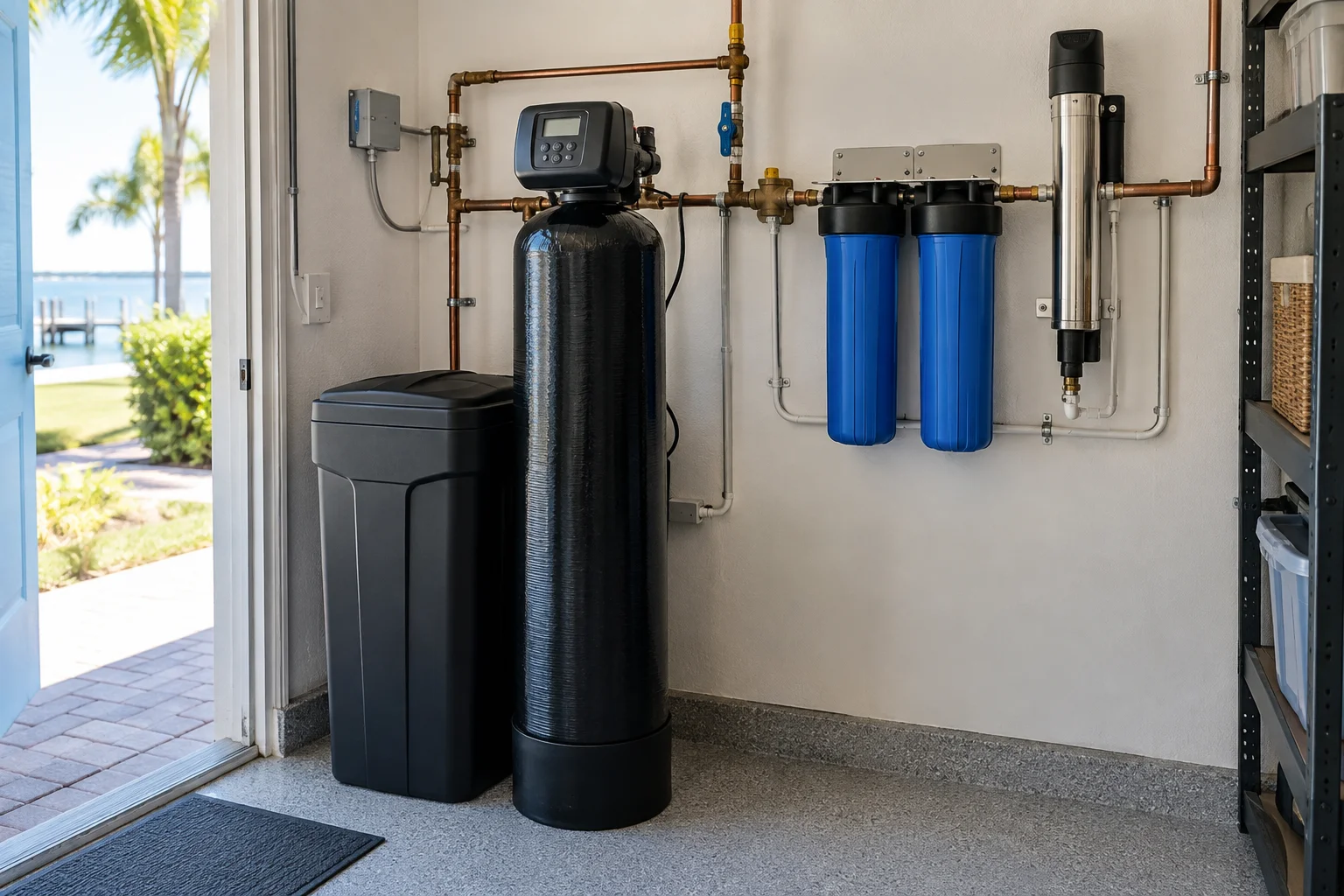
Water softeners reduce hardness by exchanging calcium and magnesium ions, usually for sodium or potassium ions. That makes softening the more direct approach to hardness-related scale, soap residue, and mineral spotting throughout the home. Softening does not replace contaminant-specific filtration or disinfection.
Whole home water filtration treats incoming water before it reaches household outlets. Depending on the equipment, it may target sediment, chlorine taste and odor, or particular contaminants. A basic whole-home carbon filter does not remove hardness, and a sediment cartridge does not remove dissolved minerals.
For some Freeport homes, the sensible arrangement is whole-home treatment for the incoming supply and reverse osmosis at the kitchen sink. A Superior Mechanical's water filtration, RO, and water softener options provide a starting point for discussing those different jobs.
Freeport Water Treatment Starts With the Actual Supply
Freeport's warm, humid climate makes drinking water a daily priority, especially after yardwork or time outdoors. Warm weather also makes cold water, ice, and refillable bottles part of everyday family routines. Climate alone, however, does not establish whether your home's water is hard or contains a particular substance.
Water conditions can differ between utility-connected homes and properties using private wells. Neighborhood supply arrangements, household plumbing materials, and existing treatment equipment can also affect what comes from the tap. A newer home and an older property in Walton County may need different treatment even when they are nearby.
For utility water, review the supplier's current water quality report and test at the home when investigating specific concerns. Private well owners should follow health department guidance for routine bacteria and nitrate testing, along with testing for local concerns. After flooding or suspected well contamination, seek safety guidance rather than relying on a kitchen filter.
Local service matters because treatment must fit the property, not just a regional assumption. A provider serving Freeport homeowners and the wider Walton County area can assess the supply, installation conditions, and ongoing maintenance needs together.
Match the Complaint to the Treatment
Hardness and appliance strain
Mineral scale can reduce heat transfer in water heating equipment and restrict small passages in fixtures and appliances. Homeowners sometimes notice appliances wearing out faster, but hardness is only one possible factor. Installation quality, usage, and maintenance also matter. Test hardness before selecting a softener, and have existing scale-related restrictions evaluated separately.
Unpleasant drinking water
For poor tasting coffee, cooking water with an off flavor, or persistent mineral taste, RO may be a useful point-of-use solution. Carbon filtration may be enough if chlorine taste is the only concern. Testing helps avoid paying for unnecessary equipment or buying a filter that misses the actual cause.
Sediment, discoloration, and odors
Sediment in household water may call for an appropriately sized sediment filter, but recurring particles should also prompt source investigation. Rust-colored water can involve iron or corrosion. An odor limited to hot water may point toward the water heater rather than the entire supply.
If water changes suddenly, contact your utility or a qualified professional before assuming it is a routine filter issue. Follow any boil-water or do-not-use advisory exactly. A standard residential RO system is not a substitute for emergency instructions or verified microbiological treatment.
Choosing Equipment Without Buying More Than You Need
Start with test results and household use, then compare equipment. Consider how much drinking water the family uses during the busiest hour, whether you want a refrigerator connection, and how much cabinet space is available. Tank-style and tankless systems have different pressure, space, electrical, and delivery requirements.
RO systems send a portion of incoming water to the drain during treatment. Efficiency varies by model and operating conditions, so ask about recovery performance, available pressure, and whether a booster pump is necessary. Advertised daily production is measured under specified conditions and may differ from real-world output.
If you are comparing AO Smith water filtration products, evaluate the specific model's intended purpose, certifications, replacement cartridge availability, and maintenance requirements. The brand name alone does not tell you whether a unit softens water, reduces sediment, or provides reverse osmosis treatment.
Homeowners searching for a reverse osmosis system near me should ask who will install and service it, not just what the equipment costs. Accessible replacement parts and clear maintenance instructions matter long after installation day.
Installation Details That Affect Daily Use
A good installation includes more than placing filters beneath a sink. The installer should evaluate pressure, feed-water conditions, shutoff access, drain connections, faucet placement, and service clearance. Connections must meet applicable plumbing requirements, including required backflow protection.
A refrigerator connection needs special attention because an RO system may not provide the flow or pressure the appliance requires without additional measures. Long tubing runs, a small storage tank, or a refrigerator's existing filter can affect delivery. Confirm compatibility before expecting the RO system to supply both the faucet and ice maker.
During a kitchen renovation, plan the treatment system before cabinets and countertops are finalized. This guide to plumbing installation in Freeport homes offers useful context for coordinating water connections with the rest of the project.
Maintenance Keeps Better Water Consistent
Filters and membranes do not last indefinitely. Follow the manufacturer's replacement schedule, adjusted for water quality and actual use. Prefilters protect the membrane, while carbon components have a limited treatment capacity. Delaying replacement can affect performance even before a noticeable taste change occurs.
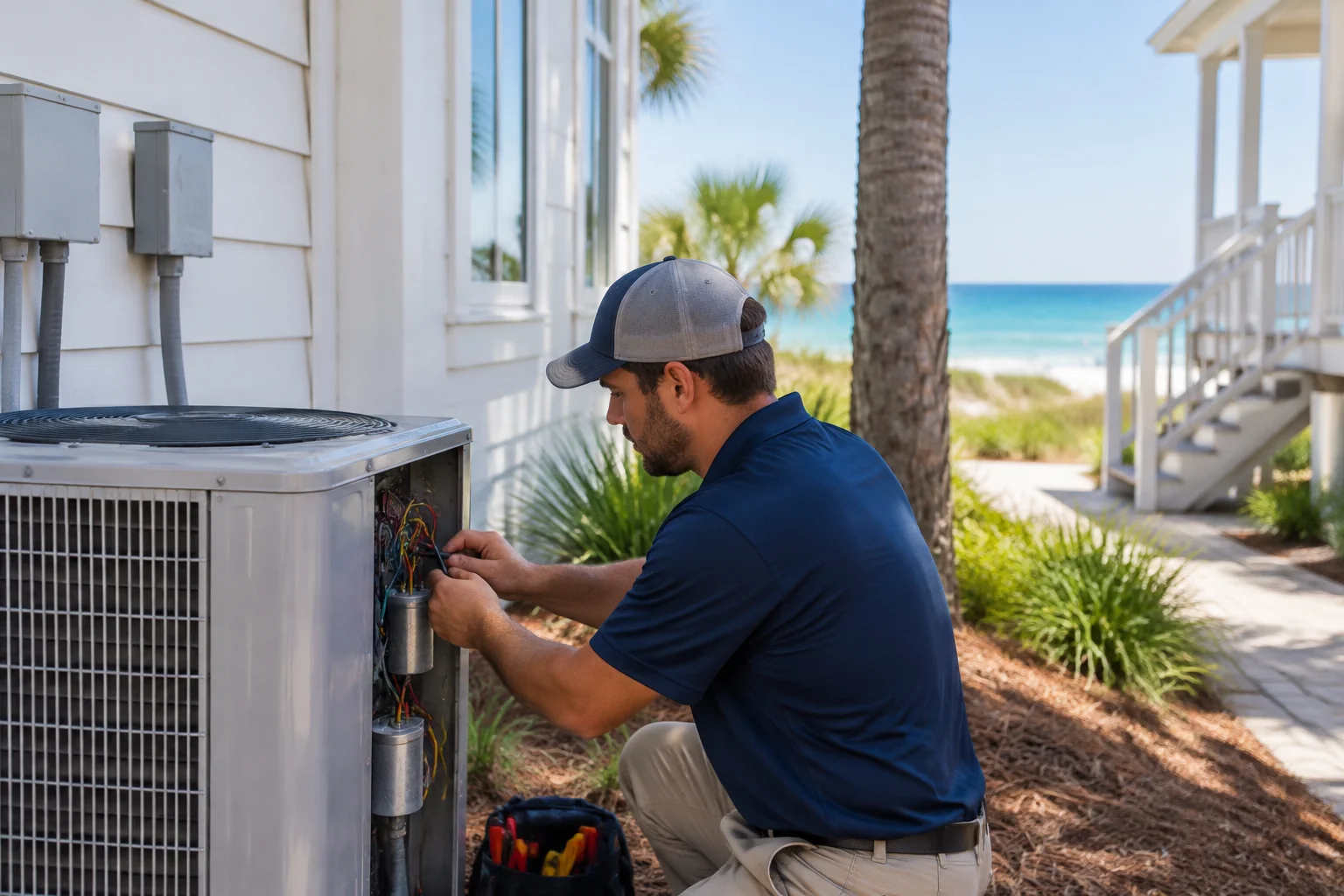
Keep a simple record of installation dates, filter changes, sanitizing, and service visits. RO tanks and tubing should be sanitized according to manufacturer instructions. Reduced flow, slow tank recovery, persistent drain flow, leaks, or returning taste problems are reasons to arrange service rather than change parts at random.
A total dissolved solids reading can help assess membrane performance, but it is not a complete safety test. Systems paired with softeners also need the appropriate salt checks and softener maintenance. Practical RO maintenance habits for nearby 30A homes can help homeowners establish a consistent care routine.
Get a Plan for Your Freeport Home's Water
Before scheduling an assessment, note whether the problem affects hot water, cold water, or both. Record which fixtures are involved, how long the issue has been present, and whether neighbors report similar changes. Have any water reports and existing equipment information ready.
If your search began with water treatment near me, focus on a provider who explains what each recommended component will and will not do. For scale throughout the house, ask about hardness testing and water softener service. For drinking and cooking water, ask about RO performance, capacity, and maintenance costs.
A Superior Mechanical can help Freeport homeowners plan reverse osmosis installation, replacement, or maintenance around their actual water concerns. The goal is a practical setup: better tasting drinking water at the kitchen sink, appropriate treatment for bathing and laundry, and fewer avoidable water-related problems around fixtures and appliances.
Find Reverse Osmosis Systems in Freeport, FL
If you need Reverse Osmosis Systems in Freeport, FL, visit our local service page or contact A Superior Mechanical today.
For a broader look at whole-home water filtration, reverse osmosis, and water softener options, visit our water filtration, RO, and water softener page.
Map of Freeport, FL
Frequently Asked Questions
Will a reverse osmosis system remove hard water spots throughout my Freeport home?
An under-sink reverse osmosis system reduces dissolved minerals in the water it treats, but it does not treat water going to showers, laundry, or other fixtures. A water softener is generally the more direct solution for household hardness and scale. Testing helps determine whether you need RO, softening, or both.
Can reverse osmosis improve metallic taste, cloudy ice, and coffee flavor?
An appropriately selected RO system can reduce dissolved substances that affect taste and may improve coffee and ice quality. Metallic taste should be investigated because corrosion or metals may be involved. Cloudy ice can also result from trapped air and freezing conditions, so RO does not guarantee perfectly clear cubes.
How often does a residential reverse osmosis system need maintenance?
Follow the specific manufacturer's schedule. Many systems require prefilter and postfilter replacement about every 6 to 12 months, while membranes often last several years. Actual intervals depend on incoming water quality, usage, and system design. Sanitizing and performance checks are also important, especially if flow slows or an unpleasant taste returns.
Related Articles
Photo Gallery