A toilet that refills between flushes, rocks against the floor, or needs a second flush deserves attention before it becomes a bathroom emergency. Some problems come from inexpensive tank parts. Others involve the drain, floor flange, supply pipe, or sewer line, where replacing the toilet alone will not solve the underlying issue.
For homeowners considering toilet repair and replacement in Santa Rosa Beach, FL, the smart approach starts with identifying where the problem begins. A Superior Mechanical helps local homeowners and rental property owners address toilet problems with the surrounding plumbing system in mind.
Local living puts different demands on bathroom plumbing
Santa Rosa Beach includes full-time residences, vacation homes, and short-term rentals, each with different patterns of water use. A guest bathroom may sit unused for weeks, then handle repeated flushing during a busy rental stay. That change can reveal a sticking fill valve, a marginal drain, or a supply connection that has started seeping.
The warm, humid climate also complicates leak detection. Moisture on a toilet tank can be condensation rather than a plumbing leak, especially when cooler water enters a humid bathroom. Drying the surfaces and watching where moisture returns helps distinguish the two.
Heavy rain can worsen existing sewer infiltration or septic drainage problems, but rainfall should not routinely cause a sound toilet system to back up. Local plumbing service matters because the diagnosis should account for the property's age, occupancy, drain layout, and whether wastewater goes to a sewer or septic system.
A running toilet usually starts inside the tank
Check the seal before replacing the whole fixture
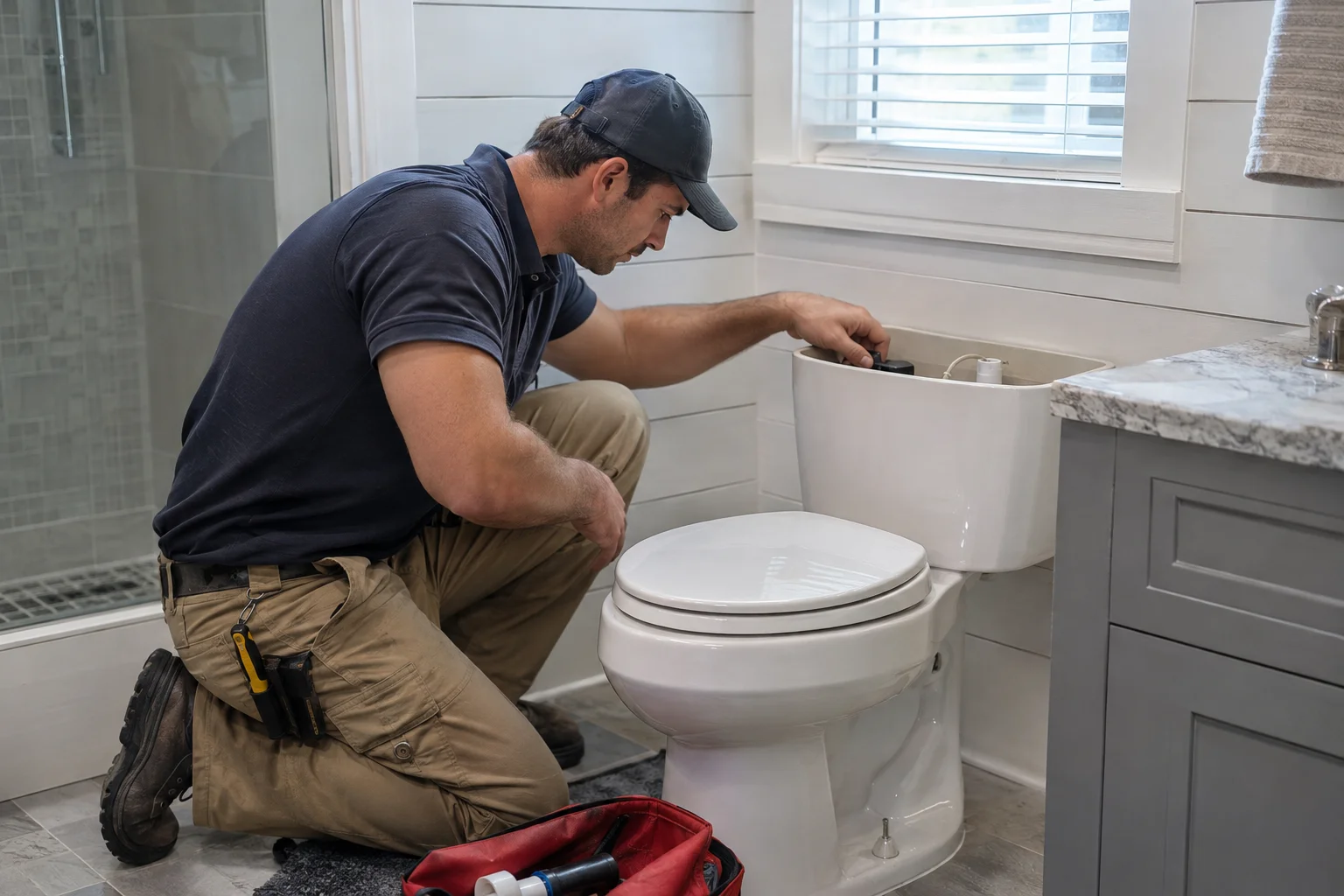
A toilet that runs continuously often has a worn flapper, damaged flush valve seal, tangled lift chain, or fill valve that will not shut off. Intermittent refilling usually means water is slowly escaping from the tank into the bowl. The sound may be subtle, but the wasted water can accumulate between utility bills.
For a simple check, add a few drops of food coloring to the tank and avoid flushing for about 15 to 20 minutes. Color appearing in the bowl suggests a tank-to-bowl leak. Flush afterward to reduce the chance of staining. This test does not identify every possible fault, but it helps confirm that water is escaping internally.
Match replacement parts to the toilet
Not every flapper or seal fits every toilet. Some newer fixtures use a canister-style flush mechanism, and the wrong replacement part can cause poor flushing or continued leakage. The tank water level should follow the manufacturer's mark, with the refill tube properly positioned above the overflow opening.
Homeowners searching for running toilet repair near me should describe whether the toilet runs constantly, refills occasionally, or leaks only after flushing. Those details help narrow the repair. Stop DIY work if the shutoff valve will not close or the tank hardware is badly corroded.
Water around the base needs a careful diagnosis
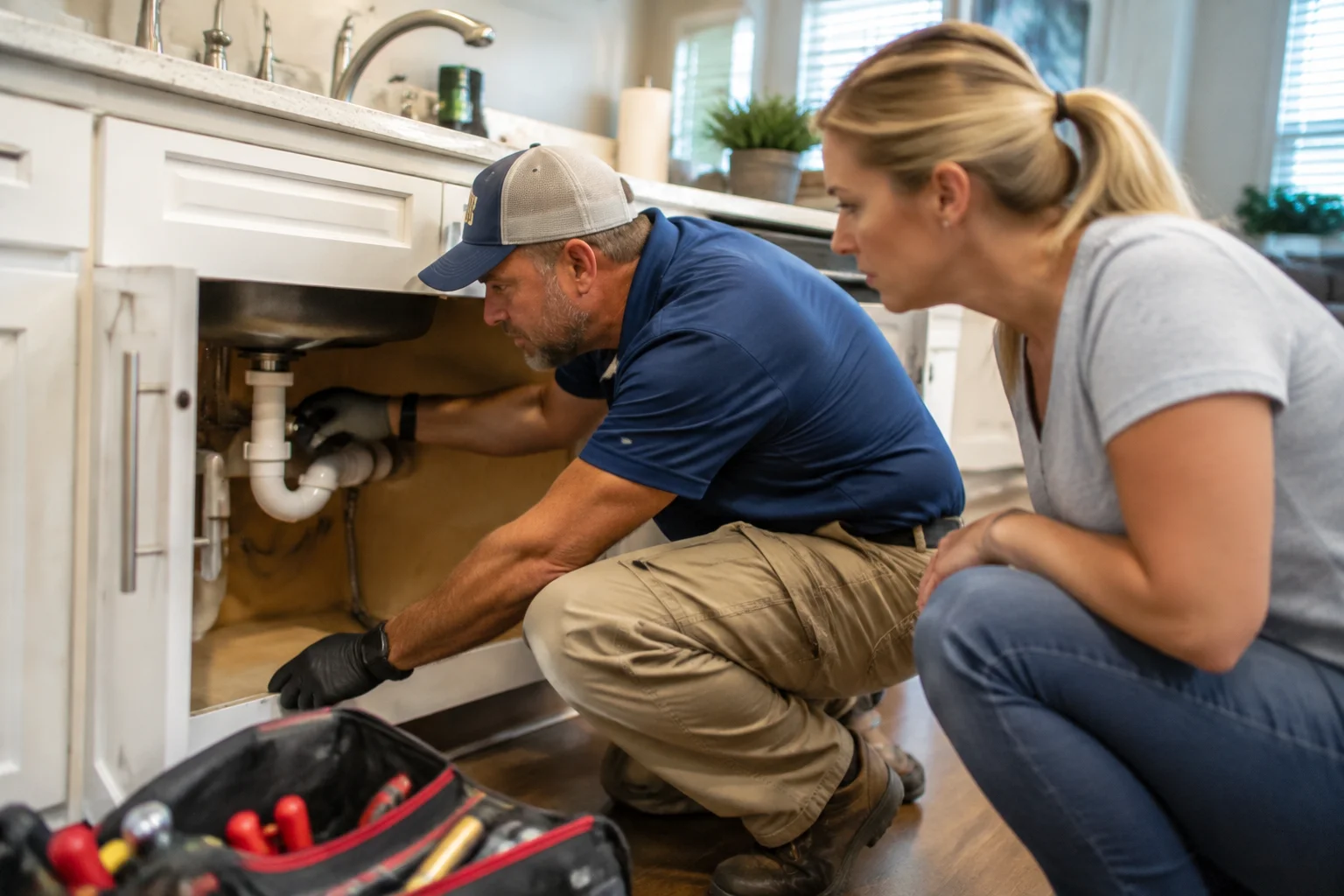
A wet floor does not automatically mean a failed toilet seal. Water can travel down from tank bolts, the tank-to-bowl gasket, the supply connector, or the shutoff valve. Condensation can also collect beneath the fixture. Dry the toilet and nearby floor, then inspect the connections while the tank fills and during a flush.
If water appears at the base specifically when flushing, a failed seal or damaged flange becomes more likely. A rocking toilet can break the seal repeatedly. Simply tightening the mounting bolts may crack the porcelain, and caulking around the base does not repair a leaking connection.
A lasting repair may require lifting the toilet, checking the flange height and condition, replacing the seal, and securing the fixture on a stable surface. Soft flooring, discoloration, or a persistent odor warrants checking for hidden moisture damage.
A cracked tank or bowl generally calls for replacement rather than patching. Stop using the toilet if porcelain is cracked or wastewater reaches the floor. For active supply leakage, close the toilet shutoff valve if it operates safely. Do not force a seized valve.
Recurring clogs may be a drain problem, not a toilet problem
Separate a fixture blockage from a larger restriction
A single clogged toilet may have an obstruction in its built-in trap. Too much paper, wipes, hygiene products, and small objects are frequent causes. Even products labeled flushable can contribute to blockages and should go in the trash rather than the toilet.
If the bowl is rising, stop flushing. For an isolated clog without backup elsewhere, a flange plunger may clear the obstruction. A toilet auger can reach farther into the trap, but improper use can scratch the bowl or push an object deeper. Avoid chemical drain cleaners, which can create splash hazards and leave hazardous liquid behind for whoever clears the blockage.
Homeowners looking for clogged drain repair near me should mention whether nearby sinks or tubs also drain slowly. Gurgling, wastewater rising in a shower, or several affected fixtures can indicate a branch drain or main sewer restriction rather than a defective toilet.
Choose cleaning based on the pipe condition
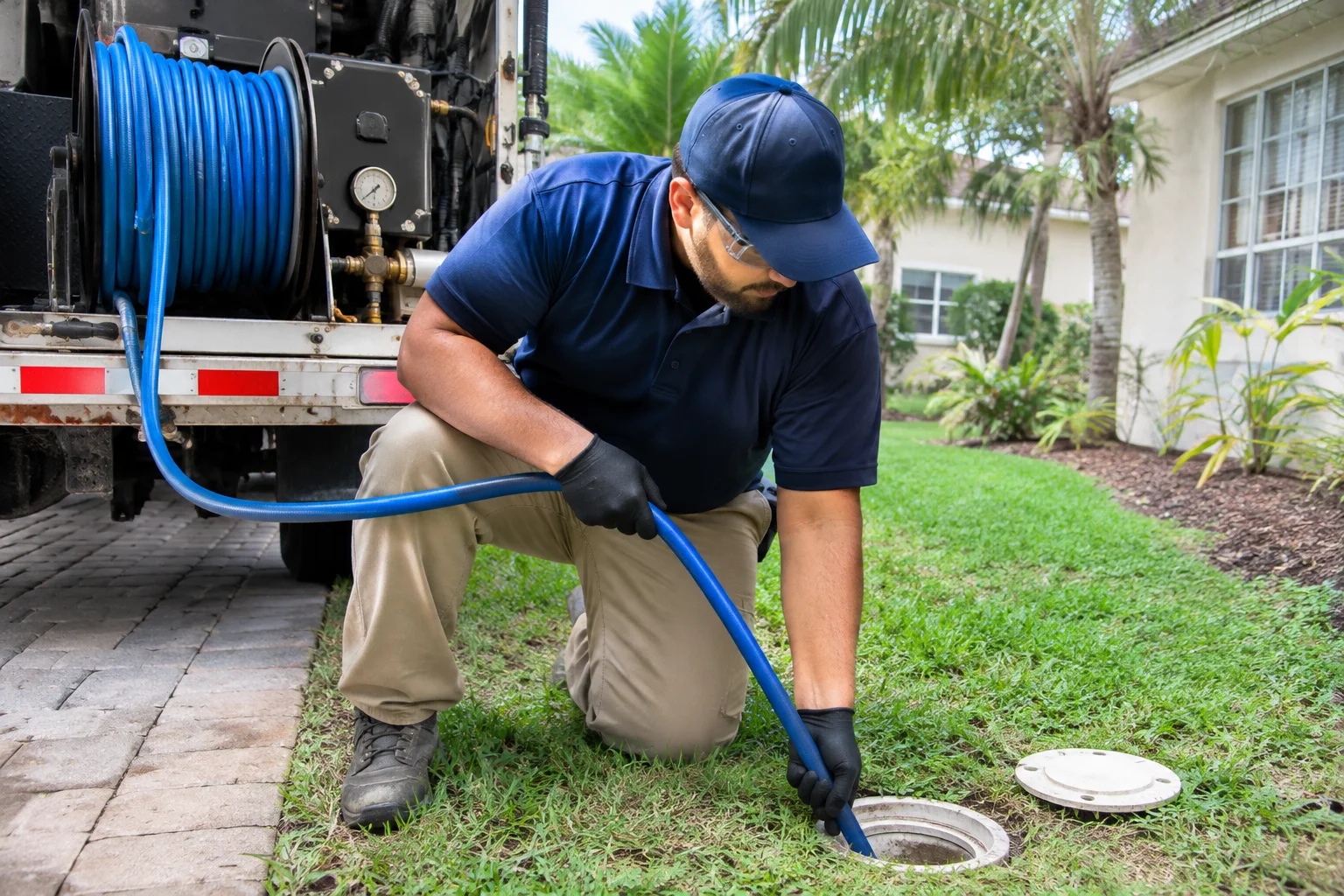
Professional clogged drain and pipe cleaning can address restrictions beyond the fixture. Repeated blockages may justify a camera inspection to look for roots, damaged piping, buildup, or low spots that collect waste.
In suitable pipes, hydro jetting can remove certain stubborn deposits, but it is not appropriate for every damaged or fragile line. Cleaning cannot correct a broken pipe or improper slope. This guide to persistent sewer problems in Santa Rosa Beach homes explains why some clogs keep returning.
Water pressure and mineral deposits affect toilet performance
Most residential toilets use gravity to flush, so household supply pressure mainly affects how the tank refills, not the force of water leaving a properly filled tank. Slow refilling can result from a partially closed valve, debris in the fill valve, a restricted connector, or a supply problem. Increasing pressure is not a reliable fix for a weak flush.
Excessive pressure can stress toilet valves, faucet components, appliance connections, and other plumbing fixtures. A plumber can measure pressure rather than guessing. If several fixtures have poor flow, water line services may be more relevant than another toilet repair.
Hard water conditions vary by water source and treatment. Where mineral deposits are present, they can interfere with fill valves and restrict rim openings over time. Deposits on faucets and showerheads offer clues, but testing is better than assuming. Learn more about cleaner water and longer-lasting plumbing before choosing treatment equipment.
Repair or replace? Consider the fixture and its surroundings
A sound toilet with one worn internal part is often a good repair candidate. Replacement makes more sense when porcelain is cracked, repairs recur, compatible parts are difficult to obtain, or the fixture performs poorly despite a clear drain and properly adjusted components.
Older toilets may also use substantially more water per flush. WaterSense-labeled models use no more than 1.28 gallons per flush and meet performance criteria. Actual savings depend on the existing toilet and household use, so replacing a leaking component may still be the most economical first step.
Before buying, confirm the rough-in measurement from the finished wall to the mounting bolt centers. Check bowl shape, seat height, bathroom clearances, and supply valve location. An elongated bowl can improve comfort but may crowd a compact bathroom.
Installation should include checking the flange, supply connector, shutoff valve, and floor support. If corrosion or deteriorated piping extends beyond the fixture, discuss targeted plumbing replacement rather than attaching a new toilet to unreliable connections. Ask for an estimate that distinguishes fixture costs, installation labor, and any additional repairs.
Small maintenance habits protect toilets and nearby fixtures
Check around toilet bases and supply valves regularly, particularly before and after a rental stay. Listen for unexplained refilling and investigate changes in the water bill. A toilet that seems quiet during a quick walkthrough may still leak intermittently.
Avoid in-tank cleaning tablets unless the toilet manufacturer specifically approves them. Some chemicals can damage rubber seals or other components. Clean bowl openings using manufacturer-approved methods, and avoid abrasive tools that scratch porcelain.
In vacation rentals, provide a wastebasket and a brief reminder to flush only toilet paper and human waste. Keep a suitable plunger accessible. Property managers should document slow flushing, loose fixtures, and leaking valves instead of treating each report as an isolated guest complaint.
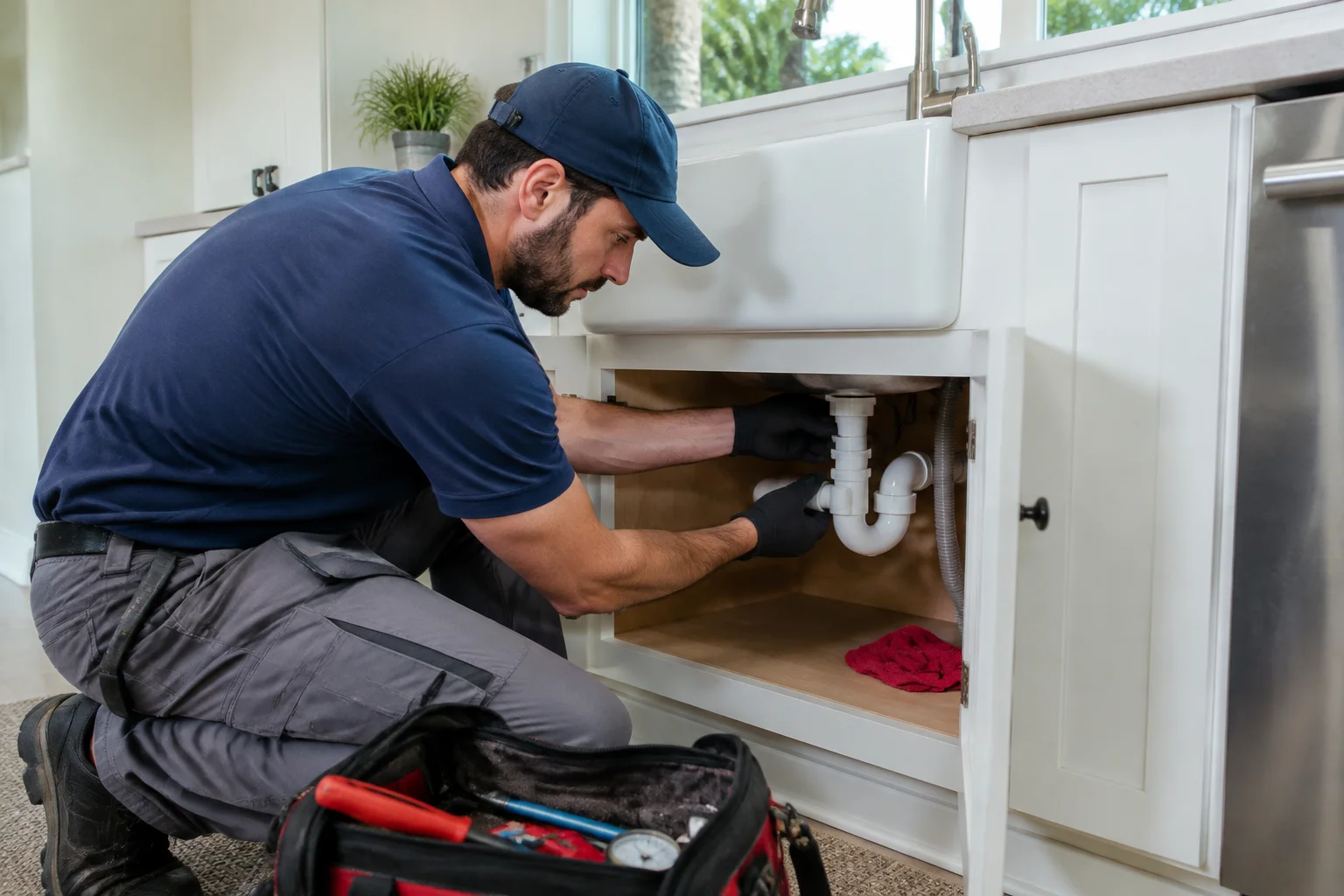
Coordinate toilet maintenance with faucet repair, checks beneath sinks, and manufacturer-recommended water heater service. Toilet leaks and water heater problems are not necessarily related, but pressure issues can affect multiple fixtures. A broader inspection can help homeowners searching for plumbing repair near me identify whether they have one faulty component or several developing problems.
Know which symptoms require urgent plumbing help
An overflowing toilet, sewage in a tub, a cracked tank, or a supply line spraying water needs prompt attention. Stop using affected fixtures. If multiple drains are backing up, avoid running the dishwasher, washing machine, or other water-using appliances until the drainage problem is assessed.
Close the toilet supply valve for a fixture leak if it can be operated safely. For uncontrolled supply leakage, use the home's main shutoff if you know its location and can reach it safely. Keep people and pets away from sewage, and avoid electrical equipment near standing water.
Not every bathroom moisture problem originates at the toilet. Persistent damp flooring, unexplained water use, or an unusually warm floor area can justify investigating a concealed pipe leak or possible slab leak. These symptoms do not prove a slab leak, but they should not be dismissed because the toilet appears dry.
For budgeting guidance before problems escalate, review understanding plumbing costs in Santa Rosa Beach. Active flooding or sewage exposure should take priority over routine estimate comparisons.
Get the right repair for your Santa Rosa Beach property
When a plumber near me search starts with a troublesome toilet, explain what happens, when it happens, and whether other fixtures are affected. Photos of the toilet model information and visible leakage can also help prepare for the visit.
A Superior Mechanical provides plumbing service in Santa Rosa Beach for local homes, vacation properties, and businesses, with service across Walton County. Request a toilet assessment to determine whether a focused repair, drain service, or properly fitted replacement will address the actual cause.
Find Toilet Repair and Replacement in Santa Rosa Beach, FL
If you need Toilet Repair and Replacement in Santa Rosa Beach, FL, visit our local service page or contact A Superior Mechanical today.
Map of Santa Rosa Beach, FL
Frequently Asked Questions
Why does my toilet refill when nobody has flushed it?
Intermittent refilling usually means water is leaking from the tank into the bowl through a worn flapper or flush valve seal. A chain problem or incorrect water level can also contribute. A dye test can help confirm an internal leak, and a plumber can identify the correct replacement components.
Will replacing my toilet fix recurring clogs?
Only if the toilet itself is causing the problem. A replacement will not correct roots, damaged sewer piping, improper pipe slope, or a blockage farther down the drain. If multiple fixtures drain slowly or the toilet repeatedly backs up after clearing, the drainage system should be assessed before replacing the fixture.
What should I do if my toilet leaks around the base?
Stop using the toilet and check whether water is coming from the supply connection, tank, or base during flushing. Close the supply valve if there is an active supply leak and the valve operates safely. A failed base seal, loose fixture, or damaged flange needs proper repair rather than extra caulk or overtightened bolts.
Related Articles
- Why Sewer Problems Linger in Santa Rosa Beach Homes and How to Keep Plumbing Systems Going Longer
- Understanding Plumbing Costs Before Small Problems Get Expensive in Santa Rosa Beach
- A Santa Rosa Beach Homeowner’s Guide to Cleaner Water and Longer Lasting Plumbing
- A Better Electrical Backbone for Santa Rosa Beach Homes: Panels, Wiring, and Everyday Power
Photo Gallery