Fort Walton Beach homes live with a lot of water pressure, humid weather, and coastal conditions that can make water quality feel inconsistent. Even when you have a water softening system, small changes in how water looks, smells, or feels can be the first clue that something is not working the way it should. These are the kinds of symptoms homeowners notice during showers, laundry, and everyday kitchen use, and they often point to a softener issue, a filtration issue, or both.
This guide breaks down what can cause problems with water softening systems in Fort Walton Beach, FL, and what those small water quality symptoms can reveal. If you are trying to make smarter water quality decisions, you will also see where reverse osmosis, whole home water filtration, and AO Smith water filtration fit in.
Why Fort Walton Beach water makes softener performance matter
Hard water is common across Okaloosa County, and it is not just about “feeling” hard. Hard water is typically high in minerals that form scale. When scale builds up, it can show up everywhere: on glass, in showerheads, and around faucets. It can also interfere with how efficiently your water heater heats and how reliably appliances run.
In a coastal area like Fort Walton Beach, homeowners also tend to notice more variability in how water looks and tastes depending on supply conditions and household plumbing. That is why water treatment service matters. A properly sized and maintained system helps protect the home from scale buildup and helps keep drinking water and cooking water tasting clean.
Hard water spots on glass and fixtures: the symptom with the clearest cause
One of the most common “small” signs is visible scale. You might see it as:
- Hard water spots on glass shower doors and bathroom mirrors
- Scale buildup on faucets and showerheads
- White crust around plumbing connections and spouts
When these show up after you already have a water softener, it usually means the system is not removing enough hardness minerals. That can happen even if the softener is running. The mineral removal step depends on salt, brine formation, correct settings, and proper regeneration timing.
Common causes behind scale buildup on faucets and showerheads
Homeowners often assume scale means “the water is hard,” but the real question is whether the softener is working consistently. Problems can include:
- Salt issues: Salt bridging, low salt level, or using the wrong salt type can prevent proper brine production. The result is weak regeneration and leftover hardness.
- Regeneration timing problems: If the system regenerates too rarely, it may not keep up with household water use. If it regenerates too often, it may not fully process properly and can waste resources.
- Clogging or fouling: Sediment and fine particles can work their way into components. This is where whole house water filtration near me searches can become relevant, because prefiltration can protect the softener.
- Incorrect hardness settings: If the water hardness setting on the control is wrong, the softener may regenerate based on inaccurate assumptions.
- Worn or failing parts: Valves, seals, and control components can wear over time. A system can still “run,” but not in the correct sequence.
Dry skin or dull hair after bathing: when softened water still feels harsh
Another clue shows up during bathing. Many homeowners describe dry skin from hard water, itchy feeling after showers, or hair that looks dull and feels less manageable. Even if the shower does not look scaled, hardness minerals can still affect how soap and shampoo behave.
Softened water usually improves lather and rinse. When that does not happen, it can mean the softener is not delivering enough softened water to the taps you use most.
What can cause “softener is on” but bathing still feels dry
- Insufficient soft water flow: If the system is undersized for household demand, it may soften only part of the day or certain fixtures.
- Bypass or plumbing routing issues: If the softener is bypassed during service or if plumbing was altered, water may be flowing unsoftened.
- Channeling or resin performance decline: Over time, resin can degrade or become less effective, reducing hardness removal.
- Soap that does not lather or rinse well: This symptom often pairs with hardness and can also be worsened by sediment in household water.
Soap that does not lather or rinses poorly: a practical test
If you notice that soap does not lather or does not rinse well, you are likely reacting to mineral film. Hard water makes it harder for soap to work as intended. That is why this symptom often appears alongside scale buildup on fixtures and dry skin from hard water.
It also affects laundry. Clothes can feel stiff, and towels may lose softness faster. When homeowners start seeing these changes, it is a useful moment to evaluate whether water softener service near me is needed, or whether additional filtration is required upstream.
Cloudy ice cubes and metallic or chlorinated taste: softening is only part of the story
Some of the most confusing symptoms are taste and clarity. Cloudy ice cubes can indicate suspended particles or air plus mineral effects. A metallic, chlorinated, or unpleasant taste can also point to issues beyond hardness, such as:
- Residual sediment in household water
- Water treatment chemistry changes
- Inadequate carbon filtration
- System media that is not doing its job
Softening primarily addresses hardness minerals. It does not automatically solve taste and odor. That is where homeowners often look for drinking water filter near me or consider reverse osmosis installation near me for drinking water and cooking water.
Quick kitchen checks that reveal water quality changes
Try these small observations during a normal family kitchen routine:
- Poor tasting coffee and cooking water: If coffee tastes flat or metallic, your water filtration approach may need adjustment. Scale and sediment can also affect kettle performance.
- Cloudy ice cubes: If ice forms cloudy, it can be from mineral content or suspended particles. Clean drinking water systems typically improve clarity.
- Discoloration during storage: If water looks slightly discolored from the tap at certain times, it can be a sediment or distribution issue that softening alone cannot fix.
For many Fort Walton Beach families, the kitchen is where water quality problems become obvious first. When you brew coffee, fill a pot, or fill a glass, you want water that tastes clean and cooks consistently.
Visible sediment, discoloration, and odor concerns: when filtration is the missing step
Visible sediment and discoloration concerns usually suggest that filtration is not adequate. While a water softening system can help with scale, sediment can still travel through plumbing and build up in appliances, faucets, and showerheads.
Odor concerns can also be linked to water quality variability. If you notice a persistent odor, it is worth evaluating a whole house water filter setup rather than relying only on softening.
Why whole home water filtration may be needed along with softening
A layered approach often works best:
- Whole home filtration helps reduce sediment and protects downstream equipment.
- Water softening reduces scale-forming hardness minerals.
- Drinking water filtration or reverse osmosis improves taste, odor, and clarity for drinking water and cooking water.
When homeowners search for water filtration near me, they are often looking for exactly this kind of protection across the whole home. In Fort Walton Beach, that can be especially helpful when seasonal changes or supply fluctuations make water quality feel less predictable.
Appliances wearing out faster: scale does not stay in the shower
Scale buildup on faucets and showerheads is visible, but the more expensive effects happen inside appliances and plumbing components. When hardness is not controlled, you can see:
- Water heater efficiency dropping
- Shorter lifespan for kettles and hot water appliances
- Reduced performance from dishwashers
Appliances wearing out faster is a strong sign that hard water treatment is not keeping up. It can also show up as cloudy dishes after washing, or spots that look like they never fully come clean.
Dishes that look dull after washing
If dishes and glassware show spots or a film, it often means minerals are still present in the wash water. Hard water spots on glass are a common indicator, but you might also notice:
- Soap residue that does not rinse well
- Dishwasher detergent not performing as expected
- Microscopic scale that builds up on heating elements
These issues can be reduced when water softening is functioning properly and when whole house filtration reduces sediment that can interfere with cleaning.
What can disrupt water softening systems in Fort Walton Beach homes
Below are the most common real-world causes that lead to “my softener is not working” feelings. You may not notice every detail, but these are the usual suspects that a technician evaluates during water softener service.
1) Salt bridging and incorrect salt levels
Salt bridging forms a hard crust in the brine tank. Water cannot dissolve the salt properly, so the system cannot regenerate the resin effectively. Low salt levels can also cause weak regeneration.
Homeowners often notice symptoms first, like scale buildup on faucets, soap that does not lather well, and dry skin from hard water. The salt tank is a simple place to start checking between service visits.
2) Wrong hardness setting or outdated water test data
If the control settings are not aligned with current water conditions, the softener may not regenerate at the right intervals. Hardness can vary based on supply conditions and distribution changes. Even a small mismatch can lead to recurring scale.
If you have had plumbing changes, new fixtures, or a change in household water use, it is also worth confirming the system is still sized and configured correctly.
3) Regeneration frequency that does not match your household
Many systems regenerate based on a schedule or measured usage. If the schedule no longer fits your routine, the softener can run too infrequently. That is when you may see sudden increases in hard water spots on glass and dull laundry results.
On the other hand, excessive regeneration can also cause inefficiency and may not fully solve sediment or taste concerns.
4) Resin performance decline or media channeling
Resin is what actually exchanges hardness minerals. Over time, it can become less effective due to age, fouling, or improper regeneration. Channeling can also reduce contact between water and resin.
When this happens, softening may seem inconsistent. Some days feel better, and other days feel like you are back to hard water.
5) Sediment intrusion that affects the softener and plumbing
Even with a softener, sediment in household water can build up in fixtures and appliances. Sediment can also foul components and reduce softener performance.
This is one reason whole home water filtration near me searches matter. A properly installed whole house water filter can reduce the sediment load and help the softener last longer.
6) Plumbing bypass or valving problems
If the system is accidentally bypassed, or if valves are not switching correctly, water may flow around the softener. You might still see the control panel display, but water is not being treated.
Homeowners notice this as a rapid return of symptoms: scale buildup on faucets, soap that does not lather, and cloudy ice cubes or taste changes depending on what else is feeding the plumbing.
Where AO Smith water filtration, reverse osmosis, and whole home filtration fit
Many Fort Walton Beach homeowners choose a combination system because different water quality issues require different solutions.
AO Smith water softener and filtration options
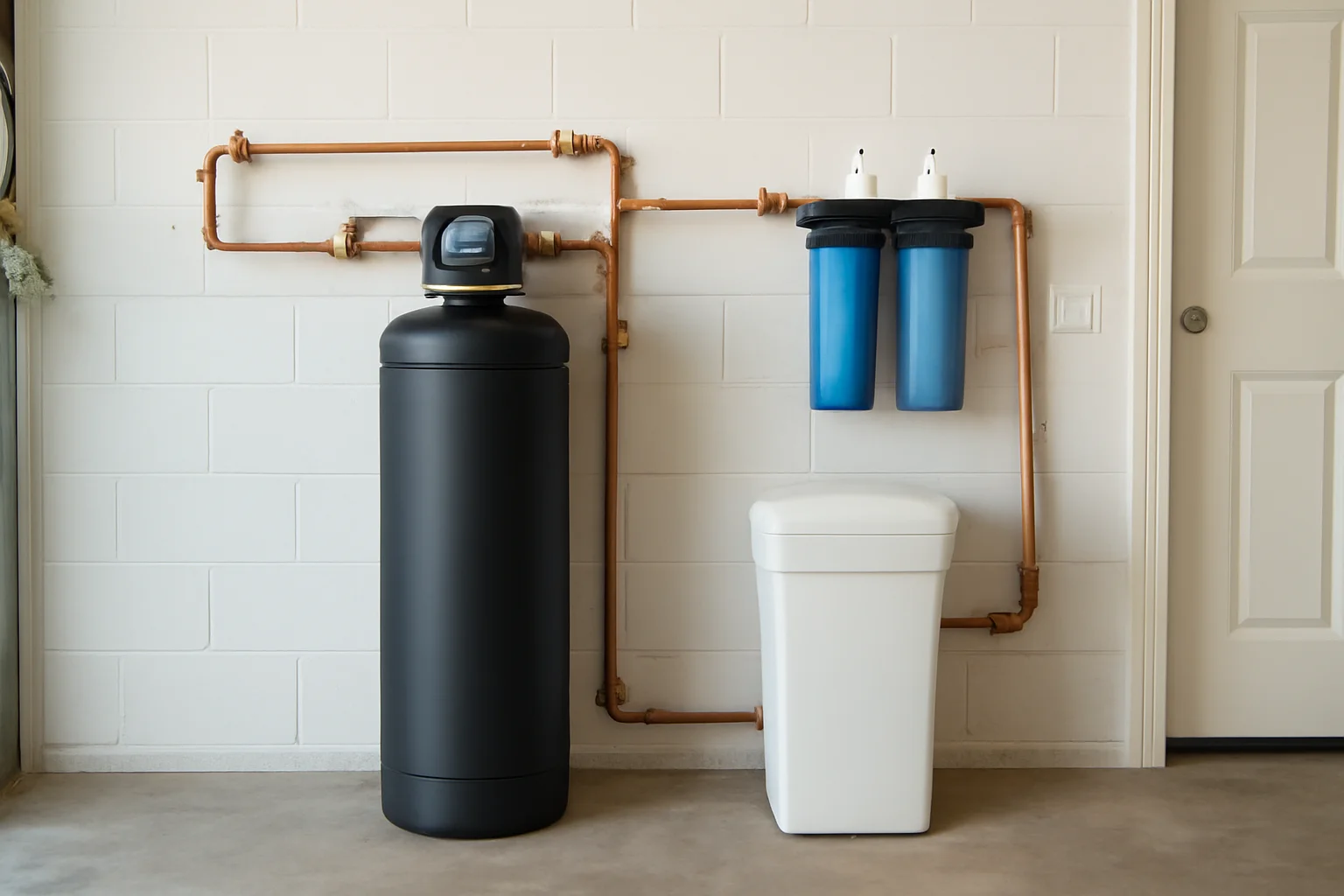
AO Smith water filtration solutions are often selected for both softening and broader filtration needs. If you already have an AO Smith system, service and tuning can be the key to restoring performance. If you are considering upgrades, an AO Smith water softener paired with appropriate filtration can address both scale and sediment-related issues.
Reverse osmosis for drinking water and cooking water
For taste and clarity issues like poor tasting coffee water, metallic flavor, or cloudy ice cubes, reverse osmosis installation near me can be a strong option for drinking water and cooking water. Reverse osmosis systems focus on improving the water you consume most, which is often where family kitchen routines care the most.
In many homes, reverse osmosis complements whole home water filtration and softening. That way, showers and laundry benefit from reduced hardness, and drinking water benefits from improved taste and reduced contaminants.
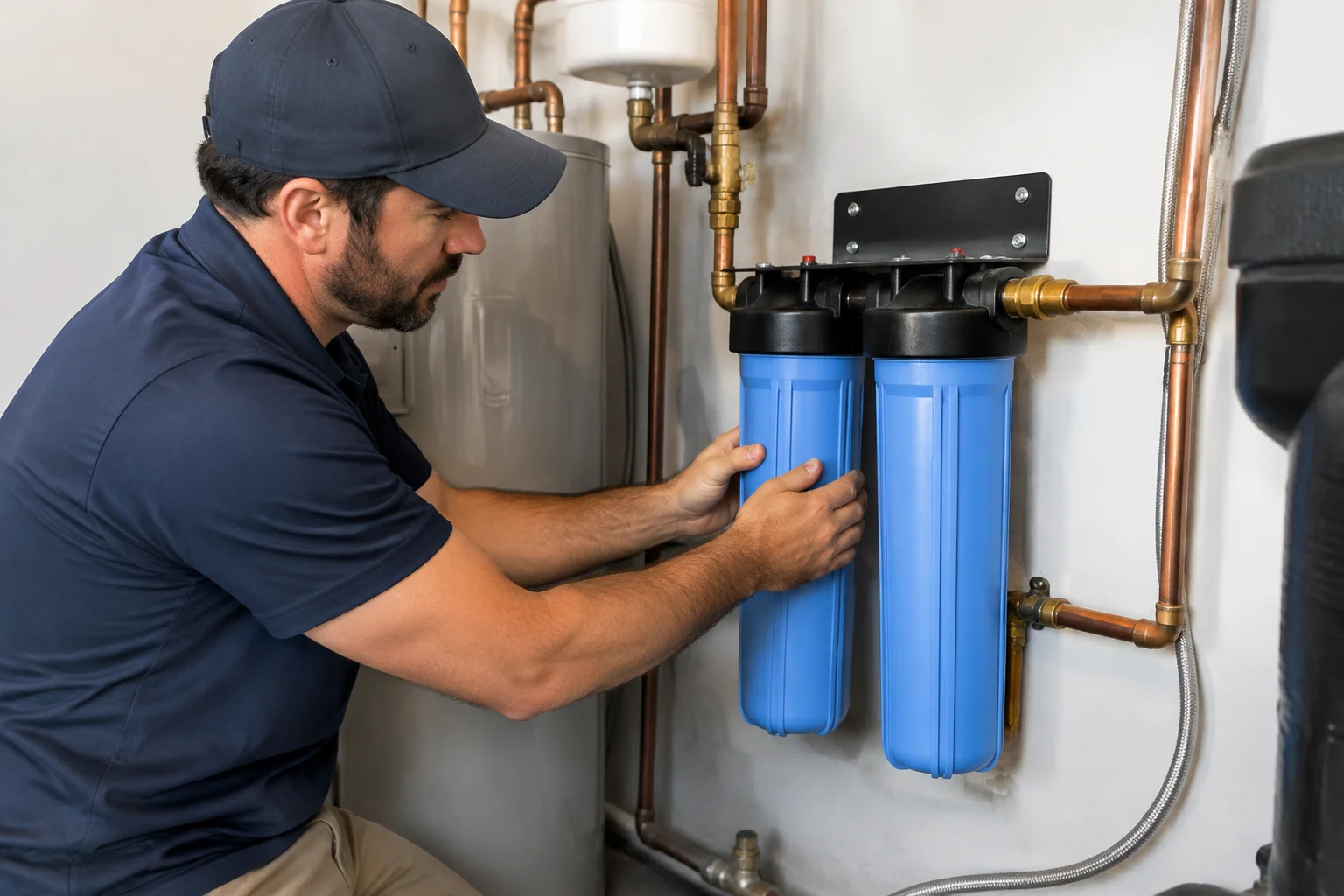
Whole house water filter for sediment and protection
Whole home water filtration helps protect plumbing, appliances, and the softening system itself. If you are seeing visible sediment, discoloration, or odor concerns, homeowners searching for water filtration near me often need a whole house approach rather than a single point-of-use filter.
Maintenance habits that help prevent small symptoms from becoming big repairs
Homeowners can reduce the chance of recurring water softener problems with a few practical steps:
- Keep salt at the right level and check for bridging or crusting.
- Watch for early signs like soap that does not lather, new scale buildup on faucets, or cloudy ice cubes.
- Use the correct salt type recommended for your system.
- Schedule professional checks so settings, regeneration performance, and component wear are evaluated.
- Consider prefiltration if you have sediment in household water or if fixtures clog more often than expected.
These habits do not replace service, but they help keep your system stable through the year. Coastal weather and household water use patterns can make consistency harder, so proactive care helps.
When to call A Superior Mechanical for water softener service in Fort Walton Beach
If you notice scale buildup around faucets and showerheads, hard water spots on glass that keep returning, dry skin or dull hair after bathing, or changes in taste like metallic or chlorinated notes, it is time to evaluate your system. The earlier you address it, the easier it is to protect fixtures, appliances, and your water heater.
For homeowners looking for water treatment near me, A Superior Mechanical provides professional water softening systems in Fort Walton Beach, FL, including installation and service for Evolve and A. O. Smith systems. You can review the specific service area here: /service-areas/okaloosa-county/fort-walton-beach/water-softening-systems-fwb.
If your symptoms include taste, odor, cloudy ice cubes, or sediment concerns, you may also benefit from pairing softening with filtration. Start with the main water filtration landing page: /water-filtration-ro-water-softeners. You can also explore service coverage for the area here: /service-areas/okaloosa-county/fort-walton-beach and /service-areas/okaloosa-county.
Related water treatment decisions homeowners often compare
When you are trying to improve water quality in Fort Walton Beach, you may be choosing between softening, whole home filtration, and drinking water filtration. It helps to understand how each one supports different parts of daily life.
- For showers, laundry, and fixtures: water softening reduces scale and improves soap performance.
- For appliances and plumbing protection: whole home water filtration helps reduce sediment in household water.
- For drinking water and cooking water: reverse osmosis can improve taste and clarity for coffee, ice, and everyday consumption.
If you are also dealing with other home maintenance concerns, you may find it useful to read: /news/a-fort-walton-beach-homeowner’s-guide-to-water-line-replacement-before-small-problems-spread and /news/planning-sewer-repair-around-fort-walton-beach-homes-and-hard-water. Those topics connect to how water quality affects the life of plumbing systems.
And if you want to understand how home plumbing work can intersect with water treatment, see /news/a-smarter-way-to-handle-plumbing-services-in-fort-walton-beach-homes-2 and /news/plumbing-warning-signs-fort Walton Beach-homeowners-should-not-ignore.
Find Water Softening Systems in Fort Walton Beach, FL
If you need Water Softening Systems in Fort Walton Beach, FL, visit our local service page or contact A Superior Mechanical today.
For a broader look at whole-home water filtration, reverse osmosis, and water softener options, visit our water filtration, RO, and water softener page.
Map of Fort Walton Beach, FL
Frequently Asked Questions
Why do I still see hard water spots on glass if I have a water softener?
Hard water spots on glass usually mean the softener is not removing enough hardness consistently. Common causes include low or bridged salt, incorrect hardness settings, regeneration timing issues, clogged components, or worn valve and control parts. A technician can verify brine formation, settings, and system performance.
Can a water softening system fix cloudy ice cubes and bad-tasting coffee water?
Softening mainly reduces hardness minerals that cause scale. Cloudy ice cubes and poor tasting coffee and cooking water can also involve sediment, taste, and odor concerns that softening alone may not address. Many homeowners solve this by adding whole home water filtration and, for drinking water, reverse osmosis installation or drinking water filtration.
What does dry skin or dull hair after bathing tell me about my water?
Dry skin from hard water and dull hair often point to hardness minerals interfering with soap and shampoo. If you already have a softener, it can indicate the system is under-softening your water due to sizing, settings, salt and brine issues, or resin performance decline.
How often should I schedule water softener service in Fort Walton Beach?
Many systems benefit from periodic professional maintenance, especially if you notice new scale buildup on faucets, changes in taste or odor, or soap that does not lather well. Service frequency depends on household usage and system type, but early attention to symptoms can prevent appliance and plumbing scale damage.
Related Articles
Photo Gallery