Callaway homes run on water every day, from coffee and cooking to showers, laundry, and the way faucets and showerheads look after a week. When hard water is in the mix, the changes are easy to miss at first. Then the scale shows up on glass and fixtures, soap starts to feel like it is not working, and appliances start wearing out faster. The good news is that water softening and water filtration can prevent the expensive, frustrating effects before they take over your routine.
This guide explains what water softening does, what everyday hard water signs to watch for in Callaway, FL, and how a properly designed clean water system can improve drinking water, bathing, and household efficiency. If you are searching for water filtration near me or planning an AO Smith water softener, this is the local, homeowner-focused breakdown you can use to make a smarter decision.
Why Callaway hard water becomes expensive over time
In Callaway and the wider Bay County area, many homes deal with hard water issues that show up as scale buildup and mineral deposits. Hard water is not just an inconvenience. It changes how water interacts with plumbing surfaces, heating elements, and appliance internals. Over months and years, mineral buildup can reduce flow, lower efficiency, and contribute to premature wear.
Homeowners often notice the problem through visual clues first, like hard water spots on glass or chalky residue around faucets and showerheads. Then the effects expand into everyday life: laundry that feels rough, soap that does not lather or rinse well, and a dull look on fixtures. Eventually, appliances that rely on hot water, like water heaters, dishwashers, and washing machines, may work harder to get the same results.
That is when water softening becomes part of protecting your investment, not just improving comfort.
Everyday signs hard water is already affecting your home
Hard water problems usually do not arrive with a dramatic warning. They build slowly, and you start to accept the mess. If you see several of the items below, it is a strong sign that hard water treatment is overdue.
Scale on glass, dishes, and fixtures
Look closely after running the dishwasher or washing up. Do you see hard water spots on dishes, a film that will not wipe clean, or dullness on water-facing surfaces? In the shower, you may notice scale buildup around faucets and showerheads, especially where water evaporates and leaves minerals behind.
Dry skin or dull hair after bathing
When minerals interfere with soap and leave residue behind, bathing can feel different. Many homeowners describe dry skin or dull hair after bathing, even when they use the same products they always have. If your skin feels tighter or your hair looks less vibrant, water softening can make a noticeable difference.
Metallic, chlorinated, or unpleasant taste
Hard water can be part of a broader water quality picture. Some homes also experience taste or odor concerns. If your drinking water tastes metallic, chlorinated, or simply unpleasant, that is a reason to consider water filtration. If you are also seeing sediment or discoloration, you may be dealing with more than hardness.
Cloudy ice cubes and odd cooking water
Home water quality shows up quickly in the freezer. Cloudy ice cubes can be a sign of minerals, sediment, or water chemistry that is not consistent. The same issues can affect cooking water, like rice, pasta, and vegetables. You might notice that food tastes different, or coffee does not taste right.
Poor tasting coffee and cooking water
Hard water can impact how flavors extract. If coffee tastes flat or harsh, or cooking water leaves a noticeable difference, improving water quality can help. Many homeowners find that better filtration improves the taste and clarity of drinking water, which makes everyday kitchen routines better.
Soap that does not lather or rinse well
If soap does not lather or you feel like you need more product, hard water is likely reacting with soap. Instead of rinsing clean, minerals can leave residue. That residue can also cling to shower walls and bathroom fixtures.
Visible sediment, discoloration, and odor concerns
Sometimes the issue is not only scale. If you see visible sediment, notice discoloration, or detect odor issues that come and go, it is time to evaluate the full clean water system, not just hardness.
Appliances wearing out faster
Scale buildup inside appliances acts like insulation and reduces heat transfer. That means water heaters can become less efficient, and dishwashers or washing machines may struggle to perform. When hard water treatment is missing, appliances often show wear sooner.
How water softening works in plain terms
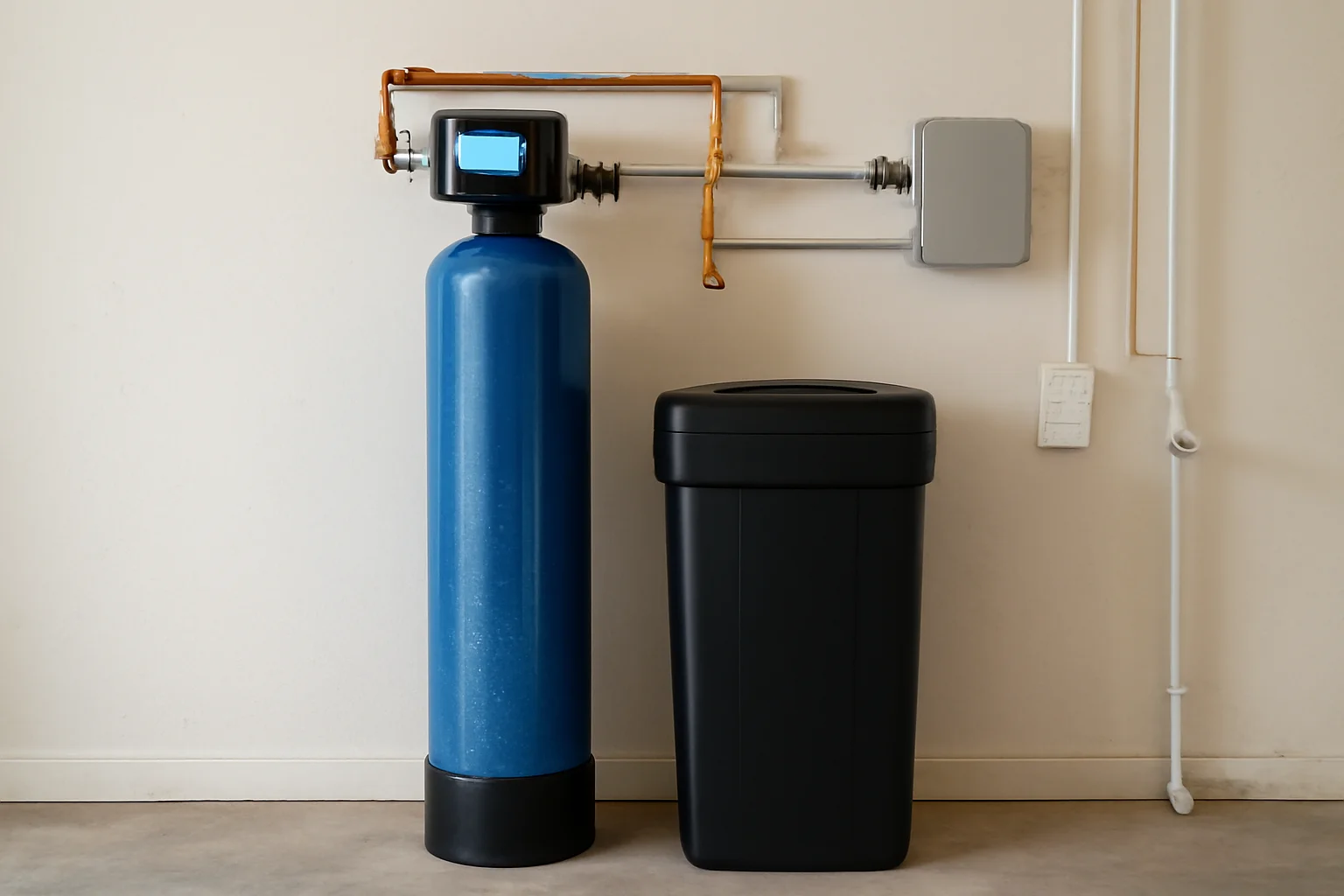
Water softening focuses on hardness minerals, typically calcium and magnesium. These minerals are what create scale buildup around faucets, showerheads, and plumbing. An AO Smith water softener uses a process that replaces hardness minerals with softer alternatives, helping prevent scale from forming as water moves through your home.
When soft water is used throughout the house, soap lathers more easily, rinses more cleanly, and fixtures look better for longer. In the background, it also reduces mineral buildup that can affect water heaters and other equipment.
Where soft water makes the biggest day-to-day difference
Think about the kitchen and bathroom routines in a typical Callaway home. A family might run the dishwasher nightly, fill a kettle for morning coffee, and take showers every day. With softened water, you can expect fewer hard water spots on glass, less chalky residue in the shower, and better performance from soaps and detergents.
For laundry, soft water can help clothes feel cleaner and reduce the dull, stiff feeling that sometimes comes from mineral residue. For bathing, it can help your skin and hair feel less dry, especially if you have noticed that your usual products do not perform the same way.
Water softening vs whole home water filtration and RO
Many homeowners assume one solution covers everything, but water quality has multiple layers. It is common for a home to need both hardness control and contaminant reduction. That is where water filtration and clean water systems come in.
Water softening targets hardness and scale
Water softening is best for calcium and magnesium control. It helps prevent the scale that leads to cloudy buildup, dull fixtures, and inefficient appliance operation. If your main concerns are hard water spots on glass, soap that does not lather, and scale around showerheads, a water softening system is often the core fix.
Whole home water filtration addresses additional water quality issues
Whole home water filtration is designed to treat water across your home before it reaches plumbing fixtures and appliances. This can help reduce sediment and improve overall water clarity and taste, depending on the system design.
Homeowners searching for whole home water filtration near me often want cleaner water for drinking, cooking, and bathing, not just fewer spots. When paired with softening, it can create a more complete clean water system.
Reverse osmosis improves drinking and cooking water
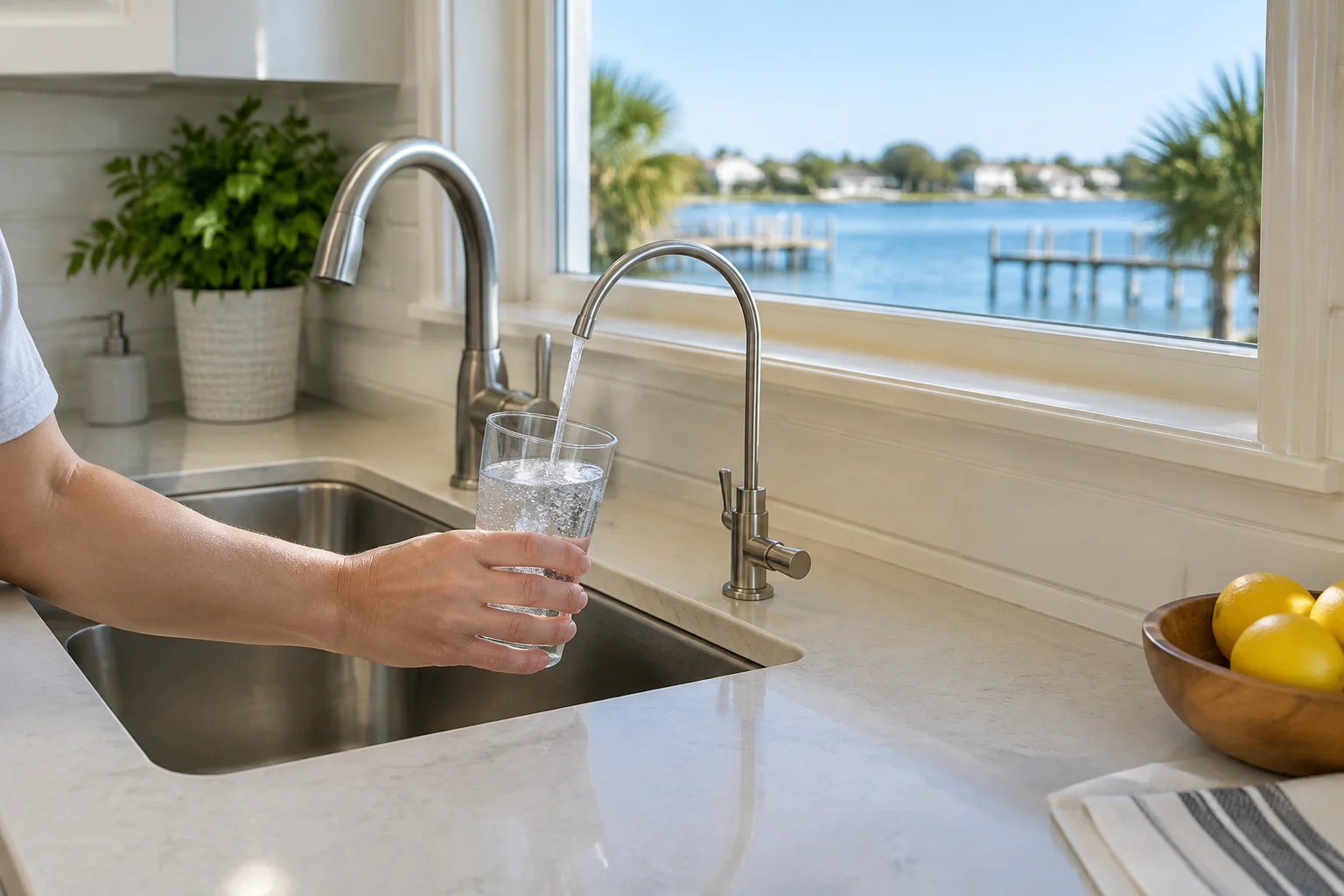
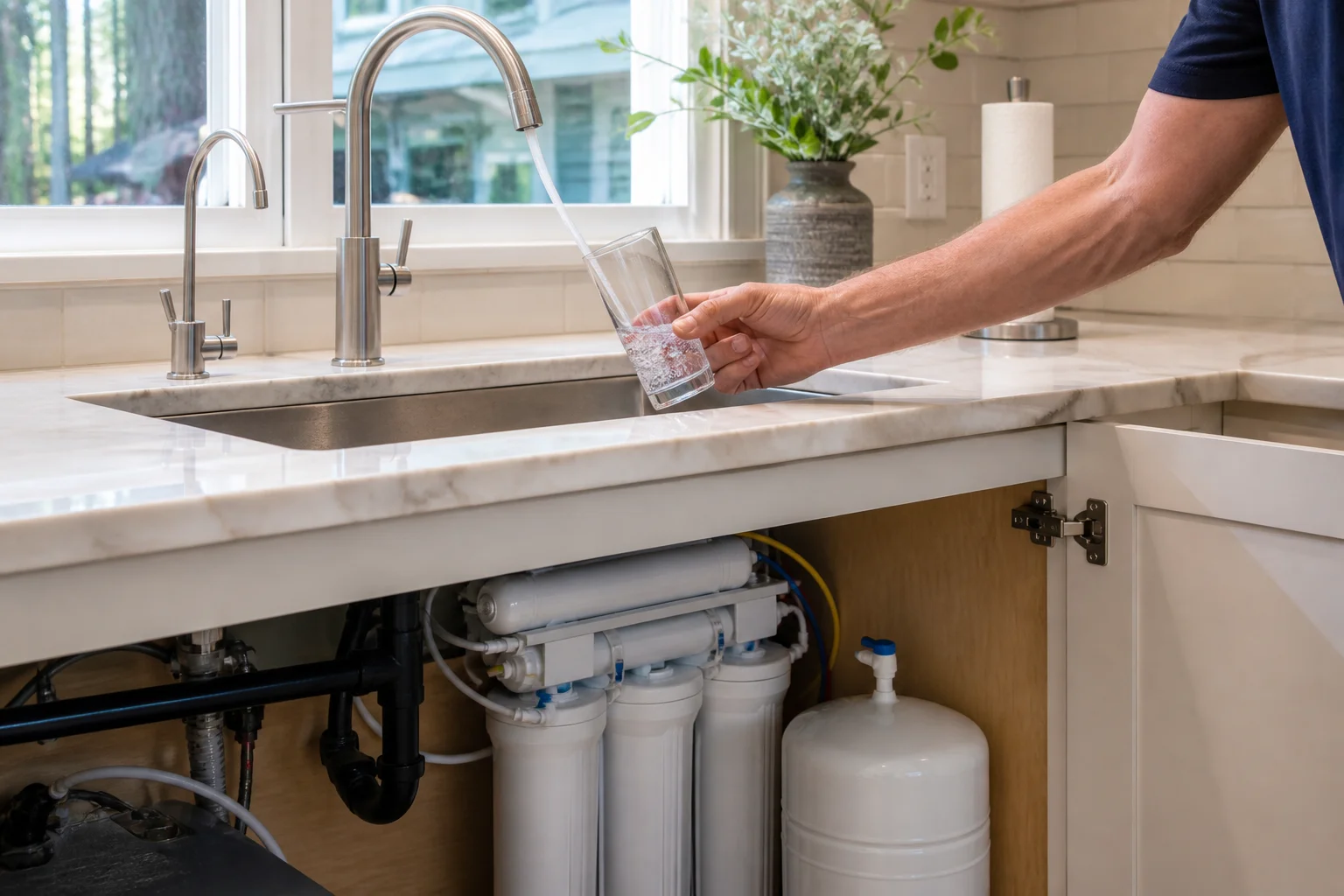
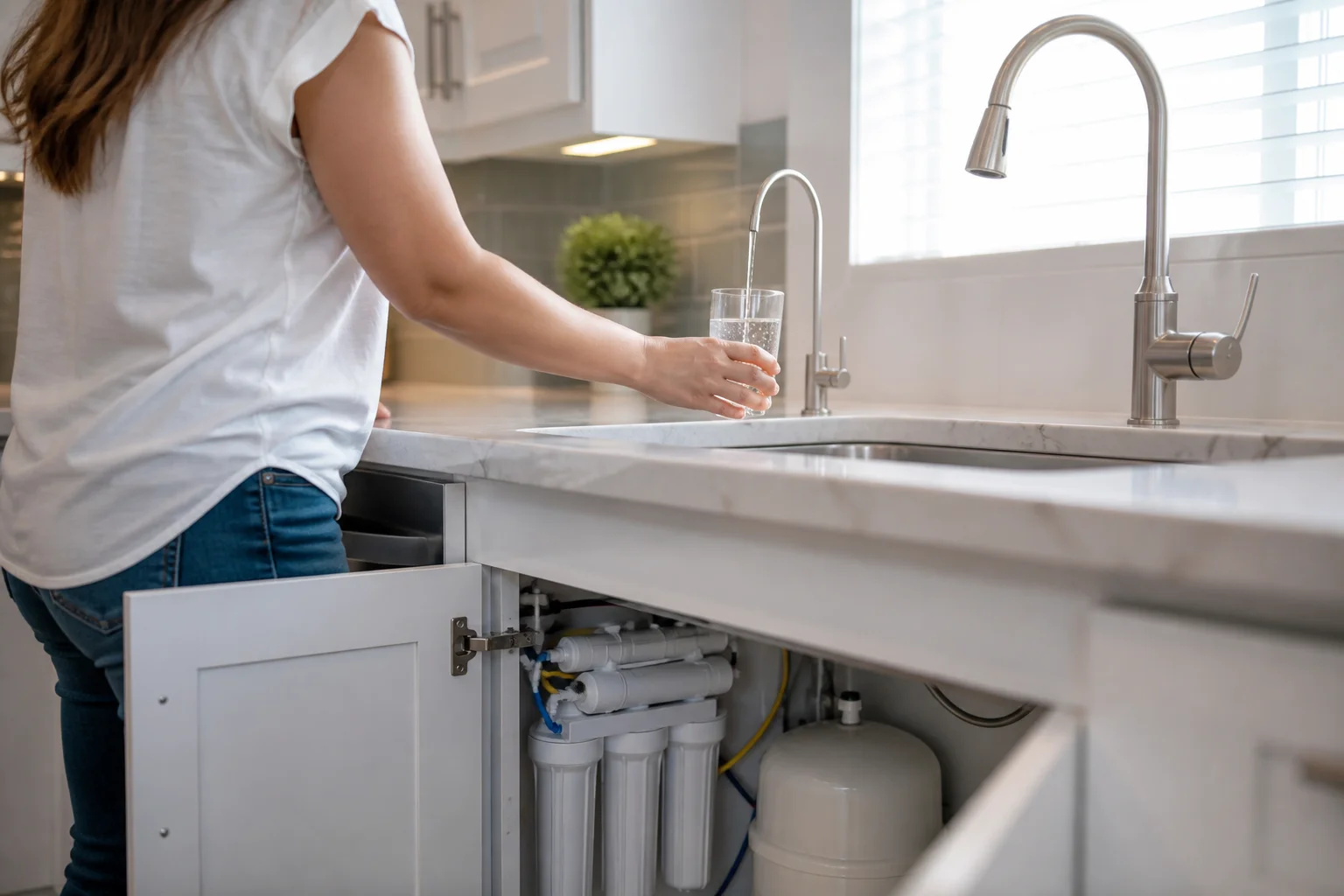
A reverse osmosis system near me is commonly used to improve drinking water quality at the kitchen tap. RO can reduce many dissolved contaminants and help with taste and odor issues. For families who care about the flavor of drinking water, ice, and cooking water, RO can be a strong complement to softening.
Many Callaway homeowners choose a setup where the whole home system improves overall quality, while RO focuses on the kitchen point of use for drinking and cooking. That way, you get cleaner everyday water without relying on bottled water for taste and clarity.
If you are considering a full upgrade, you can explore the options on our water filtration and RO water softeners landing page for a clear overview of how these systems work together.
What a local water treatment plan should include
Water treatment is not one-size-fits-all. A good plan starts with understanding your water, your household size, and how you use water daily. In Callaway, seasonal changes, household demand, and plumbing age can all influence results.
Start with testing, not guesswork
Before installing an AO Smith water softener, a professional evaluation should include water testing. Testing helps confirm hardness levels and identify other concerns such as sediment, taste and odor issues, or discoloration. If you are seeing cloudy ice cubes or metallic or unpleasant taste, that points to quality factors that softening alone may not fully solve.
Choose the right system size and setup
Oversized or undersized systems can lead to inconsistent performance. Proper sizing affects how often regeneration cycles happen and how effectively the system controls hardness. It also impacts salt usage and long-term operating costs.
Plan for maintenance so performance stays consistent
Water softeners and filtration systems require ongoing care. Filters need replacement on schedule, and softener components should be maintained to keep performance stable. When maintenance is neglected, scale and water quality issues can return.
For homeowners, this is where the “before it gets expensive” part matters. Preventive service helps avoid emergency repairs, premature appliance failure, and ongoing cleaning costs from hard water spots on glass and fixtures.
Common causes of rising water treatment costs
It is easy to budget for a system. It is harder to budget for what happens when treatment is delayed. Here are the typical cost drivers homeowners run into.
Delayed treatment after spot and scale buildup starts
When hard water spots appear on glass, they often keep coming. Over time, mineral deposits accumulate in plumbing and fixtures. That buildup can be harder to remove later and can contribute to inefficient performance.
Relying on partial solutions
Some homes only add a softener, even when there are sediment or taste issues. Others install filtration but do not address hardness. When hardness and filtration are not aligned, you may still see soap residue, dull fixtures, and faster appliance wear.
Skipping system service
Water softeners and filtration systems work best with routine checks. If you have noticed performance slipping, it may be time for service rather than continuing to troubleshoot with cleaning products.
Prevention and maintenance tips homeowners can do now
You can reduce hard water impact while you plan a long-term solution.
Watch high-impact areas
Check showerheads, faucet aerators, and the glassware you use most. If scale buildup around faucets keeps returning quickly, that is a sign your home needs a stronger water treatment approach.
Pay attention to soap behavior
If you notice you need more soap to get the same clean, or rinse water leaves a film, that is consistent with hard water. It is also a sign that softening performance may be insufficient.
Track changes in taste and ice
Cloudy ice cubes and unpleasant taste can change when filters are due or when water chemistry shifts. If you see these changes, testing and service can prevent the problem from spreading to other parts of your home.
Keep an eye on appliance performance
When dishwashers and washing machines take longer to clean, or water heaters seem less effective, mineral buildup may be involved. Better water treatment helps reduce scale formation that leads to those slow declines.
Why local service matters in Callaway and Bay County
Callaway is a coastal Florida community, and homes here face real-world water and usage patterns that differ from other parts of the state. Local installation experience matters because a system should be tuned to how your home uses water, the condition of your plumbing, and the specific water quality challenges common in the area.
A Superior Mechanical helps homeowners and businesses in Callaway with water softening and water filtration designed to fit local needs. You can review our service options on our Callaway water softening service page and learn about the broader coverage on the Callaway service area page and Bay County service area.
Real-life examples: what better water looks like at home
Picture a typical weekday in Callaway. The kitchen is busy. Someone fills a kettle for coffee, another person grabs a glass for water, and dinner prep starts with rinsing vegetables and cooking pasta. If your water has a metallic or unpleasant taste, coffee can taste off and cooking water can change how flavors come through.
Now imagine the difference after improving water quality. Drinking water tastes cleaner. Ice cubes look clear. Kitchen and bathroom surfaces stay cleaner longer, and your soap does not fight against minerals. Laundry feels less rough, and the shower does not leave that chalky film you keep scrubbing.
When water softening is paired with the right filtration approach, it is not just about comfort. It is also about protecting appliances that use hot water and reducing the scale buildup that can shorten equipment life.
Related reads for Callaway homeowners
If you want to go deeper into how treatment choices affect results, these guides can help you plan a smarter upgrade:
- Why Water Treatment Makes Water Softening Work Better in Callaway Homes
- A Callaway Homeowner’s Guide to Smarter Water Filtration and Fewer Plumbing Repairs
- Cleaner Water Starts at the Source in Callaway
- How Water Softening Protects Rosemary Beach Plumbing from Costly Water Damage
When to call a water treatment professional
Call a professional when you notice patterns, not just one-off problems. Reach out if you are dealing with hard water spots on glass, scale buildup around faucets and showerheads, dry skin or dull hair after bathing, or taste and odor issues like metallic or unpleasant flavors. Also call if you see sediment, discoloration, or cloudy ice cubes.
If you are searching for water filtration near me or a reverse osmosis system near me, the next step is a proper assessment. With the right combination of water softening, whole home filtration, and, when appropriate, RO for drinking and cooking, you can keep everyday water quality consistent and help prevent the costly effects of scale buildup.
For many Callaway homeowners, the best time to address hard water is before the buildup becomes routine and expensive. A Superior Mechanical can help you choose the right clean water systems for your home so your kitchen, laundry, and bathing routines stay comfortable and efficient.
Find Water Softening in Callaway, FL
If you need Water Softening in Callaway, FL, visit our local service page or contact A Superior Mechanical today.
For a broader look at whole-home water filtration, reverse osmosis, and water softener options, visit our water filtration, RO, and water softener page.
Map of Callaway, FL
Frequently Asked Questions
Does a water softener fix hard water spots on glass and dishes?
Yes, water softening is designed to reduce hardness minerals that cause hard water spots on glass and hard water spots on dishes. With softened water, soap and detergents work more effectively and scale buildup is less likely to form on frequently used surfaces.
Can water softening improve the taste of drinking water?
Water softening primarily targets hardness. If you notice metallic, chlorinated, or otherwise unpleasant taste, whole home water filtration and, in many cases, a reverse osmosis system at the kitchen tap can help improve drinking and cooking water quality.
Do I need whole home water filtration if I already have a water softener?
Often, yes. A softener helps with scale from hardness, but it does not automatically address sediment, odor, or other water quality concerns. A properly designed whole home water filtration system can improve overall water clarity and performance throughout the home.
What maintenance keeps an AO Smith water softener performing well?
Routine service includes checking system performance, monitoring regeneration behavior, and replacing or servicing components as recommended. Keeping up with maintenance helps prevent scale return and supports consistent water softening.
How do I know whether I should consider reverse osmosis for my Callaway home?
If you have concerns like cloudy ice cubes, taste and odor issues, or you want cleaner drinking and cooking water, reverse osmosis may be a good fit. A water test and system review can confirm which contaminants are present and what treatment will work best.
Related Articles
Photo Gallery