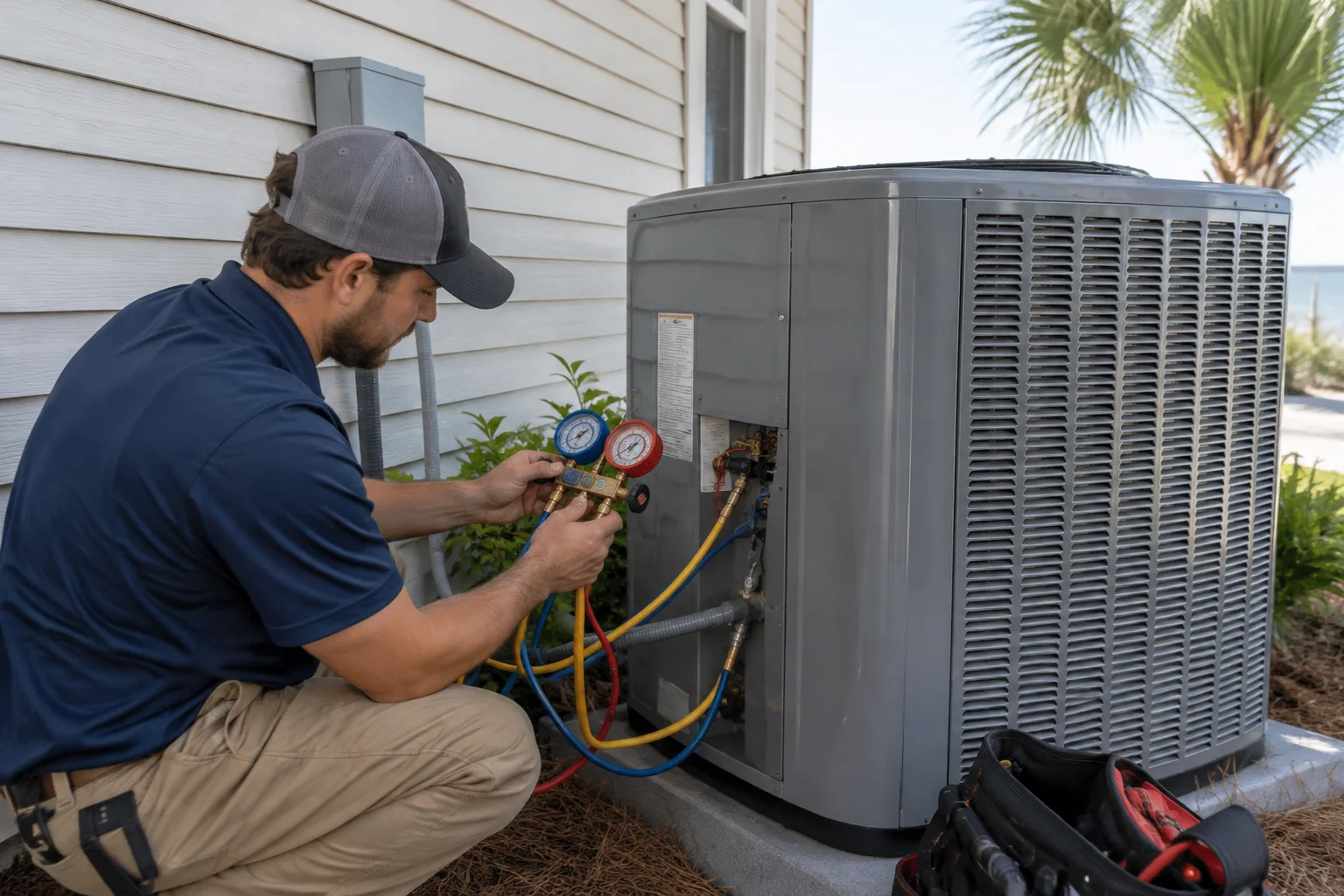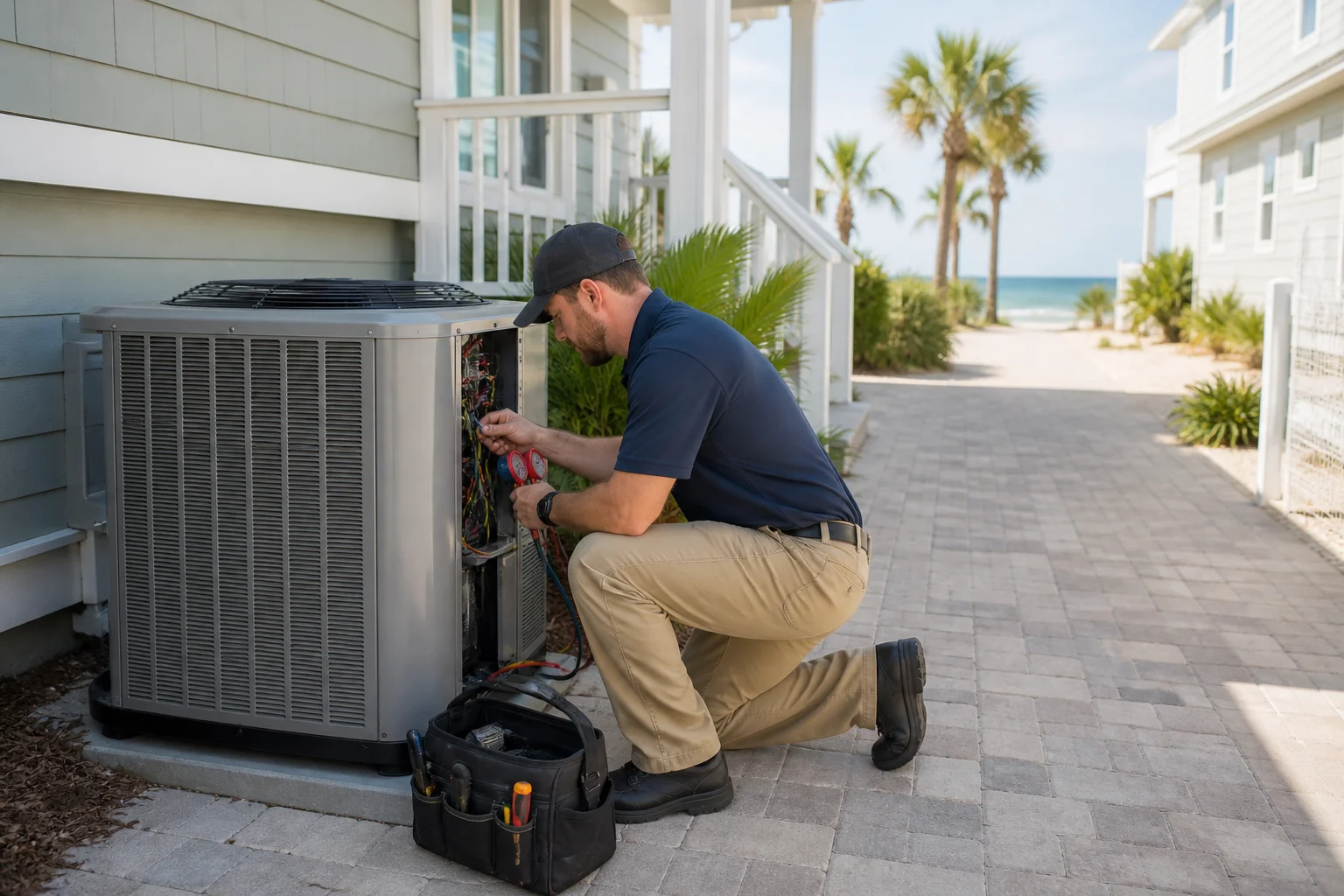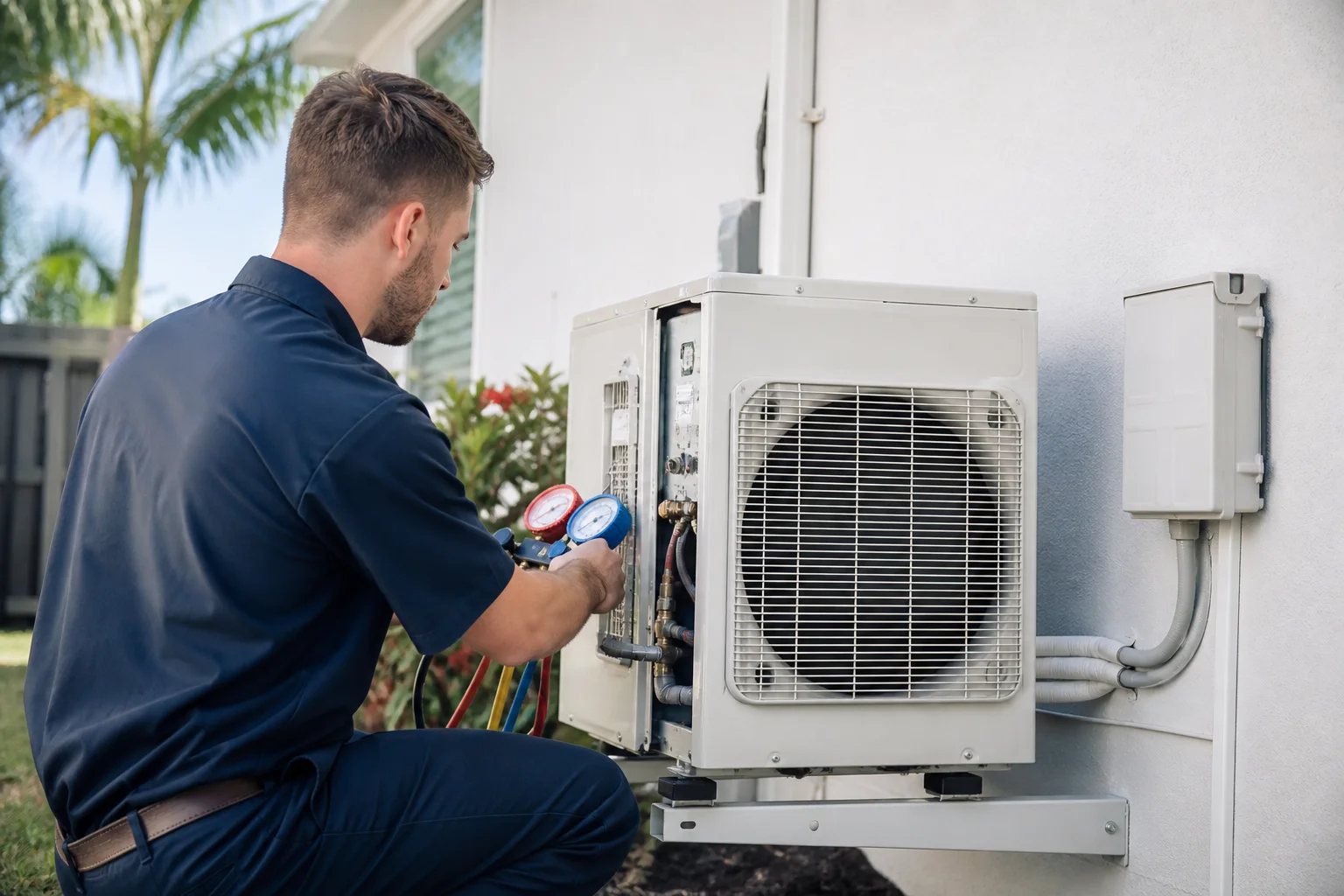
A sunny upstairs bedroom, a shaded guest suite, and a busy kitchen rarely need the same amount of cooling. In Santa Rosa Beach, those differences get more noticeable when summer humidity, open exterior doors, and visiting guests add to the load. One thermostat cannot always keep every space comfortable.
VRF multi zone HVAC systems offer room-by-room control, but equipment alone does not solve every comfort problem. Good results depend on sizing, airflow, moisture management, installation details, and maintenance. For homeowners planning a remodel, addition, or complete replacement, those decisions deserve attention before equipment is ordered.
How VRF fits a coastal home
Variable refrigerant flow, or VRF, systems use variable-capacity outdoor equipment to deliver refrigerant to multiple indoor units. Each zone can respond to its own temperature setting within the system's operating limits. Indoor units may include wall-mounted heads, ceiling cassettes, or compact ducted air handlers concealed above ceilings or in other accessible spaces.
VRF and ductless mini splits share some technology, but not every multi-zone mini split is a VRF system. Equipment capabilities, piping arrangements, controls, and service requirements vary. Standard heat pump configurations typically require connected zones to operate in the same heating or cooling mode. Heat recovery VRF systems can support simultaneous heating and cooling when properly configured.
A Superior Mechanical provides VRF multi zone HVAC installation and service in Santa Rosa Beach for commercial properties and luxury residences. The right recommendation starts with the building's needs, not simply the number of rooms.
Start with the house, not the equipment catalog
Calculate the load for each zone
A room-by-room load calculation should account for windows, orientation, insulation, ceiling height, air leakage, and occupancy. A west-facing room near the coast may gain substantial afternoon heat, while an interior bedroom needs relatively little cooling. Sizing every zone by square footage alone misses these differences.
Oversized indoor units can reach the thermostat setting before removing enough moisture. An oversized outdoor unit may also struggle to match very low demand. Designers should review minimum operating capacity, connected indoor capacity, and manufacturer-approved combinations, rather than assuming that more capacity provides better comfort.
Match the layout to the project
Older Santa Rosa Beach homes may have limited chases, aging ductwork, or uneven insulation. Newer homes may have tighter envelopes that need deliberate ventilation planning. Remodels and additions can change airflow paths and leave existing equipment poorly matched to the updated floor plan.
Homeowners comparing options through a search for multi zone mini split installation near me should ask whether a full VRF system is necessary. For a single addition or isolated room, ductless mini split systems may offer a simpler solution. Complexity should serve a clear comfort need.
Humidity needs its own plan
Santa Rosa Beach has a long cooling season with substantial outdoor moisture. Mild, damp days can be particularly challenging because a house may need dehumidification without much temperature reduction. Separate thermostats do not automatically provide separate humidity control.
Ask how the proposed system manages moisture at partial load. Indoor fan settings, coil temperature, equipment sizing, and runtime all affect water removal. Some homes benefit from a dedicated dehumidifier, especially where ventilation air or frequent door openings introduce moisture. That equipment must be coordinated with the HVAC design.
A practical indoor relative humidity range is often around 40 to 55 percent, with sustained readings above 60 percent warranting attention. Actual targets depend on the building and conditions. Use a reliable hygrometer, and investigate musty odors, condensation, or damp closets rather than lowering the thermostat indefinitely.
VRF indoor units generally recirculate room air; they do not inherently provide the outdoor air a home may need. A ventilation strategy should address filtration and moisture together. A Superior Mechanical's indoor air quality services can help evaluate humidity, filtration, and ventilation concerns as part of the larger comfort plan.
Airflow still matters with separate zones
Zoning cannot compensate for poor air distribution. A wall-mounted unit placed above a doorway may send air across the ceiling without reaching an adjoining alcove. A ceiling cassette blocked by a tall cabinet may leave an occupied area warm. Placement should reflect furniture, sleeping areas, ceiling geometry, and maintenance access.
Ducted zones need properly sized supply ducts, returns, and vents. Closed bedroom doors can restrict return airflow unless transfer paths are provided. Leaky ducts in unconditioned spaces can lose conditioned air and, depending on their location and pressure, draw in hot, humid air.
If one zone feels weak, check whether its filter is dirty or a grille is obstructed before changing multiple settings. Persistent problems call for airflow measurements and duct inspection. Duct sealing and Aeroseal services may help when leakage is confirmed, while crushed, disconnected, or undersized ducts may require physical ductwork repair.
Protect outdoor equipment from coastal exposure
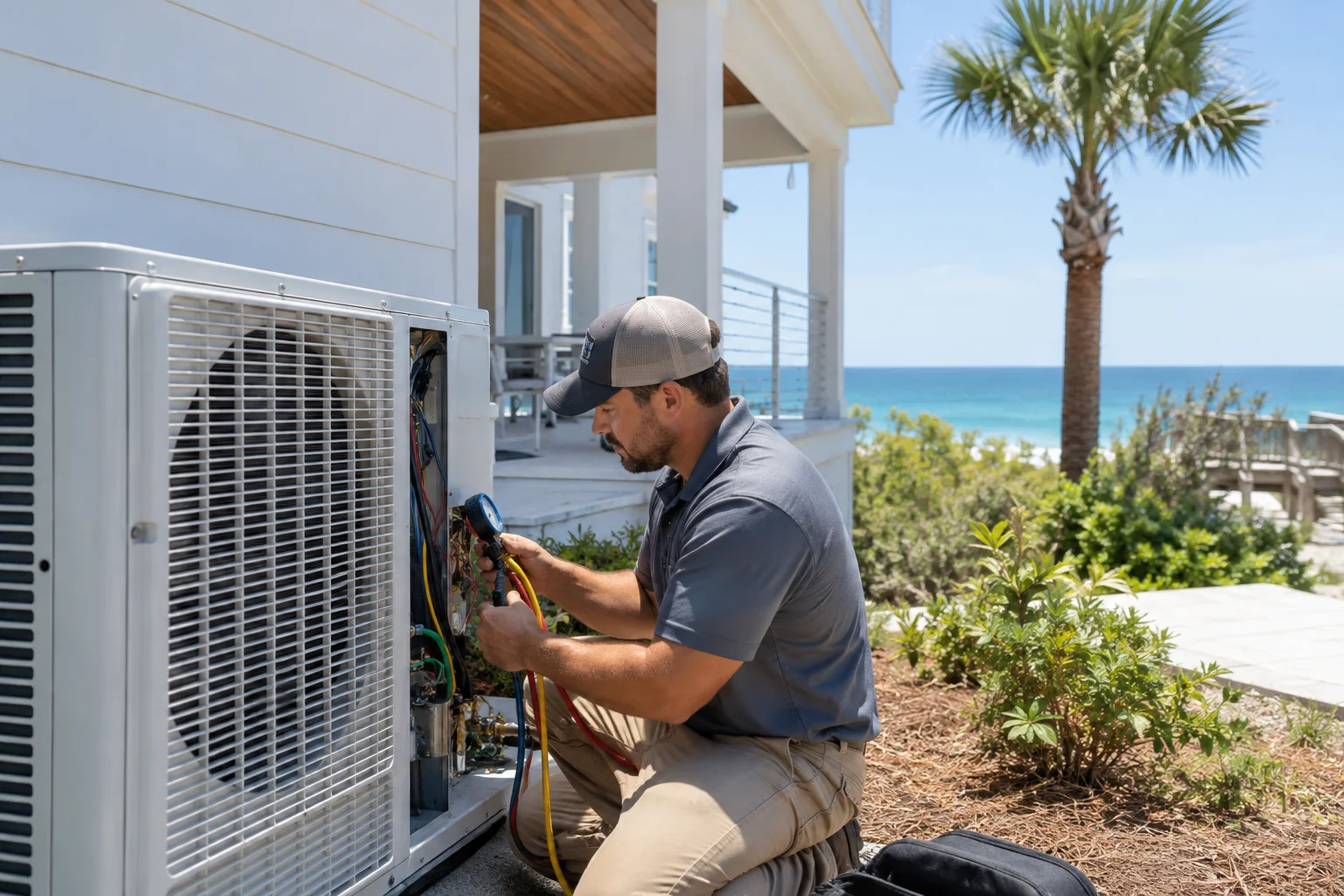
Salt air can accelerate corrosion on outdoor units, including condenser coils, cabinets, fasteners, and electrical connections. Rain and wind-driven debris add wear, while storms can expose poorly positioned equipment to standing water or impact damage. Coastal durability depends on suitable equipment and installation practices, not a coastal label alone.
The outdoor location should provide manufacturer-required clearances, service access, suitable drainage, and code-compliant mounting. Where flood or wind requirements apply, the installation must address them. Avoid enclosing condensers behind tight decorative screens that restrict airflow, and keep irrigation spray away from the equipment.
Ask about manufacturer-approved protective options and cleaning procedures. Coatings are not interchangeable, and harsh chemicals or pressure washing can damage coils. After a significant storm, inspect the area from a safe distance. Submerged equipment, shifted units, or damaged refrigerant lines need professional evaluation before operation.
Controls should make comfort easier
VRF controls may look like ordinary thermostats but often communicate through manufacturer-specific networks. A generic smart thermostat is not automatically compatible. Before thermostat installation, verify approved interfaces, available functions, and whether independent zone settings can conflict with system-wide operating modes.
Use modest, consistent settings rather than dramatic daily temperature swings. Deep setbacks can create long recovery periods and may allow humidity to rise in lightly used areas. Guest bedrooms still need enough conditioning and air movement to protect finishes and furnishings.
For properties used seasonally, remote monitoring can help identify temperature or humidity changes before the next visit. Ask about sensor placement, alerts, and control limits. Reviewing heating control systems is also useful when coordinating winter operation or existing equipment with a new installation.
Installation details that prevent expensive callbacks
VRF performance depends on accurate refrigerant piping lengths, approved fittings, proper insulation, pressure testing, evacuation, and refrigerant charging. Refrigerant leaks can affect multiple zones, reduce capacity, and eventually damage equipment. Repeatedly adding refrigerant without locating the leak is not a lasting repair.
The design must also address applicable refrigerant safety limits for occupied spaces. Total refrigerant charge, room volume, equipment type, and current code requirements can influence permissible layouts and any needed safeguards. This review belongs in the design process, especially where small bedrooms connect to a large system.
Each indoor unit needs reliable condensate drainage. Drain lines should be routed, supported, trapped where required, and accessible for cleaning. Condensate pumps and overflow protection must suit the installation. Before handoff, commissioning should verify drainage, controls, airflow, operating data, and performance across representative zone combinations.
Recognize problems before several rooms lose comfort
Weak cooling, ice, or rising humidity
Dirty filters, obstructed airflow, fouled evaporator coils, control faults, and refrigerant problems can produce similar symptoms. Ice is not proof that a system simply needs refrigerant. If an indoor coil or refrigerant line freezes, stop cooling operation and arrange service. Do not chip away ice or keep restarting the system.
Homeowners searching for ductless mini split repair near me should confirm that the contractor services their specific VRF brand and controls. Diagnosis may require proprietary tools and knowledge of communication wiring, expansion valves, and shared refrigerant circuits, not just a basic thermostat check.
Water leaks, unusual noises, and urgent failures
Water below an indoor unit can indicate a blocked drain, failed condensate pump, insulation problem, or coil icing. Shut down the affected equipment if continued operation risks property damage. Grinding noises, repeated breaker trips, or a burning smell require prompt attention; do not repeatedly reset a breaker.
A search for emergency HVAC repair near me becomes especially important when cooling fails during extreme heat or vulnerable occupants cannot stay comfortable. Move to a safe, cooler location if needed. Smoke or fire warrants evacuation and emergency services, not routine troubleshooting. Ask the contractor about current availability rather than assuming every company offers overnight response.
A maintenance routine suited to Santa Rosa Beach
Check filters regularly and clean or replace them according to the manufacturer's instructions. Heavy occupancy, pets, remodeling dust, and extended operation may require more frequent attention. Keep indoor grilles clear and look for moisture around air handlers and drain outlets.
Professional maintenance should include appropriate coil inspection and cleaning, condensate checks, electrical inspections, control diagnostics, and review of operating performance. Refrigerant evaluation should follow manufacturer procedures, with leak investigation when readings or symptoms indicate a problem. Multiple indoor units mean multiple filters, coils, and drains to maintain.
If you are searching for preventive HVAC maintenance near me, ask whether the proposed visit covers every zone and the outdoor equipment. This guide to maintenance that supports new AC installations in Santa Rosa Beach explains why ongoing care matters even after a replacement.
Schedule air conditioning service before peak summer demand when possible, and review heating operation before cooler weather. VRF heat pumps need model-specific heating checks. Homes retaining furnaces also need separate furnace service, including combustion safety checks for fuel-fired equipment; VRF maintenance does not replace that work.
Choose a plan that stays serviceable
VRF can improve energy efficiency by matching output to changing loads, but savings depend on the equipment, building envelope, settings, and installation. Compare suitable alternatives and ask about lifecycle costs, warranty terms, parts access, and maintenance responsibilities. Accessible filters, valves, drain pumps, and service panels matter long after installation day.
Local experience helps connect system design with coastal exposure, seasonal occupancy, and the practical challenges of servicing Santa Rosa Beach homes. A Superior Mechanical provides HVAC services in Santa Rosa Beach and serves properties throughout Walton County. Request an assessment that addresses room loads, humidity, airflow, controls, and coastal protection together, whether you need a new VRF system or help with an existing installation.
Find VRF Multi Zone HVAC Systems in Santa Rosa Beach, FL
If you need VRF Multi Zone HVAC Systems in Santa Rosa Beach, FL, visit our local service page or contact A Superior Mechanical today.
Map of Santa Rosa Beach, FL
Frequently Asked Questions
Is a VRF system the same as a multi-zone mini split?
They use related technology, but the terms are not interchangeable. VRF systems typically offer more extensive zoning, piping, and control options. A smaller multi-zone mini split may be sufficient for a few rooms, while a larger residence may benefit from VRF. A load calculation and layout review help determine the appropriate system.
Will VRF control humidity in a Santa Rosa Beach home?
VRF removes moisture during cooling, but humidity performance depends on sizing, runtime, airflow, and outdoor moisture entering the house. During mild, damp weather, some homes need dedicated dehumidification. The design should address humidity and ventilation rather than relying on temperature settings alone.
Can a VRF system heat one room while cooling another?
A properly designed heat recovery VRF system can provide simultaneous heating and cooling in different zones. Standard heat pump VRF configurations generally require connected zones to share an operating mode. Confirm this capability during equipment selection if rooms regularly have opposing comfort needs.
Related Articles
- Why Better HVAC Maintenance Makes New AC Installations Work Better in Santa Rosa Beach
- Cleaner Water From Kitchen to Shower: Whole Home Purification in Santa Rosa Beach
- Why Sewer Problems Linger in Santa Rosa Beach Homes and How to Keep Plumbing Systems Going Longer
- Understanding Plumbing Costs Before Small Problems Get Expensive in Santa Rosa Beach
Photo Gallery