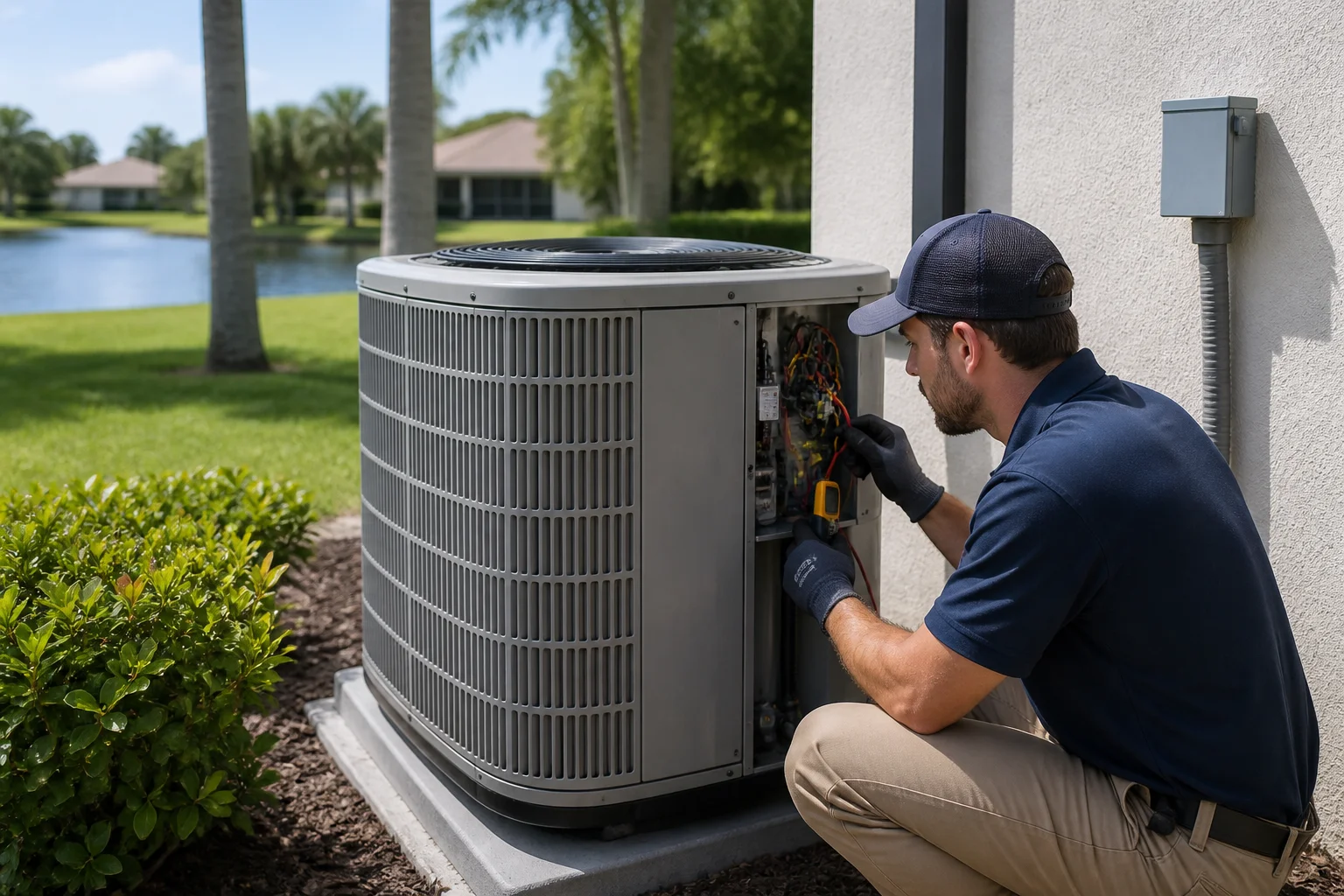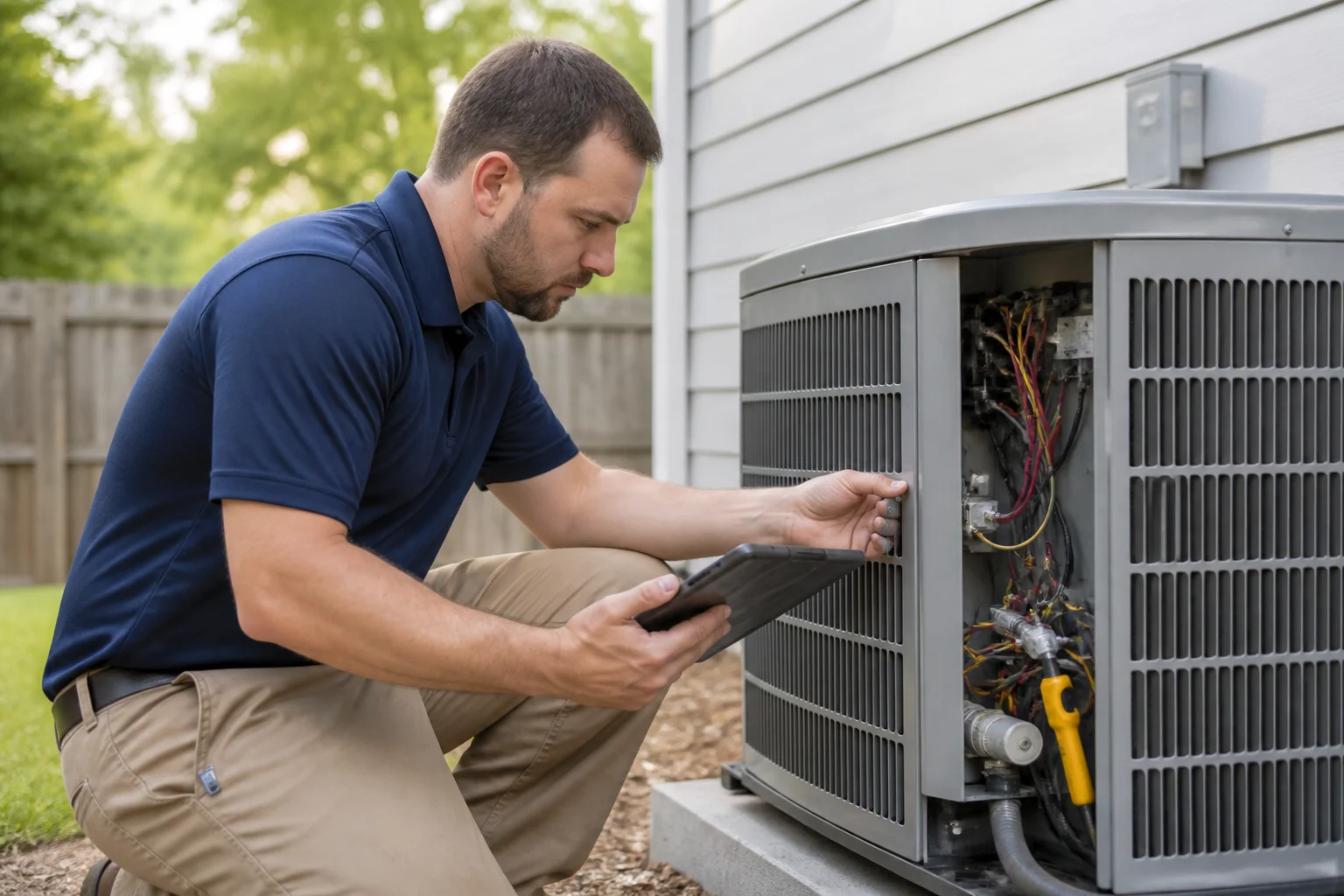
Replacing an air conditioner in Mary Esther is an opportunity to solve more than a failing outdoor unit. A carefully planned replacement can improve room to room comfort, reduce indoor humidity, correct airflow problems, and help the equipment withstand demanding coastal conditions.
The best results come from looking at the entire comfort system. That includes the condenser, air handler, evaporator coil, thermostat, ductwork, vents, filters, drain lines, and the building itself. Homeowners considering air conditioning replacement in Mary Esther should expect these parts to be evaluated before new equipment is selected.
Mary Esther weather changes the replacement plan
Air conditioners in Mary Esther operate through long periods of heat and high humidity. Salt air can accelerate corrosion on outdoor units, while heavy rain and storms can affect electrical components, equipment pads, drain systems, and exposed ductwork. Seasonal demand also means that a struggling system may run for extended periods without enough time to recover.
Local homes are not all built the same. Older homes may have undersized return ducts, limited insulation, air leaks, or ductwork added in stages. Newer homes can be tighter and more efficient, but they still need proper ventilation and moisture control. Remodels, enclosed porches, converted garages, and additions can change the cooling load well after the original system was installed.
This is why local HVAC service matters. A contractor familiar with Mary Esther HVAC needs can account for coastal weather, local construction styles, storm exposure, and the long cooling season across Okaloosa County.
Replacement decisions begin with the current system
An older air conditioner does not always need immediate replacement, and a newer unit is not always worth repairing. The decision should consider age, repair history, energy use, comfort, refrigerant type, corrosion, and the condition of connected components.
Frequent breakdowns often point toward replacement, especially when repairs involve a compressor, leaking evaporator coil, damaged condenser coil, or obsolete controls. Refrigerant leaks deserve careful diagnosis. Adding refrigerant without locating the leak does not correct the problem. Homeowners searching for refrigerant leak repair near me should ask whether the leak can be repaired reliably and how the repair cost compares with replacing aging equipment.
Other warning signs include rising utility bills, long run times, weak airflow, uneven temperatures, recurring frozen coils, unusual compressor noise, and an AC that cannot maintain the thermostat setting. Water around the air handler may indicate a blocked drain line, cracked drain pan, frozen evaporator coil, or poor installation. These problems require inspection before assuming the outdoor unit alone is responsible.
If the system has a repairable problem and otherwise remains in good condition, air conditioning repair in Mary Esther may be the practical choice. If breakdowns are becoming routine, homeowners searching for HVAC system replacement near me will usually benefit from comparing repair costs with expected equipment life and operating expenses.
Correct sizing protects comfort and humidity control
Air conditioner size should be based on a cooling load calculation, not just the capacity of the old nameplate. The calculation considers square footage, insulation, windows, ceiling height, orientation, air leakage, occupancy, and heat produced inside the home. It should also account for additions and remodeling work.
An oversized system can cool the air quickly but shut off before removing enough moisture. That may leave the home cool yet clammy, with indoor humidity that encourages odors, condensation, dust mite activity, and microbial growth. Short cycling also adds wear to compressors and other components.
An undersized system may run constantly on hot afternoons and still fail to reach the thermostat setting. Continuous operation is not automatically a sizing problem because modern variable capacity systems are designed for longer cycles. The key question is whether the system maintains the desired temperature and humidity efficiently under normal design conditions.
A proper load calculation can also reveal whether separate equipment would serve an addition more effectively. For example, a properly designed ductless system may be suitable for a sunroom, garage conversion, or isolated bonus room. Homeowners considering sunroom cooling can discuss single zone or multi zone comfort options rather than increasing the capacity of the central system without analysis.
Airflow should be measured before equipment is chosen
New equipment cannot perform as intended if the duct system restricts airflow. Small return ducts, crushed flexible duct, disconnected sections, dirty filters, closed vents, and poorly selected grilles can all reduce the amount of air moving across the evaporator coil.
Low airflow can cause weak cooling, noisy vents, high energy use, frozen coils, and premature equipment failure. Excessive airflow can create noise and reduce moisture removal. Static pressure testing helps a technician determine whether the blower is pushing against too much resistance.
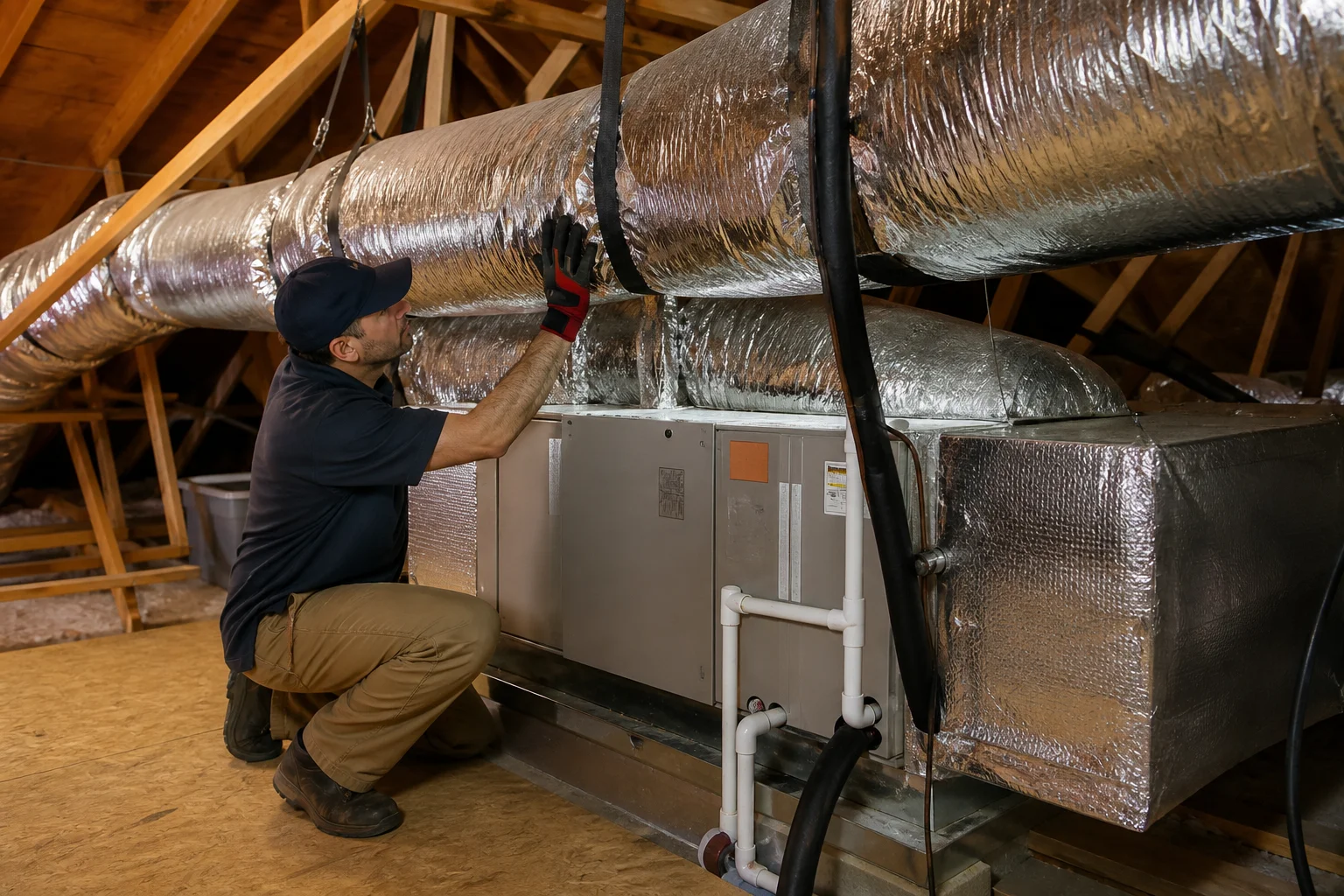
Older Mary Esther homes may have ductwork in hot attics or tight chases. Leaks on the supply side waste cooled air, while return leaks can pull humid attic air, insulation particles, and dust into the system. Duct sealing may improve comfort without replacing every duct. Severely damaged, contaminated, undersized, or poorly routed ducts may require more extensive ductwork repair or replacement.
Homeowners searching for ductwork installation near me should ask whether the proposed work includes airflow design, return air capacity, insulation, sealing, and balancing. Simply replacing ducts with the same sizes can repeat an existing design problem.
Humidity control requires more than a lower thermostat setting
Mary Esther humidity can remain high even when outdoor temperatures are moderate. During rainy weather, an air conditioner may not run long enough to remove the moisture entering through doors, air leaks, and normal household activity.
Equipment selection affects moisture removal. Variable speed air handlers and staged or variable capacity condensers can operate at lower output for longer periods, which often improves dehumidification. Thermostat setup and blower programming also matter. If fan speed is too high, air may cool without spending enough time across the evaporator coil for effective moisture removal.
A whole home dehumidifier in Mary Esther may be appropriate for homes with persistent humidity, tightly sealed construction, moisture sensitive belongings, or periods when cooling demand is low. It should be sized and integrated with the HVAC system rather than treated as a substitute for correcting air leaks, duct leakage, or drainage problems.
Humidity control supports indoor air quality, but it is only one part of the plan. Filters should match the blower and duct system. A filter with excessive resistance can reduce airflow. Fresh air ventilation, drain line maintenance, coil cleanliness, and control of building moisture are also important.
Heat pumps, straight cool systems, and ductless options
Many Mary Esther homes use heat pumps because they provide cooling and efficient electric heating in one system. A heat pump replacement should consider both summer cooling and winter heating performance. The outdoor unit, indoor coil, air handler, controls, and any auxiliary electric heat must be compatible.
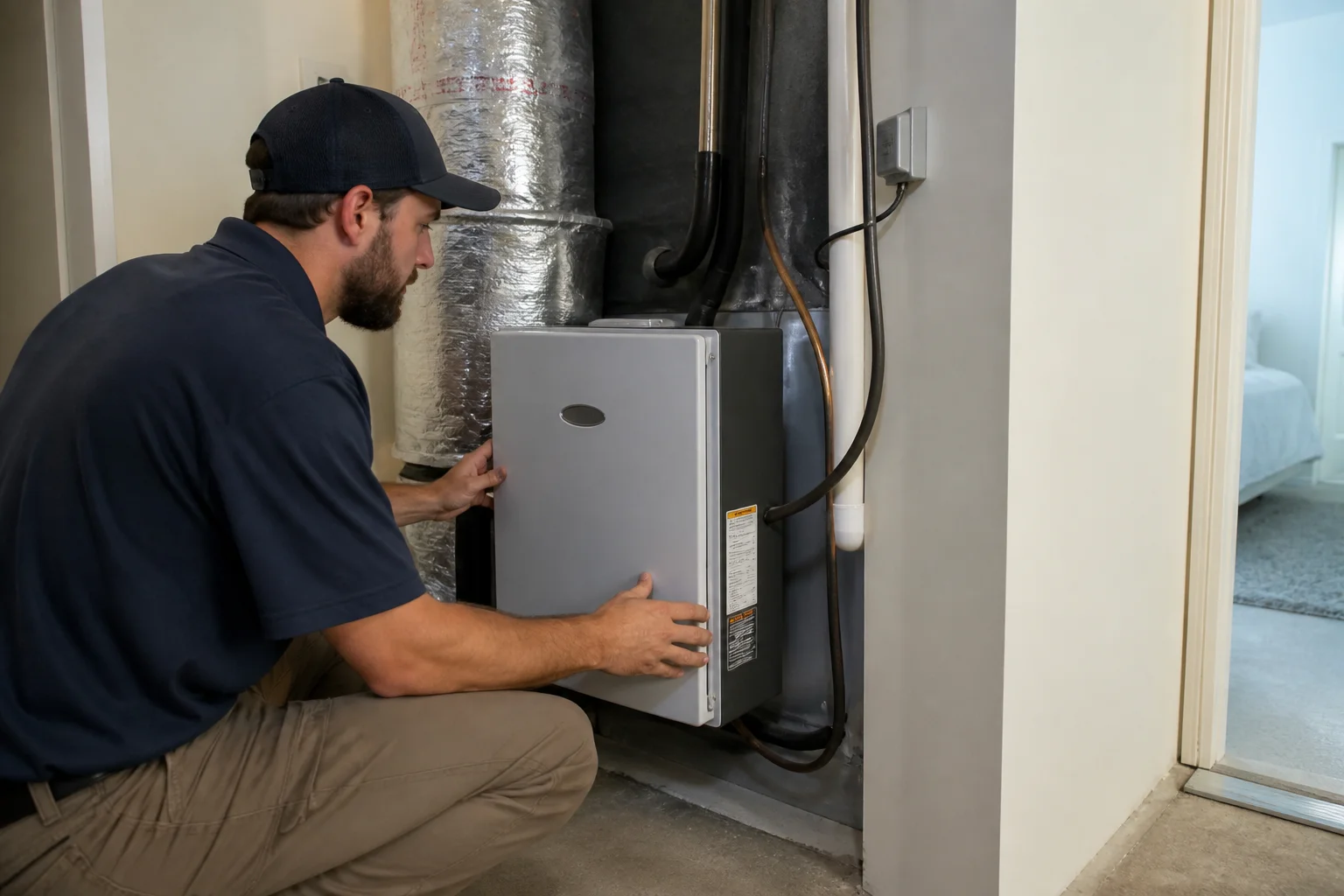
Straight cool air conditioners may be paired with electric furnaces or, less commonly in the area, gas furnaces. If a home has a furnace, the blower capacity, heat exchanger condition, venting, and controls should be reviewed during AC replacement. Heating repair needs should not be ignored just because the replacement occurs during summer.
Ductless mini splits can be useful where extending central ductwork is impractical. They are often considered for additions, workshops, sunrooms, and rooms with unique schedules. They still require correct sizing, condensate drainage, refrigerant piping, and accessible maintenance locations. Larger homes may also benefit from advanced zoning or variable refrigerant systems when the design is completed carefully.
Efficiency depends on the whole installation
Efficiency ratings are useful for comparing equipment, but actual energy use depends on installation quality and home conditions. A high efficiency condenser connected to leaky ducts or an improperly matched indoor coil will not deliver its rated performance.
Matched equipment is important. The condenser, evaporator coil, air handler, metering device, and thermostat must be approved to operate together. Refrigerant lines need correct sizing, clean installation practices, proper evacuation, and an accurate charge. The outdoor unit also needs adequate clearance for airflow and service.
A smart thermostat can improve scheduling, temperature control, and system monitoring, but it cannot correct bad ductwork or incorrect equipment sizing. Homeowners searching for smart thermostat installation near me should verify that the thermostat supports the selected heat pump stages, variable equipment, humidity settings, and auxiliary heat controls.
Installation details that matter near the coast
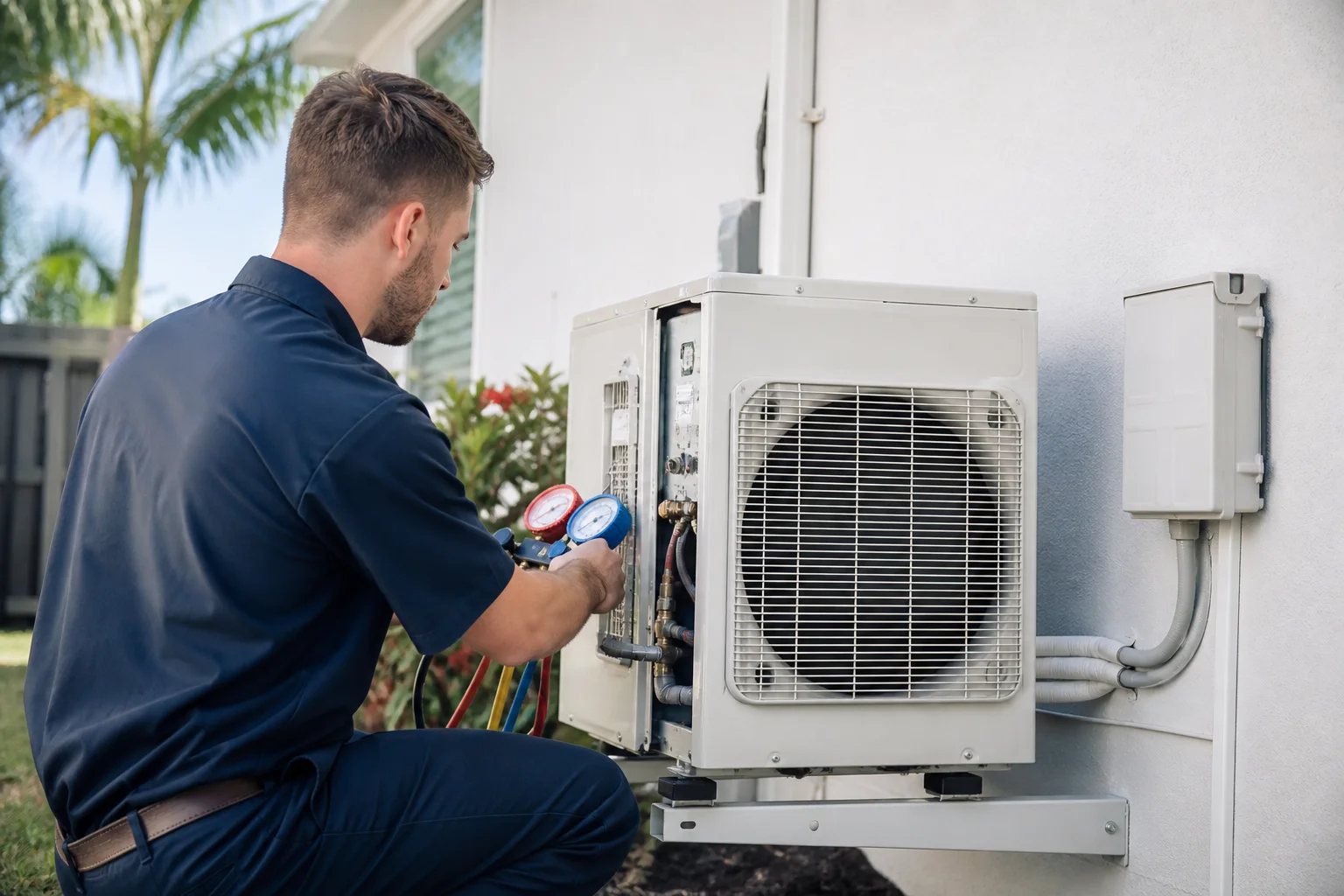
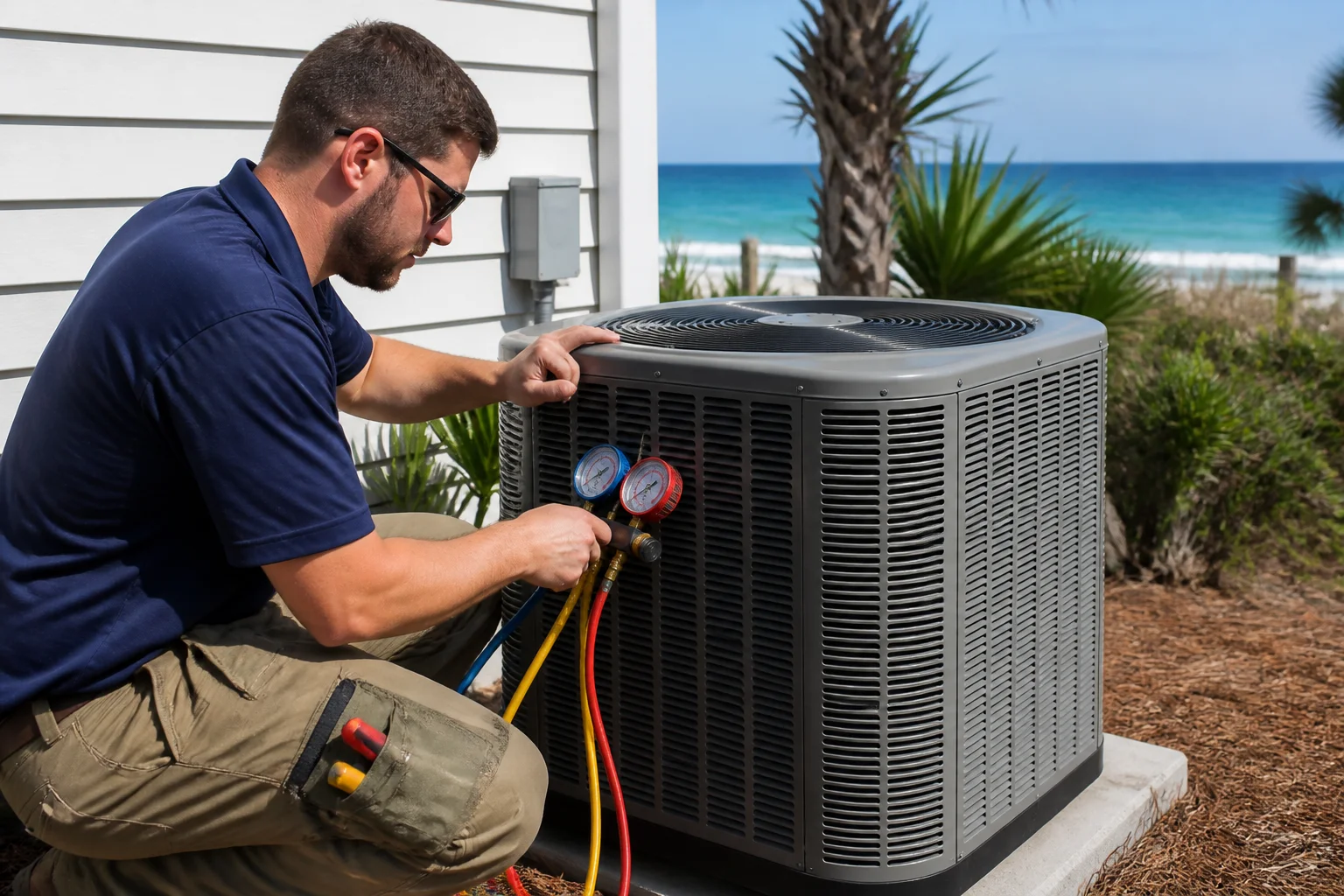
Outdoor condensers should be placed on stable, level pads above areas likely to hold water. They need clearance from fences, shrubs, dryer vents, and other obstacles that restrict airflow. Coastal corrosion protection may help, but no coating eliminates the need for inspection and gentle cleaning.
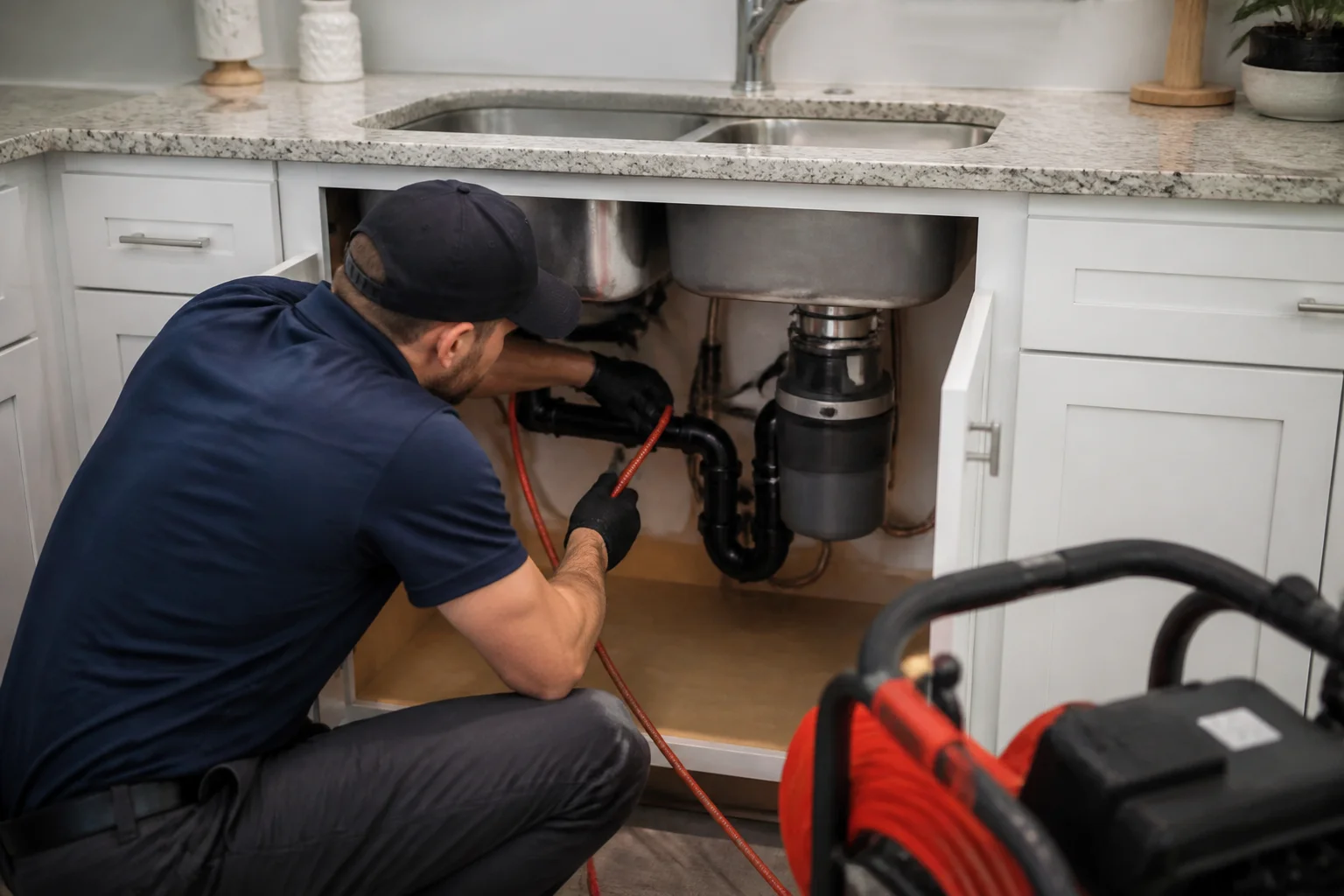
Indoor equipment needs equal attention. The air handler should be accessible for filter changes, coil service, blower work, and drain maintenance. Drain lines should have the correct slope, cleanout access, and appropriate safety switches. In attic installations, secondary drain protection can help reduce the risk of ceiling damage.
Replacement is also the right time to inspect electrical disconnects, equipment connections, thermostat wiring, and surge protection associated with the HVAC system. Storms and power disturbances can damage control boards, compressors, and variable speed motors. Any electrical work should support the HVAC installation without turning the project into an unrelated renovation.
For a new home or major addition, new construction air conditioning planning allows equipment locations, returns, supplies, drain routes, and service access to be designed before walls and ceilings limit the options.
Maintenance protects the replacement investment
Preventive care begins as soon as the new system is installed. Filters should be checked regularly and replaced according to the home, filter type, pets, occupancy, and system use. Outdoor coils need to remain free of leaves, grass clippings, and heavy salt buildup. Harsh chemicals or high pressure washing can damage delicate coil fins.
Professional HVAC maintenance should include refrigerant performance checks when appropriate, electrical testing, drain cleaning, coil inspection, blower evaluation, temperature measurements, and verification of thermostat operation. A technician should also look for developing corrosion, duct leakage, insulation damage, and abnormal noise.
Rental homes and managed properties may need a more structured schedule because occupants do not always report gradual comfort changes. The guide to HVAC care for Mary Esther rentals and managed homes offers additional planning considerations for filters, access, service records, and turnover inspections.
Homeowners searching for AC maintenance near me should look for service that evaluates performance rather than offering only a quick visual check. Catching a weak capacitor, clogged drain, dirty coil, or loose connection can prevent a service interruption during peak summer demand.
Situations that should not wait
Turn the system off and request professional help if there is a burning odor, smoke, repeated breaker tripping, severe electrical noise, or water approaching ceilings or electrical components. A frozen evaporator coil also needs attention. Continuing to operate the system can damage the compressor or create more water when the ice melts.
A loss of cooling can become urgent for older adults, infants, people with health conditions, pets, and occupied vacation rentals. Emergency HVAC service in Mary Esther is appropriate when safety, property damage, or extreme indoor temperatures are concerns. Homeowners searching for emergency AC repair near me should describe any odors, sounds, leaks, thermostat messages, and recent storm activity when calling.
A replacement proposal should explain the complete comfort plan
A useful proposal should identify equipment capacity, efficiency, model compatibility, warranty terms, duct modifications, thermostat needs, drain protection, and any indoor air quality recommendations. It should also explain why the system was selected for the home rather than relying only on price or the capacity of the previous unit.
A Superior Mechanical can evaluate existing equipment, airflow, humidity, ductwork, and the building load before recommending replacement. That whole system approach helps Mary Esther homeowners choose equipment that is serviceable, efficient, and suited to coastal conditions. Scheduling before the busiest cooling months also provides more time to compare options instead of making a rushed decision after a complete breakdown.
Find Air Conditioning Replacement in Mary Esther, FL
If you need Air Conditioning Replacement in Mary Esther, FL, visit our local service page or contact A Superior Mechanical today.
Map of Mary Esther, FL
Frequently Asked Questions
How long does an air conditioner usually last in Mary Esther, FL?
Many systems provide about 10 to 15 years of service, but coastal salt air, heavy use, storm exposure, installation quality, and maintenance can shorten or extend that range. Equipment condition and repair history are more useful than age alone.
Should ductwork be replaced with a new AC system?
Not automatically. Ductwork should be inspected for leakage, damage, poor insulation, restricted returns, incorrect sizing, and weak airflow. Some homes need sealing or targeted repairs, while others benefit from redesigned or fully replaced ducts.
Can a new air conditioner lower indoor humidity?
Yes, when the system is correctly sized and configured. Variable capacity equipment, proper blower settings, sealed ductwork, and longer cooling cycles can improve moisture removal. Persistent humidity may also call for a whole home dehumidifier.
Related Articles
- Keeping Mary Esther Properties Comfortable: A Practical Guide to HVAC Care for Managed Homes and Rentals
- Commercial HVAC design that keeps Mary Esther buildings comfortable, dry, and efficient
- A Smarter Electrical Blueprint for Data Cabling in Mary Esther Homes
- A Smarter Comfort Map for VRF Systems in Mary Esther Homes
Photo Gallery