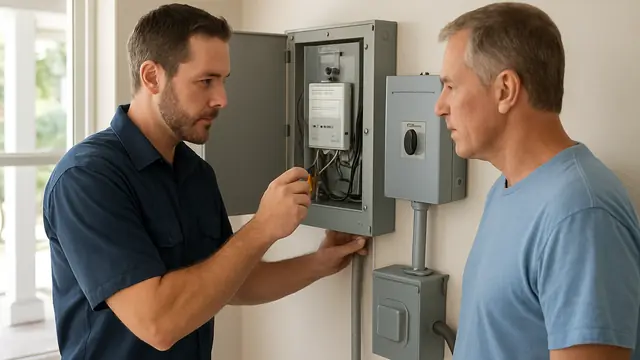
Do not remove an electrical panel cover, touch exposed conductors, bypass protection, or repeatedly reset a fault. Keep clear of smoke, sparks, burning odors, hot equipment, standing water near electricity, and downed lines, then call qualified help.
You are preparing a 30A home for family or arriving guests when the dishwasher, microwave, and air conditioner are running and part of the property suddenly loses power. You reset the breaker, but it trips again. Repeated tripping is not merely inconvenient. It is the electrical system warning that the circuit is carrying too much current or that a fault may be present.
A circuit breaker shuts off power before wiring overheats. One trip may result from several high-demand devices operating together. A breaker that trips repeatedly, immediately, or under light use may indicate an overloaded circuit, damaged appliance, short circuit, ground fault, loose connection, or defective breaker.
The safest immediate action is to unplug or turn off equipment on the affected circuit. Reset the breaker only once when there is no smoke, heat, odor, moisture, or visible damage. If it trips again, leave it off and arrange an electrical evaluation.
Why Does My Circuit Breaker Keep Tripping in 30A?
The breaker is usually reacting to another problem rather than causing it. What happens immediately before the trip provides an important clue.
If the breaker trips when a hair dryer, countertop appliance, and portable heater operate together, the circuit may be overloaded. If it trips as soon as one appliance starts, that appliance or its wiring may be faulty. If it trips when little appears to be running, the cause may be hidden wiring damage, a loose connection, moisture, or a worn breaker.
Common Causes of Repeated Breaker Trips
An Overloaded Circuit
Every circuit has a maximum safe capacity. Several appliances can collectively exceed it even when each device works correctly. Vacation homes and rentals may experience this when occupants simultaneously use hair dryers, coffee makers, toaster ovens, chargers, and other portable equipment.
Reducing the number of devices may stop the trip temporarily, but repeated overloads show that the circuit may not match the property's current electrical demand.
A Short Circuit or Ground Fault
A short circuit occurs when energized conductors make unintended contact, causing current to rise rapidly. A ground fault occurs when electricity travels along an unintended path. Both conditions can cause immediate tripping.
Damaged cords, failed receptacles, wet exterior equipment, deteriorated insulation, and internal appliance failures are possible causes. These faults should not be tested by repeatedly resetting the breaker.
A Faulty Appliance
Dishwashers, refrigerators, washing machines, disposals, water heaters, HVAC equipment, and pool equipment may trip breakers when a motor, heating element, control, or internal wire fails.
The appliance may operate normally until a particular cycle begins. A dishwasher might trip during its heating stage, while an air-conditioning system may trip when the compressor starts.
Loose Connections or a Worn Breaker
Loose electrical connections create resistance and heat. They can cause flickering lights, buzzing, intermittent trips, discoloration, or a warm outlet or switch.
Breakers can also wear out, but replacing one without testing the circuit is not a proper diagnosis. The breaker may be correctly responding to a fault elsewhere. Panel connections and compatibility must also be checked.
Safe Checks You Can Perform
Identify which rooms, lights, outlets, or appliances lost power. Read the panel label, but remember that labels are not always complete or accurate.
Turn off switches and unplug portable devices on the affected circuit. Move the breaker fully to OFF and then back to ON. Reconnect devices one at a time. If one appliance consistently causes the trip, stop using it.
Check nearby GFCI receptacles for a tripped reset button. One GFCI may protect several outlets. Reset it only when the area is dry and there is no heat, burning smell, cracking, or discoloration.
What a Homeowner Should Not Attempt
Do not install a larger breaker. The wire size and circuit design determine the permitted breaker rating. An oversized breaker may allow wiring to overheat before protection activates.
Do not remove the panel cover, tighten internal terminals, bypass an AFCI or GFCI, splice concealed wiring, or replace electrical components without proper qualifications.
Do not rely on extension cords as a permanent workaround. They may move the load while introducing additional overheating and trip hazards.
Warning Signs That Make the Problem Urgent
Leave the breaker off and request prompt service if you notice smoke, sparks, burning odor, crackling, buzzing, melted plastic, black marks, or a hot panel, receptacle, switch, cord, or appliance.
The problem is also urgent when the breaker will not stay reset, trips with almost no load, feels loose, trips during rain, affects essential equipment, or is accompanied by shocks or tingling.
If there is active fire or smoke, leave the property and call emergency services. Never use water on an electrical fire.
How a Licensed Electrician Diagnoses the Problem
A licensed electrician begins by asking when the breaker trips, what was operating, and whether appliances, renovations, or electrical devices were recently added.
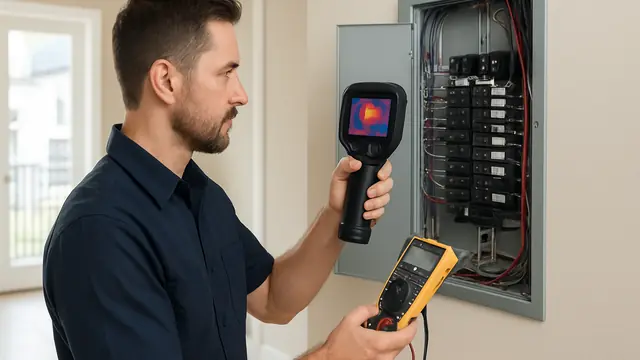
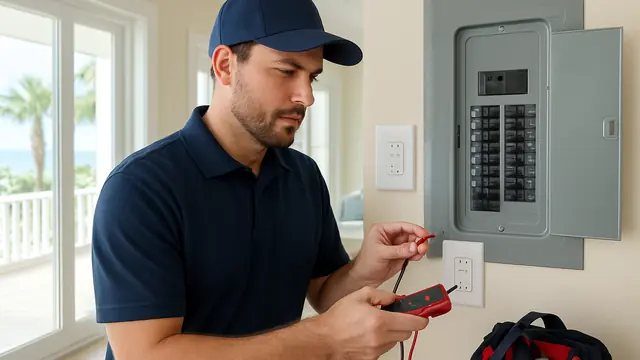
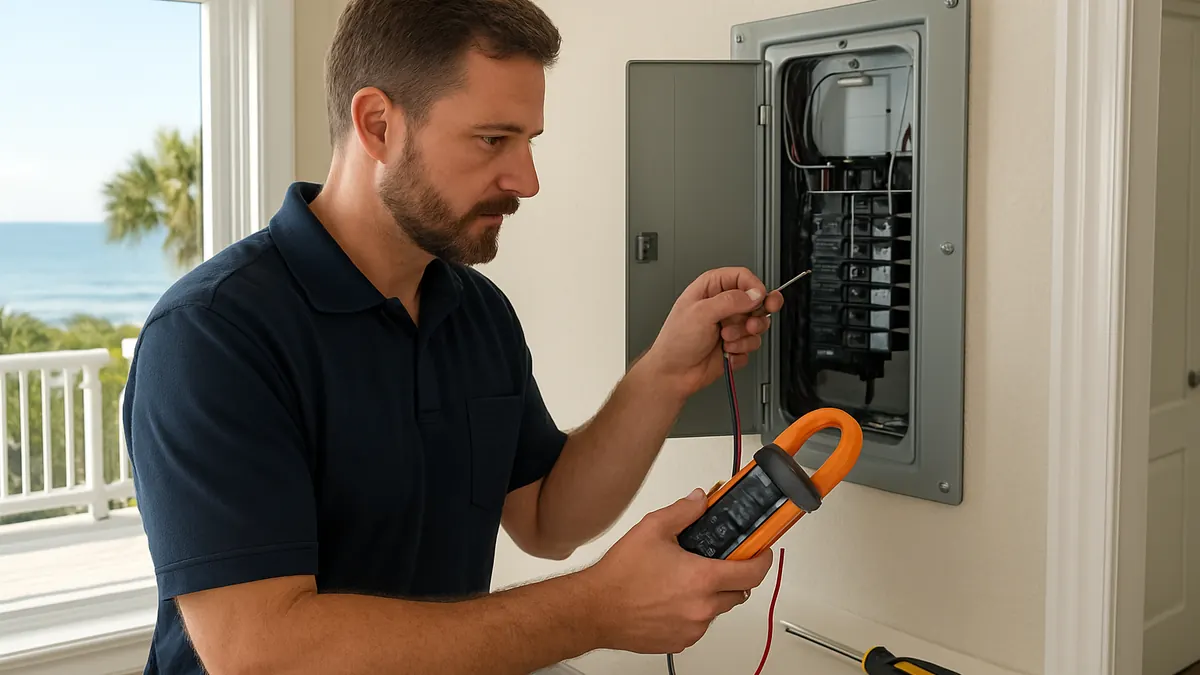
The electrician may inspect the panel, verify breaker type and rating, measure circuit current, test receptacles and switches, isolate appliances, and examine accessible connections. Voltage, continuity, insulation, ground-fault, or thermal testing may be used when appropriate.
For an intermittent trip, current may be measured while equipment starts and runs. The objective is to determine whether the breaker is defective or correctly protecting the circuit from another condition.
Repair Options From Least to Most Invasive
A simple repair may involve removing a damaged power strip, replacing a faulty cord, repairing an appliance, or changing how portable devices are used.
A failed receptacle, switch, GFCI, AFCI, or breaker may be replaced after testing confirms the cause. A loose accessible connection may be corrected without replacing the entire circuit.
If demand exceeds the circuit's capacity, a dedicated circuit may be installed for high-use equipment. Localized wiring damage may be repaired when the affected section is accessible and the remaining wiring tests safely.
Broader rewiring or panel work may be appropriate when there is widespread deterioration, unsafe modification, damaged panel equipment, inadequate capacity, or multiple related circuit problems. Complete replacement should be recommended only when the findings justify it.
Factors That Affect Repair Cost
Cost depends on the source of the trip, how easily it can be reproduced, wiring accessibility, and whether the problem involves an appliance, receptacle, branch circuit, breaker, or panel.
Other factors include the number of circuits involved, panel compatibility, access, and permit or inspection requirements.
Prevention and Maintenance
Avoid operating several heat-producing or motor-driven appliances on one general-purpose circuit. Use dedicated circuits where equipment requires them.
Test GFCI and AFCI devices according to manufacturer instructions. Replace damaged cords and loose receptacles promptly. Keep exterior covers closed and address outlets that become warm, discolored, or unreliable.
For a second home or rental, keep panel labels current and instruct occupants not to reset a breaker repeatedly. Consider an electrical inspection after renovations, major appliance additions, storm-related damage, or recurring power complaints.
Take the Next Safe Step
When a circuit breaker keeps tripping in 30A, do not treat the breaker as an obstacle to defeat. Reduce the load, disconnect suspect equipment, and leave the circuit off if it will not reset safely. A licensed electrician can determine whether the solution is a focused device repair, appliance correction, dedicated circuit, wiring repair, or justified panel work.
About this guide: This resource provides general homeowner education, not a remote diagnosis. Actual conditions, code requirements, equipment, and safe repair options must be evaluated at the property.