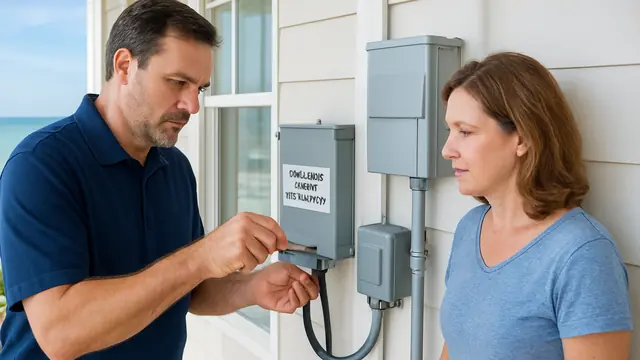
Do not remove an electrical panel cover, touch exposed conductors, bypass protection, or repeatedly reset a fault. Keep clear of smoke, sparks, burning odors, hot equipment, standing water near electricity, and downed lines, then call qualified help.
You plug in a vacuum, start the washing machine, or turn on a countertop appliance and the same breaker trips again. In another home, the breaker may stay on all day but open as soon as the outdoor equipment starts or rain moves through the area. For a Blue Mountain Beach homeowner, the pattern can be confusing because power often returns after a reset.
A tripping breaker is doing its job: interrupting electricity when the circuit appears overloaded or unsafe. The cause may be temporary, such as several high-demand devices running together, or it may involve a failing appliance, loose connection, damaged wire, moisture, arc fault, ground fault, or worn breaker.
Turn off or unplug equipment on the affected circuit. Reset the breaker one time only if there is no burning odor, heat, smoke, sparking, water, or visible damage. If it trips again, leave it off and call a licensed electrician. Do not continue restoring power to a circuit that is repeatedly warning of a problem.
Start With the Symptoms, Not the Breaker
The same breaker can trip for very different reasons, so the first question is not "Which breaker should I replace?" It is "What was happening when it opened?"
A trip after several appliances have been running usually suggests overload or heat buildup. An immediate trip may indicate a short circuit, serious appliance fault, or damaged wiring. A trip linked to one outlet, switch, or appliance narrows the search. A trip that happens after rainfall or when exterior equipment operates raises concern about moisture or outdoor wiring.
Common Causes in Homes and Rental Properties
Overloading a General-Purpose Circuit
A general-purpose circuit may serve lighting and multiple receptacles. When occupants add hair dryers, portable cooking devices, dehumidifiers, heaters, or other high-draw equipment, the total current can exceed the circuit rating.
The breaker opens because the combined demand is greater than the wiring can safely carry.
An Appliance That Fails During Operation
Appliances contain parts that switch on and off during normal cycles. Motors, compressors, pumps, and heating elements can draw excess current when they deteriorate.
The trip may occur only during spinning, defrost, water heating, compressor startup, or another operating stage.
Short Circuit
A short circuit occurs when electricity finds an unintended low-resistance path. Current rises quickly, and the breaker may trip instantly.
Possible sources include damaged cords, pinched conductors, failed devices, or internal appliance faults.
Ground Fault or Moisture Exposure
A ground fault occurs when electrical current leaves its intended path and moves toward grounded metal, water, or another conductive surface.
A wet connection, failed gasket, cracked cover, damaged cable, or faulty appliance can trip GFCI protection.
Arc Fault or Loose Electrical Connection
An arc is electricity jumping across a gap. Damaged insulation, loose terminals, worn receptacles, or poorly secured connections can create arcing.
Clues include flickering, buzzing, intermittent power, warm devices, or discoloration.
A Breaker or Panel Connection Problem
A breaker can wear out or lose a secure connection to the panel. Heat damage, improper breaker selection, corrosion, or damaged panel components can also contribute.
Replacing the breaker may solve the issue only when testing confirms that it is the failed component. Installing a new breaker without identifying the cause can leave a dangerous fault unchanged.
Safe Checks Before Scheduling Service
- First, determine exactly what lost power. Test lights and receptacles without opening electrical boxes. Note every appliance that was operating when the trip occurred.
- Unplug portable devices, turn accessible equipment off, and move the breaker fully to OFF before resetting it to ON.
- Reconnect items individually. If one device causes the trip, stop using it and report that pattern.
- Check for a tripped GFCI receptacle. One GFCI can protect other outlets downstream. Reset it only in a dry area with no evidence of damage.
What You Should Not Attempt
Do not replace the breaker with a larger size. Breaker ratings protect specific wire sizes and circuit designs. Increasing the rating without approved wiring changes can allow concealed conductors to overheat.
Do not remove the panel cover, tighten internal connections, bypass protective devices, or splice wiring unless qualified.
Do not tape a breaker on, hold it in place, or reset it repeatedly. Do not use extension cords through doors, windows, rugs, or walls as a permanent substitute for needed circuits.
Urgent Warning Signs
Keep the breaker off and seek prompt help when you see smoke, sparks, melted insulation, black marks, or water near electrical equipment.
Burning odor, crackling, buzzing, shocks, tingling, flickering combined with heat, or an unusually hot breaker, outlet, switch, cord, or appliance also require attention.
A breaker that trips with nothing connected, refuses to reset, or operates loosely may indicate a circuit or panel problem. If active fire or smoke is present, leave the building and call emergency services.
How a Licensed Electrician Diagnoses Repeated Tripping
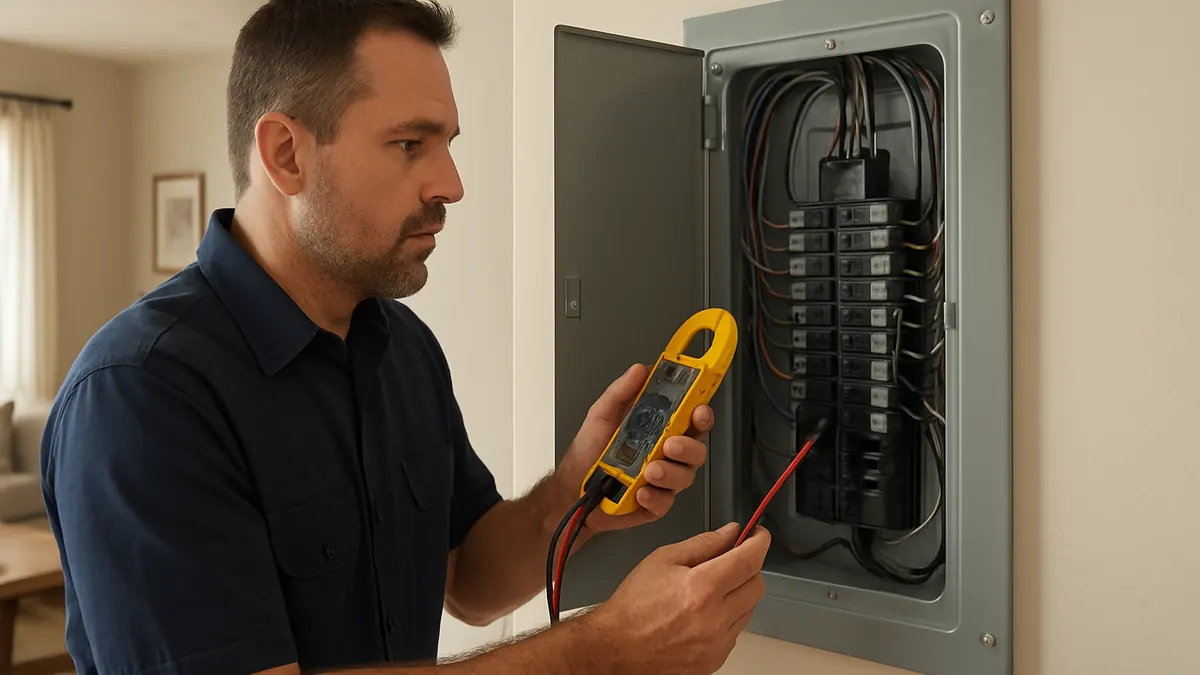
The electrician reviews whether the trip is immediate or delayed, weather-related, tied to one appliance, or new after renovation or equipment changes. The breaker type, rating, compatibility, circuit mapping, and operating current are then checked.
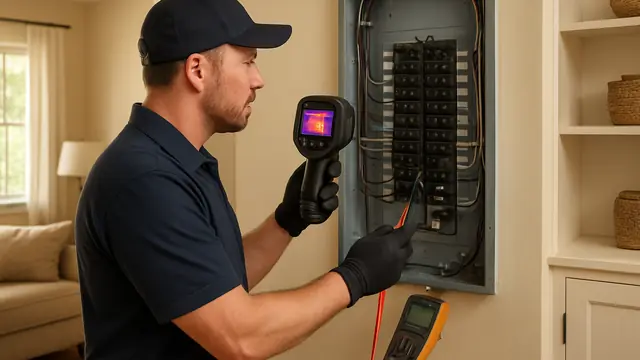
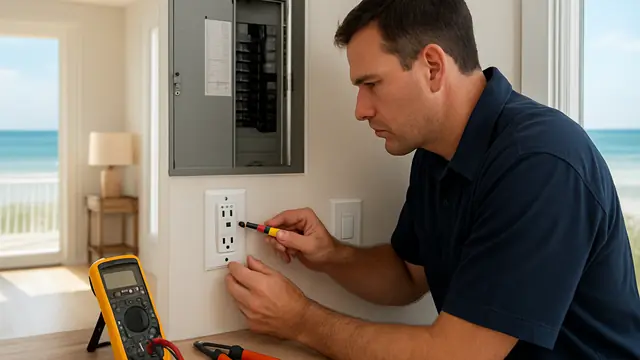
Receptacles, switches, disconnects, junction boxes, accessible wiring, and equipment may be inspected. Tests can check voltage, continuity, grounding, insulation, and current leakage. Suspected appliances may be isolated to determine whether the fault is in the equipment or the building wiring.
Repair Options Beginning With the Least Invasive
The first solution may be removing a defective plug-in device, replacing a damaged cord, repairing one appliance, or reducing simultaneous use on an otherwise properly designed circuit.
A failed receptacle, switch, GFCI device, disconnect, or breaker can often be replaced individually. Loose accessible connections may be repaired when conductors and equipment remain serviceable.
If the circuit is routinely overloaded, an electrician may recommend a dedicated circuit for the equipment creating the demand. A localized damaged cable may be repaired or rerouted without rewiring the entire home.
Panel repair, service upgrades, or broader rewiring may be necessary when there is extensive damage, insufficient capacity, incompatible equipment, unsafe modifications, or widespread deterioration. Those recommendations should be supported by inspection and testing.
Factors That Influence Cost
The repair cost depends on whether the issue is an appliance, device, accessible connection, concealed cable, breaker, or panel component.
A repeatable fault is generally easier to locate than one appearing only after hours of operation or certain weather.
Access, circuit length, wall and ceiling finishes, outdoor equipment, permit requirements, replacement-part availability, and restoration after access can all affect the final scope.
Prevention and Maintenance
Use high-demand appliances according to manufacturer circuit requirements. Avoid stacking several heat-producing devices on one receptacle circuit.
Test GFCI and AFCI devices as directed by the manufacturer. Replace damaged cords and loose plugs. Keep exterior covers closed and have cracked boxes, missing gaskets, and unreliable outdoor outlets repaired.
Maintain an accurate panel directory and review circuit capacity after remodeling or adding major equipment.
Take Repeated Tripping Seriously
When a circuit breaker keeps tripping in Blue Mountain Beach, gather the operating pattern, disconnect suspect equipment, and stop after one unsuccessful reset. The breaker may be preventing overloaded or damaged wiring from heating further. A licensed electrician can determine whether the repair involves one device, an appliance, a dedicated circuit, localized wiring, or justified panel work.
About this guide: This resource provides general homeowner education, not a remote diagnosis. Actual conditions, code requirements, equipment, and safe repair options must be evaluated at the property.