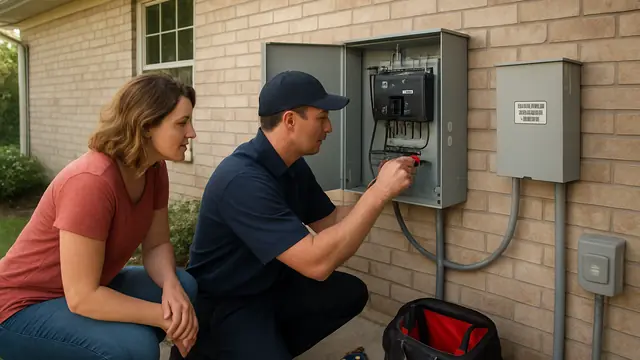
Do not remove an electrical panel cover, touch exposed conductors, bypass protection, or repeatedly reset a fault. Keep clear of smoke, sparks, burning odors, hot equipment, standing water near electricity, and downed lines, then call qualified help.
You are using a space heater in one room, the washing machine is running, and a breaker suddenly shuts off several outlets. Maybe the power comes back after a reset but disappears again later. The confusing part is that lights or appliances may work normally between trips. That does not mean the problem has corrected itself.
A circuit breaker opens when it detects more current than the circuit should safely carry. Repeated tripping can result from an overloaded circuit, defective appliance, loose connection, damaged conductor, moisture, short circuit, ground fault, or a breaker that is no longer operating properly.
Turn off and unplug everything you can identify on the affected circuit. Reset the breaker only once if the panel and connected devices show no heat, smoke, odor, sparking, moisture, or visible damage. If the breaker trips again, leave it off and arrange for a licensed electrician to diagnose the cause.
Begin With When the Breaker Trips
The timing often provides the clearest clue. A breaker that opens only after several devices have run together may be overloaded. An immediate trip can indicate a short circuit or a major fault inside an appliance. A delayed trip may occur as a motor, wire, or loose connection heats under load.
Some appliances operate in stages. A dryer may trip when its heating element energizes, while a refrigerator, pump, or air-conditioning system may trip during motor startup. Report exactly what happened before power was lost.
The Most Common Causes
Circuit Overload
An overload occurs when connected equipment asks the circuit to carry more current than it was designed to handle. Portable heaters, hair dryers, cooking appliances, vacuums, and power tools can add substantial demand.
The breaker may remain on when devices operate separately but trip when several run together. Another receptacle may still be on the same circuit.
Defective Appliance or Tool
A damaged appliance can draw too much current or allow electricity to travel where it should not. Frayed cords, failed motors, heating elements, switches, and internal wiring may cause trips.
If a breaker opens whenever the same appliance is plugged in or reaches a certain operating cycle, stop using that appliance. Do not continue testing it on different outlets around the home.
Short Circuit
A short circuit forms when energized conductors make unintended contact or current finds another very low-resistance path. The resulting current can rise rapidly, causing the breaker to trip immediately.
The source may be a damaged cord, receptacle, pinched cable, loose wire, or internal equipment failure. The damaged point may be concealed.
Ground Fault or Arc Fault
A ground fault occurs when electricity leaves its normal path and moves toward grounded metal, water, or another conductive material. An arc fault involves electricity jumping across a damaged or loose connection.
GFCI and AFCI protection may trip even when the circuit is not overloaded. That is intentional. These devices are designed to respond to fault patterns associated with shock or fire hazards.
Loose Connection or Failing Breaker
Loose terminals can create heat and arcing. Clues include flickering, buzzing, warmth, discoloration, or delayed tripping.
A breaker can also wear out. However, a new breaker should not be installed until the circuit has been tested. A correctly functioning breaker may be protecting the home from a fault elsewhere.
Checks You Can Safely Make
- Identify the rooms or equipment that lost power. Verify panel labels by checking lights and receptacles without opening electrical boxes.
- Unplug portable equipment. Turn accessible appliance controls off. Move the tripped breaker fully to OFF and then back to ON.
- Reconnect devices one at a time. If one triggers the trip, disconnect it and leave it out of service.
- Check nearby GFCI receptacles. One may protect outlets without reset buttons. Reset it only if the location is dry and undamaged.
What Not to Do
Do not replace the breaker with one of a higher amperage. Breakers are selected to protect the circuit conductors. Oversizing the breaker can allow wiring to overheat without shutting off soon enough.
Do not remove the panel cover or touch components inside it. Do not bypass GFCI or AFCI protection, repair concealed wiring, or open hardwired equipment without the required training and qualifications.
Never hold a breaker on, tape it in position, or keep resetting it. Do not use extension cords as permanent wiring.
When the Situation Is Urgent
Leave the affected circuit off when there is a burning smell, smoke, sparking, crackling, melted material, blackened plastic, or visible water near electrical equipment.
A hot outlet, switch, plug, breaker, or panel requires prompt attention. So does a shock, tingling sensation, breaker that will not reset, or breaker that trips when almost nothing is connected.
If you see active fire or smoke, evacuate and call emergency services. Do not touch the panel or use water on the fire.
How a Licensed Electrician Diagnoses It
The electrician reviews appliances in use, weather conditions, and whether the trip is immediate or delayed.
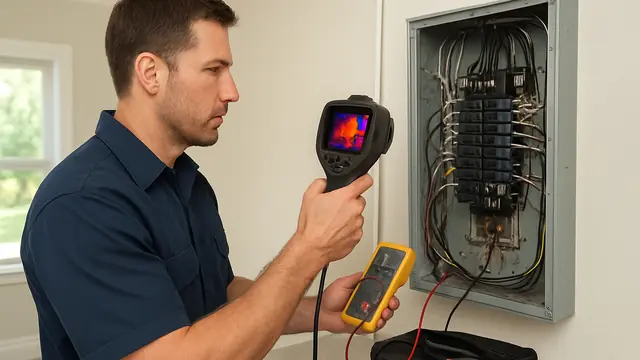
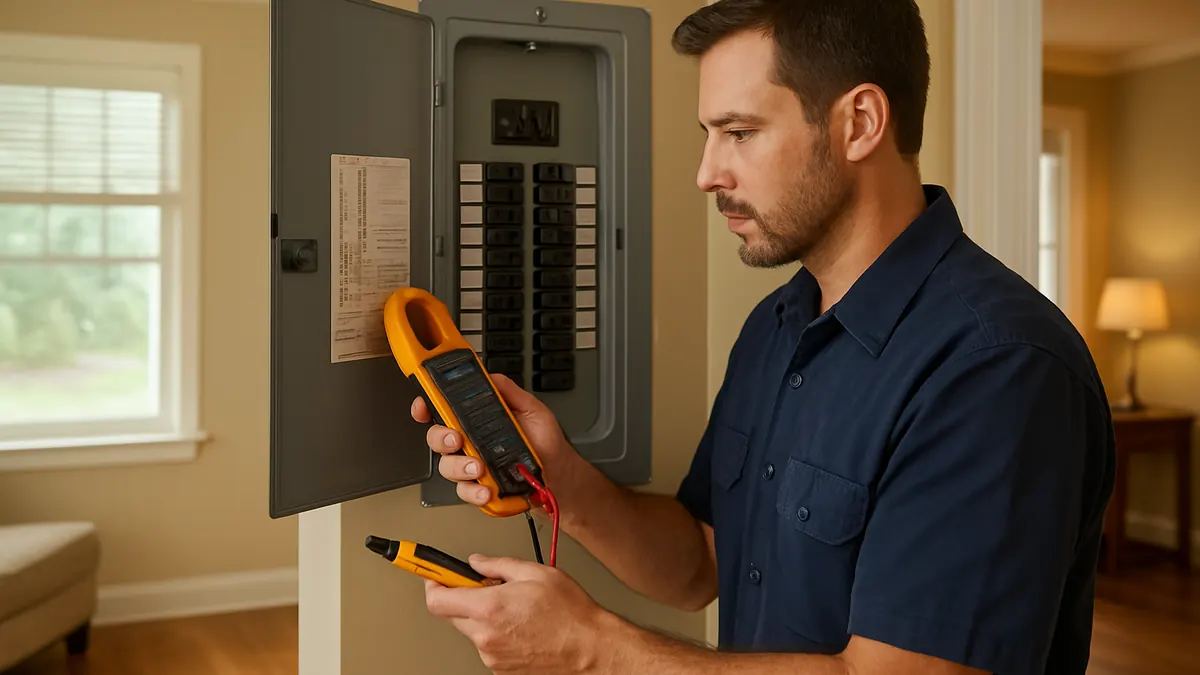
The panel and breaker are inspected for correct type, rating, condition, and connection. The electrician may measure current while the circuit operates, test voltage and grounding, inspect accessible receptacles and switches, and isolate appliances.
Additional electrical or thermal testing may locate hidden faults and show whether the breaker is defective or responding correctly.
Repair Options, Starting With the Simplest
The appropriate repair may be limited to replacing a damaged cord, removing a faulty plug-in device, repairing an appliance, or reducing simultaneous use of portable equipment.
A defective receptacle, switch, GFCI, AFCI device, disconnect, or breaker can often be replaced without changing the rest of the circuit. Loose accessible connections may be corrected when the conductors and equipment remain serviceable.
A consistently overloaded circuit may need a dedicated circuit for the appliance or equipment creating the demand. Localized cable damage may be repaired or a section rerouted.
Wider rewiring, panel repair, or service upgrades may be needed when inspection finds widespread damage, unsafe alterations, inadequate capacity, or panel components that cannot be safely restored. Complete replacement should follow evidence, not assumptions.
What Affects the Cost of Repair?
Cost depends on the location and type of fault, the amount of diagnostic time required, and how easily the wiring can be accessed.
A visible failed receptacle is more straightforward than an intermittent concealed fault. Circuit length, compatibility, permits, inspections, and finish repairs also affect scope.
Preventing Future Breaker Trips
Learn which receptacles and appliances share each circuit. Avoid running several high-demand portable devices together.
Use dedicated circuits when required by the equipment manufacturer. Test GFCI and AFCI devices according to their instructions, and replace damaged cords, loose plugs, and cracked electrical covers promptly.
Keep the panel directory current. Review capacity before adding large equipment, and address flickering, buzzing, warmth, or occasional trips promptly.
Get the Cause Identified
When a circuit breaker keeps tripping in DeFuniak Springs, the next step is not to force it to remain on. Note what was operating, disconnect suspect devices, and leave the breaker off if it trips a second time. A licensed electrician can identify whether the cause is an overload, failed appliance, damaged device, wiring fault, worn breaker, or panel problem and recommend the least invasive safe repair.
About this guide: This resource provides general homeowner education, not a remote diagnosis. Actual conditions, code requirements, equipment, and safe repair options must be evaluated at the property.