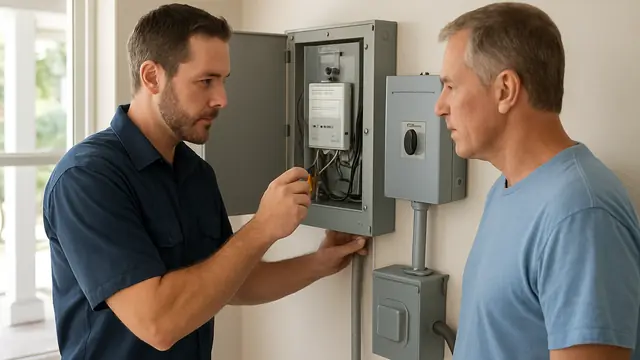
Do not remove an electrical panel cover, touch exposed conductors, bypass protection, or repeatedly reset a fault. Keep clear of smoke, sparks, burning odors, hot equipment, standing water near electricity, and downed lines, then call qualified help.
A guest checks into your 30A vacation rental, turns on the oven, starts laundry, and lowers the thermostat. Minutes later, part of the house loses power. Or the cleaning crew reports that a bathroom outlet will not reset, an exterior light is flickering, or a bedroom receptacle feels loose.
These symptoms usually point to an overloaded circuit, a worn device, moisture near protected wiring, or a loose electrical connection. The safest immediate action is to stop using the affected appliance or circuit, unplug portable devices, and check the panel only when the area is dry and there is no smoke, heat, buzzing, or burning odor. Never keep resetting a breaker that trips again.
Vacation rentals create demanding conditions. Guests use unfamiliar appliances, charge multiple devices, and may not report small problems before checkout. Frequent turnover can hide warning signs until the next arrival. Knowing the most common electrical problems for vacation rentals in 30A helps owners respond safely and avoid larger disruptions.
Most Common Electrical Problems for Vacation Rentals in 30A
Circuit Breakers That Keep Tripping
A breaker is a safety switch that stops electrical flow when a circuit is overloaded or develops a fault. One trip may happen because too many high-demand devices ran together. Repeated trips can indicate an overloaded circuit, damaged appliance, loose connection, short circuit, or ground fault.
Common rental combinations include a microwave and countertop appliance on one kitchen circuit, several hair dryers, or portable heaters added by guests. Resetting the breaker without finding the cause may allow heat to build in wiring or connections.
GFCI Outlets That Will Not Reset
Ground-fault circuit interrupter outlets, or GFCIs, are used where electricity may be near water. They shut power off when current begins traveling along an unsafe path.
A GFCI may refuse to reset because the device has failed, moisture is present, a downstream outlet has a problem, or an appliance is leaking current. One GFCI can protect several ordinary-looking outlets, so the source may be in another room or outside.
Loose, Worn, or Warm Outlets
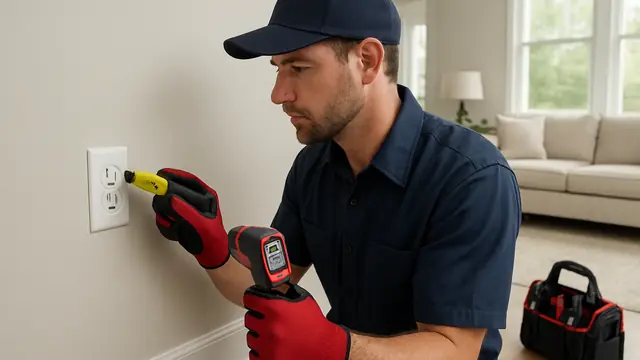
Repeated plugging and unplugging can loosen outlet contacts, causing plugs to fall out or connections to heat. An outlet that crackles, sparks repeatedly, feels warm, looks discolored, or will not hold a plug should be removed from service.
A warm charger is not the same as a warm wall outlet. Heat at the receptacle can indicate a loose connection, overloading, or damaged wiring and deserves prompt attention.
Flickering or Dimming Lights
One flickering bulb may simply be loose. Flickering across several fixtures, dimming when appliances start, or lights that suddenly brighten can indicate a loose connection, overloaded circuit, failing switch, or service problem.
Exterior Electrical Damage
Outdoor receptacles and fixtures face moisture and wear. Covers can crack, seals can fail, and metal parts can corrode.
Do not use an exterior outlet that is loose, discolored, broken, or missing a proper weather cover. Outdoor faults can also trip an indoor GFCI, making the source less obvious.
Damaged Cords and Power Strips
Extension cords should not replace permanent wiring, and ordinary power strips should not supply high-wattage appliances.
Inspect property-supplied lamps, televisions, vacuums, and small appliances. Remove items with frayed cords, scorched plastic, loose plugs, or bent prongs.
Safe Checks an Owner or Property Manager Can Perform
First, identify the room, device, and activity involved. Ask whether the problem stopped after an appliance was unplugged.
You may look for a breaker handle sitting between "on" and "off." Move it fully off, then back on one time. If it trips again, leave it off and call an electrician.
For a GFCI, unplug nearby appliances and press reset once. Stop if it will not reset, trips immediately, or appears damp. You may also replace a known-good light bulb and visually inspect cords, covers, and switches. Do not remove devices or panels.
What You Should Not Attempt
Do not remove the panel cover, tighten internal connections, replace breakers, bypass GFCI protection, or install a larger breaker to stop trips. A larger breaker may let wiring overheat because the wire may not be rated for the additional current.
Do not tape over damaged cords as a permanent repair or continue using an outlet that buzzes, smells burned, sparks, or will not hold a plug. Cleaning and maintenance staff should not be directed to perform electrical repairs unless properly qualified.
Signs the Problem Is Urgent
Turn power off if it is safe and request prompt service for a burning odor, smoke, visible arcing, melted plastic, a hot panel, repeated breaker trips, buzzing devices, or shocks from equipment.
Call emergency services for an active fire or immediate danger. Do not enter an unsafe area just to reach the panel.
Water entering electrical equipment, storm damage near service components, several rooms losing power without a normal breaker trip, or lights becoming unusually bright and dim also require urgent evaluation.
How a Licensed Electrician Diagnoses the Problem
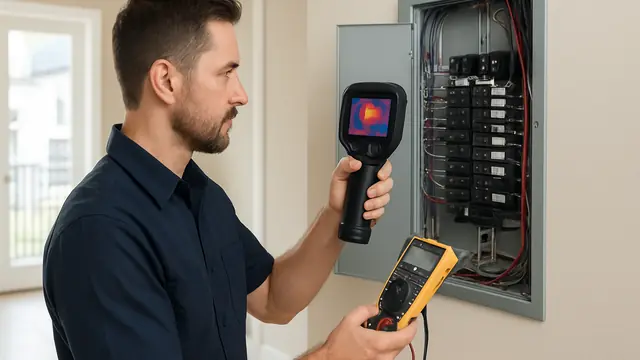
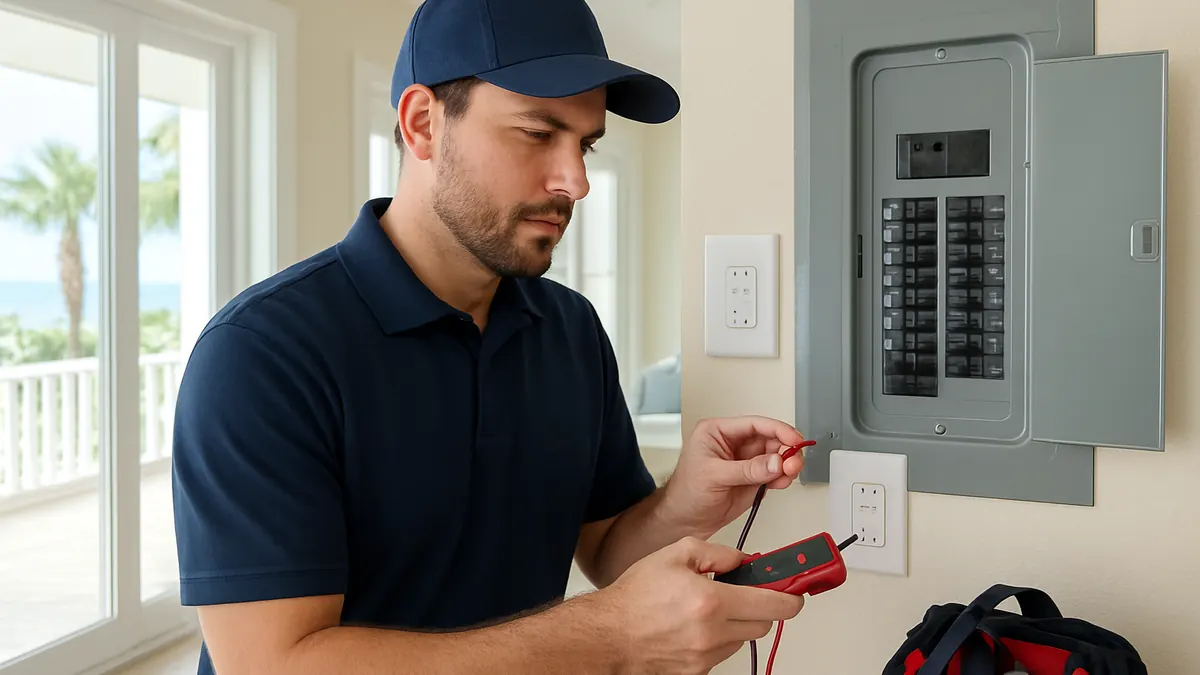
A licensed electrician starts with the symptom history and a visual inspection. Testing may include voltage, current, grounding, polarity, GFCI operation, and circuit load.
The electrician isolates the circuit and determines whether the failure comes from a device, wiring, panel, or incoming service. In a rental, the electrician may also review how high-demand appliances are distributed across circuits and whether recent additions changed the load.
The goal is to identify the actual failure, not simply reset protection and leave.
Repair Options, Starting With the Least Invasive
The simplest repair may be removing a defective appliance, replacing a damaged cord, correcting one connection, or replacing a worn switch, receptacle, GFCI, or fixture.
If several outlets are affected, a loose connection at the first failed device may be the cause. Overloaded circuits may require relocating equipment, adding a dedicated circuit, or changing appliance distribution.
Outdoor repairs can include new weather-resistant devices or covers. Panel repairs may involve a defective breaker or damaged connection. A full panel or service replacement should be considered only when condition, capacity, damage, or code-related limitations justify it.
Factors That Affect Electrical Repair Cost
Cost depends on the failure location, accessibility, number of affected devices, time needed to reproduce an intermittent problem, and whether walls, ceilings, exterior finishes, or built-in equipment restrict access.
Other factors include wiring condition, panel compatibility, permitting, and scheduling around guests. The same symptom can come from one failed outlet or a more involved circuit issue, so diagnosis should come before a firm repair estimate.
Prevention and Maintenance
Add outlet, switch, lighting, cord, and GFCI checks to turnover procedures. Test GFCIs, smoke alarms, and other safety devices according to manufacturer instructions.
Label the panel clearly. Provide convenient outlets and charging locations to discourage extension-cord use. Replace damaged power strips and worn property-supplied appliances promptly.
Have electrical capacity reviewed after major appliance additions, renovations, hot-tub installations, or other load changes. Keep exterior covers intact, address water intrusion quickly, and document recurring complaints. Several small reports from different guests may reveal one developing fault.
Take the Next Safe Step
The most common electrical problems for vacation rentals in 30A often begin with one tripped breaker, failed GFCI, flickering light, or loose outlet. Stop using the affected circuit, avoid repeated resets, and have recurring or hazardous conditions diagnosed by a licensed electrician before the next guest arrives.
About this guide: This resource provides general homeowner education, not a remote diagnosis. Actual conditions, code requirements, equipment, and safe repair options must be evaluated at the property.