Do not remove an electrical panel cover, touch exposed conductors, bypass protection, or repeatedly reset a fault. Keep clear of smoke, sparks, burning odors, hot equipment, standing water near electricity, and downed lines, then call qualified help.
A late-night guest message says half the upstairs outlets are dead, the hallway light flashes when the air conditioner starts, and a breaker will not stay on. The property may have looked fine after cleaning, but the problem appeared only after guests connected chargers, used bathroom appliances, and began cooking.
That combination most often points to an overloaded circuit, a failed GFCI, a loose connection, or a defective appliance. The safest immediate response is to unplug equipment on the affected circuit and keep everyone away from any outlet or panel that is hot, wet, buzzing, damaged, or producing an odor. A breaker or GFCI may be reset once under safe conditions. If it trips again, leave it off.
Vacation-rental electrical problems are often intermittent because each group uses the property differently. Cleaners may dismiss a loose outlet as cosmetic, and owners may not see flickering during a brief visit. Recognizing the most common electrical problems for vacation rentals in Blue Mountain Beach turns scattered reports into a maintenance response.
Common Problems and What the Symptoms Mean
One Room or One Side of the Rental Loses Power
When several outlets or lights stop together, check for a tripped breaker or GFCI. A tripped breaker handle may sit between "on" and "off."
If one reset does not restore stable power, the cause may be a loose connection, damaged wiring, failed breaker, or appliance fault. Partial power loss across unrelated rooms may indicate a service issue.
Breakers Trip When Guests Use Appliances
- A breaker protects wiring from excessive current. It may trip because a circuit is overloaded, an appliance has an internal fault, or current is escaping to ground.
- Simultaneous use of laundry equipment, heaters, hair dryers, and countertop appliances may expose an overloaded circuit or weak connection.
- A breaker that trips instantly when reset suggests a fault rather than ordinary overuse. Leave it off.
GFCIs Trip in Bathrooms, Kitchens, or Outdoors
- A GFCI compares current leaving and returning on a circuit. A small difference can mean electricity is traveling through an unsafe path, so the device shuts off power quickly.
- Moisture, a damaged cord, a failing appliance, or a worn GFCI can cause trips. One GFCI may protect several outlets, so an outdoor fault can interrupt indoor power.
- Repeated trips require diagnosis to determine whether the GFCI is failing or responding correctly to another hazard.
Plugs Fall Out or Outlets Feel Warm
An outlet should grip a plug firmly. Loose plugs indicate worn contacts that may arc or produce heat.
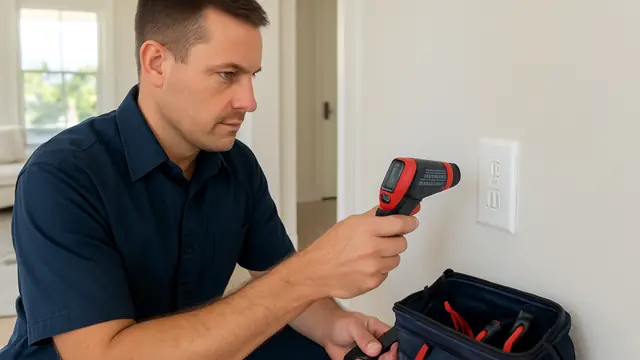
Warmth, discoloration, crackling, or a burned odor can indicate resistance at a loose connection. Resistance converts electrical energy into heat. Stop using the outlet and do not cover the symptom with a power strip.
Lights Flicker or Change Brightness
A loose bulb or incompatible dimmer can affect one fixture. Flickering in multiple rooms, lights that dim when equipment starts, or bulbs that become unusually bright may indicate a circuit or service connection problem.
Ask whether one fixture or several rooms were affected and whether an appliance had just started.
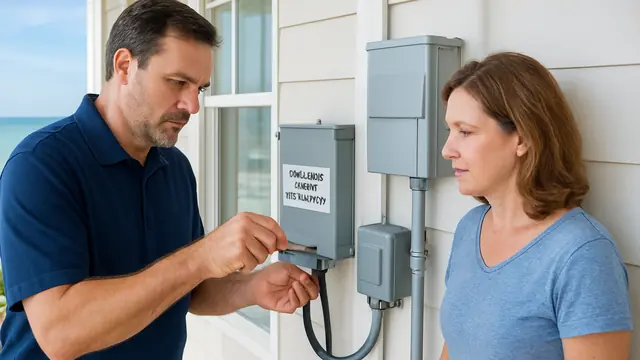
Exterior Fixtures Stop Working After Wet Weather
Outdoor lights and receptacles rely on intact covers, seals, boxes, and GFCI protection. Cracks or failed gaskets can admit moisture.
Equipment is not necessarily safe because it works again after drying.
Extension Cords and Improvised Charging Setups
Guest-added adapters and extension cords can be overloaded, pinched, or damaged.
Remove unsafe setups and evaluate permanent power when the same need keeps recurring.
Safe Checks You Can Make Without Opening Equipment
Identify the affected rooms, equipment in use, weather, and any heat, noise, odor, or sparks.
Unplug portable appliances on the affected circuit. Look at the panel without removing its cover. If a breaker is tripped and conditions are safe, switch it fully off and then on once. Reset a GFCI once after unplugging connected devices.
Replace a suspect bulb and visually inspect cords, faceplates, covers, and plugs. Stop for melting, discoloration, moisture, exposed wiring, or heat.
These checks gather information; they do not replace diagnosis when the symptom returns.
Repairs Owners Should Not Attempt
Do not remove a panel cover, replace breakers, splice wiring, or install a larger breaker. Breaker size must match the circuit wiring.
Do not bypass a GFCI, break off a grounding prong, use an adapter to defeat grounding, or push a loose plug into place with tape. Do not direct a guest or cleaner to replace outlets or switches.
An incorrect repair may appear normal while overheating inside a box or wall.
Warning Signs That Require Urgent Service
Smoke, flame, visible arcing, a burning odor, melted plastic, a hot panel, repeated trips, shocks, or loud buzzing require immediate action. Turn power off only if you can reach the correct disconnect safely.
Call emergency services for an active fire or immediate danger. Keep people out of the affected area.
Urgent evaluation is also needed for water in electrical equipment, service damage, widespread brightness changes, or unexplained multi-area power loss.
How a Licensed Electrician Diagnoses Rental Problems
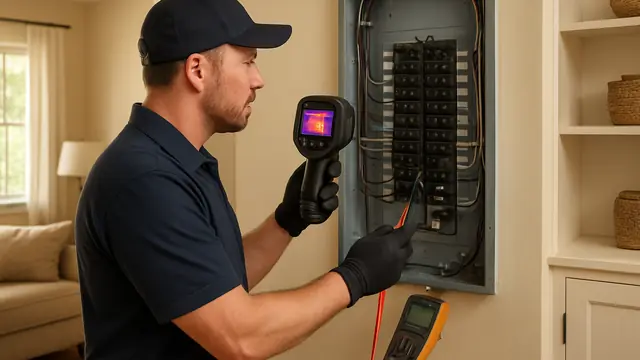
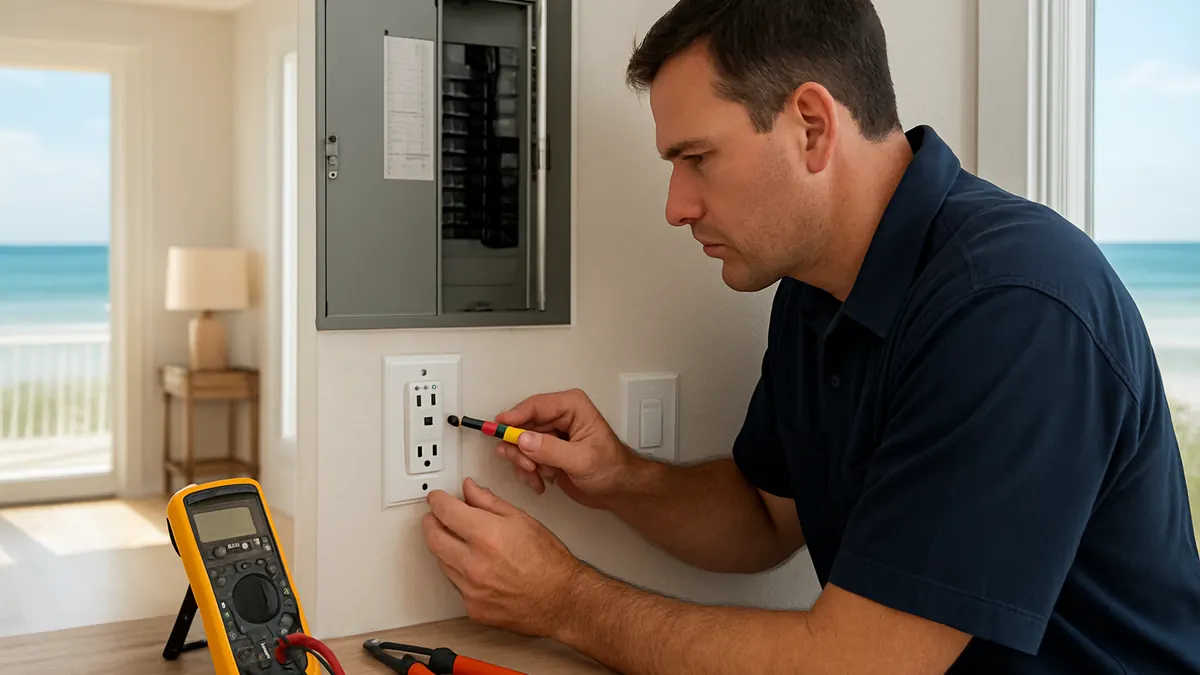
- The electrician reviews the sequence of events and may test voltage, amperage, polarity, grounding, GFCI response, breaker performance, and continuity.
- Appliances may be disconnected individually, and load may be measured while representative equipment operates.
- After de-energizing the circuit, the electrician checks for loose terminals, damage, corrosion, overheating, or excessive demand.
Repair Options From Least to Most Invasive
The least invasive solution may be removing a faulty appliance, replacing a damaged cord, installing a correct bulb, or replacing one failed receptacle, switch, dimmer, GFCI, or exterior cover.
A loose connection may be repaired at a device or junction box. If a circuit is overloaded during normal occupancy, appliances may be redistributed or a dedicated circuit added.
More involved repairs may include replacing cable, correcting outdoor boxes, repairing panel components, or upgrading capacity. Complete replacement should follow documented need.
What Determines the Cost?
- Cost varies with affected circuits, accessibility, diagnostic time, wiring condition, and whether the fault is behind finished surfaces.
- Panel type, device specifications, permits, repair timing, and occupancy coordination also matter. Intermittent faults may take longer to isolate.
- The least expensive responsible path begins with accurate diagnosis, not guessing at parts.
Prevention for Blue Mountain Beach Vacation Rentals
- Include electrical checks in every turnover. Test GFCIs, switches, lights, and exterior receptacles, and look for loose plugs, damaged cords, or scorched marks.
- Keep an accurate panel directory and maintenance log. Repeated complaints from one area should trigger service even when the problem disappears.
- Replace worn appliances and cords, provide charging locations, and schedule a review after renovations, equipment additions, or recurring trips.
Resolve the Problem Before It Becomes a Guest Emergency
The most common electrical problems for vacation rentals in Blue Mountain Beach often reveal themselves only under full guest use. A repeated breaker trip, failed GFCI, warm outlet, or multi-room flicker should not be dismissed because the property later appears normal. Perform only safe visual checks and one reset, then leave recurring or hazardous problems to a licensed electrician.
About this guide: This resource provides general homeowner education, not a remote diagnosis. Actual conditions, code requirements, equipment, and safe repair options must be evaluated at the property.