Do not remove an electrical panel cover, touch exposed conductors, bypass protection, or repeatedly reset a fault. Keep clear of smoke, sparks, burning odors, hot equipment, standing water near electricity, and downed lines, then call qualified help.
You return to your Blue Mountain Beach property after a hurricane and discover that the kitchen lights work, the air conditioner will not start, and one bedroom has no power. That pattern could mean a tripped breaker, damaged branch circuit, failed equipment, or a utility service problem affecting voltage. The safe immediate action is to turn off major appliances, unplug sensitive electronics, and look at the panel only from a dry, safe location. If the panel is wet, hot, buzzing, corroded, or physically damaged, do not touch it. Leave the area and call for professional help.
A Northwest Florida hurricane electrical checklist in Blue Mountain Beach should cover more than buying batteries. It should help you prepare the electrical system before landfall, avoid unsafe actions during an outage, and inspect the property methodically after the storm.
Before the Storm: Establish a Safe Baseline
Before severe weather, note breakers that trip, outlets that fail, flickering lights, or appliances that produce a tingling sensation.
These symptoms may indicate loose wiring, overloaded circuits, damaged equipment, or a ground fault. A ground fault occurs when electricity leaves its intended path, sometimes through metal or a person.
Resolving a known defect before a storm is safer than discovering it while the utility supply is unstable or emergency access is limited.
Secure and Check Exterior Electrical Components
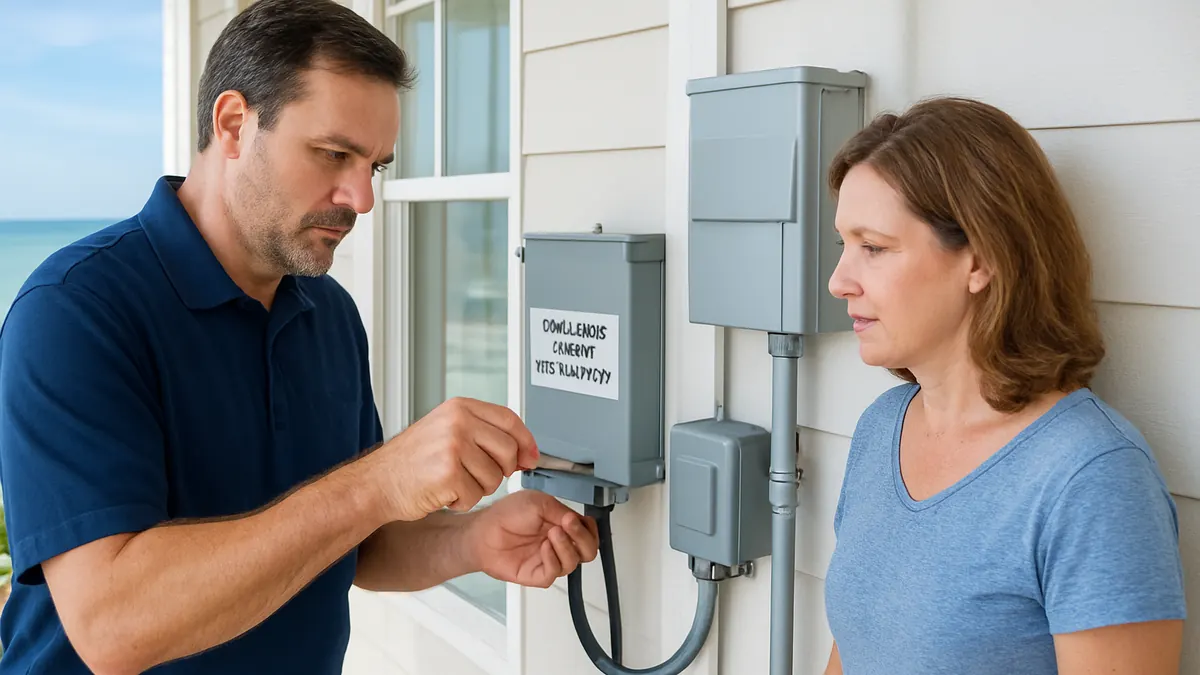
While conditions are calm, look from the ground at exterior receptacles, lighting, air-conditioning equipment, the meter area, and the visible service connection.
Outdoor receptacle covers should be intact and able to close. Cords should not have exposed conductors, crushed insulation, or loose plugs. Move portable electrical items indoors and clear unsecured objects that could strike equipment.
Do not tape over damage or open disconnects, meter enclosures, or equipment cabinets.
Prepare the Panel Without Opening It
- Confirm that the panel directory is accurate. Identify circuits for refrigeration, heating and cooling, bedrooms, kitchen outlets, garage equipment, and any essential devices.
- Inspect the panel exterior for rust, water stains, damage, discoloration, buzzing, crackling, or unusual heat.
- Do not remove the cover. Even with the main breaker off, parts of the panel may remain energized from the utility service.
Protect Electronics and Appliances
Unplug nonessential electronics before the worst weather arrives. Computers, televisions, network equipment, chargers, and smart devices can be affected by voltage spikes when lines are damaged or power is restored.
Surge protection reduces some excess-voltage events but cannot stop every surge. Proper grounding and unplugging equipment add protection.
Turn off or unplug large appliances when an outage begins. This reduces the number of loads attempting to restart simultaneously when power returns.
Check Your Generator Plan Before You Need It
Test the generator before a hurricane warning and handle fuel according to the manufacturer's guidance.
Portable generators belong outdoors, far enough from doors, windows, vents, and enclosed spaces to prevent exhaust from entering. Never operate one in a garage, shed, screened enclosure, or under an attached area where fumes can accumulate.
Do not plug a generator into an ordinary receptacle. That can backfeed the home and utility lines. Use an approved transfer switch or interlock that mechanically prevents generator power and utility power from connecting at the same time.
Connect only designed loads. Motors can draw extra current when starting. If the generator trips repeatedly, reduce the load and have the setup checked.
Safe Homeowner Checks During an Outage
Use flashlights instead of candles. If only part of the home is affected, turn off large appliances and check for a tripped breaker from a safe location.
A tripped breaker often rests between the ON and OFF positions. If the panel is completely dry and undamaged, turn the breaker fully off and then back on once after disconnecting appliances on that circuit. If it trips again, leave it off.
If a carbon-monoxide alarm sounds or anyone feels ill, move to fresh air and contact emergency services.
What You Should Never Attempt
Never enter standing water near electrical equipment or touch a fallen line or anything contacting it.
Do not replace breakers, splice damaged wiring, open the meter enclosure, or repair the service mast. Do not use cords with missing ground pins or connect extension cords end to end.
Urgent Signs After the Hurricane
Contact the utility, emergency services, or a licensed electrician as appropriate if you find:
- Smoke, sparks, melted insulation, or burning odors
- Water inside the panel or electrical equipment
- A damaged service mast, meter base, or service cable
- Repeated breaker or GFCI trips
- Outlets or switches that are hot to the touch
- Lights that become very bright and then dim
- Shocks or tingling from appliances, faucets, or metal surfaces
- Generator transfer equipment that appears damaged
- Power in only part of the home with no clear tripped breaker
Unusual brightening and dimming can signal a damaged neutral connection. The neutral normally helps keep voltage balanced. A failed neutral can expose equipment to abnormal voltage, so major appliances should remain off until the condition is evaluated.
How a Licensed Electrician Diagnoses Storm Damage
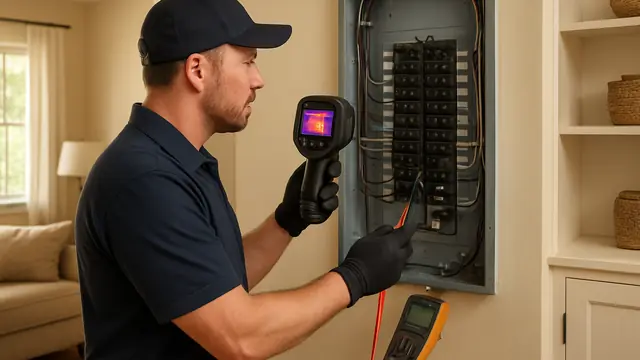
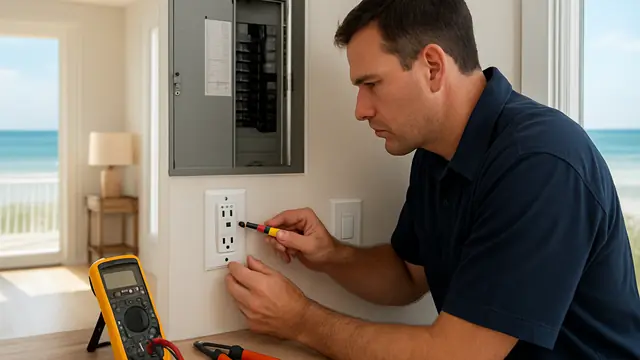
The electrician asks when power failed, whether water entered, and which circuits work, then inspects the service, panel, grounding and bonding, outdoor devices, generator equipment, and visible wiring.
Testing may include voltage measurements, protective-device checks, connection inspection, and thermal imaging. Moisture exposure may require additional testing.
The diagnosis should distinguish a failed appliance, damaged branch circuit, service problem, and utility-side outage.
Repair Options From Least to Most Invasive
A simple repair may be replacing a failed receptacle, weather-resistant cover, loose connection, or damaged cord after testing.
Moderate repairs may include replacing a defective breaker, damaged exterior disconnect, surge protective device, generator inlet, or section of accessible wiring. Grounding and bonding defects may also be corrected.
More extensive repairs can involve a panel, feeder, meter enclosure, service mast, or storm-damaged equipment. Replacement is warranted when components are physically damaged, contaminated by water, severely corroded, overheated, or no longer capable of safe operation.
Factors That Affect Repair Cost
The cost depends on which component failed, the extent of water exposure, accessibility, diagnostic time, permit requirements, equipment type, and whether the utility must disconnect or reconnect service.
Concealed damage may require approved access before the scope is known. Ask what is immediately necessary and what is optional.
Prevention and Maintenance
- Test GFCI receptacles and safety alarms, maintain panel labels, replace broken outdoor covers, and service generator equipment.
- Have recurring flickering, warm outlets, or breaker trips evaluated. Review the plan with occupants or property managers.
- After any storm that causes water intrusion or visible service damage, arrange an electrical inspection before placing affected equipment back into operation.
Complete the Northwest Florida Hurricane Electrical Checklist in Blue Mountain Beach
Completing a Northwest Florida hurricane electrical checklist in Blue Mountain Beach means establishing how the system operates before the storm and refusing to guess afterward. Secure outdoor equipment, disconnect sensitive electronics, prepare the generator correctly, and treat water exposure, partial power, repeated trips, heat, or burning odors as warning signs.
About this guide: This resource provides general homeowner education, not a remote diagnosis. Actual conditions, code requirements, equipment, and safe repair options must be evaluated at the property.