Do not remove an electrical panel cover, touch exposed conductors, bypass protection, or repeatedly reset a fault. Keep clear of smoke, sparks, burning odors, hot equipment, standing water near electricity, and downed lines, then call qualified help.
The question often comes up after something changes. Perhaps a new heat pump is being installed, the kitchen is being updated, or an electrician discovers that the existing service is smaller than expected. You may also notice lights dim when several appliances run, breakers trip during heavy use, or there is no clear place to add circuits for a pool pump, workshop, or vehicle charger.
Those signs do not prove that your Blue Mountain Beach home needs a 200-amp electrical service, but they justify evaluation. Until the system is checked, do not keep resetting a main breaker or continue operating equipment that causes heat, odor, buzzing, or repeated power loss. Turn off the affected appliance if you can do so safely and arrange an inspection.
The correct answer comes from two questions: Is the present service safe, and does it have enough calculated capacity for the way the home is used now and in the future?
Separate Panel Space From Service Capacity
Homeowners often hear that a panel is "full" and assume the house needs 200 amps. A full panel means there may be no approved spaces for additional breakers. It does not necessarily mean the service is overloaded.
Service capacity is the amount of power the entire service is designed to supply. Panel space is the number and type of circuits the panel can contain. A subpanel may solve a space issue, but it does not add amperage to the utility service.
The home may have adequate capacity but need better circuit organization, or it may have open breaker spaces while lacking capacity for another major load.
Situations That Lead to a 200-Amp Evaluation
A major remodel changes electrical demand
New cooking equipment, additional refrigeration, upgraded laundry appliances, bathroom heaters, or a larger HVAC system can increase demand. Renovation plans should be included in the load calculation before wiring begins.
Several electric systems can operate together
Air conditioning, water heating, cooking, clothes drying, pool equipment, and vehicle charging may overlap. The service must be evaluated for expected simultaneous demand, not just average monthly energy use.
You are planning a generator, solar system, or battery
These systems do not automatically require 200 amps, but they affect panel configuration, disconnects, transfer equipment, and future planning.
Existing equipment shows wear
Corrosion, heat discoloration, loose breakers, buzzing, damaged labels, or improper past work may justify panel or service repairs even when capacity is adequate.
The main breaker trips
A main breaker trip may result from excessive total demand, a loose connection, a failing breaker, or another defect. It should not be treated as a routine inconvenience.
Safe Checks Before the Electrician Arrives
- Stand in front of the closed panel and read the number on the main breaker. Do not remove screws or internal covers. If there is a separate outdoor disconnect, note its rating.
- Prepare an equipment inventory. List HVAC systems, water heaters, dryers, cooking appliances, pool or spa components, pumps, chargers, and planned additions.
- Record the pattern. Note which breakers trip, what equipment was operating, whether power loss affected one circuit or the whole home, and whether an odor or sound occurred.
- From a safe distance, look for rust, damaged conduit, a loose enclosure, or a missing cover. Do not touch exposed metal or attempt temporary repairs around energized equipment.
What Not to Do
- Do not replace a tripping breaker with a larger one. Breakers are sized to protect wiring and equipment. Increasing the rating can leave conductors without proper protection.
- Do not install a high-demand appliance on an existing circuit because the plug fits or an adapter is available. Large appliances require correctly sized circuits.
- Do not use extension cords as permanent wiring for vehicle charging, laundry equipment, cooking appliances, or HVAC accessories.
- Do not open the meter enclosure or service panel. Components ahead of the main disconnect can remain energized.
Warning Signs That Require Fast Action
A panel that is hot, smells burned, or makes crackling sounds needs urgent attention. Smoke, sparks, or flames require emergency services.
Call an electrician promptly if the main breaker trips, several areas lose power together, or lights brighten and dim unpredictably. Those symptoms may involve the service or a loose connection.
Water entering the meter, disconnect, or panel is also urgent. Stay away from wet electrical equipment and do not attempt to dry it while energized.
How a Licensed Electrician Diagnoses the System
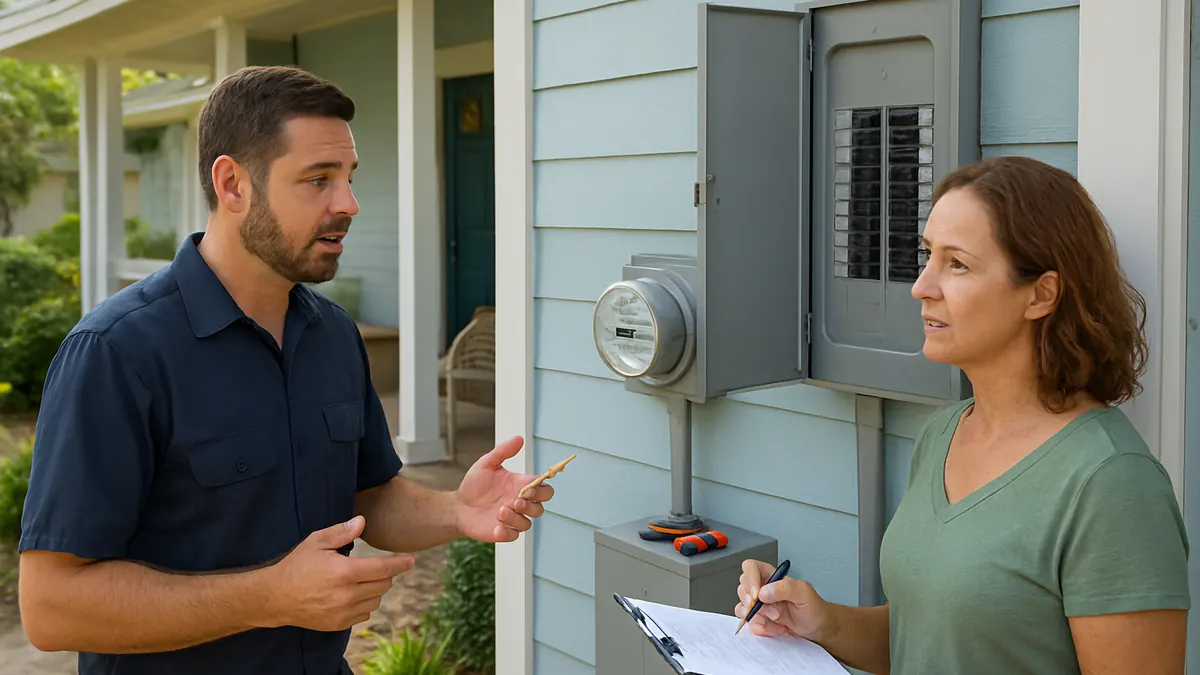
The electrician verifies the rating and condition of service conductors, meter base, disconnect, panel, breakers, grounding, and bonding. Grounding and bonding help fault current return safely so protective devices can operate.
Next comes a load calculation. It considers general household demand and major appliances. It is not the same as adding every breaker number because circuits do not all operate at maximum load simultaneously.
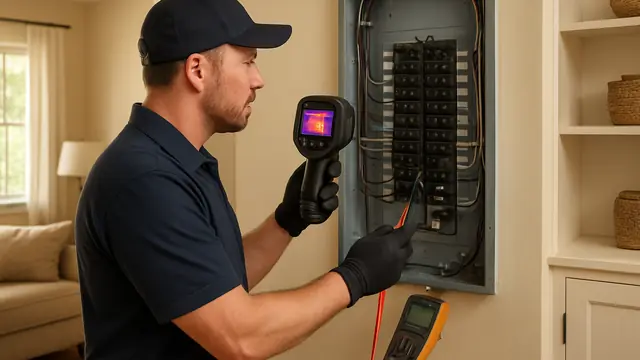
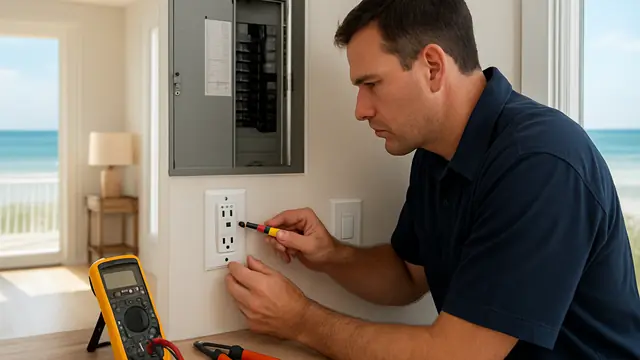
Testing may include voltage checks, current measurements, thermal scanning, and inspection of accessible connections. These steps help distinguish inadequate capacity from a loose connection, defective breaker, appliance fault, or overloaded branch circuit.
Future plans are included so the recommendation supports known additions rather than only today's usage.
Possible Solutions in Practical Order
Correct the specific fault
Repairing a loose termination, damaged breaker, overloaded circuit, or appliance failure may solve the problem without changing service size.
Reconfigure or add circuits
An electrician may redistribute loads, install dedicated circuits, or correct improper shared wiring when total service capacity remains adequate.
Install a subpanel
A subpanel provides approved breaker spaces for an addition, garage, or equipment area. It does not increase service amperage.
Use load management
Some systems prevent selected large loads from operating at the same time. This may support vehicle charging or other controllable equipment without an immediate upgrade.
Replace the panel at the existing rating
A damaged or unsuitable panel can sometimes be replaced without increasing service capacity.
Upgrade to 200 amps
When the calculation and project plans exceed the current capacity, work may include conductors, meter equipment, disconnects, panel, grounding and bonding, utility coordination, permits, and inspection.
Cost Factors Homeowners Should Expect
Cost depends on the existing service size, overhead or underground utility supply, equipment location, access, conductor length, and grounding condition.
Panel or meter relocation, generator or solar integration, correction of previous work, surge protection, finished-surface repairs, and outage coordination can affect the scope. A written proposal should clarify what is being replaced and whether the project increases capacity or only replaces equipment.
Maintenance and Future Planning
Have the service evaluated before ordering major electrical equipment. Provide model numbers and electrical specifications when available.
Keep clear working space in front of the panel, maintain readable labels, and correct inaccurate circuit descriptions. Do not store flammable materials near electrical equipment.
Schedule an inspection for corrosion, repeated breaker problems, water intrusion, or unexplained flickering. Keep permits and upgrade records so future electricians can understand previous changes.
Does Your Blue Mountain Beach Home Need a 200-Amp Electrical Service?
Your home may need 200 amps if demand exceeds the present service, but breaker trips and a full panel can also have less invasive solutions. The safest decision comes from inspecting the service and performing a load calculation. Address heat, odor, arcing, water intrusion, or main-breaker problems immediately, and evaluate capacity before adding major equipment.
About this guide: This resource provides general homeowner education, not a remote diagnosis. Actual conditions, code requirements, equipment, and safe repair options must be evaluated at the property.