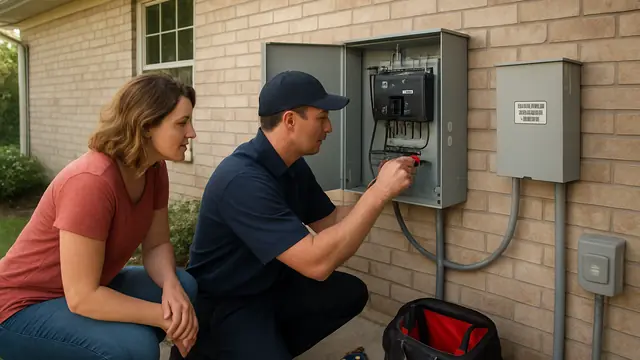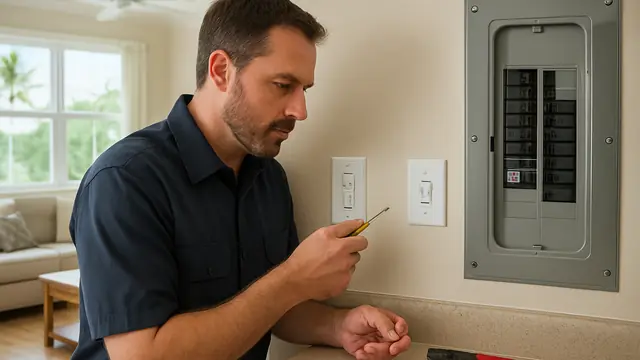
Do not remove an electrical panel cover, touch exposed conductors, bypass protection, or repeatedly reset a fault. Keep clear of smoke, sparks, burning odors, hot equipment, standing water near electricity, and downed lines, then call qualified help.
The lights in the living room blink when the well pump or air conditioner starts. A breaker that once stayed on now trips. You may even notice that one section of the electrical panel feels warmer than the surrounding wall. When these symptoms appear in a DeFuniak Springs home, resetting the breaker and hoping the problem goes away is not a reliable solution.
Your safest immediate response is to turn off or unplug equipment on the affected circuit and leave the panel closed. A breaker may be reset one time only when there is no burning smell, smoke, sparking, visible damage, or unusual heat. If it trips again, leave it off. A breaker is opening for a reason, and repeated resets can reenergize a circuit with an unresolved fault.
What Are the Seven Signs Your Electrical Panel Needs an Inspection in DeFuniak Springs?
1. Breakers Trip Even Though You Have Not Added More Appliances
A circuit may overload when too many devices operate at once, but unexplained tripping during normal use deserves attention. The cause could be a weakening breaker, loose connection, damaged conductor, failing appliance, short circuit, or ground fault.
Make a note of the affected breaker and what was running. Do not keep turning it back on to see whether it will "eventually hold."
2. Lights Become Brighter and Dimmer Without an Obvious Reason
A brief dimming when a large motor starts can happen. Lights that repeatedly pulse, become unusually bright, or change intensity in several parts of the home may indicate a loose connection or voltage imbalance.
A loose neutral can cause unstable voltage on different circuits. Because this can affect appliances and electronics, widespread brightening and dimming should be evaluated promptly.
3. You Hear a Sound From the Breaker Box
A low mechanical hum from nearby equipment can be mistaken for panel noise, but crackling, sizzling, popping, or persistent buzzing from the panel is not normal. It can indicate that electricity is arcing across a loose or deteriorated connection.
Arcing creates intense heat in a small area even while the circuit still works. Do not open the panel. Arrange prompt service, especially when sound is accompanied by odor or warmth.
4. There Is Rust, Moisture Staining, or Corrosion
Electrical equipment must remain dry. Rust on the enclosure, water marks above or around the panel, corrosion at the cover, or moisture nearby should be investigated. The source may be a leak, condensation, or water entering from another part of the structure.
Do not attempt to dry the panel yourself. A licensed electrician must determine whether internal components were affected and can be repaired safely.
5. A Breaker or Part of the Panel Feels Hot
Electrical current naturally creates some heat, but a breaker or panel area should not be noticeably hot, discolored, or accompanied by a burning-plastic smell. Excessive heat can result from an overloaded circuit, loose terminal, corrosion, damaged breaker, or poor contact between a breaker and the panel's internal bus.
Do not touch a panel that is smoking, sparking, or visibly damaged. If there is active fire or smoke, call emergency services.
6. Breakers, Labels, or Openings Look Improvised
Missing filler plates, handwritten labels that no longer match the rooms, mismatched breaker styles, damaged covers, or wires entering through unprotected openings are reasons for inspection. A filler plate closes an unused breaker opening and helps prevent contact with energized parts.
A breaker that physically fits is not necessarily approved for that panel.
7. The Home's Electrical Demand Has Changed
Adding a larger HVAC system, electric water heater, workshop equipment, hot tub, EV charger, freezer, or remodeled kitchen can change the amount of power the home requires. Frequent trips or dimming after such changes may mean a circuit is overloaded or the service capacity needs review.
An empty panel space does not prove that another large circuit can be added. Rating, conductor size, and existing demand must be considered.
Safe Checks Before Scheduling Service
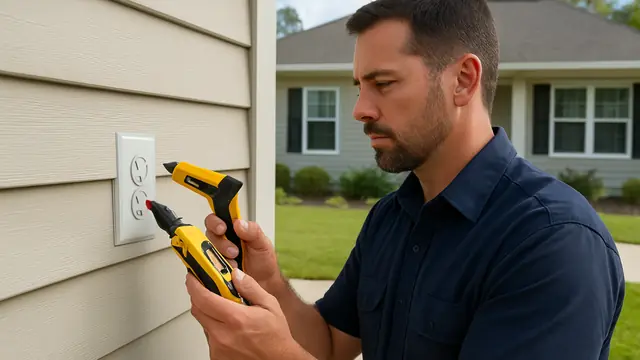
Observe the problem without removing any covers. Record which breaker trips, which rooms lose power, what equipment was operating, and whether the symptom occurs at startup or after several minutes. Check accessible appliance cords, plugs, switches, and receptacles for damage, odor, discoloration, or unusual warmth.
Unplug nonessential devices. If one appliance appears to cause the problem, stop using it. Keep the panel area accessible.
What a Homeowner Should Not Do
Do not remove the panel's dead front, which is the interior cover surrounding the breaker handles. Behind it are energized conductors and metal parts. Turning off the main breaker does not necessarily remove power from the utility conductors entering the panel.
Do not tighten terminals, move wires, or use a meter inside the enclosure. Never replace a tripping breaker with a higher-rated one; its rating must match the wire size. Do not cover damaged openings with improvised materials.
When the Situation Is Urgent
Arrange prompt inspection when the same breaker trips repeatedly, several rooms flicker, the panel makes noise, corrosion is visible, or a breaker will not stay reset. A problem following water intrusion, storm damage, renovation work, or installation of new equipment also deserves quick attention.
Smoke, flames, active sparks, severe heat, or a strong burning odor are emergencies. Keep people away from the panel and call emergency services when fire or smoke is present.
How a Licensed Electrician Diagnoses Panel Problems
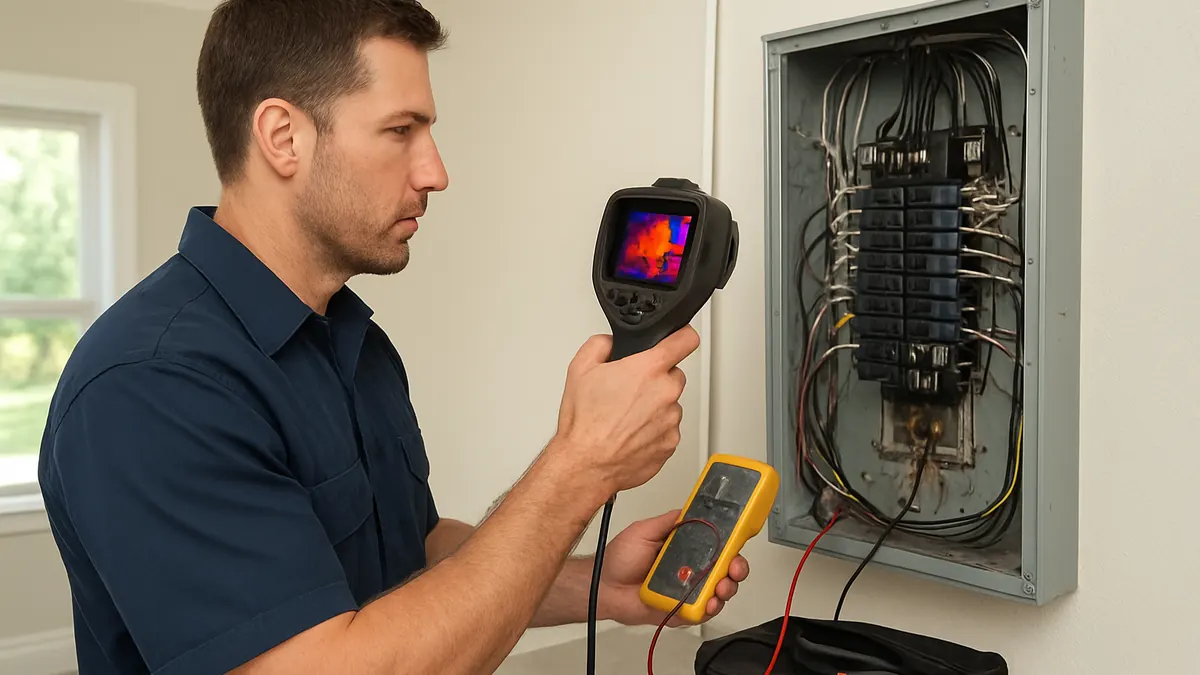
The electrician begins with the symptom history and any recent changes. A visual inspection may cover breaker compatibility, conductor terminations, the internal bus, grounding and bonding, corrosion, heat damage, and circuit labeling.
Testing can include voltage and current measurements, thermal imaging, and isolation of appliances or branch circuits.
When new equipment or overall capacity is involved, the electrician may complete a load calculation. This determines whether the issue comes from one appliance, an individual circuit, the panel, the service equipment, or the utility supply.
Repair Options, Beginning With the Smallest Reasonable Fix
A targeted repair may involve replacing one damaged compatible breaker, correcting an approved loose connection, repairing a branch circuit, replacing a damaged receptacle, or removing a faulty appliance from service. A frequently overloaded appliance may need its own dedicated circuit.
A subpanel may add circuit space, and load management may control large appliances. Replacement is considered when capacity is inadequate, damage or corrosion is extensive, or approved parts are unavailable.
What Affects the Cost of the Work?
Cost depends on diagnostic time, accessibility, number of affected circuits, wiring condition, breaker availability, permit requirements, and utility coordination.
A written scope should explain the finding, recommended repair, and reasonable alternatives.
Preventing Future Panel Problems
Keep the panel dry and accessible, and maintain an accurate circuit directory. Use licensed electricians for new circuits and high-demand equipment. Schedule an inspection after water exposure, recurring symptoms, major remodeling, or questionable earlier modifications.
Schedule an Electrical Panel Inspection in DeFuniak Springs
Seven signs your electrical panel needs an inspection in DeFuniak Springs include unexplained breaker trips, unstable lighting, panel noise, corrosion, excess heat, questionable modifications, and increased electrical demand. The right next step is a licensed inspection that identifies the cause before repairs are selected.
About this guide: This resource provides general homeowner education, not a remote diagnosis. Actual conditions, code requirements, equipment, and safe repair options must be evaluated at the property.