Do not remove an electrical panel cover, touch exposed conductors, bypass protection, or repeatedly reset a fault. Keep clear of smoke, sparks, burning odors, hot equipment, standing water near electricity, and downed lines, then call qualified help.
You are preparing to leave your Alys Beach home before a tropical system arrives when a smart thermostat goes offline and an exterior GFCI outlet refuses to reset. The failed outlet may be responding to moisture, a connected appliance fault, damaged wiring, or a problem farther upstream on the circuit. The safe immediate action is to unplug equipment connected to that outlet, leave the device off if it will not reset once, and avoid opening any electrical box. Before leaving the property, make sure a responsible person knows about the problem and arrange professional evaluation rather than assuming it will correct itself.
A Northwest Florida hurricane electrical checklist in Alys Beach should account for both personal safety and what happens when a home is vacant during an outage.
Build a Clear Electrical Plan Before You Leave or Shelter
Decide which equipment must remain powered and which equipment can be disconnected. Refrigeration, security equipment, communications devices, sump or drainage equipment where installed, and medically necessary devices may be priorities. Decorative lighting, entertainment equipment, countertop appliances, chargers, and nonessential electronics can usually be unplugged.
Write down the panel location, generator controls, and emergency contacts. Share them with anyone responsible for checking the home. Do not rely only on smart devices because internet service may fail.
Common Electrical Problems a Hurricane Can Expose
Loose connections may heat, arc, or cause flickering. An arc is electricity jumping across a gap instead of following a secure connection. Damaged outdoor receptacles admit moisture, and temporary power can overload circuits.
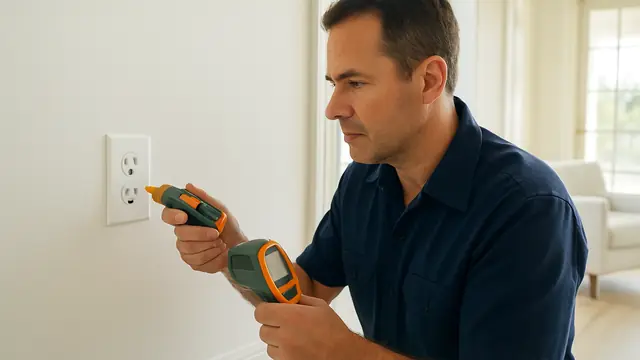
A GFCI outlet that will not reset may indicate that power is absent, moisture is present, the device has failed, or a downstream fault remains. Repeatedly pressing the reset button will not correct the underlying cause.
Safe Checks to Include on the Alys Beach Hurricane Electrical Checklist
Test GFCI and AFCI Protection Early
Press the test and reset buttons on accessible GFCI receptacles while weather is calm. GFCIs protect against dangerous current leakage, especially in damp locations.
An AFCI, or arc-fault circuit interrupter, detects patterns associated with arcing. If either protective device will not reset, leave it off.
Confirm Panel Labels
Make sure breaker labels are specific and readable. "Lights" is less useful than "upstairs bedrooms" or "kitchen outlets." Clear labels help a caretaker disconnect a problem circuit without shutting down unrelated equipment.
Inspect Surge Protection Indicators
Some whole-home surge protective devices have indicator lights. Check the manufacturer's instructions to understand what the indicator means. A failed or missing light may require service, but homeowners should not remove the panel cover to investigate.
Check Exterior Devices Without Opening Them
Look for cracked covers, loose fixtures, exposed cords, rust stains, or water marks around exterior electrical equipment. Confirm that portable appliances and extension cords are stored indoors.
Do not spray electrical equipment, seal openings with improvised materials, or wrap energized devices in plastic.
Prepare Backup Power Correctly
Portable generators must run outdoors and away from doors, windows, vents, and enclosed areas. They should never be operated in a garage, even with the door open. Use carbon-monoxide alarms with working batteries.
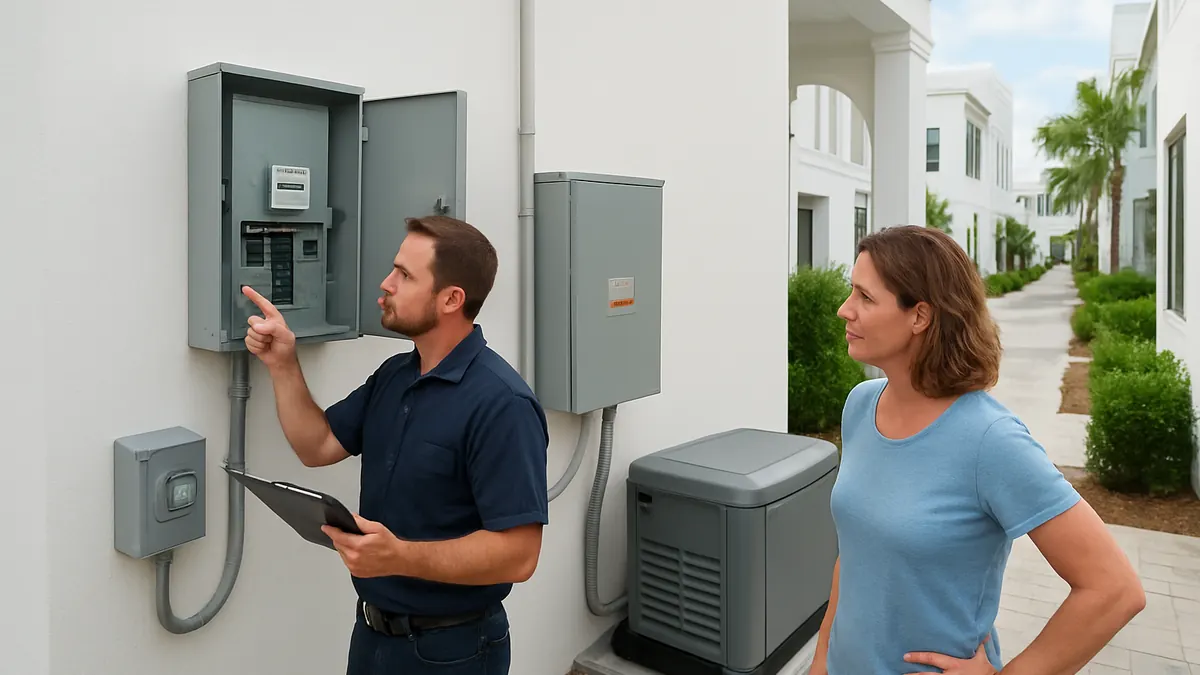
A generator should supply the home only through approved transfer equipment. A transfer switch or approved interlock prevents generator power from feeding the utility line. Never use a homemade adapter or connect the generator through a dryer, range, or ordinary wall outlet.
Power only necessary loads. Large appliances can require substantial starting current, and overloading a generator can create unsafe heat.
What Not to Do as the Storm Approaches
Do not modify wiring, climb near service lines, trim limbs near power lines, or handle a generator in heavy rain.
Do not remove the panel cover or assume the main breaker makes the entire cabinet safe. Incoming service conductors may remain energized.
Do not reset the same breaker repeatedly. A breaker that trips is signaling an abnormal condition. One reset may be reasonable only when the panel is dry, undamaged, and the connected loads have been turned off. If it trips again, leave it off.
Electrical Warning Signs That Require Urgent Action
Treat the following conditions as urgent:
- Burning odors, smoke, sparks, or popping sounds
- A hot panel, outlet, switch, or plug
- Water inside or immediately around electrical equipment
- A damaged meter enclosure, service mast, or utility line
- Electrical tingling from metal plumbing fixtures or appliances
- Partial power with unusual brightening and dimming
- A generator operating irregularly or repeatedly tripping
- Carbon-monoxide alarm activation
Move away and contact the appropriate utility, emergency service, or electrician. Never enter standing water near electrical equipment.
How an Electrician Diagnoses the System
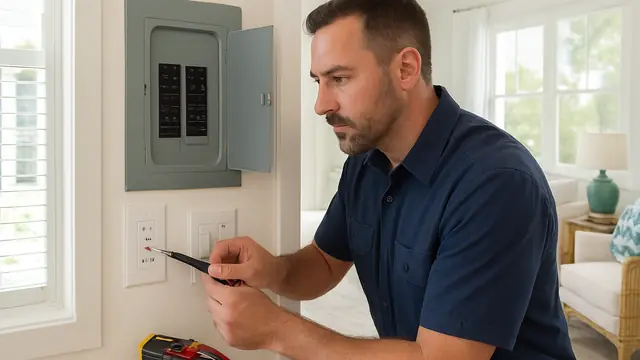
A licensed electrician begins by asking when the problem occurred, which circuits were affected, whether utility power was unstable, and whether any equipment became wet. The electrician then inspects the service, panel, breakers, visible wiring, outdoor devices, grounding and bonding, surge protection, and generator transfer equipment.
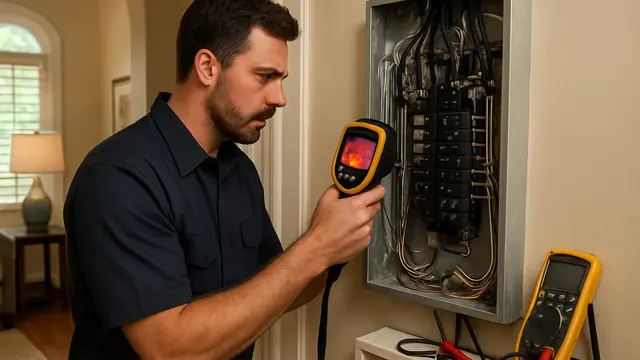
Voltage testing can reveal supply problems, connection testing can identify loose conductors, and thermal imaging can locate abnormal heat. The electrician also separates utility-side issues from defects within the property.
Repair Options From Simple to Extensive
The least invasive repair may be replacing a failed GFCI receptacle, damaged weatherproof cover, defective breaker, worn cord, or failed surge module after the circuit is tested.
Other repairs can include correcting loose connections, replacing water-damaged exterior devices, repairing grounding and bonding, adding a dedicated circuit, or correcting an unsafe generator inlet.
More extensive work may involve replacing a damaged panel, meter enclosure, service mast, feeder, or transfer equipment. Complete replacement is appropriate only when testing and physical condition show that repair would not provide a safe, reliable result.
What Determines the Cost?
Cost is affected by accessibility, circuit length, device type, water exposure, corrosion, generator configuration, permit needs, equipment availability, and utility coordination. Troubleshooting an intermittent outage may require more diagnostic time than replacing a visibly broken cover.
Steps to Take When Power Returns
Restore power cautiously. Leave major appliances off at first, then reconnect them one at a time. Watch for repeated breaker trips, unusual sounds, heat, odors, or equipment that behaves differently than before the storm.
Do not use wet appliances or receptacles. Photograph visible damage safely. If the home was unattended, arrange an in-person inspection rather than relying only on app notifications.
Prevention and Ongoing Maintenance
Before each hurricane season, test protective devices, update panel labels, service generator equipment, replace damaged cords, and review surge protection. Keep vegetation and stored items away from electrical equipment without working near utility lines.
Confirm smoke and carbon-monoxide alarms have battery backup, and keep printed shutdown instructions with emergency contacts.
Finish Your Northwest Florida Hurricane Electrical Checklist in Alys Beach
A complete Northwest Florida hurricane electrical checklist in Alys Beach should leave no uncertainty about who will monitor the home, how backup power will be used, which equipment should be disconnected, and what conditions require an electrician. Address failed protective devices and generator questions before the storm, not during it. Afterward, treat moisture exposure, partial power, repeated trips, heat, and burning odors as reasons to stop and obtain professional help.
About this guide: This resource provides general homeowner education, not a remote diagnosis. Actual conditions, code requirements, equipment, and safe repair options must be evaluated at the property.