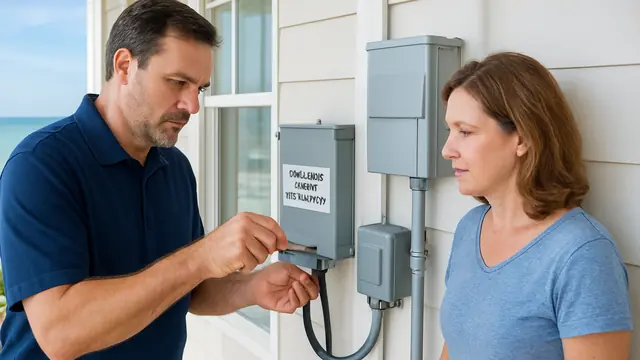
Do not remove an electrical panel cover, touch exposed conductors, bypass protection, or repeatedly reset a fault. Keep clear of smoke, sparks, burning odors, hot equipment, standing water near electricity, and downed lines, then call qualified help.
You move a nightstand to unplug a lamp in a Blue Mountain Beach home and discover that the receptacle feels warm. Perhaps a guest reported that a charger kept falling out, or a cleaner noticed heat after using a vacuum. The outlet may still supply power, but warmth means energy is being released as heat instead of moving efficiently through the circuit.
Unplug every device from the receptacle and leave it unused. If it is hot, smells burnt, crackles, buzzes, sparks, looks scorched, or has softened plastic, turn off the associated breaker if you can do so safely. Keep others away and arrange electrical service. Never remove the cover or handle wiring to investigate.
What a Warm Outlet Usually Means
Electrical current flows most safely through clean, tight connections of the correct size. When a connection is loose, worn, damaged, or carrying unsuitable demand, electrical resistance increases. Resistance produces heat.
A small power adapter may become mildly warm. The wall outlet should not stay noticeably warm after the device is removed. Persistent heat requires diagnosis.
The Most Common Causes
A Plug Is Not Making Firm Contact
A receptacle contains spring-like metal contacts that hold plug blades. Those contacts weaken with age and frequent use. When a plug hangs loosely, falls out, or loses power when moved, the contact area may be too small.
Current forced through that limited area can generate heat. The outlet may also arc, meaning electricity crosses a tiny air gap. Arcing can leave pitting, dark marks, and damaged plastic inside the receptacle.
A Wire Connection Has Loosened
Wires attach to the receptacle or join other wires inside the box. A terminal screw, connector, or push-in connection that loosens can become a high-resistance point.
Many circuits carry power from one receptacle to the next. One loose connection can cause flickering or intermittent power farther along the circuit.
The Circuit Is Carrying Heavy Demand
Portable heaters, hair dryers, irons, countertop cooking equipment, and portable cooling units can draw substantial current. One high-demand device may expose a weak outlet. Several moderate loads operating together can also strain the branch circuit.
A branch circuit is the wiring protected by one breaker. The breaker controls total circuit current, not only the equipment plugged into one outlet. Devices elsewhere may share the same electrical path.
Power strips add connections, not circuit capacity.
The Device, Cord, or Plug Is Failing
A damaged charger, loose appliance plug, bent blades, or deteriorated cord can heat at the connection. That heat may spread to the faceplate and make the receptacle appear responsible.
If the same appliance warms more than one outlet, stop using it.
Wiring or Installation Is Defective
Improperly stripped conductors, loose splices, damaged insulation, incorrect terminal use, or an unsuitable replacement receptacle can create hidden resistance. Heat can also damage the wire enough that replacing only the visible device would be incomplete.
A receptacle may look clean from the front while its rear terminals or conductors show discoloration and melting.
Safe Observations You Can Make
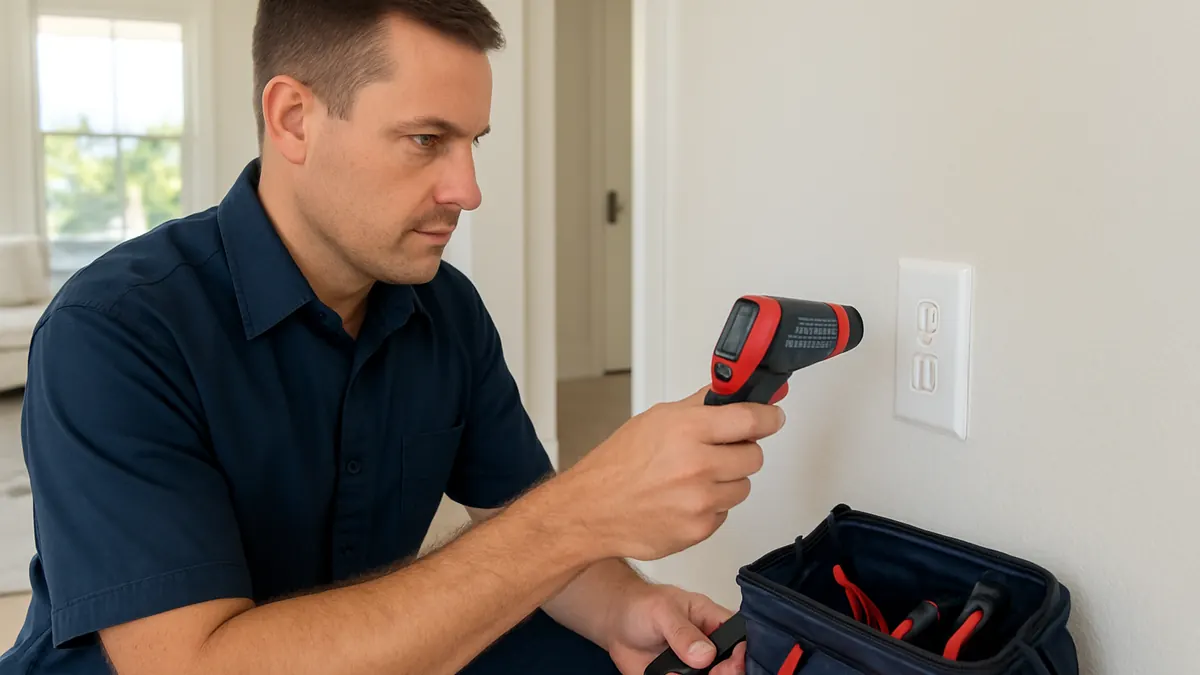
Disconnect the load and allow the outlet and device to cool. Without opening anything, inspect the faceplate, plug openings, blades, and cord.
Look for yellow or brown discoloration, cracks, warping, soot, melting, or a plug that sits crooked. Notice whether the outlet is warmer at one opening. Listen for buzzing or faint crackling without putting your face close to it.
Consider what was running. Did the warmth appear after a vacuum, hair dryer, heater, or countertop appliance operated? Were several chargers connected through one power strip? Did a lamp flicker when the cord moved?
If the breaker has tripped, leave high-demand equipment unplugged. Do not repeatedly reset a breaker without correcting the cause.
What Not to Do With a Warm Receptacle
Do not remove the wall plate, pull the receptacle from the box, or tighten wires unless you have training and test equipment. Panel directories can be inaccurate, and some boxes contain conductors from more than one circuit.
Do not cool the outlet with water or cleaner. Do not force a loose plug to stay in place with tape, furniture, or bent blades. Avoid using an extension cord as a permanent substitute.
Do not assume the outlet is safe because the breaker remains on.
Warning Signs That Require Fast Action
An outlet is urgent when it is hot enough to be uncomfortable, produces a burning or fish-like odor, emits smoke, sparks, pops, or buzzes, or shows melted or charred material. Shut off the breaker when safe and do not restore power before inspection.
Other concerning signs include repeated breaker trips, dimming or flickering lights, intermittent power, increasing heat, and warmth when nothing is plugged in.
Call emergency services and leave the area if there is active fire or continuing smoke.
How an Electrician Diagnoses a Warm Outlet
A licensed electrician starts with the symptom history. Information about connected equipment, operating time, plug fit, noises, odors, and breaker behavior can point toward the likely failure.
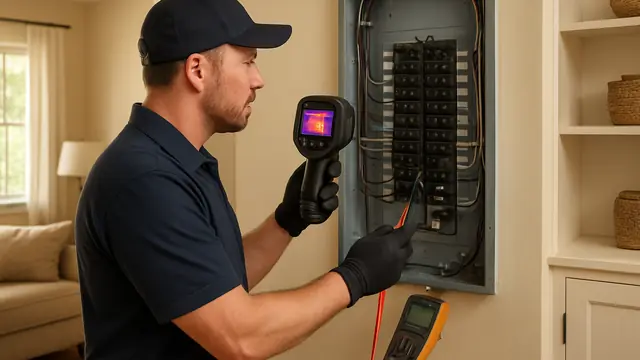
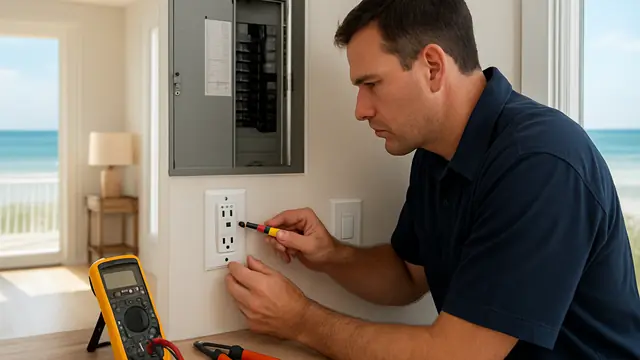
Testing may include voltage, polarity, grounding, load, amperage, and voltage drop. Voltage drop is a reduction in voltage caused by resistance along the circuit; an abnormal reading can help locate a poor connection.
After de-energizing and verifying the circuit, the electrician inspects the receptacle, terminals, splices, insulation, grounding, and box. Discoloration, loose copper, and damaged insulation help determine how far the repair must extend.
Other outlets and the panel may be checked when the fault is not isolated.
Repair Choices From Simple to More Extensive
The least invasive solution may be discontinuing a defective charger, cord, or appliance. If the receptacle is worn but the wiring is undamaged, replacing it and making secure connections may be sufficient.
A loose splice can be remade with approved connectors. Limited heat-damaged conductor ends may sometimes be trimmed and re-terminated when enough sound wire remains and the repair is safe and code-compliant.
A damaged box or unsuitable device may need correction. If heavy demand is the cause, the electrician may recommend redistributing loads or installing a dedicated circuit.
Cable replacement, wall access, or panel repairs are considered only when testing shows damage beyond the outlet.
Factors That Influence Cost
A single accessible receptacle with intact wiring is different from an intermittent problem involving several outlets. Cost varies with troubleshooting time, outlet type, access, number of affected devices, and the amount of damaged wiring.
GFCI devices, crowded boxes, concealed cable, panel corrections, or a new dedicated circuit require additional labor and materials. Electricians generally begin with the least disruptive diagnostic approach.
Preventing Warm Outlets
Replace receptacles that no longer hold plugs firmly. Remove damaged chargers and cords from service. Avoid running multiple high-wattage appliances through one power strip or adapter.
In a rental or second home, ask guests and service providers to report warmth, buzzing, loose plugs, scorch marks, or repeated breaker trips immediately. Moving a device to another outlet does not identify the original problem.
Periodic inspections are useful when a property has repeated outlet failures, unknown alterations, or circuits that frequently operate near capacity.
Respond Before the Damage Progresses
What causes an electrical outlet to feel warm in Blue Mountain Beach may be a worn plug connection, loose wire, failing appliance, heavy circuit load, or hidden installation problem. Disconnect the equipment, turn off power when warning signs are present, and have a licensed electrician identify the heat source before the outlet returns to service.
About this guide: This resource provides general homeowner education, not a remote diagnosis. Actual conditions, code requirements, equipment, and safe repair options must be evaluated at the property.