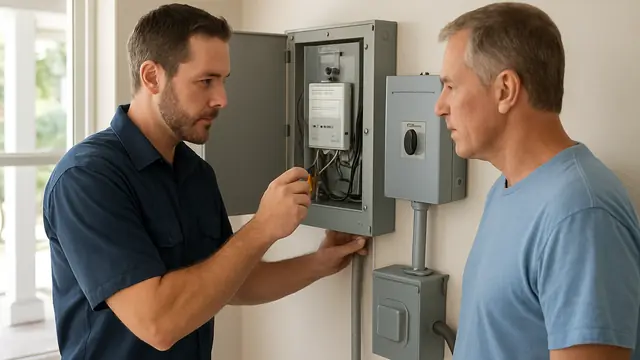
Do not remove an electrical panel cover, touch exposed conductors, bypass protection, or repeatedly reset a fault. Keep clear of smoke, sparks, burning odors, hot equipment, standing water near electricity, and downed lines, then call qualified help.
You plug in a charger, lamp, coffee maker, or television and notice that the outlet cover feels warmer than the surrounding wall. In a 30A home, condo, or vacation rental, that small change can be easy to dismiss because everything still appears to work. However, a warm electrical outlet can mean electricity is meeting resistance somewhere in the circuit. Resistance creates heat, and too much heat can damage the receptacle, wiring, or connected equipment.
The safest immediate action is to unplug anything connected to the outlet and stop using it. If the outlet is hot, smells burnt, buzzes, crackles, sparks, shows discoloration, or causes the breaker to trip, turn off the correct breaker if you can do so safely and call a licensed electrician. Do not remove the cover or touch wiring inside the box.
What Causes an Electrical Outlet to Feel Warm in 30A Homes?
A receptacle should not normally become noticeably warm during ordinary use. Plug-in transformers, USB charging blocks, and some smart devices can generate mild heat, but that warmth should usually be concentrated in the device. If the faceplate or wall remains warm after the device is removed, the outlet needs attention.
Loose Electrical Connections
A loose wire is a common cause. Current should move through a secure connection with little resistance. When a terminal screw, wire connector, or internal contact loosens, electricity may pass through a smaller or unstable contact point. That resistance produces heat.
Connections can loosen because of age, repeated use, poor installation, or repeated heating and cooling. Frequently occupied rentals may place heavier use on receptacles.
Worn Receptacle Contacts
Metal contacts inside the outlet grip the prongs of a plug. As those contacts wear, plugs may feel loose, slip partly out, or work only when positioned a certain way.
A weak connection can create heat and may also cause arcing, which means electricity jumps across a small gap instead of moving through a solid connection. Arcing can damage the receptacle and insulation even when the breaker does not trip.
Too Much Electrical Load
Space heaters, portable air conditioners, hair dryers, cooking appliances, and similar equipment draw substantial power. An outlet may warm when the connected load is too high or when several devices on the same branch circuit operate together.
A branch circuit is the group of outlets, lights, and equipment supplied by one breaker. Even if only one appliance is plugged into the warm outlet, other devices elsewhere may be contributing to the total demand.
Power strips and multi-plug adapters increase the number of available plug spaces, but they do not increase circuit capacity.
Installation Problems or a Failing Device
Push-in wire connections, damaged insulation, incorrect splices, improper wire size, or poorly secured terminals can create heat inside the box. The visible receptacle may only be the place where the hidden problem becomes noticeable.
The connected equipment can also be responsible. A damaged plug, failing charger, loose cord connection, or defective appliance may transfer heat into the outlet. If one device makes several outlets warm, stop using that device.
Safe Checks a Homeowner Can Perform
Unplug everything and allow the outlet to cool. Without removing the cover, look for brown marks, melting, cracks, warped plastic, or loose plug openings. Notice whether plugs fit firmly or fall out easily.
Think about what was operating when the warmth appeared. A hair dryer, countertop appliance, portable heater, or multiple electronics on one circuit may help explain the timing. Record any odor, buzzing, flickering, or breaker activity for the electrician.
You may turn off the labeled breaker if the outlet is hot or showing warning signs. Do not repeatedly reset a breaker that trips. If you are uncertain which breaker controls the outlet, avoid experimenting with the receptacle and arrange professional service.
What You Should Not Attempt
Do not tighten terminals, replace the receptacle, test exposed wires, or move conductors unless you are qualified. Turning off one breaker does not always prove every conductor in a box is de-energized. Incorrect labels, shared circuits, and wiring errors can create unexpected hazards.
Do not insert tools into the outlet, spray cleaner into it, tape a loose plug in place, or use an extension cord as a permanent workaround. Moving the appliance to another outlet may also transfer an overload to a different part of the circuit.
Signs the Problem Is Urgent
Seek prompt electrical service when the outlet is hot to the touch, smells burnt or fish-like, buzzes, crackles, sparks, shows black or brown marks, or has melted plastic. Frequent breaker trips, flickering lights, intermittent power, or a plug that feels unusually loose also increase concern.
An outlet that becomes warm with nothing plugged into it should be evaluated quickly. It may be carrying current to downstream devices or heating because of a hidden loose connection.
How a Licensed Electrician Diagnoses It
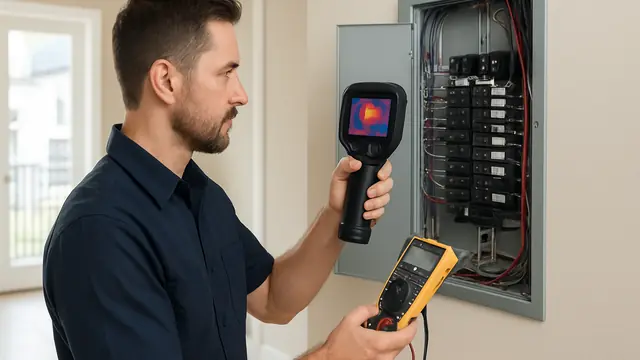
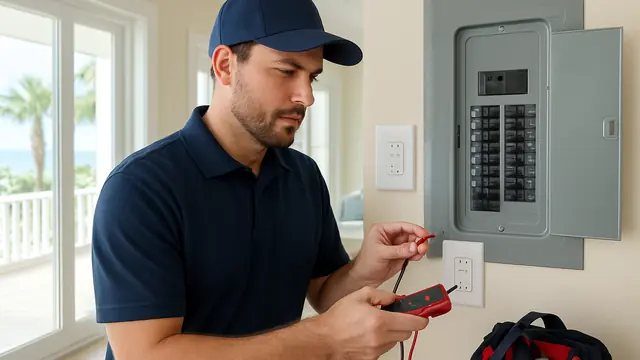
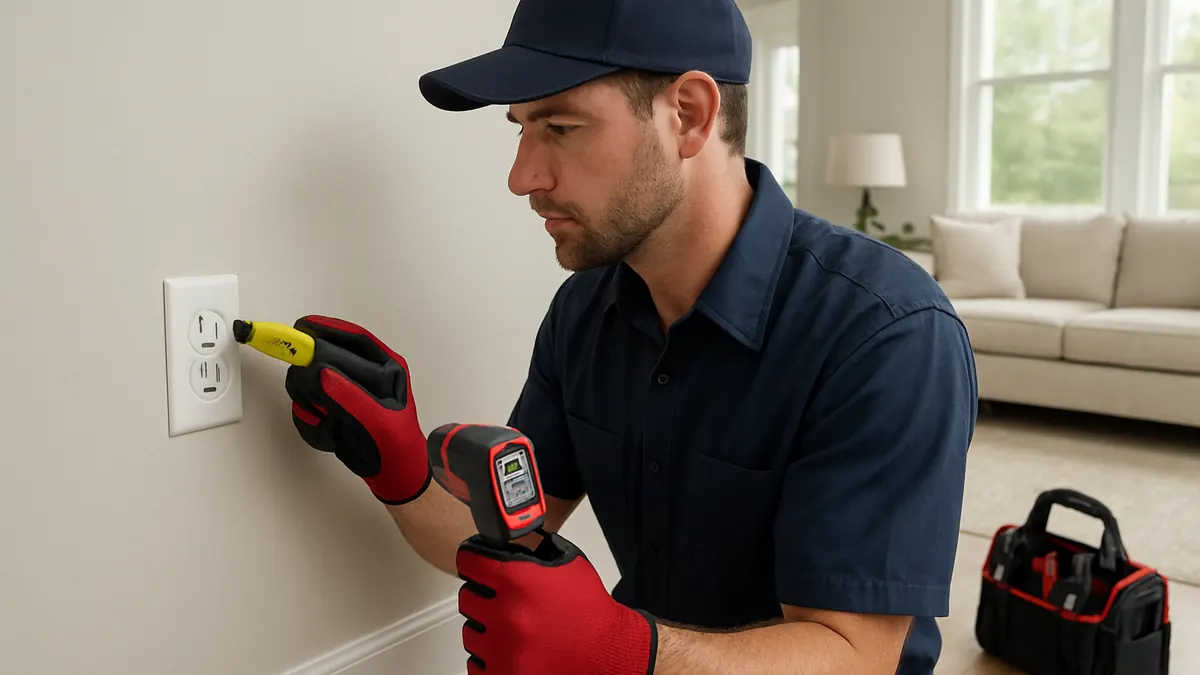
The electrician will ask what was connected and whether the circuit flickered or tripped. Testing may include voltage, current, temperature, grounding, and circuit-load checks.
After safely de-energizing and verifying the circuit, the electrician can inspect the receptacle, terminal screws, splices, conductor insulation, and electrical box. Nearby outlets may also be checked because one loose connection can affect devices farther along the circuit.
The purpose is not merely to replace the warm outlet. The electrician must determine why heat developed so the repair corrects the actual cause.
Repair Options, Beginning With the Least Invasive
The least invasive repair may be replacing a worn receptacle and properly securing the existing wires. If a damaged plug, charger, cord, or appliance caused the heat, removing that equipment from service may solve the immediate problem.
A loose terminal or splice may be remade, with any heat-damaged parts replaced. When the circuit is overloaded, the electrician may recommend redistributing devices, changing how equipment is used, or installing a dedicated circuit for a high-demand appliance.
More extensive work may include replacing damaged cable, correcting improper wiring, upgrading the box, or repairing breaker or panel problems. Complete rewiring is not automatic; the repair should match the condition found.
Factors That Affect Repair Cost
Cost depends on whether the issue is limited to one receptacle or extends through the circuit. Access, diagnostic time, device type, and wiring condition all matter.
GFCI or AFCI protection, concealed cable damage, an overloaded circuit, unclear panel labeling, or the need for a new dedicated circuit can add labor and materials. An electrician should explain the findings before recommending broader work.
Prevention and Maintenance
Avoid crowded adapters and lightweight extension cords with high-wattage appliances. Plug major equipment directly into an appropriate receptacle when required by the manufacturer. Replace damaged cords and stop using outlets that no longer grip plugs securely.
For vacation rentals and second homes, include outlet condition in routine inspections. Ask cleaners or property managers to report warm faceplates, loose plugs, buzzing, discoloration, or repeated breaker trips instead of simply moving equipment.
Take the Next Appropriate Step
What causes an electrical outlet to feel warm in 30A may be a worn receptacle or damaged plug, but it can also involve loose wiring, overloading, or hidden heat damage. Unplug equipment, respond promptly to warning signs, and leave the outlet unused until a licensed electrician identifies the cause.
About this guide: This resource provides general homeowner education, not a remote diagnosis. Actual conditions, code requirements, equipment, and safe repair options must be evaluated at the property.