Do not remove an electrical panel cover, touch exposed conductors, bypass protection, or repeatedly reset a fault. Keep clear of smoke, sparks, burning odors, hot equipment, standing water near electricity, and downed lines, then call qualified help.
You plug in a phone charger, lamp, or small kitchen appliance in your Camp Creek home and later notice that the outlet plate feels warmer than the surrounding wall. The device still works, the breaker has not tripped, and there may be no visible damage. Even so, a warm outlet is not something to ignore. Heat can indicate that electricity is meeting resistance at a loose connection, worn receptacle, damaged plug, or overloaded circuit.
The safest immediate step is to unplug anything connected to the outlet and stop using it. If the receptacle is hot, buzzing, crackling, discolored, melted, sparking, or giving off a burnt or unusual odor, turn off the correct breaker if you can do so safely. Do not remove the faceplate or touch the wiring. A licensed electrician should inspect the outlet before it is used again.
What Causes an Electrical Outlet to Feel Warm in Camp Creek Homes?
A healthy receptacle should usually feel close to the temperature of the wall around it. Some plug-in adapters and chargers naturally create a small amount of heat, but that warmth should normally be concentrated in the device. If the outlet itself stays warm after the device is removed, or if the warmth returns with different equipment, the circuit needs attention.
Loose Wiring Connections
Loose wiring is one of the most common causes of outlet heat. Electricity should move through secure metal-to-metal connections. When a terminal screw, wire connector, or internal connection becomes loose, current must pass through a smaller contact area. That creates resistance, and resistance produces heat.
It may also produce arcing, which means electricity jumps across a tiny gap instead of flowing through a firm connection. Arcing can damage insulation without always drawing enough current to trip the breaker.
A Worn or Damaged Receptacle
The metal contacts inside a receptacle grip the blades of a plug. With frequent use, those contacts can weaken. Plugs may sag, fall out easily, or work only when the cord is held in a certain position.
A loose-fitting plug creates poor contact and heat. Replacement is often appropriate, but an electrician should also check the wiring for heat damage.
Too Much Demand on the Circuit
Hair dryers, portable heaters, countertop cooking appliances, irons, and portable air conditioners can draw a significant amount of current. An outlet may become warm when a high-demand appliance is used on a worn receptacle or when several devices share the same branch circuit.
A branch circuit is the group of outlets, lights, and appliances supplied by one breaker. Other equipment in nearby rooms may share it. Power strips add plug spaces, but they do not increase circuit capacity.
A Failing Plug, Cord, or Appliance
The outlet may not be the original source of the heat. A damaged plug, loose cord connection, defective charger, or failing appliance can become hot and transfer that heat into the receptacle.
If one particular device causes several different outlets to feel warm, stop using the device. Do not continue testing it around the home.
Improper Installation or Hidden Damage
Incorrectly installed receptacles, poor splices, damaged insulation, unsuitable wire connections, or crowded electrical boxes can create hidden heat. The front of the outlet may look normal while the back of the receptacle shows discoloration, melted plastic, or damaged wiring.
Safe Checks a Homeowner Can Perform
Unplug everything from the outlet and let it cool. Without removing the cover, inspect the receptacle for brown marks, yellowing, cracks, warping, soot, or loose plug openings.
Check the connected device for bent blades, darkened metal, frayed insulation, or a plug body that feels unusually hot. Do not plug visibly damaged equipment into another outlet.
Think about what was running when the warmth appeared. Was it a vacuum, hair dryer, heater, coffee maker, or several electronics on a power strip? Note whether lights flickered, power cut in and out, or the breaker tripped. Those details can help the electrician locate the problem.
If the empty outlet remains warm, turn off the breaker if it is safe to identify. It may still carry current to downstream devices.
What You Should Not Attempt
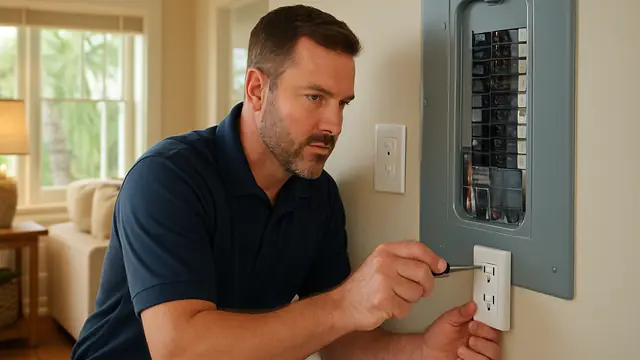
Do not remove the wall plate, pull the receptacle from the box, tighten wires, or test exposed conductors unless you are properly trained. Turning off one breaker does not always guarantee every wire in a box is de-energized.
Do not spray cleaner into the outlet, bend plug blades, wedge a loose plug in place, or use tape to hold a cord. Do not rely on an extension cord as a permanent substitute. Moving the appliance to another outlet may transfer the load without correcting the original hazard.
Signs That Make the Problem Urgent
Call for prompt electrical service when the outlet is hot to the touch, smells burnt or fish-like, buzzes, crackles, pops, sparks, or shows melted or scorched material.
Other urgent signs include repeated breaker trips, flickering lights, intermittent power, increasing heat, and a receptacle that becomes warm with nothing plugged into it. If there is smoke or an active fire, leave the area and call emergency services.
How a Licensed Electrician Diagnoses the Cause
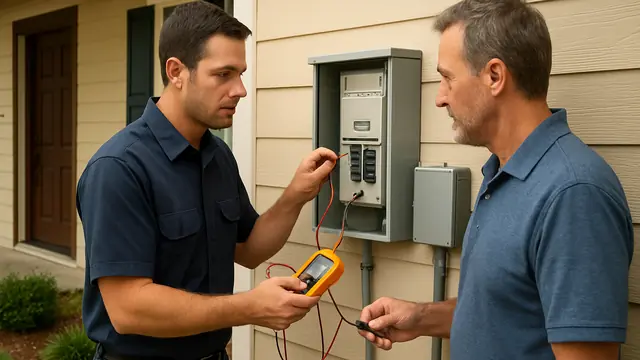
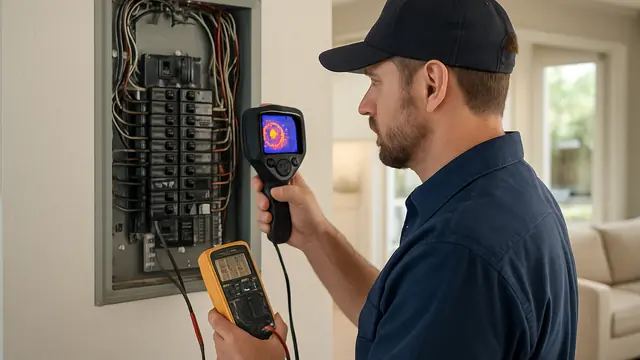
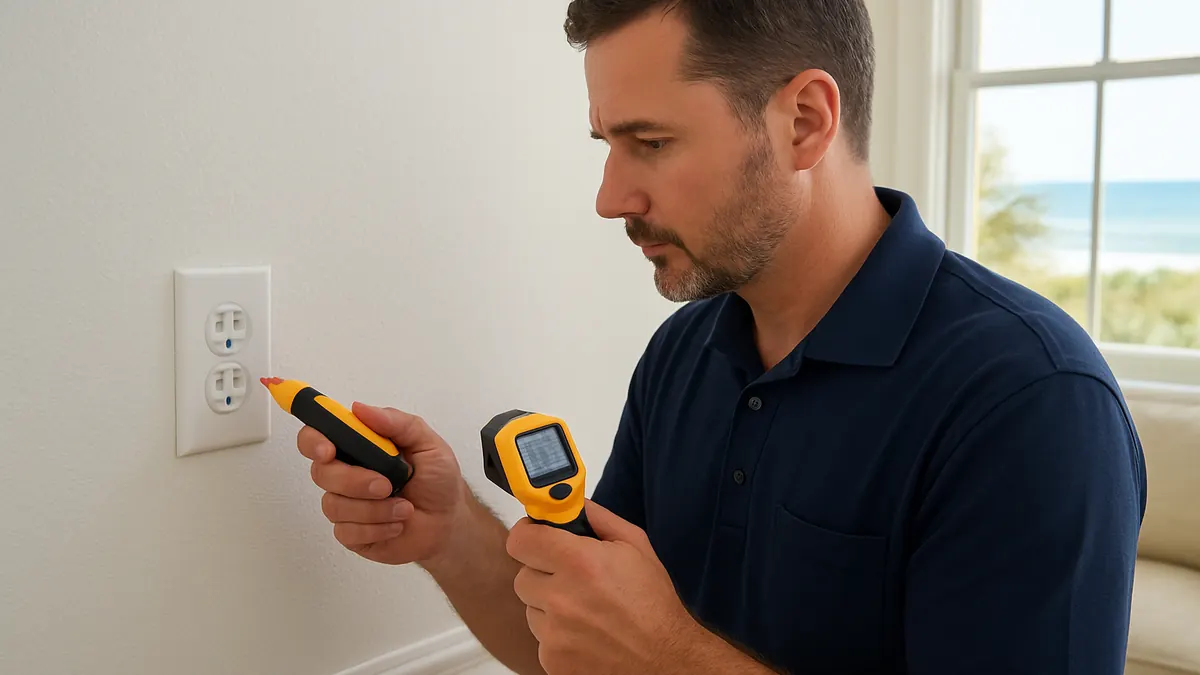
The electrician will ask what was connected and whether the circuit tripped or flickered. Testing may include voltage, current, grounding, temperature, and voltage-drop measurements.
After verifying the power is off, the electrician inspects the receptacle, terminals, splices, insulation, grounding, and box. Nearby outlets may also be checked because one loose connection can affect downstream devices. The goal is to identify why heat developed and whether damage extends beyond the outlet.
Repair Options From Least to Most Invasive
The least invasive solution may be removing a defective charger, cord, or appliance from service. If the receptacle is worn but the wiring is undamaged, replacing the outlet and making secure connections may solve the problem.
A loose terminal or splice can be remade with approved connectors. Heat-damaged receptacles, connectors, and conductor ends may need replacement. If the circuit is overloaded, the electrician may recommend redistributing equipment or installing a dedicated circuit for a high-demand appliance.
More extensive work may include replacing damaged cable, correcting improper wiring, replacing an electrical box, or repairing a breaker or panel connection. Complete rewiring is not automatically necessary.
Factors That Affect Repair Cost
Cost depends on whether the issue is limited to one receptacle or involves concealed wiring or the panel. Diagnostic time, outlet type, access, and heat damage all matter. A new dedicated circuit or cable replacement requires more labor than a straightforward outlet repair.
Prevention and Maintenance
Replace outlets that no longer hold plugs firmly. Remove damaged cords, chargers, and appliances from service. Avoid running multiple high-wattage devices through one power strip or adapter.
For vacation homes and rentals, ask guests, cleaners, or property managers to report warm faceplates, loose plugs, buzzing, discoloration, and repeated breaker trips immediately. Routine attention can prevent a minor connection problem from becoming a larger repair.
Take the Next Safe Step
What causes an electrical outlet to feel warm in Camp Creek may be a worn receptacle, loose wire, failing device, overloaded circuit, or hidden installation problem. Unplug equipment, respond quickly to warning signs, and leave the outlet unused until a licensed electrician identifies the cause.
About this guide: This resource provides general homeowner education, not a remote diagnosis. Actual conditions, code requirements, equipment, and safe repair options must be evaluated at the property.