Do not remove an electrical panel cover, touch exposed conductors, bypass protection, or repeatedly reset a fault. Keep clear of smoke, sparks, burning odors, hot equipment, standing water near electricity, and downed lines, then call qualified help.
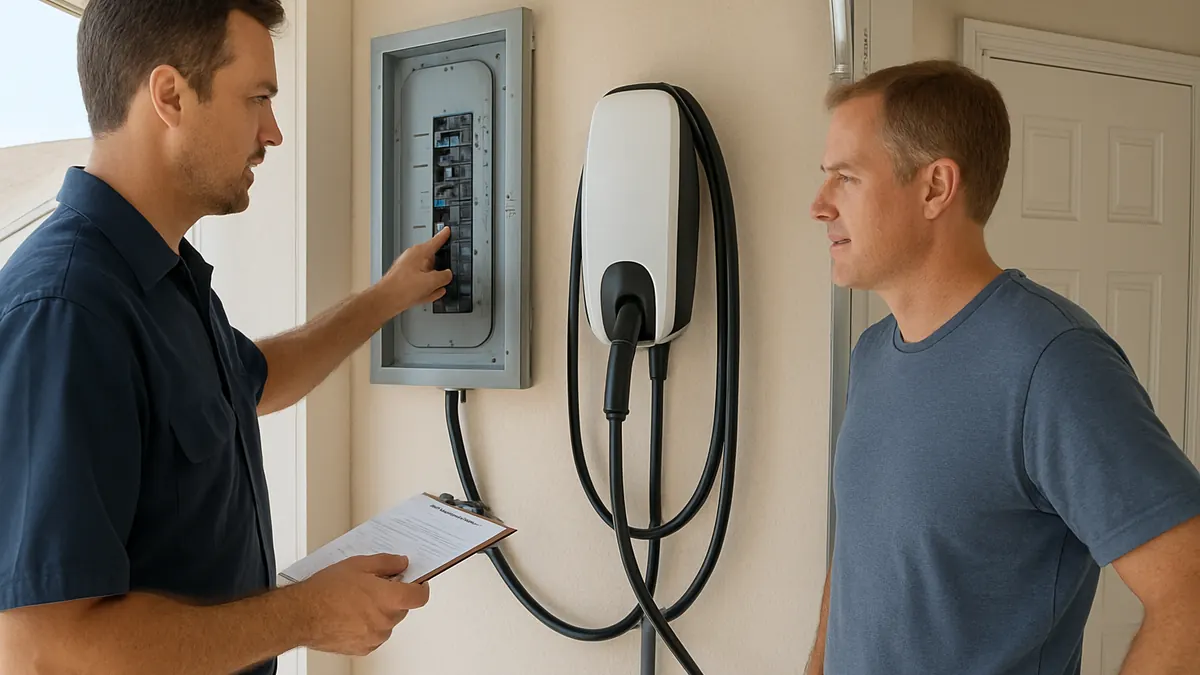
You have purchased an electric vehicle and want to wake up each morning with a full or nearly full battery. The standard charging cord works, but it may add range too slowly for your driving schedule. When you look at the electrical panel, however, every breaker position appears occupied, and you are unsure whether adding a Level 2 EV charger will overload the home.
Can Your Electric Panel Support a Level 2 EV Charger?
A Level 2 charger generally operates at 240 volts and uses a dedicated circuit. "Dedicated" means the circuit serves the charger alone instead of also supplying a dryer, water heater, or another appliance. Because an EV can charge for several hours, the circuit must be designed for a long-duration electrical load.
Common Reasons the Panel May Not Be Ready
The home already has several large electrical loads
Large appliances do not always run at the same time, but an electrical load calculation accounts for how the home is expected to use power. Adding a charger without evaluating existing demand can create repeated breaker trips or require the service to operate too close to its limit.
The charger is larger than necessary
Many homeowners shop by maximum amperage. A 48-amp charger may sound more future-proof, but the vehicle may accept less power, or the car may remain parked long enough for a 24-amp or 32-amp charger to replace the daily mileage comfortably.
The panel is full
Most Level 2 chargers need a two-pole breaker, which usually occupies two adjacent panel positions. A subpanel or approved breaker arrangement may solve a space problem, but neither option increases the home's total service capacity.
Existing electrical defects are present
Loose connections, heat damage, corrosion, improper breakers, missing covers, or earlier unpermitted alterations may need correction before a new charger can be installed. A charger creates a sustained load that can expose weaknesses that were not noticeable during ordinary household use.
Safe Checks a Homeowner Can Perform
You can collect useful information without removing the panel cover.
Photograph the main breaker, panel label, breaker directory, and visible breaker layout. Record whether the home's water heater, range, dryer, and heating equipment are electric or gas. Note other significant loads such as pool equipment, a spa, workshop tools, or a second refrigerator.
Check the vehicle manual or manufacturer specifications for the maximum Level 2 charging rate. Also locate the charger's amperage settings. Some chargers can be configured for several circuit sizes.
What You Should Not Attempt
Do not remove the electrical panel cover. Even when the main breaker is switched off, parts of the service equipment may remain energized.
Do not install a larger breaker to prevent tripping. A breaker is sized to protect the conductors. Increasing the breaker without confirming wire size can allow the wiring to overheat.
Do not connect a charger to a dryer outlet through an unapproved splitter or improvised adapter. An existing receptacle may have worn contacts, unsuitable wiring, or a circuit that was not intended for repeated EV charging.
Avoid household extension cords. They can introduce additional resistance, heat, and connection points. Never continue charging when a plug, receptacle, breaker, or cable becomes hot.
Signs That Make the Situation Urgent
Stop charging and arrange prompt electrical service if you notice:
- A breaker that trips repeatedly
- A burning or melted-plastic odor
- Buzzing, crackling, or popping
- A hot plug, receptacle, breaker, or charger
- Brown or black discoloration
- Flickering lights during charging
- Repeated charger fault messages
- Visible corrosion or moisture in the panel
If you see smoke, flame, or active arcing, leave the area and contact emergency services. Do not open the panel or attempt to cool energized electrical equipment with water.
How a Licensed Electrician Diagnoses the Panel
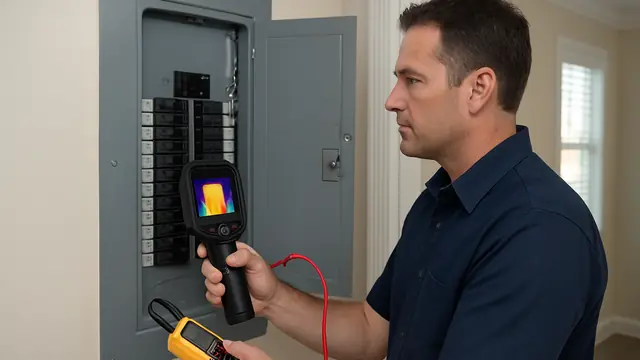
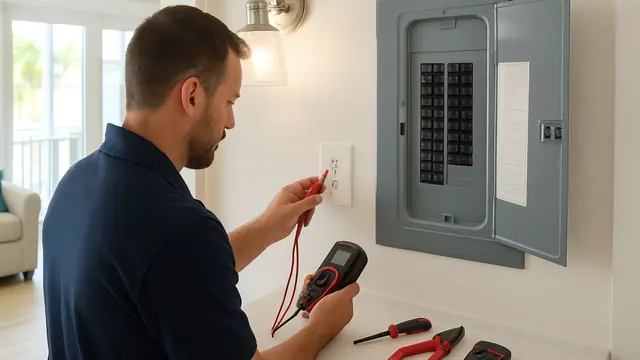
The electrician begins by identifying the service rating, panel model, breaker type, available spaces, and overall condition. The inspection includes the panel bus, breakers, conductors, grounding, bonding, enclosure, and signs of overheating or previous improper work.
Next comes the load calculation. This is a structured evaluation of the home's expected electrical demand. It considers general household use, major appliances, heating and cooling equipment, and the proposed charger.
The electrician also compares the charger's output with the vehicle's charging limit and the owner's driving needs. This step can prevent an unnecessarily large circuit.
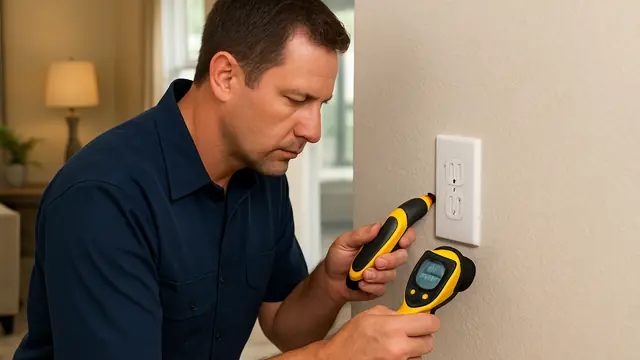
The proposed wiring route is then evaluated for conductor length, physical protection, indoor or outdoor exposure, and access. If an existing charger or receptacle is already causing trouble, voltage, connections, breaker operation, and equipment condition may be tested.
Repair and Installation Options
The least invasive reasonable solution may be to install the charger at a lower amperage. A 24-amp or 32-amp Level 2 charger can provide substantial overnight range without placing the same demand on the panel as a higher-output unit.
Another option is approved load-management equipment. This equipment monitors household demand and temporarily reduces or pauses EV charging when major appliances are using more power. Charging resumes when capacity becomes available.
If service capacity is adequate but the panel lacks spaces, an electrician may install a subpanel or reorganize circuits using only manufacturer-approved methods.
Specific defects may be repaired individually. The project may require a new breaker, corrected termination, replacement conductor, suitable receptacle, or hardwired charger connection.
Panel replacement becomes appropriate when the existing equipment is damaged, obsolete, improperly modified, or unable to accept the required circuit safely. A complete service upgrade is considered when the calculated household demand exceeds the existing service capacity and smaller solutions are not suitable.
Factors That Affect Installation Cost
Cost depends on the charger's amperage, the distance from the panel to the vehicle, conductor size, wiring route, wall access, outdoor exposure, trenching, mounting requirements, and whether the charger is plug-in or hardwired.
Panel condition also matters. A straightforward circuit installation costs differently from a project requiring load management, a subpanel, panel replacement, or a larger electrical service. Permit and inspection requirements can also affect the final scope.
Prevention and Maintenance Guidance
Use listed charging equipment and follow its operating instructions. Keep the charging cable away from tires, sharp edges, standing water, garage doors, and lawn equipment.
Inspect the cord, plug, connector, and enclosure periodically for cracks, looseness, heat, or discoloration. Keep the connector stored in its holder when not in use.
Do not ignore new fault messages or breaker trips. Problems that begin after months of normal use may indicate a worn receptacle, loose connection, damaged cord, or developing panel issue.
Schedule an Electrical Evaluation Before Choosing the Circuit
Can your electric panel support a Level 2 EV charger in Latitude Margaritaville Watersound? It may support the charger exactly as selected, a lower-amperage installation, managed charging, targeted repairs, or a service upgrade. The right answer comes from evaluating the panel, calculating existing demand, and matching the charger to the vehicle and daily driving pattern.
About this guide: This resource provides general homeowner education, not a remote diagnosis. Actual conditions, code requirements, equipment, and safe repair options must be evaluated at the property.