Do not remove an electrical panel cover, touch exposed conductors, bypass protection, or repeatedly reset a fault. Keep clear of smoke, sparks, burning odors, hot equipment, standing water near electricity, and downed lines, then call qualified help.
Your electric vehicle is parked outside or under a carport, and the nearest standard outlet charges too slowly. You are considering a Level 2 charger, but the panel is on the opposite side of the house, and an existing 240-volt receptacle seems like an easier solution. Before using that receptacle or buying an adapter, remember that matching plug shapes do not prove the circuit is suitable for hours of EV charging.
An existing outlet may have old terminations, a worn receptacle, an undersized conductor, or a circuit dedicated to another appliance. The safe immediate action is to use only approved charging equipment exactly as directed. Stop charging if the outlet, plug, cable, or breaker becomes hot, and have the full circuit evaluated before installing a permanent Level 2 charger.
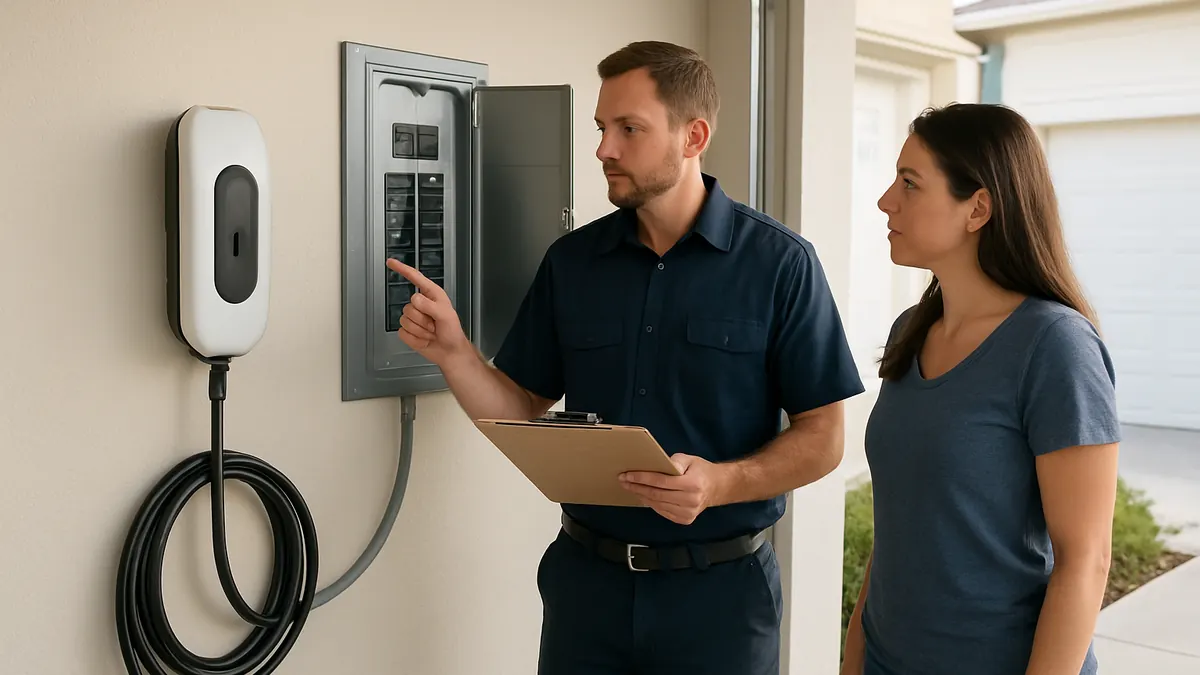
Can Your Electric Panel Support a Level 2 EV Charger?
A Level 2 charger usually operates at 240 volts on a dedicated circuit. Because charging can continue for hours, the breaker and conductors must be sized for sustained demand.
Common Reasons a Charger Cannot Be Added Immediately
The panel's calculated demand is already high
Air conditioning, electric water heating, ranges, dryers, pool equipment, and other large appliances contribute to household demand. A home may not experience obvious problems because those loads do not always run together, but an EV charger can operate for a long period and increase the calculated demand.
The existing 240-volt outlet is unsuitable
A dryer or workshop receptacle may not be on a dedicated EV circuit. Its contacts may also be worn from age or repeated plugging and unplugging. A receptacle that works for a short appliance cycle may overheat during a long charging session if connections are loose or damaged.
The wiring distance is substantial
A charger located far from the panel may require larger conductors to control voltage drop and carry the load safely. Exterior routing, underground conduit, finished walls, and physical protection can add complexity.
The selected charger is oversized
The fastest charger may not provide a practical benefit if the vehicle cannot accept that rate or if it remains parked overnight. A smaller Level 2 circuit may still restore more range than the homeowner uses each day.
The panel contains existing problems
Improper breakers, double-tapped connections, corrosion, damaged insulation, overheated components, or missing covers must be addressed before adding another major load.
Safe Checks Before Calling an Electrician
Locate the charger specifications and identify its maximum amperage and adjustable settings. Check the vehicle's maximum AC charging rate so you know whether the car can use the charger's full output.
Photograph the panel without opening it. Include the main breaker, breaker directory, manufacturer label, and all visible breaker positions.
Make a list of major electric equipment in the home. Include the air-conditioning system, heat source, water heater, range, dryer, pool or spa equipment, and any large garage or shop tools.
What Homeowners Should Not Attempt
- Do not remove the panel cover, touch internal wiring, or move breakers. The service conductors can remain energized even when the main breaker is off.
- Do not assume an adapter makes a dryer outlet safe for EV charging. Do not use a household extension cord, multiple adapters, or a homemade switching arrangement.
- Never replace a tripping breaker with a larger one. The breaker protects the wire. Increasing its size without verifying the entire circuit can create an overheating hazard.
- Do not repeatedly unplug and reconnect a hot charging plug. Turn off the affected circuit if it can be done safely and arrange professional service.
Warning Signs That Require Prompt Attention
Stop charging when you notice a hot receptacle, hot plug, repeated breaker trips, charger interruptions, or fault messages. Other urgent symptoms include:
- Burning or fish-like electrical odors
- Buzzing or crackling near the panel or outlet
- Scorch marks or melted plastic
- Lights dimming or flickering when charging starts
- A breaker that will not reset
- Visible rust, water staining, or corrosion
- A loose receptacle that does not hold the plug firmly
Smoke, fire, or active sparking requires immediate evacuation and emergency assistance.
How a Licensed Electrician Diagnoses the System
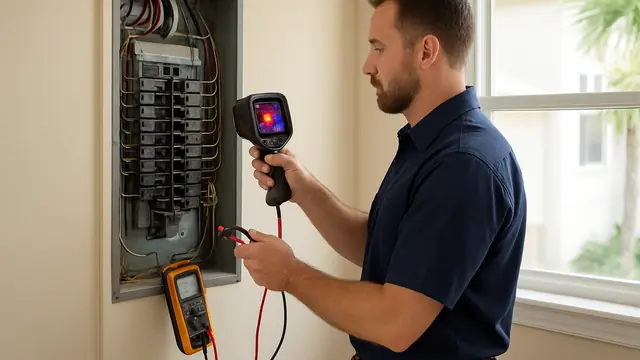
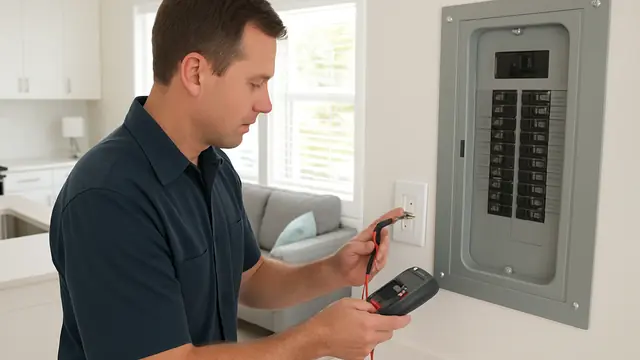
The evaluation starts with the service rating and panel identification. The electrician confirms which breakers are approved, whether two adjacent spaces are available, and whether the panel bus and connections are in acceptable condition.
The electrician then performs a load calculation. In plain language, this calculation estimates the maximum electrical demand the home is expected to place on the service. It includes general household load, major appliances, heating and cooling, and the proposed EV charger.
The charger model and vehicle specifications are reviewed so the circuit is not larger than necessary. The electrician also examines the route to the parking area, considering conductor length, weather exposure, conduit, trenching, impact protection, and cable reach.
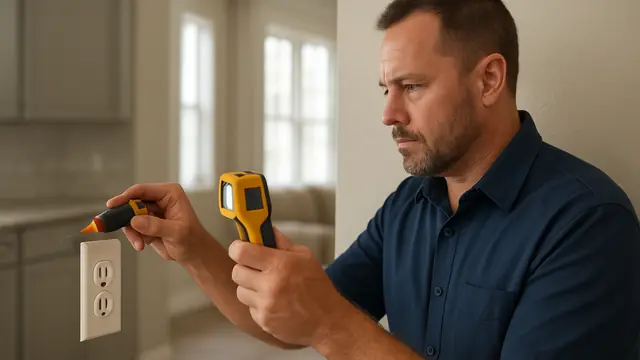
If an existing receptacle is being considered, the breaker, wire size, grounding, receptacle rating, contact condition, and terminations must be verified. Testing may reveal voltage drop, loose connections, or damage that cannot be seen from the front of the outlet.
Repair Options From Least Invasive to Most Extensive
The simplest solution may be a lower charging rate. A properly installed 16-, 24-, or 32-amp Level 2 charger may meet the homeowner's daily needs while requiring less service capacity.
Approved load-management equipment may allow the charger to share the home's available capacity intelligently. It reduces or pauses charging when other large loads operate and restores charging afterward.
When capacity is sufficient but panel space is limited, an electrician may install a subpanel or use another approved panel-specific arrangement. A subpanel does not make the electrical service larger; it only provides more circuit locations.
Targeted repair may involve replacing a damaged receptacle, breaker, conductor, termination, or section of raceway. Hardwiring the charger may be recommended when it is required by the equipment or appropriate for the location and output.
A panel replacement is considered when the panel is damaged, obsolete, or not suitable for the proposed circuit. A service upgrade is reserved for situations in which the home's calculated demand cannot be safely supported by the existing service and managed charging is not the appropriate solution.
Typical Factors Affecting Cost
The main cost factors are charger output, circuit length, conductor size, access, exterior work, trenching, conduit, weather protection, and physical protection near parking areas.
Additional cost may come from correcting existing defects, installing load management, adding a subpanel, replacing the panel, or upgrading the service. Permit and inspection requirements also affect the project.
Prevention and Maintenance
Inspect the connector, cord, receptacle, and enclosure for looseness, cracks, discoloration, or corrosion. A plug-in charger should fit firmly without wobbling.
Have recurring faults, unusual heat, or new charging interruptions investigated promptly. Keep the panel directory accurate so the charger circuit can be identified quickly.
Choose a Charging System That Fits the Entire Property
Can your electric panel support a Level 2 EV charger in Lower Grand Lagoon? The solution may be a dedicated circuit, a lower charger setting, approved load management, targeted circuit repairs, or a larger electrical service. The panel, charger, vehicle, wiring route, and parking location must be considered as one complete system.
About this guide: This resource provides general homeowner education, not a remote diagnosis. Actual conditions, code requirements, equipment, and safe repair options must be evaluated at the property.