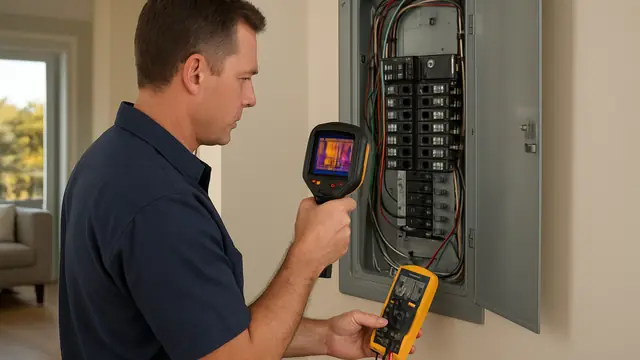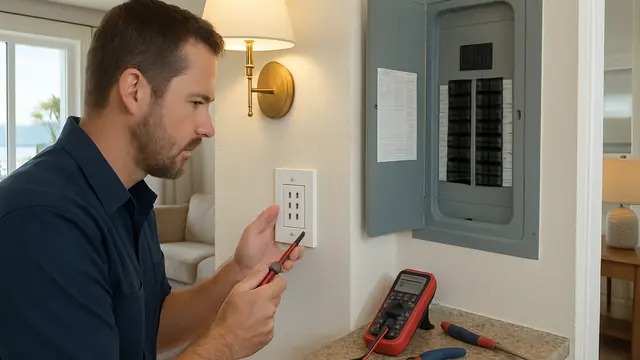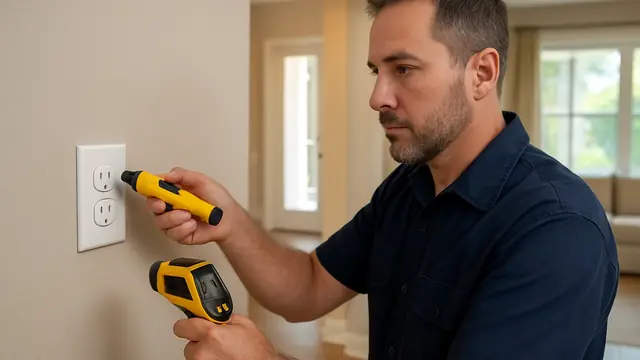
Do not remove an electrical panel cover, touch exposed conductors, bypass protection, or repeatedly reset a fault. Keep clear of smoke, sparks, burning odors, hot equipment, standing water near electricity, and downed lines, then call qualified help.
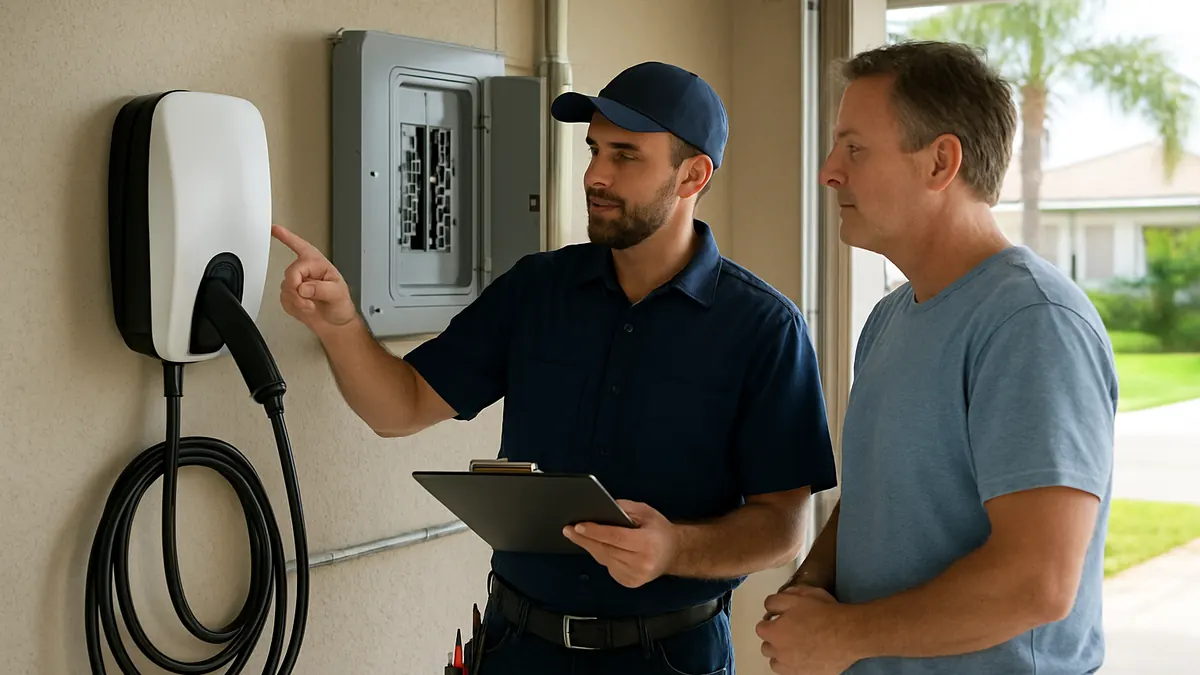
You are ready to install a wall-mounted charger near an outdoor parking area, but the electrician's first question is about the electrical panel. The label may show a 100-amp or 150-amp service, the breaker spaces may be occupied, and the charger may advertise up to 48 amps. The issue is not simply whether another breaker fits. It is whether the complete electrical system can carry the charging load safely for hours.
Do not connect the charger through an extension cord, temporary adapter, or existing 240-volt outlet merely because the plug fits. Continue using approved equipment within its instructions, and stop immediately if a cord, receptacle, plug, or breaker becomes hot. A licensed evaluation can determine whether your Laguna Beach home needs a basic circuit, lower charging setting, load management, panel work, or larger service.
Can Your Electric Panel Support a Level 2 EV Charger Safely?
Residential Level 2 chargers normally use a 240-volt circuit, but their current varies. A lower-output unit may draw 16 or 24 amps, while common chargers may draw 32, 40, or 48 amps.
Charging is a sustained load. A 32-amp charger commonly uses a 40-amp circuit, a 40-amp charger a 50-amp circuit, and a 48-amp charger a 60-amp circuit when allowed by the equipment instructions and applicable code. Higher-output units are often hardwired.
The panel rating alone cannot answer the question. A heavily loaded 200-amp service may have less available capacity than a lightly loaded 150-amp service. The panel also must be sound, accept the correct breaker, and have a practical route to the charger.
Common Reasons the System May Need Work
Electrical demand has grown
Air-conditioning changes, remodeled kitchens, electric water heating, laundry equipment, pools, workshops, and other additions can increase demand. The panel may still operate normally while having limited calculated capacity.
There is no approved breaker arrangement
A charger normally needs a two-pole breaker. Open-looking positions may be unsuitable, and not every panel permits tandem or compact breaker arrangements.
Components show deterioration
Corrosion, moisture damage, overheating, loose connections, damaged insulation, or aging equipment can make a simple charger circuit unsafe until repaired. Outdoor and garage equipment must also suit its actual exposure.
The charger exceeds the useful rate
The car controls how much AC power it accepts. Installing the largest wall charger does not make every vehicle charge at that maximum. Daily mileage and parking time may support a smaller circuit.
The charger is far from the panel
A long route to outside parking, a carport, or detached structure can require larger conductors, raceway, trenching, or additional protection.
Safe Checks a Homeowner Can Make
Find the charger model, maximum output, adjustable settings, connection method, and manufacturer requirements. Check the vehicle specifications for its maximum Level 2 charging rate.
Without opening the panel, note the main-breaker rating and photograph the panel label, breaker layout, and directory. List major electric appliances, including heating and cooling, water heater, range, dryer, pool equipment, and large shop loads.
Walk the proposed route. Note finished walls, attic access, exterior sections, underground sections, and the distance to the vehicle's charge port. Make sure the cable can be stored without crossing a normal walkway.
These checks help with planning but do not approve the installation.
What You Should Never Try Yourself
Do not remove the panel cover or probe for voltage. Service components may remain energized even after the main disconnect is off.
Do not install a larger breaker, double-tap an unsuitable breaker, or choose a breaker only because it fits. Do not borrow power from the air conditioner, dryer, water heater, or another fixed-appliance circuit.
Avoid ordinary extension cords and unlisted adapters. Do not mount indoor-rated equipment outside. Existing receptacles should be inspected before long-duration EV use.
Warning Signs That Make It Urgent
Stop charging if the breaker trips repeatedly, the plug or receptacle becomes hot, the connector discolors, or the charger reports recurring wiring or ground faults.
Other warnings include a burning smell, buzzing, crackling, flickering during charging, melted plastic, scorched insulation, visible corrosion, or a panel cover that feels unusually warm. Do not continue charging merely to see whether the problem repeats.
If you see smoke, flame, or active arcing, leave the area and call emergency services.
How a Licensed Electrician Evaluates the System
The electrician verifies the service rating, panel model, breaker compatibility, and available positions. The inspection also covers the bus, lugs, conductors, enclosure, grounding, bonding, heat damage, moisture, and improper alterations.
A load calculation uses the home's general demand and major fixed equipment, then adds the proposed charger at the appropriate sustained-load value. This determines available service capacity more reliably than whether the main breaker has tripped before.
The electrician also reviews charger instructions, vehicle limits, conductor route, cable reach, weather exposure, and physical protection. Existing installations may require voltage and connection testing.
Repair and Upgrade Choices
The first option may be reducing charger output. A 24- or 32-amp charger can provide practical overnight charging for many drivers while using less panel capacity than a 40- or 48-amp unit.
Approved load-management equipment can reduce charging when household demand is high and restore it when capacity becomes available.
If the load calculation passes but the panel lacks spaces, approved circuit reorganization or a subpanel may solve the space problem. A subpanel does not increase service capacity.
Specific defects may be corrected without replacing everything. Repairs can include a breaker, conductor, receptacle, termination, enclosure issue, or charger configuration. Panel replacement is reasonable when the equipment itself is unsafe or unsuitable. A service upgrade is considered when calculated demand cannot be accommodated by other approved methods.
Typical Factors That Affect Cost
Cost varies with charger amperage, circuit distance, conductor size, hardwired versus receptacle connection, indoor or outdoor routing, wall access, trenching, detached structures, permitting, and panel condition.
A subpanel, load-management device, panel replacement, service upgrade, or correction of previous work changes the scope. Selecting a suitable charger first can prevent paying for capacity the vehicle and driving schedule do not require.
Prevention and Long-Term Care
Use listed equipment designed for the location. Protect the cable from tires, doors, lawn equipment, standing water, and sharp bends. Keep covers and connector holsters closed as designed.
Inspect the cable, plug, connector, and enclosure occasionally. Schedule service for heat, looseness, cracked insulation, corrosion, interruptions, or repeated fault messages. Keep circuit labeling accurate.
Homeowner FAQs
Can a 100-amp panel support a Level 2 charger?
Possibly. It may support a lower-output charger or approved managed-charging solution, depending on the load calculation and panel condition.
Do I need a 48-amp charger?
Not necessarily. The useful size depends on the vehicle's onboard charging limit, miles driven, and hours parked.
Is an outdoor charger safe?
Yes, when the equipment is listed for the location and installed with proper wiring, protection, mounting, and weather considerations.
Can an electrician just add a subpanel?
Only when the existing service has enough capacity. A subpanel creates circuit spaces, not additional supply.
Why is my EV receptacle getting hot?
Possible causes include a loose or worn receptacle, poor termination, damaged wiring, excessive load, or equipment trouble. Stop charging and have it inspected.
Should I use a plug-in or hardwired charger?
That depends on output, equipment instructions, location, and electrical requirements. Some higher-output units require hardwiring.
Make the Installation Match the Home and Vehicle
Can your electric panel support a Level 2 EV charger in Laguna Beach? The safest answer may be a dedicated circuit, lower charging rate, approved load management, focused repairs, or a service upgrade. A proper inspection prevents guesswork and helps you choose only the work the home needs.
Verified article-body word count: 1,301 words.
About this guide: This resource provides general homeowner education, not a remote diagnosis. Actual conditions, code requirements, equipment, and safe repair options must be evaluated at the property.