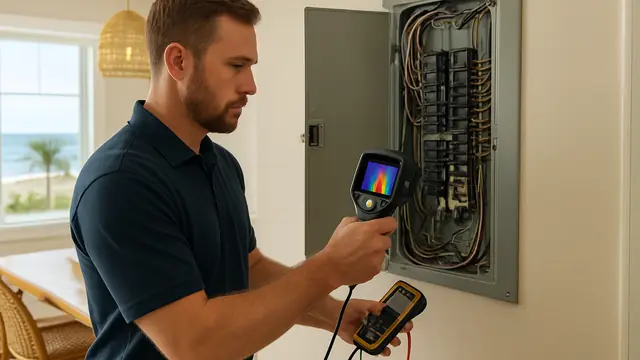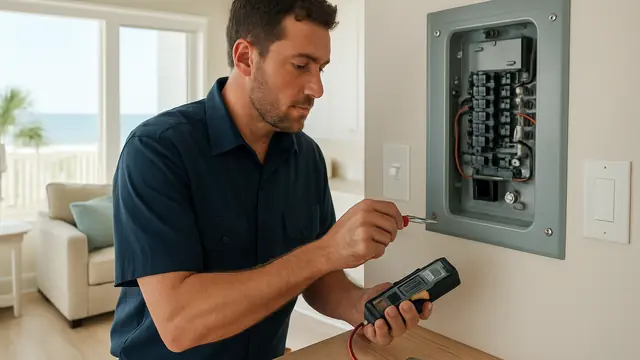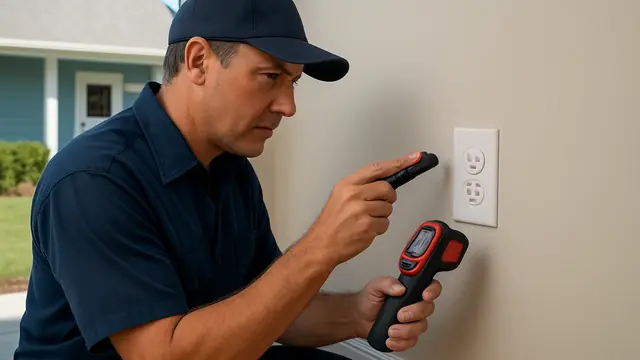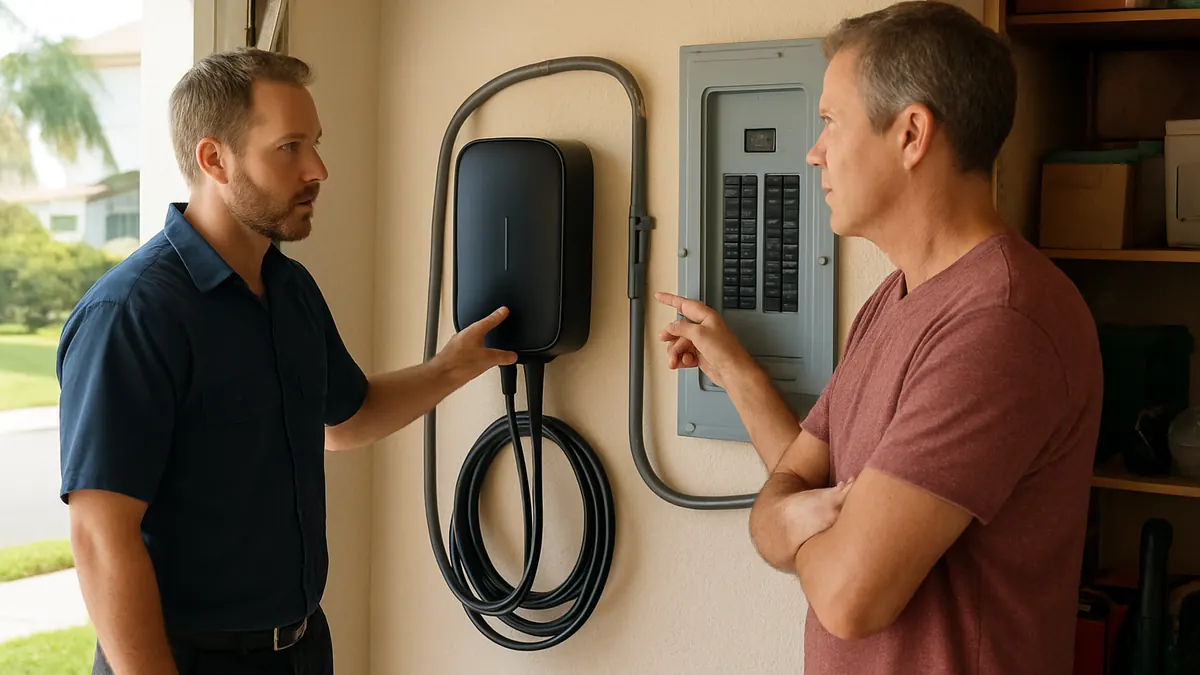
Do not remove an electrical panel cover, touch exposed conductors, bypass protection, or repeatedly reset a fault. Keep clear of smoke, sparks, burning odors, hot equipment, standing water near electricity, and downed lines, then call qualified help.
Your new EV charges for a while, but the session stops when the air conditioner and dryer are running. Perhaps the breaker has tripped, the charger has reduced output, or you have delayed installation because the panel appears full. These signs may point to an overloaded circuit, weak connection, incorrect charger setting, limited service capacity, or separate equipment problem.
Stop using any setup that trips, becomes hot, or depends on an unapproved adapter. Use the vehicle's approved Level 1 cord temporarily only when it can connect directly to a suitable outlet. Then schedule an electrical evaluation before assuming the panel must be replaced.
What Determines Whether a Callaway Panel Can Support Level 2 Charging?
Level 2 charging normally uses 240 volts and a dedicated circuit. Because an EV may charge for hours, the wiring and protection must be sized for sustained demand.
A 32-amp charger is commonly installed on a 40-amp circuit. A 40-amp charger commonly uses a 50-amp circuit, while many 48-amp chargers are hardwired on a 60-amp circuit. Exact requirements come from the equipment instructions, applicable code, and site conditions.
The main service rating is only the starting point. An electrician also evaluates existing demand from air conditioning, heat, water heating, cooking, laundry, and other fixed equipment. Breaker space and electrical capacity are separate questions.
Most Common Obstacles
The service has little remaining capacity
A home can operate normally yet have limited calculated capacity for a new continuous load. This is common when several large appliances are electric. The answer requires an approved load calculation, not a guess based on the utility bill or breaker numbers.
The panel has capacity but no room
A two-pole EV breaker usually needs two adjacent positions. Installing unsupported tandem breakers or forcing an incompatible breaker into the cabinet is not a safe shortcut.
Existing defects need correction
Loose connections, overheated breakers, damaged bus components, corrosion, missing knockouts, or incorrect grounding and bonding can make the panel unsuitable until repaired. The charger may simply reveal an older problem.
The charger is set incorrectly
Some chargers can operate at several output levels. If the setting exceeds the installed circuit, the breaker may trip. Charger output, breaker size, and conductor size must agree.
The parking location complicates the route
A detached garage, distant parking space, finished walls, or underground route can affect conductor size, raceway, weather protection, and labor even when the panel has capacity.
Safe Information to Collect
Find the vehicle's maximum AC charging rate and the charger's selectable amperage settings. A charger capable of 48 amps may be allowed to operate at a lower fixed setting.
Without opening the panel, photograph the main breaker, panel label, breaker layout, and directory. Record whether the range, dryer, water heater, and heating system use electricity or gas. Note additions such as another air-conditioning system, pool equipment, workshop machinery, or an electric tankless water heater.
Check that the planned location allows the connector to reach the vehicle without stretching across a walkway or lying where tires can damage it.
Work Homeowners Should Not Perform
Do not remove the panel cover, move breakers, or measure amperage inside the cabinet. Service components can remain energized even when the main breaker is off.
Never install a larger breaker to stop tripping. The breaker protects the wire, and oversizing it can allow overheating. Do not splice into an appliance circuit, use an ordinary extension cord, or rely on an unapproved splitter.
A matching plug shape does not prove that an existing 240-volt receptacle is suitable. The full circuit, grounding, terminations, protection, and receptacle condition must be checked.
When the Situation Requires Prompt Attention
Disconnect charging equipment and call an electrician when a breaker trips repeatedly, a plug or receptacle becomes hot, or the charger reports recurring ground, wiring, or voltage faults. Other warnings include burning odors, crackling, flickering during charging, darkened plastic, melted insulation, or scorch marks.
A panel with visible rust, water marks, missing covers, or overheating needs attention before adding a charger. If charging trips the main breaker or causes abnormal power throughout the home, stop testing it yourself.
Smoke, flame, or active arcing requires evacuation and emergency assistance.
How an Electrician Reaches a Defensible Answer
The electrician confirms panel and service ratings, then checks breaker compatibility, bus condition, conductor sizes, grounding, bonding, enclosure integrity, and available positions.
A residential load calculation accounts for general household demand, major fixed equipment, and the proposed charger. In some cases, documented demand data or approved energy management may help establish a safe design. Panel capacity and existing peak demand are central parts of charger planning.
The electrician also evaluates the wiring route, charger manual, mounting location, cable protection, and exposure to weather or impact. If the charger is already installed, testing helps separate equipment faults from circuit or panel problems.
Solutions From Smallest Change to Largest
A lower charging setting is often the first option. Many drivers do not need maximum output. A 24- or 32-amp Level 2 charger may replenish daily mileage overnight with less demand than a 40- or 48-amp unit.
Approved load-management equipment may reduce charging when household demand rises and restore it when capacity becomes available. This differs from an unapproved splitter or manual switching.
When service capacity is adequate but panel space is limited, an electrician may reorganize permitted circuits or install a subpanel. A subpanel adds spaces, not service capacity.
Localized problems may require a new breaker, conductor, receptacle, termination, or corrected charger setting. Panel replacement is considered when equipment is damaged, obsolete, or unsafe. A service upgrade is appropriate when the calculated demand truly requires more capacity.
Factors That Influence Cost
Cost depends on charger output, circuit length, conductor and raceway size, panel access, wall repair, attic or crawlspace conditions, outdoor routing, trenching, detached structures, permitting, and charger type.
Energy management, a subpanel, corrective panel work, or a service upgrade changes the scope. Locating the charger near an accessible electrical route can reduce complexity without compromising safe cable use.
Maintenance That Protects the Installation
Keep the connector holstered and protect the cable from garage doors, tires, sharp edges, and standing water. Periodically inspect it for cuts, looseness, discoloration, or heat.
Do not ignore new errors or nuisance trips. Keep charger settings consistent with the installed circuit and document future panel changes.
Get a Clear Answer Before Installation
Can your electric panel support a Level 2 EV charger in Callaway? The right design may use full output, lower amperage, energy management, targeted panel work, or a service upgrade. An onsite inspection and load calculation separate what is necessary from what is merely possible.
Verified article-body word count: 1,279 words.
About this guide: This resource provides general homeowner education, not a remote diagnosis. Actual conditions, code requirements, equipment, and safe repair options must be evaluated at the property.