Do not remove an electrical panel cover, touch exposed conductors, bypass protection, or repeatedly reset a fault. Keep clear of smoke, sparks, burning odors, hot equipment, standing water near electricity, and downed lines, then call qualified help.
You are comparing options for a new HVAC system, electric water heater, kitchen remodel, or EV charger when you discover that your main electrical service is smaller than 200 amps. Maybe the panel has no empty spaces, the lights dip when major equipment starts, or the main breaker has tripped during heavy use. It is reasonable to ask whether your Lynn Haven home needs a 200-amp electrical service.
Do not assume that a larger breaker will solve the problem. The safe immediate action is to delay new high-demand installations until a licensed electrician completes a service evaluation. If a breaker is tripping, reduce unnecessary electrical use and avoid repeated resets. If you notice heat, smoke, a burning odor, or crackling, treat the condition as urgent and stay away from the equipment.
Service Capacity and Panel Space Are Different Problems
Panel size and service size are related, but they are not identical.
Panel space refers to the number of circuit-breaker positions. Service capacity refers to the amount of electrical current the complete service is designed to provide. A subpanel can add breaker spaces, but it cannot increase the capacity of the main service.
A 200-amp panel may be protected by a smaller main breaker, while a crowded panel may still have adequate capacity.
Why a Lynn Haven Home May Need 200 Amps
The Home Is Becoming More Electric
Replacing gas appliances with electric models can add significant load. Electric ranges, dryers, water heaters, heat pumps, and vehicle chargers may all operate during the same part of the day.
Major Equipment Is Being Added
Pools, hot tubs, detached workshops, garage equipment, additional HVAC systems, and EV chargers can require new dedicated circuits. A dedicated circuit supplies one major appliance or equipment group and has its own breaker.
Breakers Trip Under Heavy Use
A main breaker that trips when several large loads operate may indicate the total demand is too high. It might also be a defective breaker, loose connection, damaged conductor, or internal equipment fault.
One branch breaker repeatedly tripping usually points to a circuit-level problem rather than an undersized service.
The Existing Equipment Needs Replacement
An older, damaged, corroded, or improperly modified panel may need replacement. If replacement is already necessary, the electrician should compare the cost and practicality of maintaining the existing amperage with upgrading for realistic future needs.
Safe Checks You Can Perform Before the Appointment
Open only the hinged panel door and read the main-breaker marking if it is visible. Do not remove the inner cover or any screws.
Create a list of major electric loads, including HVAC units, water heaters, ranges, dryers, pool equipment, hot tubs, EV chargers, and workshop tools. Include planned equipment and its exact model when available.
Record symptoms. Note whether the whole house loses power or only one circuit. Write down which appliances were running and whether the event happened during startup or sustained use.
Visually report exterior rust, loose covers, impact damage, staining, or water marks, but do not touch the equipment.
What Homeowners Should Not Attempt
Never install a larger main breaker without confirming that every service component is rated for it. The conductors, meter base, disconnect, panel, and grounding work may all require changes.
Do not add unapproved tandem breakers, double-tap terminals, or move wiring to make room. Do not install a subpanel as a do-it-yourself way to "create more power." It only creates more spaces.
Avoid using adapters or extension cords for permanent high-amperage equipment. Never enter the meter enclosure or remove the panel cover because service wiring may remain energized even when the main is turned off.
Signs That Make the Problem Urgent
Call for prompt electrical service when the main breaker trips repeatedly, the panel is hot, or you hear ongoing buzzing, sizzling, or crackling.
A burning odor, smoke, sparks, melted insulation, or dark marks around breakers are emergency warning signs. If there is smoke or fire, leave the home and call emergency services. Do not remain near the panel to investigate.
Sudden severe voltage changes are also urgent. Lights that become abnormally bright and then dim may indicate a loose neutral or service connection. This can expose appliances to damaging voltage.
Water entering the panel or meter equipment requires immediate professional attention. Keep people away from the affected area and do not touch wet electrical equipment.
How a Licensed Electrician Diagnoses the System
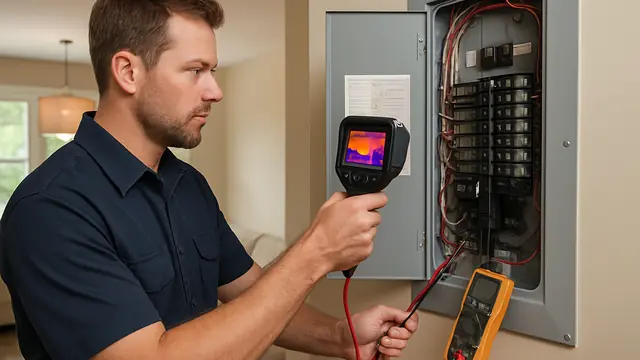
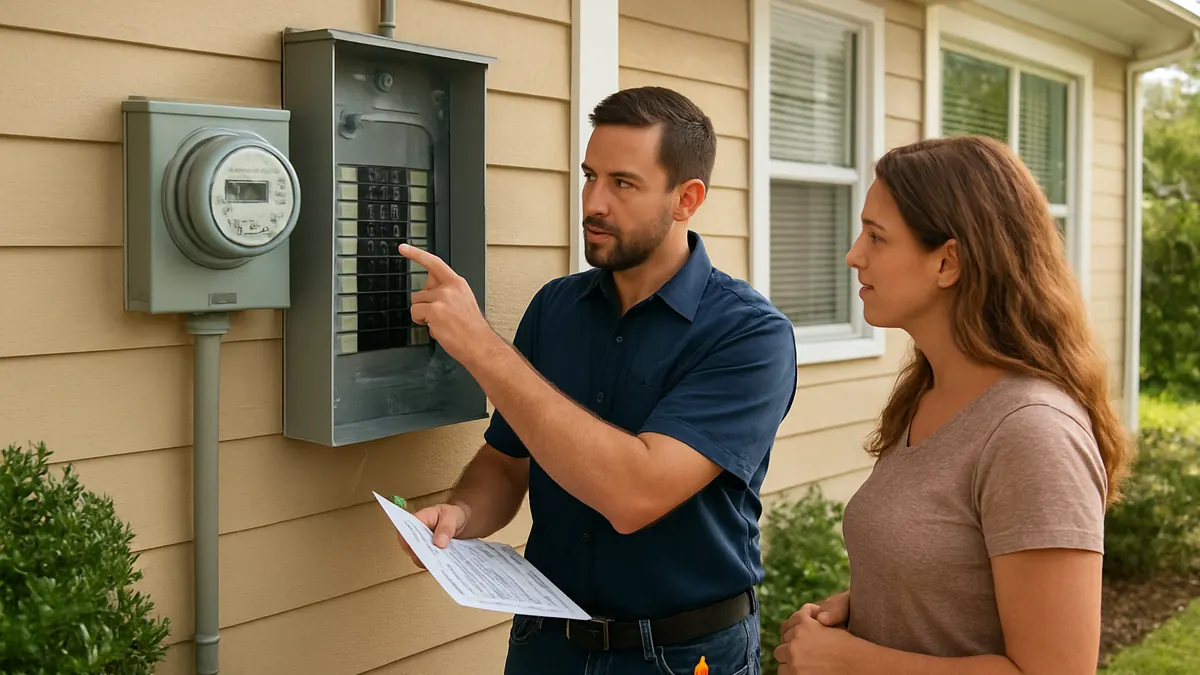
The electrician first verifies the existing service rating. This includes checking the main breaker, panel label, service entrance conductors, meter equipment, and any exterior disconnect.
The inspection checks for loose connections, heat damage, corrosion, improper breakers, doubled conductors, and grounding or bonding defects.
Next, the electrician performs a load calculation. This code-based process accounts for general household demand, kitchen and laundry circuits, HVAC, water heating, cooking equipment, fixed appliances, EV charging, and other major loads. It uses permitted demand factors because not every load is expected to operate at maximum output simultaneously.
Operating measurements can help identify voltage drop, imbalance, or abnormal current, but they do not replace the formal calculation.
Repair Options Beginning With the Least Invasive
The first repair should address the actual fault. If a loose connection, weak breaker, damaged appliance, or overloaded branch circuit is causing symptoms, correcting that issue may restore safe operation.
A new dedicated circuit may be enough for one appliance when the service has available capacity. A subpanel can solve a shortage of breaker spaces.
A listed energy-management system may make an EV charger practical by reducing or pausing charging during periods of high household demand.
If the panel is damaged but the service is large enough, a same-amperage panel replacement may be appropriate. A complete 200-amp upgrade is recommended when the existing service cannot support the calculated present and future demand.
Factors That Affect Upgrade Cost
The cost depends on the existing service rating, panel and meter location, overhead or underground utility connection, service conductor route, circuit count, grounding needs, and accessibility.
Other factors include permits, utility coordination, exterior disconnects, surge protection, equipment relocation, finish repairs, corrosion, and damaged conductors. The proposal should explain whether it covers only the panel or the complete service and conductor upgrade.
Prevention and Maintenance
Evaluate the service before buying major electrical equipment. Keep the panel accessible, dry, and accurately labeled.
Do not ignore recurring trips, unusual heat, buzzing, odors, or flickering. These symptoms often worsen rather than correct themselves. Whole-home surge protection can help reduce damage from voltage surges, but it does not increase service capacity.
Homeowner FAQs
Is 200 amps the standard for every house?
No. It is common, but the correct rating depends on the calculated load and the equipment installed in the home.
Can I tell my service size from the main breaker?
The main-breaker marking is an important clue, but the electrician should also verify the conductors, meter equipment, panel rating, and disconnect.
Can a smaller service support an EV charger?
Sometimes. The answer depends on charger output, existing demand, and whether listed load management can be used.
Will a 200-amp upgrade stop a branch breaker from tripping?
Not necessarily. A branch breaker may be tripping because of an overloaded circuit, appliance fault, short circuit, or damaged breaker.
Is a subpanel cheaper than a service upgrade?
It is generally a different type of project. A subpanel solves a need for circuit spaces, while a service upgrade increases available capacity. The correct option depends on the diagnosis.
Should I upgrade before replacing my HVAC system?
Have the load reviewed first. The new system's electrical requirements may fit the existing service, or the project may reveal a need for circuit or service changes.
Does Your Home Need a 200-Amp Electrical Service in Lynn Haven?
A smaller service is not automatically unsafe, and a full panel does not automatically require an upgrade. The correct decision depends on equipment condition, calculated demand, present symptoms, and future electrical plans. A licensed electrician can determine whether the least invasive solution is a repair, dedicated circuit, subpanel, load-management device, same-size panel replacement, or full 200-amp service upgrade.
About this guide: This resource provides general homeowner education, not a remote diagnosis. Actual conditions, code requirements, equipment, and safe repair options must be evaluated at the property.