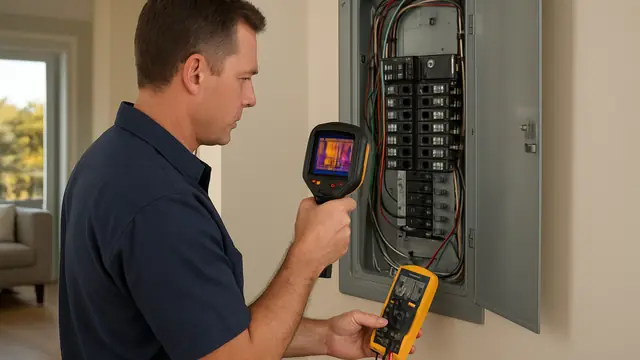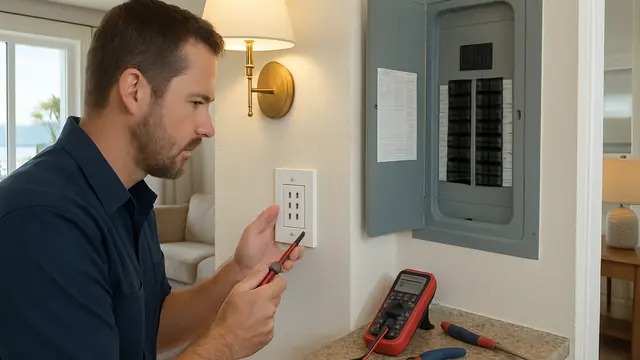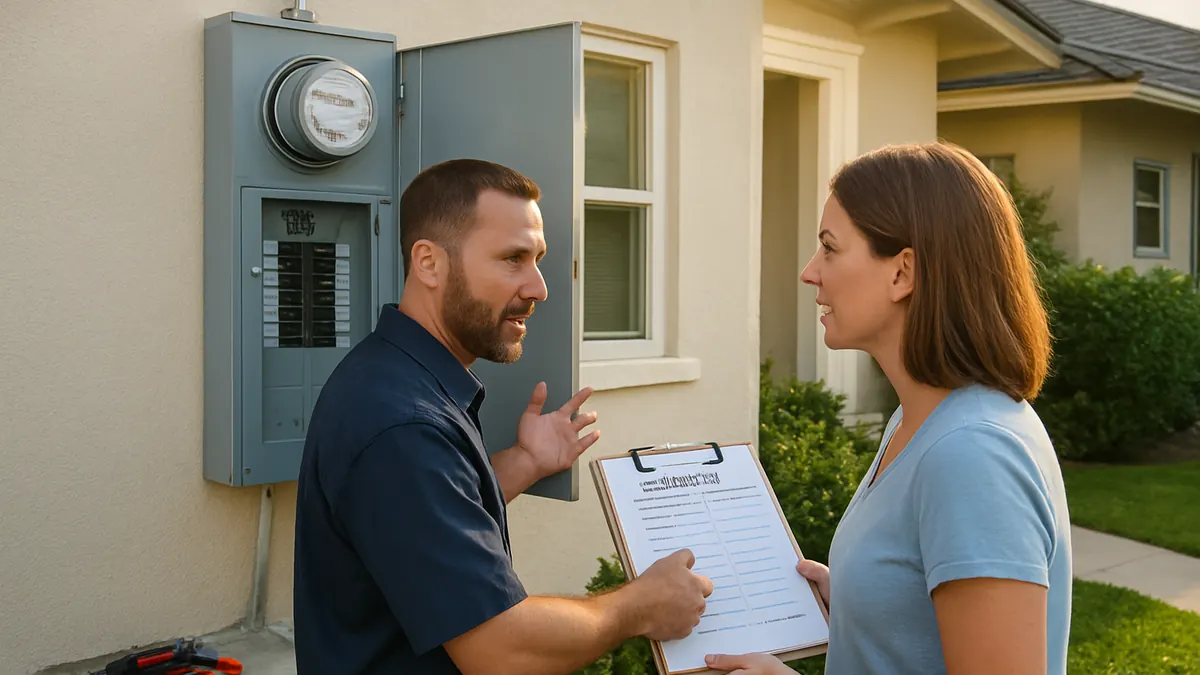
Do not remove an electrical panel cover, touch exposed conductors, bypass protection, or repeatedly reset a fault. Keep clear of smoke, sparks, burning odors, hot equipment, standing water near electricity, and downed lines, then call qualified help.
You are preparing to add a hot tub, remodel the kitchen, or install an EV charger, but the electrician asks whether the existing service can support it. The panel appears crowded, several breakers are labeled unclearly, and the lights occasionally dip when the HVAC system starts. You may be asking the right question: does your Laguna Beach home need a 200-amp electrical service?
For now, avoid adding temporary high-powered equipment or repeatedly resetting a breaker that trips. If you smell burning, hear crackling, or see discoloration, stop using the affected equipment and arrange prompt service. Do not remove the panel cover. The safest next step is an electrical service and load assessment by a licensed electrician.
Why Service Size Matters
The electrical service brings power from the utility connection into the home's distribution equipment. Its amp rating describes the current the complete system can carry safely. A 200-amp service adds capacity; it does not improve appliance efficiency or lower the electric bill. Conductors, meter equipment, disconnects, the panel, grounding, and the utility connection must all be properly sized.
Does Your Laguna Beach Home Need a 200-Amp Electrical Service?
The answer depends on the existing rating, the calculated load, and planned additions. A smaller service with several gas appliances may be adequate, while electric water heating, cooking, multiple HVAC systems, a pool, and EV charging may require more capacity or load management. Breaker spaces and panel dimensions alone can be misleading.
The Most Common Reasons Homeowners Consider an Upgrade
Major Electrical Projects Are Planned
EV charging, electric tankless water heating, hot tubs, pools, additions, workshops, and HVAC changes can increase demand. Some electric tankless heaters require several high-amperage circuits, so exact equipment specifications matter.
The Main Panel Is Crowded
A full panel may need a subpanel, a larger same-amperage panel, or a service upgrade. A subpanel adds circuit spaces but still draws through the existing service and cannot create missing capacity.
There Are Signs of Overheating or Voltage Problems
Flickering, buzzing, panel warmth, and repeated trips signal electrical trouble but do not prove the service is too small. Loose connections, damaged breakers, appliance faults, utility issues, and overloaded branch circuits can create similar symptoms.
The Existing Equipment Is Deteriorated
A corroded, damaged, or improperly modified panel may need replacement even when its amp rating is adequate. Increase capacity only when calculations and future plans support it.
Safe Checks a Homeowner Can Make
Read the main-breaker number only if it is visible after opening the hinged panel door; do not remove the inner cover. List major electric equipment and note whether the main breaker or one branch breaker trips. Document when flickering occurs. A brief motor-start dip differs from lights becoming very bright and then dim. From a safe distance, report exterior damage, rust, or staining without touching service equipment.
What Not to Do
Never install a larger main breaker without verifying and upgrading the complete service. Do not force circuits into a full panel with unapproved tandem breakers, doubled conductors, or other improvised wiring. Extension cords are not permanent circuits for high-demand appliances. Never open service equipment; incoming conductors may remain energized with the main off. Temporary load reduction is a precaution, not a repair.
Conditions That Need Prompt Attention
A burning odor, visible smoke, sparking, melted breaker material, or a panel that is hot to the touch requires immediate action. Leave the area and call emergency services if there is fire or smoke.
Schedule urgent electrical service for repeated main-breaker trips, persistent sizzling, loud buzzing, or water inside the panel. Do not reset the main breaker repeatedly.
Sudden whole-house voltage changes are also serious. Lights that swing noticeably brighter and dimmer can indicate a loose neutral or service connection. Unplug sensitive electronics if it is safe, and seek professional help promptly.
How a Licensed Electrician Evaluates the Service
The electrician verifies the rating through the main breaker, panel label, conductor size, meter equipment, and disconnect, then checks for heat, corrosion, loose connections, improper breakers, and unsafe modifications. Grounding connects the system to grounding electrodes; bonding joins metal parts to provide a reliable fault-current path. A code-based load calculation applies permitted demand factors rather than adding breaker ratings. Planned equipment is included, along with possible smaller circuits or listed load management. Any upgrade scope identifies meter, conductors, disconnect, panel, grounding, surge protection, permits, inspection, and utility coordination.
Options From Least Invasive to Most Extensive
Start by repairing the actual defect: a damaged breaker, loose termination, appliance problem, or overloaded branch circuit. Circuit reorganization can correct improper modifications. Listed load management can control EV charging when demand is high. A subpanel adds spaces when capacity is adequate, and a same-amperage panel replacement addresses damaged equipment. A full 200-amp upgrade is appropriate when calculations and future plans show the present service cannot reasonably carry the load.
What Determines the Cost?
Cost depends on overhead or underground service, meter and disconnect configuration, panel location, conductor length, circuit count, grounding corrections, surge protection, accessibility, finish restoration, permits, and utility requirements. Relocation, corrosion, or prior improper work adds complexity. The proposal should state the rating, included equipment, expected outage, coordination, and exclusions.
Maintenance and Future Planning
Keep the panel dry, accessible, and accurately labeled. Review high-demand equipment before purchase. Repeated trips, heat, noise, or flickering deserve inspection. Whole-home surge protection can limit transient voltage damage, but it does not add amperage or correct overloads.
Homeowner FAQs
How can I tell whether I have 200-amp service?
The main breaker marking is a clue, but an electrician should verify the panel, service conductors, meter equipment, and disconnect.
Is a 200-amp panel the same as 200-amp service?
Not always. The panel may be rated for 200 amps but protected by a smaller main breaker or supplied by smaller service components.
Can I install a hot tub on a 100-amp service?
Possibly, depending on the total calculated load and the hot tub's requirements. A load assessment is necessary before installation.
Will a subpanel give me more power?
No. It adds circuit spaces and distribution capacity, but total power is still limited by the main service.
Why does the main breaker trip?
Possible causes include excessive total demand, a failing breaker, a short circuit, damaged service equipment, or a loose connection. It needs professional diagnosis.
Does Your Home Need a 200-Amp Electrical Service in Laguna Beach?
A crowded panel or occasional dimming does not automatically require a full upgrade. The right answer may be a repair, dedicated circuit, load-management device, subpanel, same-size panel replacement, or 200-amp service. A licensed evaluation will identify the least invasive safe option and prepare the home for the electrical equipment you actually plan to use.
About this guide: This resource provides general homeowner education, not a remote diagnosis. Actual conditions, code requirements, equipment, and safe repair options must be evaluated at the property.