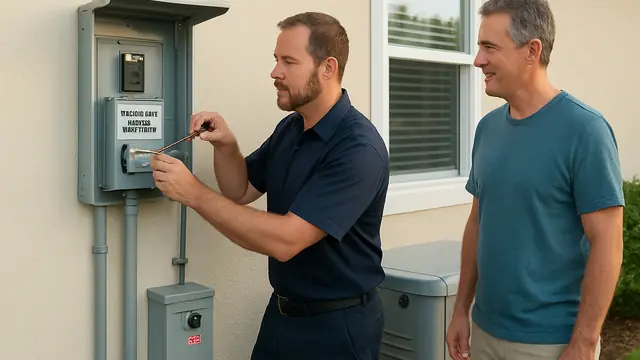
Do not remove an electrical panel cover, touch exposed conductors, bypass protection, or repeatedly reset a fault. Keep clear of smoke, sparks, burning odors, hot equipment, standing water near electricity, and downed lines, then call qualified help.
You are working from home when the computer monitor goes dark, the ceiling fan slows, and several lights flicker. A few seconds later, everything returns without anyone touching a breaker. Later, you notice a soft buzzing near the electrical panel. That combination is not something to ignore.
Panel problems do not always cause a complete outage. Loose connections, corrosion, overloaded circuits, and failing breakers can create intermittent symptoms. Unplug sensitive electronics, reduce unnecessary use, and leave a repeatedly tripping breaker off.
Keep the panel closed. If you see smoke or sparks, smell burning insulation, hear loud crackling, or find the closed cover hot, move away and contact a licensed electrician. Call emergency services for fire.
Seven Signs Your Electrical Panel Needs an Inspection in Lynn Haven
1. Breakers Trip During Normal Use
A breaker shuts off when current becomes unsafe. One trip can be a normal response when too many devices share a circuit. Repeated tripping during ordinary use may indicate an overloaded circuit, damaged wire, short circuit, ground fault, failing appliance, loose terminal, or defective breaker.
Reset the breaker only once after reducing the load. If it trips again, leave it off.
2. Lights Flicker or Change Brightness
A loose bulb can make one fixture flicker. A panel or service issue becomes more likely when lights in several rooms change brightness together.
This pattern may indicate a loose neutral conductor. The neutral helps keep voltage balanced. If it becomes unstable, electronics can restart and appliances may receive higher or lower voltage than intended.
A brief dip can occur when a motor starts, but repeated changes need evaluation.
3. The Panel Produces a Burning Odor
A smell resembling hot plastic, scorched insulation, or overheated metal can indicate that a connection or component is becoming too hot. The odor may appear only when a large load operates.
Loose terminals and poor breaker contact create resistance, which produces heat. Do not assume the problem ended because the smell disappeared after the load switched off. If the odor is strong, the panel is hot, or smoke is present, stay away.
4. You Hear Buzzing, Sizzling, or Popping
- Electrical panels should operate quietly. A persistent buzz, sizzle, crackle, snap, or pop may signal a loose connection, failing breaker, or electrical arcing.
- Arcing occurs when current jumps across a gap. It can damage a breaker terminal or the panel's internal bus bar, the metal structure that supplies power to the breakers.
- Do not remove the cover or place your face near the cabinet to locate the noise.
5. The Cover Is Hot or Discolored
Some components may feel mildly warm under load, but the closed panel door should not have a hot spot. Dark marks, yellowing, blistered paint, melted plastic, or concentrated heat can indicate an overloaded conductor, loose terminal, failing breaker, or damaged bus connection.
Continued operation may allow the damage to spread.
6. Rust, Water Marks, or Corrosion Are Visible
Rust, staining above the equipment, dampness around cable openings, or white or green residue suggests moisture exposure. Water can corrode breakers, terminals, conductors, and bus bars.
Corrosion may increase resistance and create heat even after the panel appears dry. Do not touch damp equipment or spray anything inside. Both the moisture source and electrical damage need correction.
7. The Panel Is Full or Shows Repeated Alterations
A full panel is not automatically defective, but it should be evaluated before more circuits are installed. Warning signs include missing blank covers, confusing labels, uneven breakers, doubled conductors in unsuitable terminals, or evidence that circuits have been rearranged repeatedly.
A licensed electrician can verify breaker compatibility and perform a load calculation to assess current and planned demand.
The solution may be a dedicated circuit or subpanel. A service upgrade is considered only when capacity or equipment condition requires it.
Safe Checks You Can Make
- Write down the affected rooms, breaker number, equipment operating, and whether the symptom appears during appliance startup.
- Look at the closed cabinet for rust, stains, dark marks, missing filler plates, or a damaged door. Check cords and plugs on portable equipment for obvious damage.
- Unplug devices from the affected circuit before one reset. Stop if the breaker trips again. Do not repeatedly cycle the main breaker to restore unstable power.
What the Homeowner Should Never Attempt
Do not remove the dead-front cover, tighten terminals, move conductors, test exposed components, or replace service wiring. Incoming terminals may remain energized with the main breaker off.
Never replace a breaker with a larger-amperage model because the original keeps tripping. The breaker protects the circuit wiring, and increasing its rating can permit overheating.
Do not force incompatible breakers, tape a breaker on, bypass protection, or use household cleaners.
When the Problem Is Urgent
Seek immediate help for smoke, visible sparks, active arcing, a burning odor, melted components, a hot cover, water inside, repeated main-breaker trips, electrical shocks, or extreme changes in light brightness.
For an active electrical fire, evacuate and call emergency services. Do not apply water. Stay away from downed lines and damaged exterior equipment.
How a Licensed Electrician Diagnoses the Cause
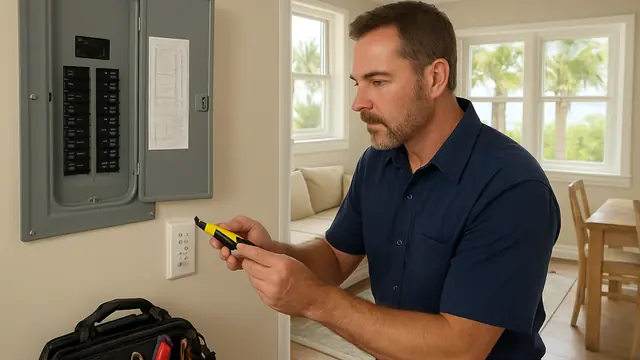
The electrician reviews the symptoms and recent changes to the home. The inspection may cover panel rating, breaker compatibility, conductor sizes, circuit loading, terminal condition, bus bars, grounding, heat damage, moisture, corrosion, and previous modifications.
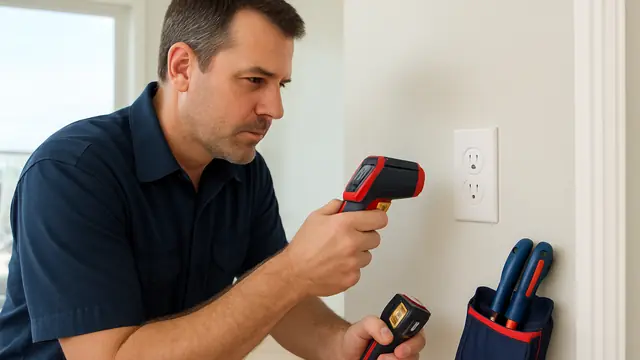
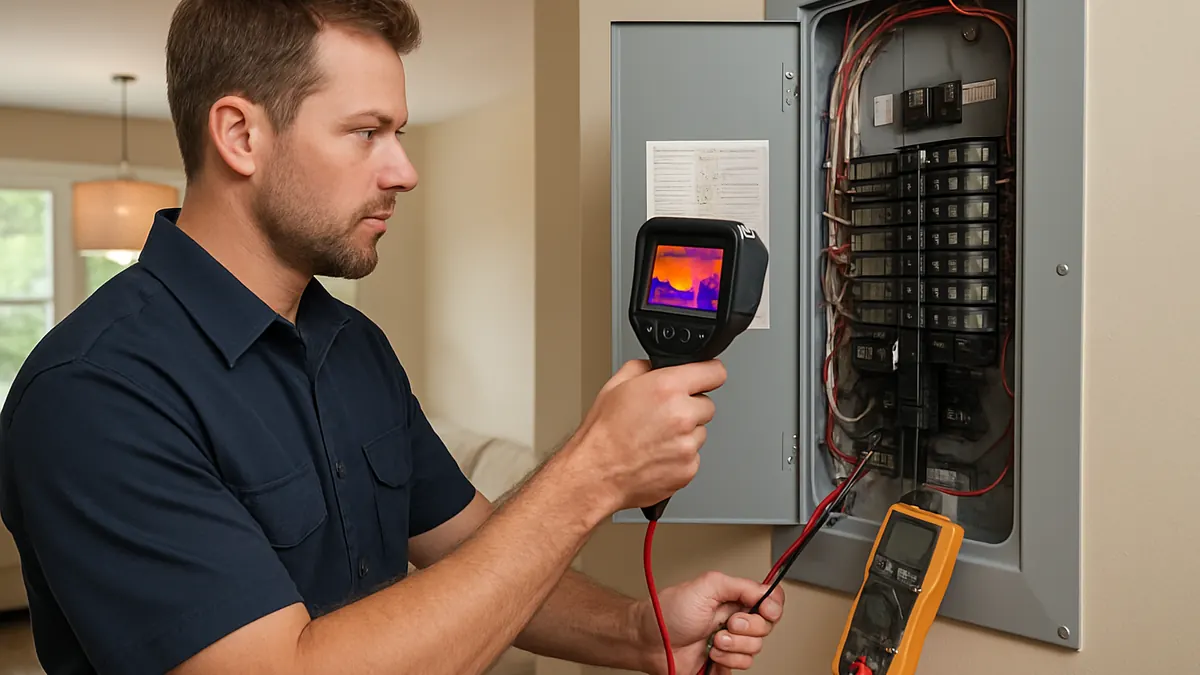
Voltage and current readings can reveal unstable supply, neutral problems, and circuit loading. Thermal imaging may identify abnormal heat. An appliance or branch circuit may also be tested to determine whether the panel is the source or the breaker is responding to a downstream fault.
Repair Options Beginning With the Least Invasive
The smallest safe repair may be replacing one approved breaker, repairing a loose branch-circuit connection, correcting damaged wiring at an appliance, or adding a dedicated circuit for a load that should not share power.
Other work may include replacing heat-damaged conductors, correcting grounding, stopping moisture entry, or installing a properly designed subpanel for additional circuit spaces.
Panel replacement may be appropriate when bus bars are damaged, corrosion is widespread, overheating is extensive, compatible parts are unavailable, or unsafe alterations cannot be corrected. A service upgrade is considered when a load calculation shows inadequate capacity.
What Affects the Cost
Cost depends on the source of the problem, panel type, breaker availability, access, number of affected circuits, conductor damage, service size, grounding corrections, permits, and whether finished surfaces must be opened.
A focused repair differs from correcting extensive heat damage. The estimate should identify the defect, explain the least invasive safe option, and state why larger work is needed if recommended.
Preventing Future Panel Problems
- Keep the panel dry, clear, and labeled. Do not store items against it, and have electrical additions performed by qualified professionals.
- Request a load evaluation before adding high-demand equipment. After a leak, renovation, or appliance installation, watch for trips, odors, sounds, heat, or flickering.
- Surge protection can reduce damage from certain voltage spikes, but it does not correct loose terminals, overloaded circuits, corrosion, or failing breakers.
Homeowner FAQs
Can one loose wire cause problems in several rooms?
Yes. A loose panel, neutral, or service connection can affect multiple circuits.
Is a breaker supposed to feel warm?
Mild warmth can occur. A hot area, odor, discoloration, or hot panel door is not normal.
Can the panel be repaired without replacement?
Often, yes. A compatible breaker, conductor, terminal, or circuit repair may solve the problem when the equipment remains serviceable.
Why does the breaker trip when the air conditioner starts?
Motor startup creates temporary demand. Repeated trips may indicate an equipment, circuit, breaker, connection, or capacity problem.
Does adding a subpanel increase service capacity?
No. A subpanel creates more circuit spaces but does not increase the power supplied to the home.
Do Not Wait for an Intermittent Problem to Become Permanent
Seven signs your electrical panel needs an inspection in Lynn Haven include repeated tripping, widespread voltage changes, burning odors, abnormal sounds, excessive heat, moisture damage, and a crowded or altered panel. Some problems can be corrected with a focused repair, but intermittent symptoms should still be taken seriously. Document what you observe, avoid opening the equipment, and have an electrician identify the cause.
About this guide: This resource provides general homeowner education, not a remote diagnosis. Actual conditions, code requirements, equipment, and safe repair options must be evaluated at the property.