Do not remove an electrical panel cover, touch exposed conductors, bypass protection, or repeatedly reset a fault. Keep clear of smoke, sparks, burning odors, hot equipment, standing water near electricity, and downed lines, then call qualified help.
You are considering a home in Lynn Haven, and the inspection report mentions "electrical concerns-recommend specialist." The notes include a breaker that tripped during testing, an outlet with reversed polarity, and an attic junction box without a cover. You may wonder whether these are minor corrections or signs of a much larger project.
The immediate safe response is to leave the tripped breaker off, avoid the affected outlet, and keep away from exposed wiring. Do not remove the panel cover, reach into the open box, or attempt a temporary repair. A licensed electrician should identify the cause before you decide how the findings affect the purchase. An electrical inspection checklist before buying a Northwest Florida home in Lynn Haven should separate isolated defects from system-wide concerns and place each recommendation in the right order.
Begin With the Inspection Report, but Do Not Stop There
A general home inspection may identify missing covers, damaged receptacles, panel concerns, or safety devices that do not operate. A specialist can add circuit testing, load calculations, and repair recommendations. Give the electrician the report, photographs, disclosures, and available records, plus details about future equipment. Each concern should be confirmed rather than assumed to require replacement.
Evaluate the Main Panel and Service Capacity
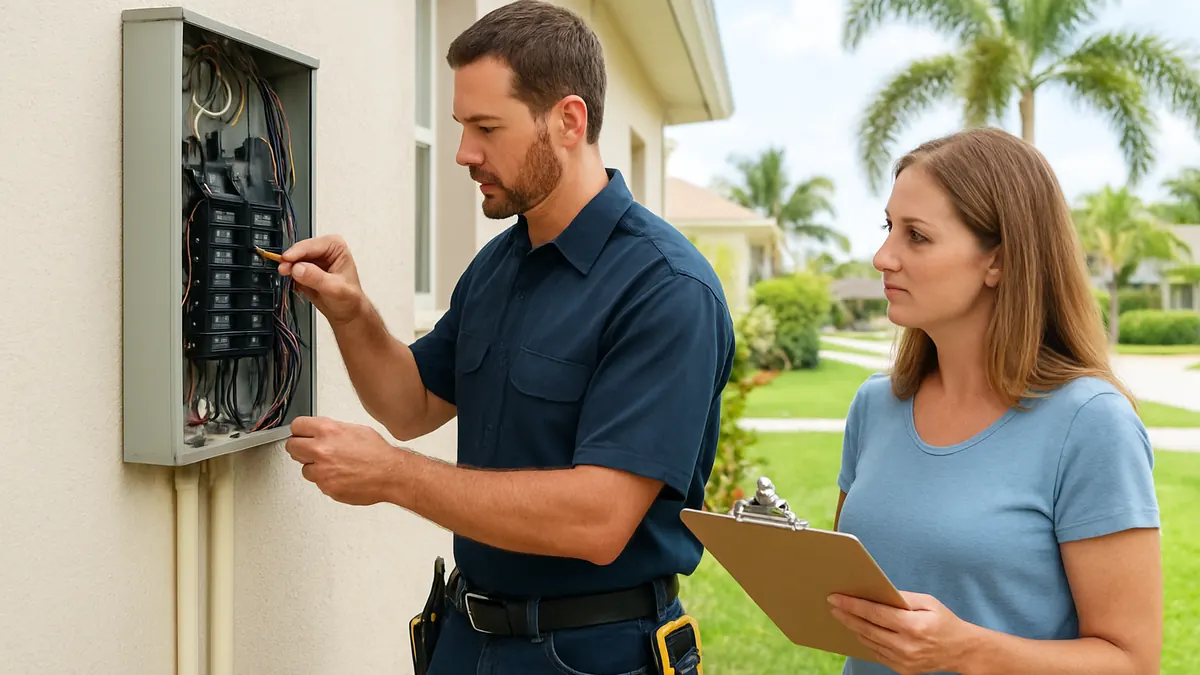
The main panel distributes electricity through branch circuits serving outlets, lights, and equipment. The electrician checks the enclosure, breakers, conductors, terminations, directory, grounding, bonding, subpanels, and signs of heat or moisture.
Breaker ratings must match the protected wiring. Replacing a tripping breaker with a larger one is not a repair. When significant additions are planned, a load calculation is needed because an empty breaker space does not prove adequate service capacity.
Check Grounding and Bonding
Grounding connects the system to earth, while bonding connects metal components so fault current can return through an effective path and operate protection. The electrician reviews accessible electrodes, conductors, clamps, and subpanel arrangements. These defects may not prevent lights from working, so testing matters.
Inspect Receptacles for More Than Power
A receptacle that powers a lamp may still have reversed polarity, an open ground, loose contact, or voltage problems. Reversed polarity means hot and neutral are connected incorrectly; an open ground means the safety path is incomplete. Loose receptacles can create resistance and heat. Discoloration, melted plastic, buzzing, or warmth increases urgency.
Verify GFCI and AFCI Operation
A GFCI shuts off power when it detects current leaking through an unintended path. An AFCI responds to certain dangerous arcing patterns. The electrician should test these protections and diagnose devices that will not trip or reset. A failed reset may indicate lost power, incorrect wiring, device failure, or a downstream fault.
Review Attics, Garages, and Utility Areas Where Accessible
Look for open junction boxes, unsupported cable, exposed splices, missing covers, extension cords serving permanent equipment, and wires vulnerable to physical damage.
A covered junction box protects connections. A missing cover may be a small correction, but damaged, overcrowded, improper, or wet wiring requires more work. Do not enter unsafe attic areas or move insulation to search for wiring.
Safe Checks a Buyer Can Perform
Without removing any electrical covers, you can:
- Operate accessible lights, fans, and switches.
- Note flickering, buzzing, delayed operation, or unusual heat.
- Look for cracked plates, scorch marks, and loose outlets.
- Review the panel labels from the outside.
- Ask whether breakers or GFCIs trip repeatedly.
- Test GFCI buttons only with permission.
- Ask for permits and invoices related to additions or electrical upgrades.
- List future equipment you expect to install.
What You Should Not Attempt Before Buying
Do not open the panel or meter equipment, pull devices from boxes, or touch bare conductors. Do not tighten panel connections or attempt to cover exposed wiring while the system may be energized.
Never bypass a protective device. Do not tape a breaker in the on position, replace it with a higher rating, or repeatedly reset it after another trip.
Signs That Make the Problem Urgent
The following conditions require prompt professional attention:
- Smoke, sparks, or a burning smell
- Crackling or sizzling inside a wall or device
- Warm, melted, or discolored electrical equipment
- Repeated breaker or GFCI trips
- Shocks or tingling from fixtures or appliances
- Water inside a panel, box, or disconnect
- Exposed energized conductors
- Damaged service equipment
Emergency conditions may require qualified personnel or the utility to disconnect power.
How a Licensed Electrician Diagnoses the Findings
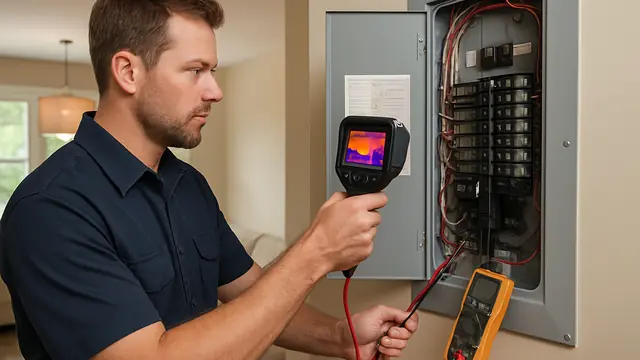
Diagnosis begins with the locations and circumstances of each symptom. The electrician may test voltage, polarity, grounding continuity, GFCI function, circuit loading, and temperature differences at connections.
The panel inspection compares breaker ratings, conductor sizes, and equipment compatibility. Circuit tracing may be used when labels are inaccurate or when a dead device cannot be linked to an obvious breaker.
The electrician should explain whether a defect is isolated, repeated, or related to the service equipment because that changes the repair scope.
Repair Options Starting With the Smallest Reasonable Correction
A missing box cover, damaged faceplate, loose receptacle, failed GFCI, inaccurate label, or reversed-polarity connection may have a direct repair.
If a connection or cable section is damaged, the electrician may repair an accessible approved splice, replace the affected section, or install a new circuit. Overloaded circuits may be corrected by moving loads or adding a dedicated circuit.
Panel repairs can include a compatible breaker or corrected termination. Panel replacement is considered when equipment is damaged, unsuitable, lacks approved replacement parts, or cannot reasonably support the home's needs.
Service upgrades or broad rewiring should be based on documented capacity limits, widespread defects, or equipment condition-not age alone.
What Affects the Cost of Electrical Corrections
Cost depends on diagnostic time, number of affected circuits, wiring accessibility, panel type, parts availability, permit needs, utility coordination, and whether walls or ceilings require repair.
Ask for the estimate to separate immediate safety work, necessary reliability corrections, and optional upgrades.
Prevention and Maintenance After Closing
- Keep electrical panels accessible and accurately labeled. Test GFCI devices according to their manufacturer instructions and replace cracked covers or loose devices promptly.
- Avoid overloading power strips and using extension cords permanently. Before adding large electrical equipment, have the service and circuit requirements evaluated.
- Pay attention to new flickering, buzzing, heat, odors, or tripping. Early evaluation often limits damage and prevents a small defect from becoming a larger repair.
Make the Electrical Inspection Part of Your Buying Strategy
An electrical inspection checklist before buying a Northwest Florida home in Lynn Haven should give you a practical path forward. It should confirm the reported symptoms, identify urgent hazards, explain repair options, and show whether future electrical plans are realistic.
Do not treat every defect as a reason to abandon the purchase, but do not dismiss electrical warnings because the lights currently work. Obtain a licensed diagnosis, begin with the least invasive safe repair, and use the findings to make an informed decision before closing.
About this guide: This resource provides general homeowner education, not a remote diagnosis. Actual conditions, code requirements, equipment, and safe repair options must be evaluated at the property.