Do not remove an electrical panel cover, touch exposed conductors, bypass protection, or repeatedly reset a fault. Keep clear of smoke, sparks, burning odors, hot equipment, standing water near electricity, and downed lines, then call qualified help.
You are planning to replace one gasoline vehicle with an EV, but your home already has an electric range, dryer, water heater, and central air conditioning. The panel still works normally, yet you are concerned that charging overnight while other appliances run could overload the service. That concern is reasonable, but it does not mean a full electrical upgrade is inevitable.
The safe step is to avoid purchasing a charger based only on advertised speed. Gather the vehicle's charging specifications and arrange a panel evaluation before installation. Do not use an extension cord, increase a breaker size, or connect the charger to an appliance circuit as a temporary solution.
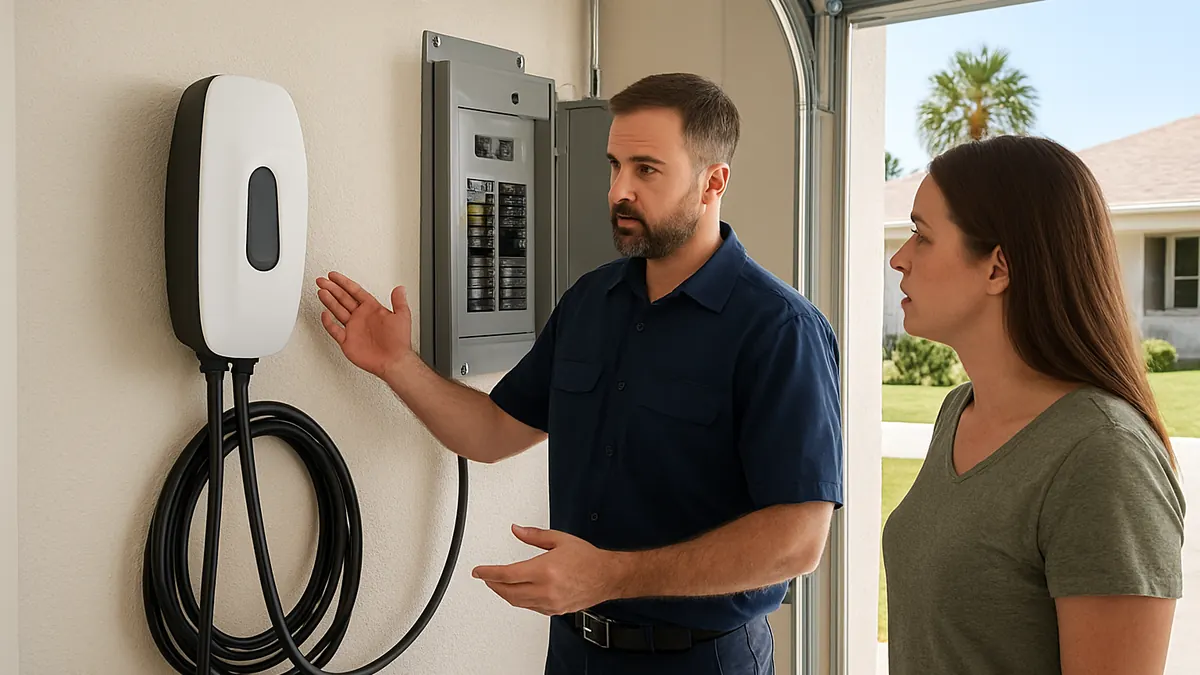
Can Your Electric Panel Support a Level 2 EV Charger in Lynn Haven?
A Level 2 charger generally uses a dedicated 240-volt circuit and charges faster than a standard 120-volt cord. The circuit must be sized for sustained amperage.
Why an Existing Panel May Need Changes
The service is close to its calculated limit
A home with several electric appliances may have limited remaining capacity. The fact that breakers have not tripped does not replace a load calculation. Household loads cycle on and off, while an EV charger may remain active for hours.
The panel lacks two usable spaces
Most EV circuits use a two-pole breaker. A panel may look full even when an approved solution exists, but unsupported tandem breakers or mismatched breaker brands are not acceptable shortcuts.
The service equipment has deteriorated
Loose lugs, heat-damaged breakers, corrosion, worn bus connections, damaged conductors, or earlier modifications may require repair. Adding a continuous charging load to compromised equipment can worsen overheating.
The charger and vehicle are mismatched
Some vehicles accept less power than the charger can provide, so a larger unit may offer no speed advantage.
Future electrical plans have not been considered
A homeowner may also be planning a heat-pump water heater, electric range, pool equipment, workshop, or second EV. The electrician should understand these likely future loads so the design does not immediately become inadequate.
Safe Checks You Can Complete Before the Appointment
Find the main breaker rating without removing the panel cover. Photograph the manufacturer label, visible breakers, and circuit directory.
List the home's large electric equipment, including heating and cooling, water heating, cooking, laundry, pumps, pool equipment, and workshop machinery. Note whether any equipment was recently added.
Review the vehicle and charger specifications. Record the maximum charging rate, adjustable amperage options, plug type, and whether the charger can be hardwired.
What You Should Not Do
Do not open the panel or attempt to perform your own load calculation from breaker labels alone. Adding every breaker rating together is not a valid method because circuits are not all loaded at their maximum simultaneously.
- Do not replace a breaker with a larger size. Do not install a breaker from another manufacturer merely because it appears to fit.
- Never share the charger with an air conditioner, dryer, range, or water heater circuit unless an approved system is specifically designed and installed for that purpose.
- Do not rely on a long extension cord or common travel adapter. Every additional connection can create heat, looseness, and voltage drop.
Signs the Electrical System Needs Urgent Service
Stop charging and schedule prompt service if the charger circuit trips repeatedly, the main breaker trips, or lights flicker significantly when charging starts.
Other urgent signs include:
- A burning odor near the panel or charger
- Crackling, humming, or buzzing sounds
- Melted plastic or darkened insulation
- A plug or receptacle that is hot to the touch
- A charger that repeatedly reports wiring or ground faults
- Visible moisture, corrosion, or rust
- A breaker that feels loose or will not remain reset
Do not continue resetting a tripping breaker. If there is smoke, flame, or active arcing, leave the home and call emergency services.
How a Licensed Electrician Evaluates Capacity
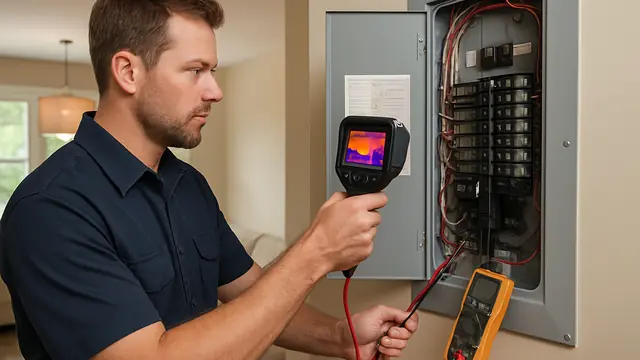
The electrician verifies the electrical service rating and panel specifications. The inspection includes breaker compatibility, available spaces, conductor condition, panel bus, grounding, bonding, and signs of heat or water damage.
The next step is a residential load calculation. This process evaluates the home's expected electrical demand using established rules. It includes general household load, major appliances, heating and cooling, and the proposed charger.
The electrician compares the calculated result with the service capacity. The charger may be evaluated at more than one output level to determine whether a smaller setting can avoid unnecessary upgrades.
The wiring path is also inspected because distance, access, exposure, and physical protection affect conductor size and installation method.
If the homeowner already has charging problems, testing may include voltage readings, load measurements, connection inspections, and evaluation of the charger itself.
Repair and Installation Choices
The least invasive solution is often to select a lower-amperage Level 2 circuit. A charger operating at 24 or 32 amps can provide useful overnight charging while placing less demand on the service.
Approved energy-management equipment is another option. It monitors the home's electrical use and reduces EV charging when other major loads operate. This can help some homes use the existing service safely.
When the panel has enough service capacity but no breaker room, an electrician may add a subpanel or use another manufacturer-approved configuration. This creates space but does not increase the main service rating.
Targeted repairs may correct a damaged breaker, loose termination, unsuitable receptacle, conductor issue, or charger setting. A hardwired installation may be chosen when required or when it reduces concerns associated with a plug-and-receptacle connection.
Panel replacement may be recommended when the existing cabinet is damaged, obsolete, improperly modified, or unable to accept the correct breaker safely. A service upgrade is the most extensive option and is used when the calculated load cannot be supported by the existing service or an approved management solution.
What Affects the Cost?
Important cost factors include charger amperage, circuit distance, conductor size, wiring accessibility, garage or exterior routing, trenching, wall repair, and the type of charger connection.
The condition of the panel can change the project significantly. A simple new circuit is different from an installation requiring a subpanel, load manager, panel replacement, service upgrade, or correction of older electrical work.
Prevention and Maintenance Guidance
Use listed charging equipment and keep software or firmware updated when the manufacturer recommends it. Store the connector securely and protect the cable from tires, doors, sharp bends, and water.
Inspect visible components periodically. Look for discoloration, cracks, looseness, damaged insulation, or corrosion. A plug-in charger should remain firmly seated in the receptacle.
Schedule service when breaker trips, fault messages, or charging interruptions begin. Problems are easier to correct before heat damage develops.
Get the Panel Answer Before Selecting Maximum Charging Speed
Can your electric panel support a Level 2 EV charger in Lynn Haven? The answer may involve a standard dedicated circuit, a lower charging setting, an approved load-management system, specific panel repairs, or a full service upgrade. The most appropriate option is the one that safely supports the vehicle and the home without adding work that does not provide a practical benefit.
About this guide: This resource provides general homeowner education, not a remote diagnosis. Actual conditions, code requirements, equipment, and safe repair options must be evaluated at the property.