Do not remove an electrical panel cover, touch exposed conductors, bypass protection, or repeatedly reset a fault. Keep clear of smoke, sparks, burning odors, hot equipment, standing water near electricity, and downed lines, then call qualified help.
You are considering a home in Laguna Beach, and the showing is going well until you step outside. One receptacle has a broken weather cover, the air-conditioning disconnect is rust-stained, and an interior bedroom outlet feels loose when a plug is inserted. These symptoms may indicate ordinary wear, moisture intrusion, corrosion, poor device installation, or a deeper wiring problem. The safe response is not to open the equipment or keep testing the loose outlet. Photograph the conditions with permission, stop using any device that is hot or damaged, and arrange a licensed electrical inspection before buying.
An electrical inspection checklist before buying a Northwest Florida home in Laguna Beach must look beyond working lights because hidden electrical risks may still be present. The checklist should address service condition, circuit protection, outdoor equipment, prior alterations, and repair priorities.
Begin the Electrical Inspection Checklist Before Buying Outside
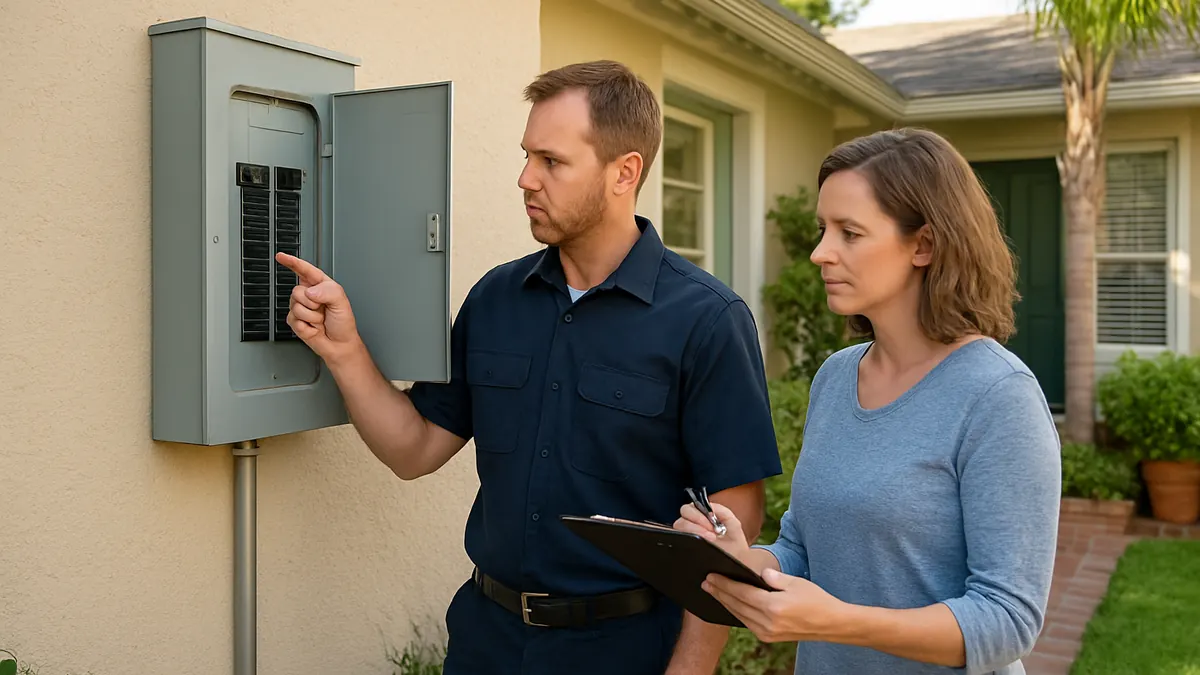
From a safe distance, examine the service attachment, meter area, conduits, disconnects, outdoor receptacles, lighting, and equipment connections.
Do not touch the meter, service mast, overhead conductors, or damaged enclosures. Note cracked fittings, missing covers, loose conduit, open holes, rust, or staining. Damaged enclosures can admit water and debris.
Where wind-driven rain or salty air reaches equipment, corrosion may develop. Surface discoloration does not always require replacement, but corrosion around connections can affect safety.
Examine the Main Panel Without Assuming Newer Means Safe
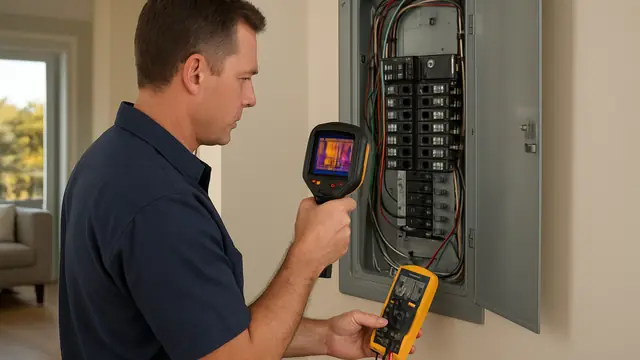
A clean panel cover does not prove the installation is correct. Only a licensed electrician should remove it and inspect internal components.
The electrician looks for heat damage, loose terminations, incompatible breakers, corrosion, open knockouts, and incorrect neutral or grounding connections. Service rating and panel space are also reviewed.
The panel directory should match actual circuits. Circuit tracing improves inaccurate or missing labels.
Confirm Grounding and Bonding
- Grounding connects the system to earth. Bonding connects metal parts so fault current has an effective path that can trip a breaker.
- The electrician inspects accessible electrodes, conductors, clamps, and service bonding. Defects may leave metal equipment energized during a fault.
- A plug-in tester may reveal an open ground, but it cannot verify the entire safety system.
Evaluate Receptacles, Switches, and Fixtures Room by Room
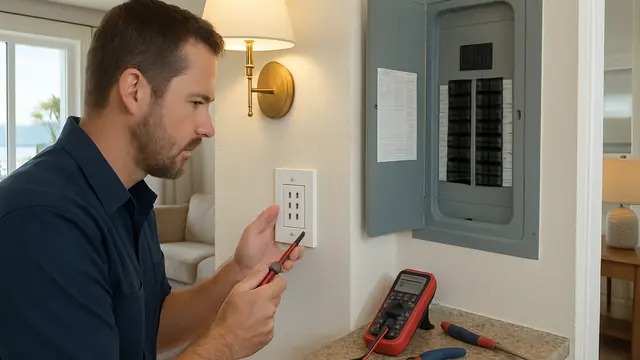
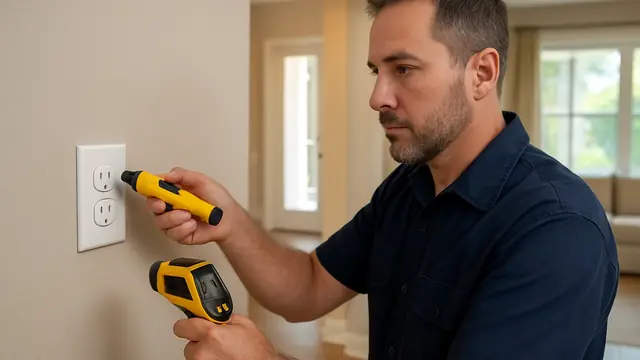
- Move through the home systematically. Note loose, discolored, cracked, or worn outlets, plus buzzing, flickering, delayed response, or warmth.
- A loose outlet may only need securing, but it can also strain connections. Heat or discoloration may indicate a poor connection or excessive load. Stop using the device.
- Fans and fixtures should be securely mounted. Document exposed parts, improper mounting, or improvised wiring.
Test Required Safety Devices
- GFCIs reduce shock risk by interrupting leaking current. AFCIs detect certain dangerous arcing conditions.
- The inspection should identify and test accessible protection. One GFCI may protect additional downstream outlets.
- Smoke and carbon-monoxide alarms should also be reviewed for condition, power source, and interconnection.
Identify Warning Signs of Unplanned Electrical Work
- Remodeling clues include vulnerable surface cable, unusual blank plates, mismatched devices, and extension cords serving permanent equipment.
- These clues do not prove unsafe work, but they direct closer inspection of boxes, cable protection, connections, breaker sizing, and dedicated circuits.
- Ask for available permits, invoices, and equipment records.
Safe Checks a Homebuyer Can Make
A buyer may perform basic observations without dismantling anything:
- Turn lights and fans on and off.
- Note flickering, buzzing, dead outlets, or repeated trips.
- Inspect visible covers for cracks or heat marks.
- Use GFCI test buttons only with permission.
- Review panel labels without opening the panel.
- Ask what major equipment is electric.
- Ask whether a generator, EV charger, hot tub, or addition was installed.
- Record where extension cords appear to be used permanently.
If a device sparks, smells burned, feels hot, or shocks someone, stop the check immediately and notify the seller or representative.
What You Should Not Attempt
- Do not remove panel covers, pull devices from boxes, touch exposed wires, or handle wet equipment.
- Never increase breaker size to prevent tripping; an oversized breaker can allow wiring to overheat.
- Do not repeatedly reset a failed GFCI or breaker. Repeated operation can worsen damage and does not correct the fault.
Conditions That Require Prompt Attention
Active sparking, smoke, burning odor, melted insulation, shocks, repeated trips, hot panel surfaces, water intrusion, exposed conductors, and damaged service equipment are urgent.
Keep people away from the area. Do not rely on a wall switch to make damaged wiring safe. Qualified personnel may need to disconnect power before inspection or repair.
How the Electrician Finds the Cause
- The electrician reviews symptoms, renovations, outages, and planned equipment, then combines visual inspection with testing.
- Tests may cover voltage, polarity, grounding, GFCI function, load, and unusual heat. Breaker ratings are compared with wire sizes.
- Intermittent symptoms require circuit-specific testing rather than guesswork.
Repair Options From Small Corrections to Larger Projects
Least-invasive repairs may include a weather cover, secured outlet, box cover, corrected connection, enclosure repair, or replacement switch or GFCI.
Damaged circuits may require an accessible cable repair, dedicated circuit, or safer route. Severely corroded outdoor equipment may need replacement.
Panel work may include a compatible breaker, labeling, or termination correction. Replacement is reasonable when damage, incompatibility, or inadequate capacity prevents safe repair.
Service upgrades or widespread rewiring should be supported by findings and load calculations.
Factors That Affect Cost
Cost depends on defect count, equipment condition, access, corrosion, circuit length, panel capacity, troubleshooting, permits, utility coordination, and finish repair.
Ask for findings to be divided into immediate hazards, near-term reliability repairs, and optional improvements. This makes the information easier to use in negotiations and budgeting.
Prevention After the Purchase
- Keep exterior covers closed, replace damaged weather protection, avoid spraying electrical equipment, and maintain access to panels.
- Test safety devices as directed, keep labels current, avoid permanent extension cords, and evaluate loads before adding major equipment.
- Schedule service for new rust, flickering, heat, buzzing, odors, trips, or loose devices.
Buy With a Clear Understanding of the Electrical System
An electrical inspection checklist before buying a Northwest Florida home in Laguna Beach should cover more than whether each lamp turns on. It should examine service condition, panel safety, grounding, weather exposure, protective devices, prior alterations, circuit performance, and future capacity.
Document concerns, avoid opening energized equipment, and ask for repair choices beginning with the least invasive safe option. Clear findings can help you protect your purchase budget and plan the home's electrical needs responsibly.
About this guide: This resource provides general homeowner education, not a remote diagnosis. Actual conditions, code requirements, equipment, and safe repair options must be evaluated at the property.