Do not remove an electrical panel cover, touch exposed conductors, bypass protection, or repeatedly reset a fault. Keep clear of smoke, sparks, burning odors, hot equipment, standing water near electricity, and downed lines, then call qualified help.
The breaker may trip while several appliances are running, when a bedroom device is plugged in, or after outdoor equipment has operated for a few minutes. You restore power, but the same circuit opens again.
A tripping breaker may be responding to excessive demand, failed equipment, damaged wiring, moisture, or arcing. Turn off or unplug devices on the circuit, reset the breaker once, and observe it. If it trips again, leave it off and contact a licensed electrician.
Why Does My Circuit Breaker Keep Tripping in Panama City Beach?
Likely causes include overload, a short circuit, ground fault, defective appliance, loose connection, arc fault, or damaged breaker.
A delayed trip can suggest overload. An instant trip may indicate a short. A trip connected with one appliance, exterior outlet, or piece of equipment narrows the investigation.
Heavy Electrical Demand Can Overload a Circuit
Every circuit has limited capacity, and its breaker protects the wiring from excessive current.
Portable air conditioners, heaters, hair dryers, countertop appliances, vacuums, dehumidifiers, and entertainment devices can create a large combined load. In a busy property, several people may start equipment at once. The breaker may trip only after heat builds for a few minutes.
Reducing demand may stop the immediate trip, but recurring overloads mean the circuit arrangement should be reviewed.
Appliance Problems May Appear Only During Certain Cycles
A refrigerator, microwave, dishwasher, washer, disposal, vacuum, or portable appliance can develop an internal fault. Motors may draw too much current at startup, heating elements can fail, and damaged insulation can leak electricity toward grounded metal.
The trip may occur only during one cycle, such as when a compressor or heating element starts. Stop using equipment that repeatedly causes the breaker to open.
Short Circuits Can Trip the Breaker Immediately
A short circuit occurs when conductors that should remain separated make unintended contact. Current rises rapidly, so the breaker usually opens quickly.
The source may be a damaged cord, appliance, outlet, switch, fixture, junction box, or concealed cable. An immediate trip with portable devices unplugged may indicate a fixed-wiring or hardwired-equipment fault.
Ground Faults Around Moisture-Prone Areas
A ground fault sends electricity toward grounded metal, moisture, or another unintended route. GFCI devices monitor for this imbalance and interrupt power quickly.
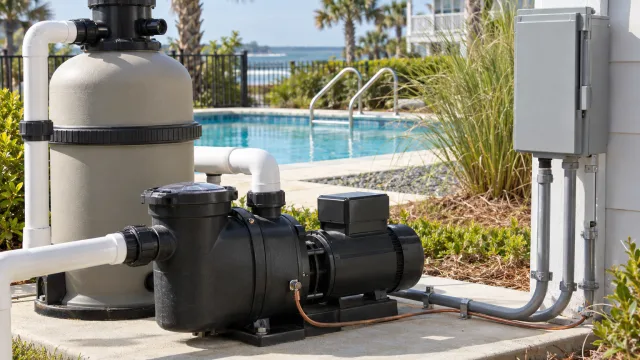
Exterior outlets, kitchens, bathrooms, laundry areas, cords, and weather-exposed equipment can develop ground faults. Drying alone may not correct corrosion or insulation damage.
Loose Connections and Arc-Fault Breakers
A loose connection can create resistance, heat, and arcing-electricity jumping across a small gap. A worn outlet, loose plug, damaged cord, poor splice, failing switch, or pinched cable may be responsible.
An AFCI breaker may trip only when furniture moves a cord, equipment vibrates, or a connection warms, making the problem appear unpredictable.
Safe Checks You Can Perform
Identify everything that lost power. In a vacation property, ask occupants what they were using immediately before the trip.
Turn off switches and unplug portable equipment. With dry hands and a dry panel, move the breaker fully to OFF and then ON. If it holds, reconnect devices individually and wait for motors, compressors, or heating elements to start.
Inspect accessible cords, plugs, and outlets for cuts, crushed insulation, looseness, discoloration, melting, heat, or odor. Check nearby GFCI outlets because one may protect several receptacles.
What You Should Not Try
Do not repeatedly reset the breaker to keep a property operating. Each reset can energize the fault again.
Never substitute a breaker with a higher amperage rating. The breaker's size must match the circuit wiring and design. Increasing the rating without redesigning the circuit can allow dangerous overheating.
Do not remove the panel cover, tighten internal terminals, replace breakers, or open outlets unless you are qualified for electrical work.
Do not bypass AFCI or GFCI protection. Do not rely on extension cords, multi-plug adapters, or power strips as permanent solutions for inadequate circuit capacity.
Urgent Warning Signs
Turn the breaker off and arrange prompt service if you notice:
- Burning, melting, or fish-like odors
- Smoke, sparks, or visible arcing
- Melted plastic or scorch marks
- Buzzing, sizzling, or crackling
- A hot panel, breaker, outlet, switch, cord, or appliance
- A shock or tingling sensation
- Water inside or around electrical equipment
- Immediate tripping with all accessible devices disconnected
If an electrical fire is active, evacuate and call emergency services. Never use water on energized equipment.
How a Licensed Electrician Diagnoses the Circuit
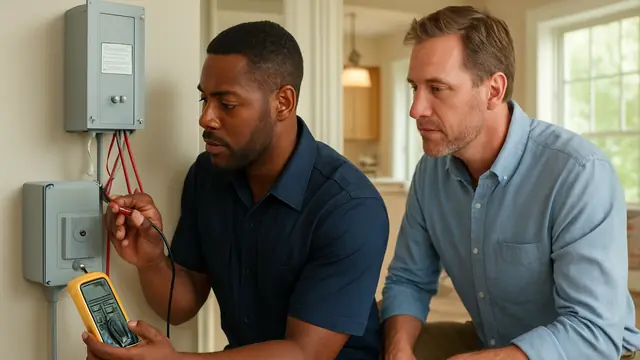
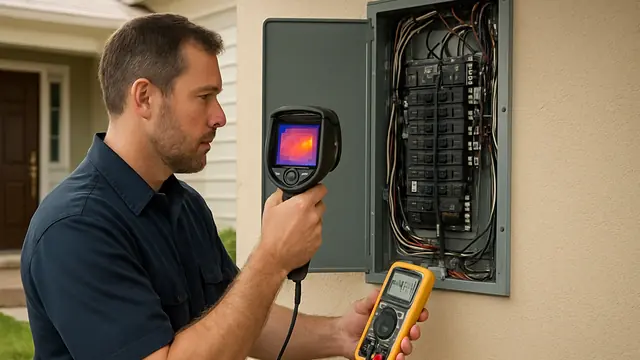
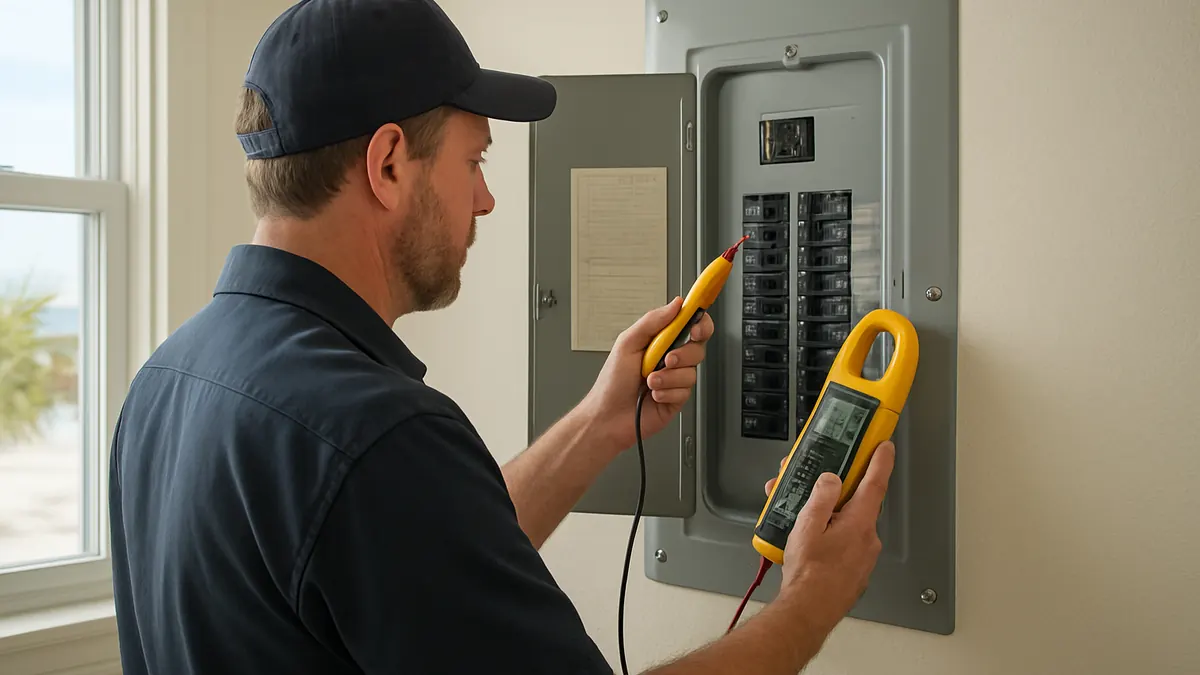
The electrician reviews the trip pattern, connected loads, and equipment operating at the time. Breaker type, rating, panel compatibility, and wire size are verified. Current measurements can confirm overload or abnormal equipment demand.
The circuit may be divided into sections while outlets, switches, fixtures, appliances, and junctions are tested. Loose terminals, heat damage, moisture, improper splices, failed devices, and damaged insulation are checked. AFCI and GFCI protection is also evaluated.
Repair Options From Least Invasive to More Extensive
The least invasive repair may be removing a defective appliance, replacing a cord, correcting a loose connection, or replacing one failed outlet, switch, GFCI, fixture, or breaker.
A confirmed overload may be corrected by redistributing loads or adding a dedicated circuit. Accessible wiring damage can sometimes be repaired locally; concealed or widespread damage may require more access or rewiring.
Panel replacement is considered only when condition, compatibility, capacity, or documented damage justifies it.
Factors Affecting Repair Cost
Diagnostic time often has the greatest effect on cost. A trip tied to one appliance is easier to trace than an intermittent fault serving several rooms.
Breaker type, device count, panel condition, wiring accessibility, permits, materials, and any new circuit route also affect the total. Rental access and the ability to reproduce the problem may influence diagnostic time.
Prevention and Maintenance Guidance
Avoid placing several high-wattage appliances on one circuit. For a rental, provide clear instructions when certain equipment should not be operated together while an overload is being evaluated.
Replace damaged cords, loose receptacles, and broken exterior covers promptly. Keep electrical equipment protected from water, and have new appliances or outdoor equipment reviewed for proper circuit capacity.
Routine inspection can identify overloaded circuits, loose connections, heat damage, and unsuitable temporary wiring.
Protect the Property Before Restoring Power
When you ask, "Why does my circuit breaker keep tripping in Panama City Beach?" treat the repeated trip as a safety warning rather than a nuisance. Turn off connected loads, reset the breaker once, and leave it off if it trips again. A licensed electrician can determine whether the cause is overload, a defective appliance, moisture, loose wiring, arcing, or a failed breaker and recommend the least invasive safe repair.
About this guide: This resource provides general homeowner education, not a remote diagnosis. Actual conditions, code requirements, equipment, and safe repair options must be evaluated at the property.