Do not remove an electrical panel cover, touch exposed conductors, bypass protection, or repeatedly reset a fault. Keep clear of smoke, sparks, burning odors, hot equipment, standing water near electricity, and downed lines, then call qualified help.
You plug in a vacuum, start the clothes dryer, or turn on a countertop appliance and hear a click from the electrical panel. The room goes dark. You reset the breaker, but later it trips again-sometimes under the same conditions and sometimes for no obvious reason.
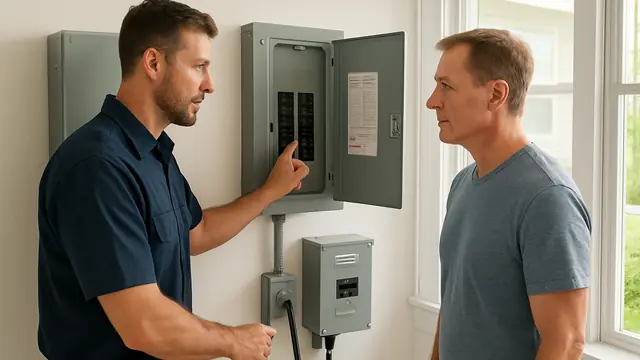
A repeatedly tripping breaker is not something to solve by simply switching it back on. The breaker is interrupting power because it senses current or fault conditions that may overheat wiring or damage equipment. The safest first step is to unplug or switch off devices on the affected circuit. Reset the breaker once. If it trips again, leave it off until a licensed electrician can determine why.
Why Does My Circuit Breaker Keep Tripping in Callaway?
The usual explanations are overload, a failing appliance, a short circuit, a ground fault, or a damaged breaker or connection.
The timing of the trip often provides the first clue. A trip after several devices run together suggests an overload. An immediate trip may indicate a short circuit. A trip linked to one appliance points toward that equipment or its outlet.
Start With the Pattern
- Before changing anything, notice what was happening when the breaker opened.
- Did it happen when a large appliance started, after a portable heater was plugged in, or while an exterior outlet was being used? Note any flicker, buzz, odor, or nearby moisture.
- Write down what stopped working and what happened immediately before the trip. Those details help diagnose intermittent faults.
The Most Common Causes
Circuit Overload
Every branch circuit has a limit based on its wire size and breaker rating. The breaker trips when demand exceeds that safe level.
Overloads are common when a circuit serves several outlets and a high-wattage device is added. Portable heaters, cooking appliances, hair dryers, and shop tools can use much of a circuit's capacity.
A simple overload usually stops after the load is reduced. However, repeated overloads mean the circuit arrangement no longer supports how the space is being used.
Short Circuit
A short circuit is an unintended low-resistance connection between energized conductors. Because current rises very quickly, the breaker may trip instantly.
Possible sources include damaged cords, loose wires, failed switches, burned outlets, crushed cable, or internal appliance defects. Many shorts remain hidden inside boxes or equipment.
Ground Fault
A ground fault happens when current leaves the normal circuit path and reaches grounded metal, moisture, or another unintended path. GFCI protection is designed to respond quickly because even a small amount of current flowing through a person can be dangerous.
It may appear around exterior outlets, laundry equipment, damp locations, or appliances with damaged motors, cords, or heating elements.
Arc-Fault Detection
An AFCI breaker monitors for arcing-electricity jumping across a loose or damaged connection. Arcing can create concentrated heat.
Possible causes include a loose plug, damaged cord, worn switch, poor splice, failing appliance, or damaged cable.
Breaker or Panel Trouble
A breaker or its panel connection can weaken from heat or wear. Buzzing, discoloration, looseness, or trips under light load require inspection.
Safe Checks a Homeowner Can Make
- First, identify the circuit. Note which rooms, lights, and outlets lost power. Turn off wall switches and unplug portable appliances from those locations.
- With dry hands and a dry panel, move the breaker fully to OFF and then ON. Do not touch a wet, damaged, hot, buzzing, or odorous panel.
- If it holds, reconnect devices one at a time and allow motor-driven or heating appliances to begin their normal cycles.
- Check cords, plugs, outlets, and switches for damage, heat, looseness, or discoloration. Stop using anything suspicious.
- You may also press RESET on a tripped GFCI receptacle after unplugging connected devices. Do not keep resetting a GFCI or breaker that will not remain on.
What Not to Do
- Never hold a breaker on, tape it in place, or install a larger breaker. Oversizing can allow wiring to overheat.
- Do not remove devices or the panel cover. Circuits may be mislabeled or unexpectedly energized.
- Power strips add outlets, not circuit capacity. Do not use extension cords as permanent wiring.
Urgent Warning Signs
Turn the circuit off and obtain prompt electrical service when you notice any of the following:
- Smoke, sparks, or visible arcing
- A burning or fish-like odor
- Melted plastic or scorch marks
- A breaker, outlet, switch, or cord that is hot
- Crackling, sizzling, or persistent buzzing
- Shocks or tingling from appliances or plumbing fixtures
- A breaker that trips immediately with all loads removed
- Electrical equipment exposed to water
If there is an active fire, leave and call emergency services. Never use water on energized equipment.
How an Electrician Finds the Fault
Diagnosis begins with the trip pattern, panel labeling, breaker rating, wire size, and connected equipment.
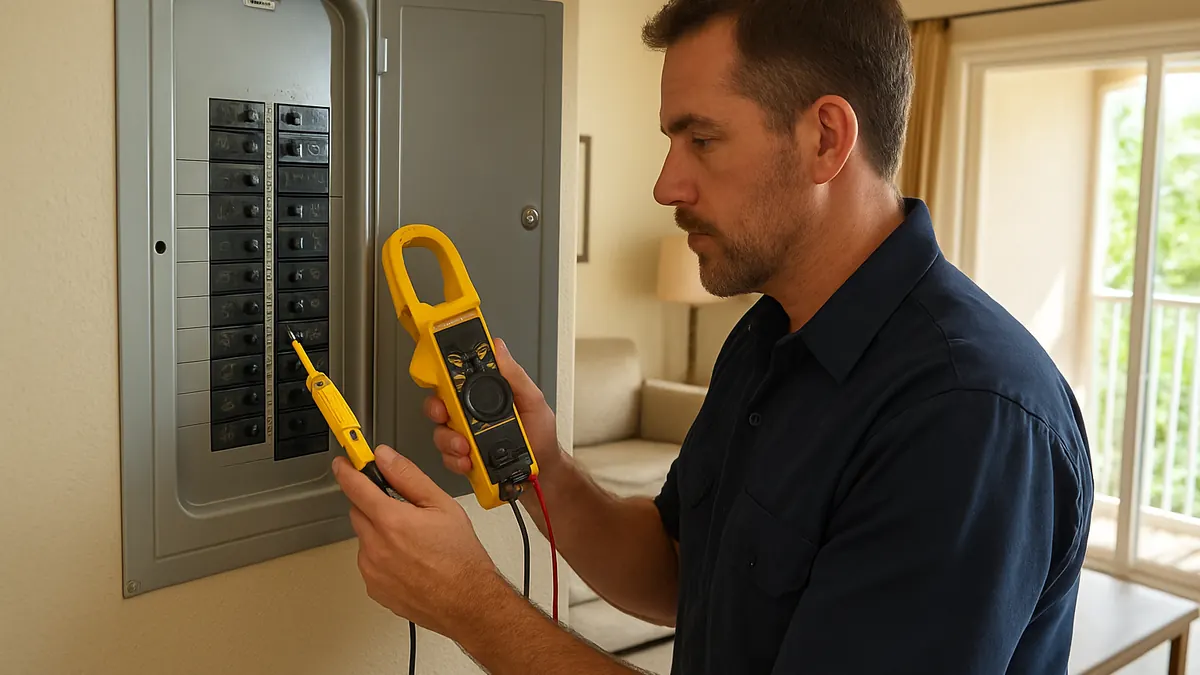
A clamp meter can show whether operating loads are actually overloading the circuit.
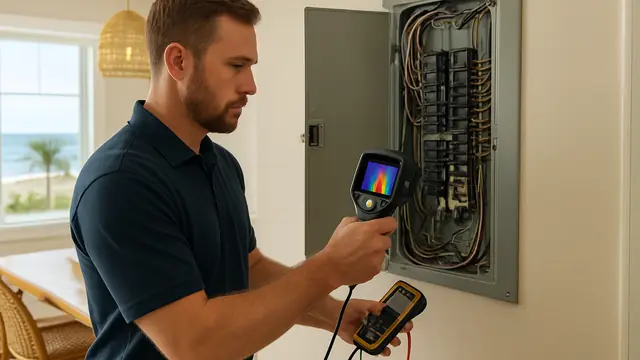
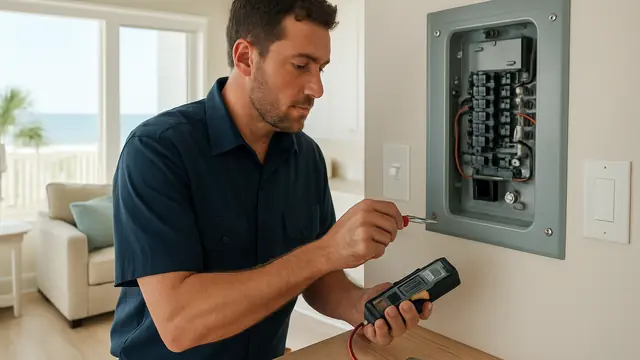
The circuit may be divided into sections while outlets, switches, fixtures, junctions, and appliances are tested. Voltage, continuity, and insulation tests help locate hidden faults.
The electrician also verifies breaker compatibility and AFCI or GFCI operation.
Repair Choices From Simple to More Involved
- The repair should match the diagnosis.
- A damaged cord or appliance may be removed. A loose terminal can be corrected, and a failed outlet, switch, GFCI, or breaker can often be replaced locally.
- If too many loads share the circuit, equipment may be redistributed or a dedicated circuit added for substantial demand.
Accessible cable damage may allow a localized repair; concealed damage may require limited wall access. Panel replacement is considered only when panel condition or system needs justify it.
What Influences Repair Cost
Diagnostic time is a major factor. A repeatable appliance-related trip is easier to locate than an intermittent fault.
Accessibility, device count, breaker type, panel condition, permits, wall access, and new wiring also affect cost.
How to Reduce Future Trips
Learn which high-demand appliances share circuits. Avoid operating several heating devices at once on the same branch circuit. Replace damaged cords and stop using outlets that do not hold plugs firmly.
Keep outdoor covers closed, correct leaks before moisture reaches electrical boxes, and supply added equipment with properly designed circuits.
Inspection can identify loose connections, heat damage, overloaded circuits, and missing protection.
Do Not Ignore the Warning
When you ask, "Why does my circuit breaker keep tripping in Callaway?" treat the trip as a safety message. Reduce the load and reset the breaker once. If it opens again, leave the circuit off rather than continuing to energize a possible fault. A licensed electrician can isolate the cause and recommend the smallest reasonable repair that restores dependable protection.
About this guide: This resource provides general homeowner education, not a remote diagnosis. Actual conditions, code requirements, equipment, and safe repair options must be evaluated at the property.