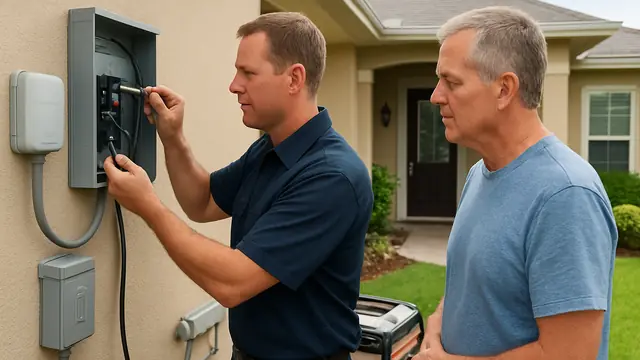
Do not remove an electrical panel cover, touch exposed conductors, bypass protection, or repeatedly reset a fault. Keep clear of smoke, sparks, burning odors, hot equipment, standing water near electricity, and downed lines, then call qualified help.
You are getting ready for the day, the air conditioner is running, someone starts the microwave, and suddenly part of the house goes dark. You find a breaker sitting between ON and OFF, reset it, and everything seems normal-until it trips again.
A breaker that keeps tripping is warning that the circuit is carrying too much current, an appliance may be failing, or a wiring fault may be creating unsafe heat. Turn off or unplug the devices on that circuit, reset the breaker only once, and watch what happens. If it trips again, leave it off and arrange for a licensed electrician to inspect the system.
What a Repeatedly Tripping Breaker Means
A circuit breaker is a safety device. It opens the circuit when electrical current rises above a level the wiring is designed to carry. That interruption helps prevent overheated conductors, damaged equipment, and electrical fires.
The most common explanations are an overloaded circuit, a short circuit, a ground fault, a failing appliance, or a weak breaker.
Common Causes in a Bid-A-Wee Home
Too Many Devices on One Circuit
An overload happens when the combined demand exceeds the circuit's capacity. A portable heater, hair dryer, vacuum, microwave, or window unit can push a heavily used circuit over its limit.
Overloads often follow a pattern: the breaker trips only when several devices run together and stays on after some are unplugged.
A Short Circuit or Ground Fault
A short circuit occurs when energized conductors contact each other in a way they should not. It can happen inside an appliance, outlet, switch, fixture, junction box, or damaged cable. The breaker may trip immediately when reset or when one specific switch or appliance is used.
A ground fault occurs when electricity leaves its intended path and flows toward ground through metal, moisture, equipment, or another unintended route. This may happen when an exterior outlet or water-using appliance is operated.
A Failing Appliance
Appliances can develop damaged cords, weak motors, failing heating elements, loose internal connections, or moisture-related faults. An appliance may appear normal but still draw abnormal current.
If the breaker stays on until one item starts, stop using that item and tell the electrician what happened.
A Worn Breaker or Loose Connection
Breakers can weaken because of heat, repeated trips, age, or poor connections. A loose terminal can also create heat and unstable operation.
A breaker that feels unusually warm, buzzes, will not stay firmly on, or trips with very little connected load needs professional evaluation.
Safe Checks You Can Perform
Identify everything that lost power. This helps determine which outlets, lights, and appliances share the circuit.
Turn off switches and unplug portable devices. At the panel, move the tripped breaker fully to OFF before returning it to ON. Many breakers will not reset unless first moved completely off.
If it stays on, reconnect devices one at a time. Wait for motor-driven or heating appliances to begin their normal cycle. If the breaker trips after one item is connected, stop using that item.
You can also check whether a GFCI outlet has tripped. A GFCI has TEST and RESET buttons and may protect other outlets downstream.
What You Should Not Attempt
- Do not install a breaker with a higher amperage rating. Breaker size must match the wire and circuit design. A larger breaker can allow wiring to overheat without shutting off.
- Do not remove the panel cover, tighten live terminals, splice wiring in the panel, or bypass an AFCI or GFCI device. Do not repeatedly force a breaker to reset.
- Avoid using extension cords as a permanent way to move loads.
Signs That Make the Problem Urgent
Leave the breaker off and call an electrician promptly if you notice a burning odor, smoke, scorching, melted plastic, sizzling, buzzing, visible arcing, a hot panel, or a hot outlet.
The situation is also urgent when the breaker trips immediately with everything unplugged, water has entered electrical equipment, lights brighten and dim unexpectedly, or you feel a shock or tingling from an appliance or metal surface.
If there is active smoke or fire, leave the area and call emergency services.
How a Licensed Electrician Diagnoses It
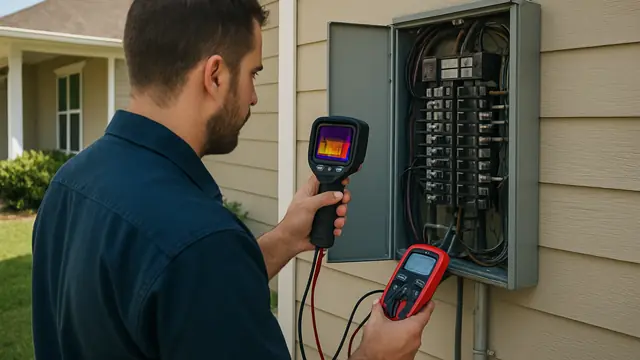
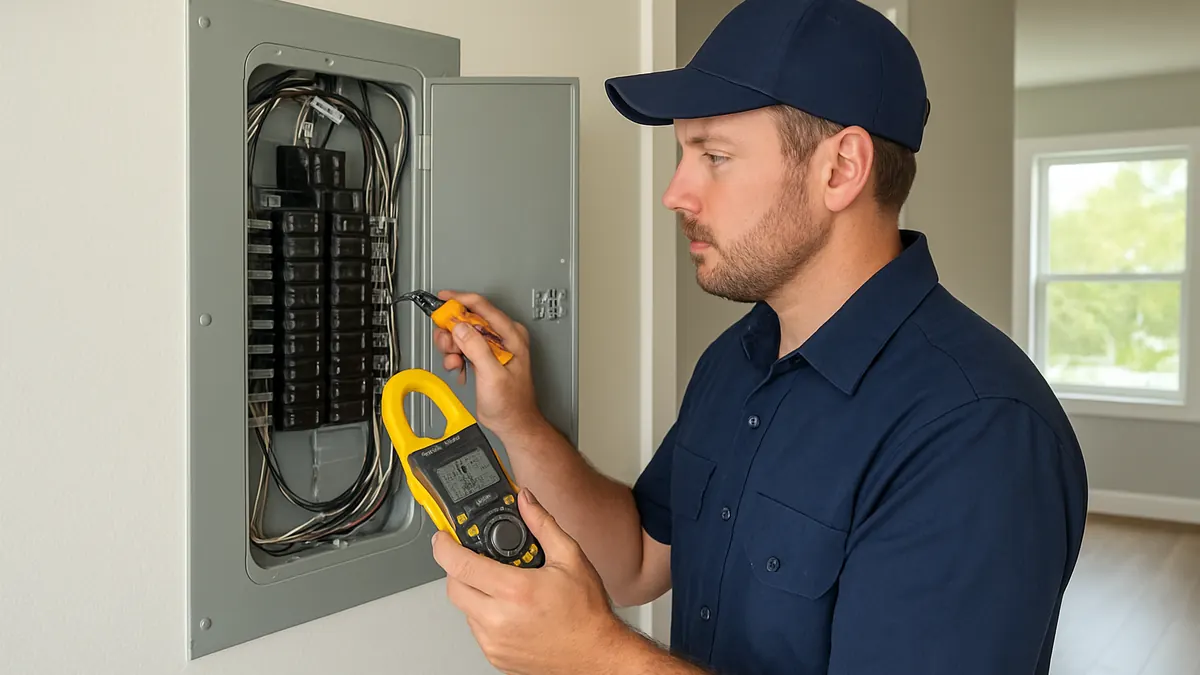
The electrician confirms the circuit rating, breaker type, and connected loads. Current may be measured with a clamp meter to determine whether the circuit is overloaded.
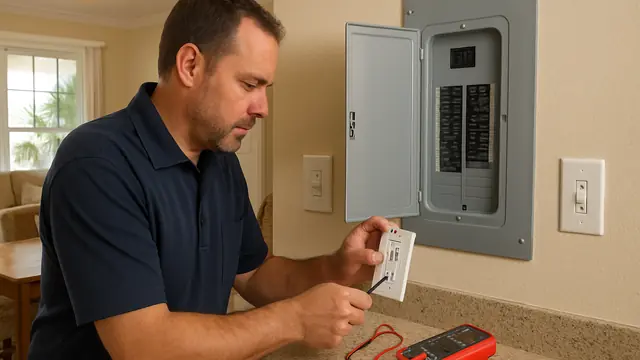
Next, sections of the circuit are isolated. Outlets, switches, fixtures, and appliances may be tested individually. The electrician checks for loose terminals, damaged conductors, overheated devices, improper splices, moisture, and equipment faults.
AFCI and GFCI breakers can also be tested to determine whether they are responding to a real fault or have become defective.
The goal is to identify the exact failure rather than replace parts until the breaker stays on.
Repair Options, Starting With the Least Invasive
The least invasive repair may be removing a defective appliance from service, replacing a damaged cord, tightening or correcting a loose device connection, or replacing one failed outlet or switch.
If the circuit is overloaded but otherwise safe, loads may be redistributed. A high-demand appliance may be moved to another suitable circuit, or a dedicated circuit may be added.
A defective breaker can be replaced with the correct listed type and rating after the wiring is verified. Damaged cable may need a localized repair when the affected section is accessible. More extensive rewiring is considered only when deterioration or improper alterations make smaller repairs inadequate.
Factors That Affect Cost
Cost depends on how quickly the fault can be located, whether the problem is in an appliance or the home's wiring, and how accessible the components are.
Other factors include breaker type, AFCI or GFCI requirements, panel condition, permit requirements, wall or ceiling access, and whether a new dedicated circuit is needed. Replacing a confirmed bad breaker is different from tracing an intermittent fault through several rooms.
Preventing Future Breaker Trips
Avoid operating several high-wattage devices on the same circuit. Portable heaters, hair dryers, countertop cooking appliances, and window air conditioners draw substantial current.
Replace damaged cords and loose plugs. Keep exterior outlet covers closed. Have warm outlets, weak plug connections, buzzing, or recurring flicker inspected instead of ignoring them.
During electrical service, ask for the panel connections, breaker condition, grounding, and heavily loaded circuits to be checked. Adding dedicated circuits during renovations can reduce future overloads.
Take the Next Safe Step
When you are asking, "Why does my circuit breaker keep tripping in Bid-A-Wee?" the breaker is already telling you that something needs attention. Reduce the load, reset it once, and stop if it trips again. A licensed electrician can determine whether the cause is an appliance, an overloaded circuit, a damaged connection, or a wiring fault and recommend the least invasive safe repair.
About this guide: This resource provides general homeowner education, not a remote diagnosis. Actual conditions, code requirements, equipment, and safe repair options must be evaluated at the property.