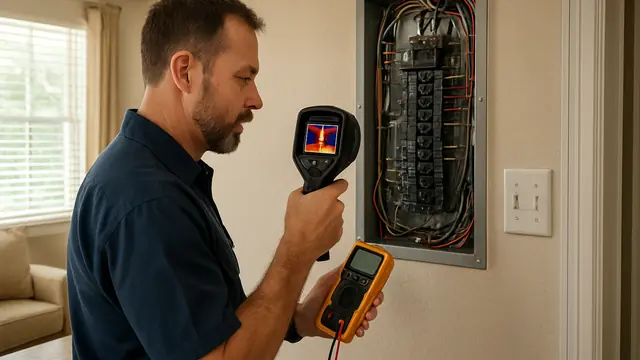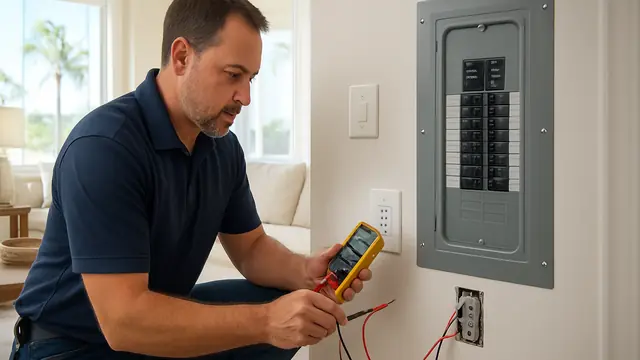
Do not remove an electrical panel cover, touch exposed conductors, bypass protection, or repeatedly reset a fault. Keep clear of smoke, sparks, burning odors, hot equipment, standing water near electricity, and downed lines, then call qualified help.
You are preparing to replace an air-conditioning system, add an electric vehicle charger, or remodel the kitchen when the installer asks about your electrical service. You look at the main breaker and see 100, 125, or 150 amps. The panel may also be crowded, and the lights occasionally dim when several appliances are operating. Those symptoms can make it seem obvious that your Panama City home needs a 200-amp electrical service, but the correct answer depends on more than the number printed on one breaker.
Delay any major new electrical load until the service has been evaluated. If breakers are tripping, reduce unnecessary simultaneous appliance use and do not reset the same breaker repeatedly. Never remove the panel cover or replace a breaker with a larger one. A licensed electrician can determine whether you have a capacity problem, damaged component, overloaded circuit, or poor connection.
What a 200-Amp Electrical Service Provides
A 200-amp service gives a home more available electrical capacity than a 100-amp, 125-amp, or 150-amp service. It does not make appliances more efficient, reduce the electric bill, or correct faulty wiring by itself.
The rating applies to the complete path that brings power into the home, including the meter equipment, service conductors, main disconnect, panel, main breaker, grounding, and bonding. Installing a panel labeled for 200 amps does not create a 200-amp service unless the rest of the system is also properly sized.
Common Reasons a Panama City Home May Need More Capacity
Several Major Electric Loads Operate Together
Electric water heating, cooking, clothes drying, HVAC equipment, pool pumps, hot tubs, workshop tools, and vehicle charging can create substantial demand. One new appliance may fit comfortably on the existing service. Several high-demand loads operating together can change the calculation.
A main breaker that trips during heavy use may indicate excessive total demand. It may also be failing or responding to another electrical defect, so repeated main-breaker trips require professional diagnosis.
The Panel Has No Open Spaces
A full panel does not automatically mean the service is undersized. Breaker space and service capacity are different issues. If the load calculation shows adequate capacity, an electrician may be able to install a subpanel.
A subpanel creates more circuit positions, but it does not increase the amount of power available to the home. Everything still passes through the existing main service.
You Are Planning a Major Improvement
Kitchen remodeling, room additions, garage improvements, HVAC replacement, and electric water-heating changes can require new dedicated circuits. Evaluating the service before equipment is purchased helps prevent delays and unexpected work.
You Want a Level 2 EV Charger
EV charging can be a substantial continuous load. Some homes can support a charger without upgrading, especially when the output is selected carefully or a listed load-management system is used. Other homes need additional capacity.
Safe Checks You Can Perform
Open only the normal hinged panel door and read the number on the main breaker if it is clearly visible. Do not remove screws or the inner cover. Write down the ratings of large appliances and anything you plan to add.
Record what happens when a breaker trips. Note which appliances were running, whether one circuit lost power, or whether the entire home went dark. Also note whether lights briefly dip when a motor starts or continue fluctuating.
From a safe distance, look for exterior damage, staining, loose covers, or signs of water entry. Do not touch damaged service equipment.
What Homeowners Should Not Attempt
Never install a larger main breaker as a shortcut. A breaker must protect the conductors and equipment connected to it. Increasing the breaker rating without upgrading the complete service can allow wiring to overheat.
Do not add unapproved tandem breakers, place two wires under a breaker not listed for them, or use extension cords as permanent wiring for chargers, heaters, or workshop equipment.
Do not remove the panel cover. Parts of the service may remain energized even when the main breaker is off.
Signs That Make the Problem Urgent
Call for prompt service if the main breaker trips repeatedly, the panel feels unusually hot, or you hear persistent buzzing, sizzling, or crackling.
A burning odor, smoke, sparks, melted plastic, or blackened breaker material indicates active damage. If you see smoke or fire, leave the area and call emergency services.
Lights that become dramatically brighter in one area and dimmer in another can indicate a loose neutral or service connection. That problem can expose appliances to damaging voltage.
Water inside the panel, meter enclosure, or disconnect is also urgent. Stay away from wet electrical equipment and arrange professional inspection.
How a Licensed Electrician Diagnoses the Service
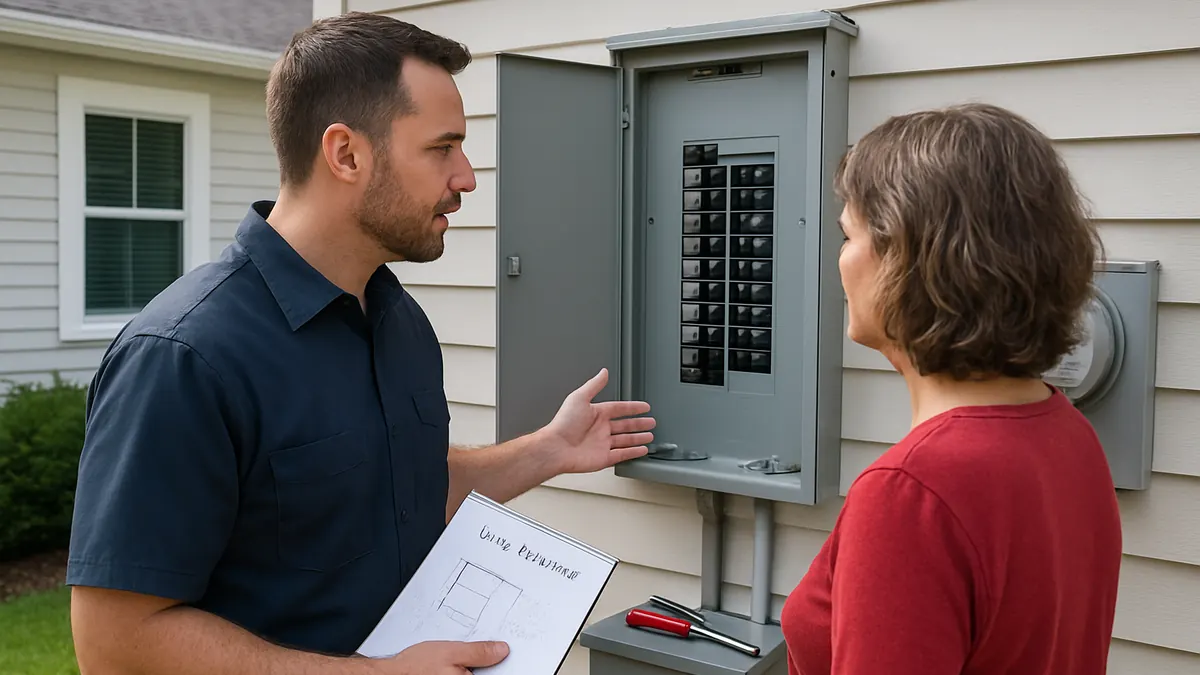
The electrician verifies the actual service rating by checking the main breaker, panel label, service conductors, meter equipment, disconnect, grounding, and bonding.
Next comes a code-based load calculation. It considers general household demand, kitchen and laundry circuits, HVAC systems, water heaters, cooking equipment, fixed appliances, EV charging, pool equipment, and other major loads. Approved demand factors recognize that not every appliance operates at maximum output simultaneously.
The inspection also looks for loose connections, overheating, corrosion, improper breakers, damaged conductors, and previous modifications. Voltage and current measurements may help identify imbalance or voltage drop, but they do not replace the calculation.
Repair Options, Beginning With the Least Invasive
The first option is to repair the actual defect. A loose termination, failing breaker, damaged appliance, or overloaded branch circuit may be responsible.
If one appliance needs more power, a properly sized dedicated circuit may solve the problem. If the panel is simply out of spaces, a subpanel may be appropriate when calculated capacity is available.
For EV charging or another controllable load, a listed energy-management device may reduce or pause that load when household demand is high. If the panel is damaged but the service is adequate, a same-amperage panel replacement may be enough.
A complete 200-amp upgrade is appropriate when the load calculation and realistic future plans show that the existing service cannot safely support expected demand.
Factors That Affect the Cost
Cost depends on the current service rating, panel and meter arrangement, overhead or underground utility connection, conductor route, grounding requirements, accessibility, and circuit count.
Permits, utility coordination, exterior disconnect requirements, surge protection, equipment relocation, finish repairs, and correction of previous work can also affect the scope. A proposal should explain whether the project includes only a panel replacement or the complete service upgrade.
Prevention and Maintenance Guidance
Review capacity before buying major equipment. Keep the panel dry, accessible, and accurately labeled. Save records of renovations and large appliance installations.
Do not ignore recurring trips, buzzing, odors, heat, or worsening flicker. Whole-home surge protection can help protect electronics from voltage spikes, but it does not add service capacity.
Does Your Home Need a 200-Amp Electrical Service in Panama City?
Your Panama City home may need a 200-amp electrical service if current and planned loads exceed the safe capacity of the existing system. It may instead need a breaker replacement, connection repair, dedicated circuit, subpanel, load-management device, or same-size panel replacement. A licensed inspection and formal load calculation will identify the least invasive safe solution.
About this guide: This resource provides general homeowner education, not a remote diagnosis. Actual conditions, code requirements, equipment, and safe repair options must be evaluated at the property.