Do not remove an electrical panel cover, touch exposed conductors, bypass protection, or repeatedly reset a fault. Keep clear of smoke, sparks, burning odors, hot equipment, standing water near electricity, and downed lines, then call qualified help.
You are under contract on a home in Panama City when the general inspection raises several electrical questions. A bedroom outlet is not grounded, the breaker directory does not match several rooms, and one breaker tripped while multiple appliances were running. None of those findings automatically means the home needs complete rewiring. They do mean you should understand the system before your inspection period ends.
The safest immediate action is to leave a repeatedly tripping breaker off, avoid outlets that are hot, loose, sparking, or discolored, and never remove electrical covers yourself. An electrical inspection checklist before buying a Northwest Florida home in Panama City should identify hazards, reasonable repairs, service capacity, and items that may affect your purchase budget.
Start With the Main Electrical Service
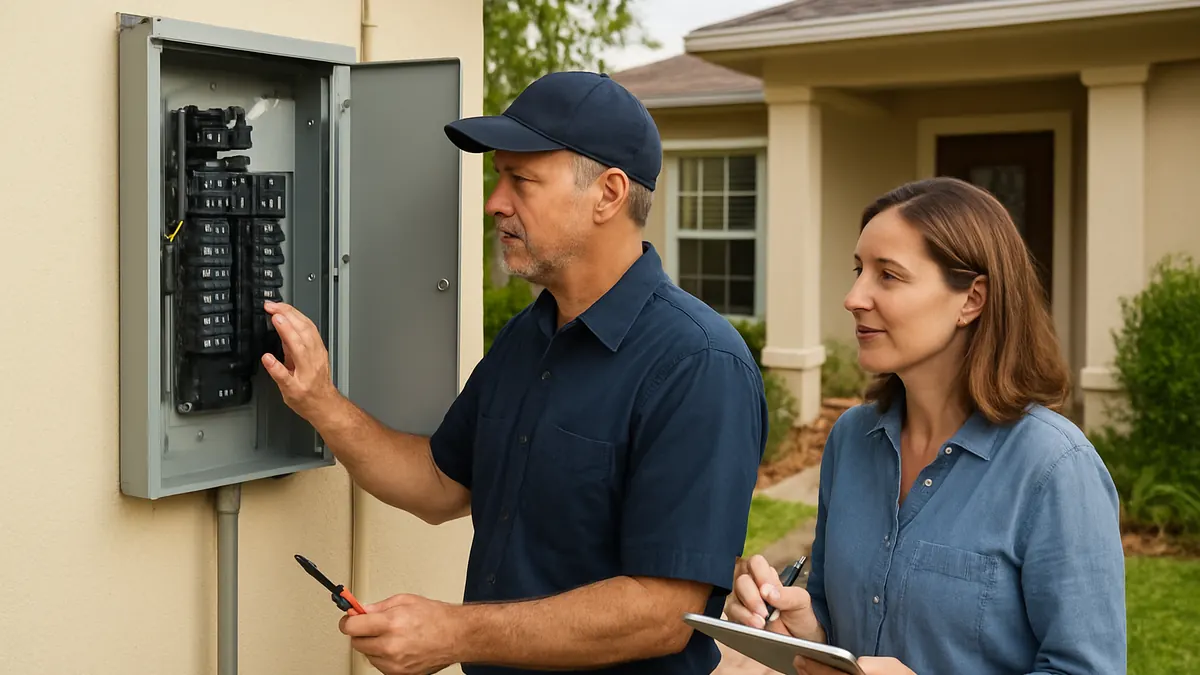
The electrical service brings utility power into the home, and the main panel distributes it through individual circuits. A licensed electrician checks accessible service equipment, the panel enclosure, main and branch breakers, grounding, bonding, and any subpanels.
The inspection looks for overheating, corrosion, damaged components, open panel spaces, incompatible breakers, and improper alterations. The electrician also compares breaker ratings with conductor sizes. A larger breaker cannot safely solve an overloaded circuit unless the wiring is designed for that amperage.
Determine Whether the Home Has Enough Electrical Capacity
A house may support its present appliances yet have limited capacity for what you plan to add. Tell the electrician if you expect to install an EV charger, hot tub, larger electric appliance, workshop equipment, or another major load.
A load calculation estimates expected electrical demand. It is more useful than simply counting empty breaker positions.
If added capacity is needed, the answer may be a dedicated circuit, load-management equipment, or a properly designed subpanel. A service upgrade becomes appropriate when calculated demand or equipment condition makes smaller solutions unreasonable.
Inspect Outlets, Switches, and Lighting
Check accessible receptacles, switches, lights, fans, and permanently connected equipment. Look for loose devices, broken covers, scorch marks, buzzing, flickering, melted plastic, or plugs that fit poorly.
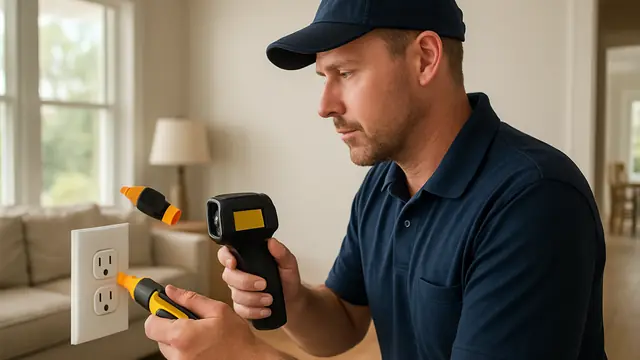
An outlet can supply power and still have reversed polarity or an open ground. Reversed polarity means the hot and neutral conductors are connected incorrectly. An open ground means the intended fault-current safety path is missing or ineffective.
A loose outlet might require only a direct repair, but movement can damage connections. Heat, discoloration, or a burning smell deserves prompt attention.
Verify GFCI and AFCI Protection
Ground-fault circuit interrupters, or GFCIs, reduce shock risk by shutting off power when electricity leaks through an unintended path. Arc-fault circuit interrupters, or AFCIs, respond to certain dangerous arcing conditions.
A GFCI that will not reset may be defective, incorrectly wired, without incoming power, or responding to a downstream fault. Testing should identify the reason rather than assuming the device simply needs replacement.
Look for Previous Electrical Alterations
Watch for open junction boxes, exposed splices, unsupported cable, extension cords used permanently, unusual adapters, and added equipment without an obvious circuit.
Ask for available permits, invoices, and contractor records for major electrical work. Documentation is helpful, but the present installation still needs to be evaluated.
Safe Checks the Buyer Can Perform
You can gather useful information without opening electrical equipment:
- Operate accessible lights, fans, and switches.
- Note flickering, buzzing, unusual heat, or dead outlets.
- Look for damaged covers and scorch marks.
- Review the panel directory from the outside.
- Ask whether breakers or GFCIs trip repeatedly.
- Test GFCI buttons only with permission.
- List major electrical equipment you plan to add.
A plug-in tester can identify some common outlet conditions, but it cannot prove that the entire circuit is safe.
What You Should Not Attempt
Do not remove the panel cover, open meter equipment, pull outlets from boxes, or touch exposed conductors. Do not tighten electrical connections during a showing.
Never install a larger breaker to stop tripping. Do not repeatedly reset a breaker or GFCI that trips again. The cause could be an overload, short circuit, ground fault, damaged appliance, or failing connection.
Signs That Make the Problem Urgent
Prompt professional attention is warranted for smoke, sparks, burning odors, crackling, melted insulation, repeated breaker trips, shocks from fixtures, water inside electrical equipment, or a panel surface that becomes unusually hot.
Keep people away from an active hazard and notify the seller or representative. Qualified personnel may need to disconnect power before the equipment can be safely inspected.
How a Licensed Electrician Diagnoses the System
The electrician reviews the home-inspection report, known symptoms, electrical history, and your future plans. Visual inspection is then combined with targeted testing.
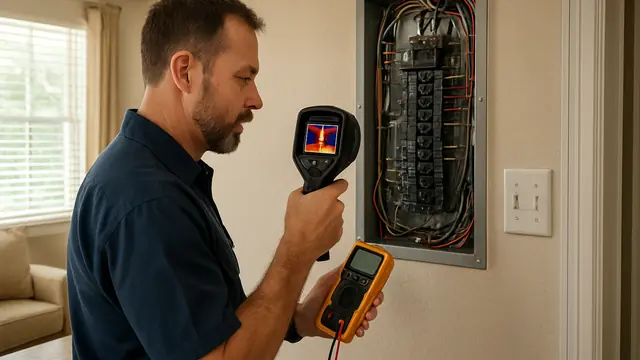
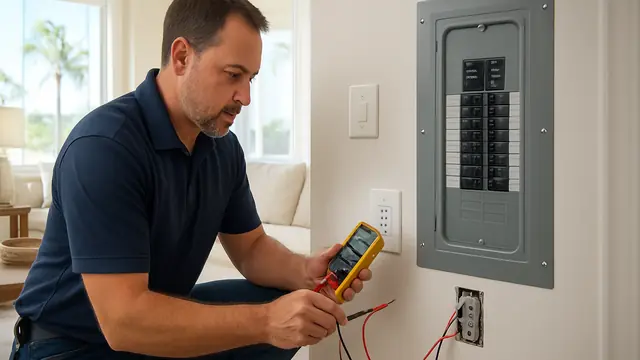
Testing may include voltage, polarity, grounding continuity, GFCI operation, circuit loading, and temperature differences that can suggest loose connections. Breaker sizes are compared with conductor sizes, and grounding and bonding are reviewed.
Circuit tracing may be used when panel labels are inaccurate. The goal is to determine whether each problem is isolated, repeated across several circuits, or related to the main service.
Repair Options From Least Invasive to More Extensive
Many inspection findings can be corrected without replacing the whole electrical system. Small repairs may include securing a loose receptacle, replacing a damaged cover, closing an open junction box, correcting polarity, replacing a failed GFCI, updating panel labels, or repairing an accessible connection.
A damaged or overloaded branch circuit may require replacing a cable section, moving loads appropriately, or installing a dedicated circuit.
Panel work might involve a compatible breaker or corrected termination. Panel replacement, a service upgrade, or broader rewiring is considered when equipment is damaged, unsuitable, no longer reasonably serviceable, or unable to meet expected demand.
Factors That Affect Cost
Cost depends on the number of defects, diagnostic time, wiring access, equipment type, parts availability, circuit length, permit requirements, utility coordination, and any wall or ceiling repair needed for access.
Ask for findings to be separated into immediate safety corrections, near-term reliability work, and optional upgrades. That makes purchase negotiations easier to evaluate.
Prevention and Maintenance After Closing
Keep panels accessible and accurately labeled. Test GFCIs according to manufacturer guidance, replace damaged covers promptly, and avoid permanent extension-cord use.
Before adding high-demand equipment, have the electrical load and circuit requirements evaluated. New flickering, buzzing, heat, burning odors, or recurring trips should be investigated promptly.
Make the Inspection Part of Your Buying Decision
An electrical inspection checklist before buying a Northwest Florida home in Panama City should explain which findings affect safety, which can be corrected with focused repairs, and whether the electrical service supports your plans.
Do not assume a working light switch proves the wiring behind it is sound. Document unusual symptoms, avoid energized components, and ask a licensed electrician to recommend the least invasive safe correction first.
About this guide: This resource provides general homeowner education, not a remote diagnosis. Actual conditions, code requirements, equipment, and safe repair options must be evaluated at the property.