Do not remove an electrical panel cover, touch exposed conductors, bypass protection, or repeatedly reset a fault. Keep clear of smoke, sparks, burning odors, hot equipment, standing water near electricity, and downed lines, then call qualified help.
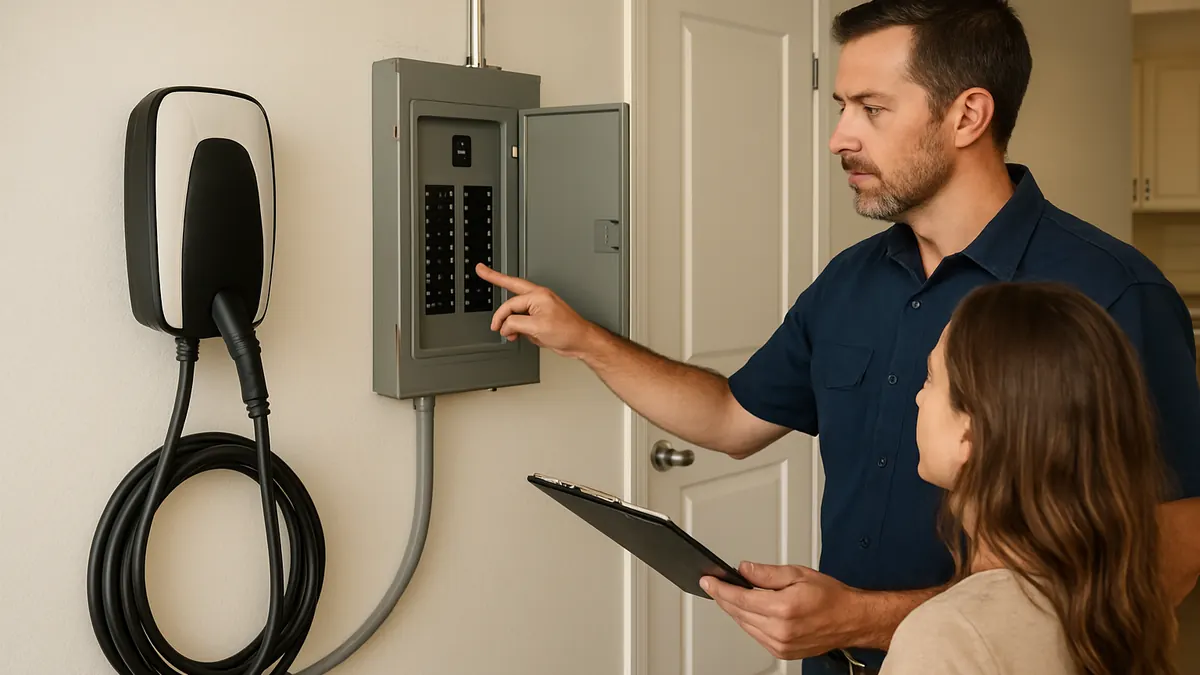
You have an electric vehicle in the driveway, but the standard 120-volt charging cord is not replacing enough range overnight. You are ready to install a Level 2 charger, yet the electrical panel already contains breakers for central air conditioning, an electric water heater, a range, and a dryer. The panel may look full, or the main breaker may be rated at only 100 or 150 amps. That raises an important question: can your electric panel support a Level 2 EV charger in Panama City without creating an overload?
Do not assume the answer is automatically no, and do not assume that an empty breaker space automatically means yes. Use only approved charging equipment exactly as directed. Avoid extension cords, improvised adapters, shared appliance circuits, and repeated breaker resets. A licensed electrician should evaluate the panel, service capacity, charger size, and wiring route before installation.
What Determines Whether the Panel Can Support the Charger?
A Level 2 charger normally operates at 240 volts and requires a dedicated circuit. "Dedicated" means the circuit serves the charger alone rather than sharing power with another appliance.
The power required depends on charger output. A charger set to 32 amps commonly needs a 40-amp circuit. A 40-amp charger commonly needs a 50-amp circuit, while a 48-amp charger commonly requires a 60-amp circuit and is often hardwired. The exact design must follow the charger manufacturer's instructions and applicable electrical requirements.
Because an EV charger may run for hours, the electrician must account for it as a sustained load. Simply looking at breaker handles is not enough.
Common Reasons an Existing Panel May Not Be Ready
The home has limited remaining capacity
Air conditioning, electric heating, water heating, cooking equipment, laundry appliances, pool equipment, and workshop tools can already use much of the home's electrical capacity. A house can function without obvious problems and still lack enough calculated capacity for a large charger.
The panel lacks the right breaker positions
Most Level 2 chargers require a two-pole breaker, which normally occupies two adjacent spaces. A panel may have no usable spaces even though one narrow opening appears available. Breaker arrangement and compatibility depend on the panel manufacturer and model.
Existing electrical problems need correction
Loose connections, overheating, corrosion, damaged breakers, incorrect breaker types, or previous improper modifications can make the panel unsuitable for another major load. The charger may reveal a weakness that did not cause symptoms during lighter use.
The charger is larger than the vehicle needs
A homeowner may purchase a 48-amp charger even though the vehicle accepts only 32 amps. In other cases, the car remains parked long enough that a lower charging rate would still replace the daily mileage overnight.
Safe Checks You Can Perform
Photograph the main breaker, panel label, visible breaker arrangement, and circuit directory without opening the panel. Record whether the water heater, dryer, range, and heating system are electric or gas. Include other significant loads such as a pool pump, hot tub, second air-conditioning system, or large workshop equipment.
Find the charger model and note its maximum amperage, adjustable settings, and whether it is plug-in or hardwired. Check the vehicle's maximum Level 2 charging rate.
Measure the approximate distance between the panel and preferred charging location. Note whether the route passes through finished walls, attic space, exterior areas, underground sections, or a detached structure.
These checks help with planning but do not replace a load calculation or internal inspection.
What the Homeowner Should Not Attempt
Do not remove the panel cover. Even when the main breaker is off, parts of the service equipment may remain energized.
Do not install a larger breaker to stop tripping. The breaker protects the conductors. Increasing its size without confirming wire size can allow overheating.
Do not connect an EV charger to an air-conditioning, dryer, range, or water-heater circuit unless an approved system has been specifically designed for that purpose. A plug that fits an existing receptacle does not prove the circuit is suitable for sustained charging.
Avoid household extension cords and unapproved splitters. Do not continue charging through a receptacle that feels loose, shows discoloration, or becomes hot.
Signs That Make the Situation Urgent
Stop charging and arrange prompt electrical service if you notice repeated breaker trips, a burning odor, buzzing, crackling, melted plastic, darkened insulation, or a hot receptacle or plug.
Other urgent warnings include significant light flickering when charging starts, a breaker that will not reset, repeated charger fault messages, visible corrosion, water staining, or unusual heat at the panel cover.
If you see smoke, flame, or active arcing, leave the area and contact emergency services. Do not open the panel or apply water to energized equipment.
How a Licensed Electrician Diagnoses the System
The electrician confirms the service rating, panel manufacturer, panel condition, approved breaker types, and available spaces. The inspection also includes grounding, bonding, conductor condition, bus connections, enclosure integrity, and signs of overheating or improper work.
Next comes a residential load calculation. In plain language, this estimates how much electrical demand the home is expected to place on the service. It considers general household use, major appliances, heating and cooling equipment, and the proposed charger.
The charger and vehicle specifications are compared so the circuit is not larger than necessary. The wiring route is reviewed for distance, conductor size, access, exposure, and physical protection.
If charging equipment is already causing trouble, the electrician may test voltage, inspect terminations, evaluate breaker operation, and determine whether the fault is in the charger, circuit, panel, or incoming supply.
Repair and Installation Options
The least invasive option may be to lower charger output. A 24-amp or 32-amp Level 2 charger can still provide meaningful overnight range while requiring less capacity than a 40-amp or 48-amp unit.
Approved load-management equipment can monitor household demand and temporarily reduce or pause EV charging when other large loads operate. Charging resumes when capacity becomes available.
If the service has enough capacity but the panel lacks spaces, an electrician may reorganize permitted circuits or install a subpanel. A subpanel provides more circuit positions but does not increase total service capacity.
Targeted repairs may include replacing a damaged breaker, correcting a loose termination, installing suitable conductors, replacing an unsuitable receptacle, or hardwiring the charger.
Panel replacement may be necessary when existing equipment is damaged, obsolete, improperly modified, or unable to accept the circuit safely. A service upgrade is considered when calculated demand exceeds existing capacity and smaller approved solutions are not appropriate.
Typical Factors That Affect Cost
Cost depends on charger amperage, conductor length, wiring access, breaker availability, hardwired versus plug-in installation, exterior routing, trenching, wall repair, and physical protection near the parking area.
Prevention and Maintenance Guidance
Use listed charging equipment and follow the manufacturer's instructions. Keep the cable away from tires, sharp edges, standing water, garage doors, and lawn equipment.
Periodically inspect the enclosure, cord, plug, connector, and receptacle for cracks, looseness, discoloration, or heat. Do not ignore new fault messages, charging interruptions, or breaker trips. A system that worked normally can later develop a loose connection, worn receptacle, damaged cable, or panel problem.
Get a Clear Answer Before Installing the Charger
Can your electric panel support a Level 2 EV charger in Panama City? It may support the charger as selected, a lower-amperage circuit, approved load management, targeted panel repairs, or a larger service. The correct recommendation comes from evaluating the entire electrical system instead of judging the panel by appearance alone.
About this guide: This resource provides general homeowner education, not a remote diagnosis. Actual conditions, code requirements, equipment, and safe repair options must be evaluated at the property.